Denise Sullivan

Author, Arts & Cultural Reporter and Worker

The Complete Unknowns

Martin Luther King Jr., Joan Baez and Harry Belafonte

Joan Baez was a junior at Palo Alto High School when she first heard Martin Luther King, Jr. speak at a conference for young Quakers. She would go on to sing for the non-violent movements for civil rights, social, economic and racial justice and against the war in Vietnam.

“King was giving voice to my passionate and ill-articulated beliefs,” wrote Baez in her memoir. Her “exhilarating sense of ‘going somewhere’ with my pacifism” in the aftermath of that speech would lead her to join King on marches in the Jim Crow south and at the historic March on Washington.

If you don’t already know about Baez’s history as a lifelong activist, you certainly would not get it from a viewing of the ahistorical Bob Dylan biopic, A Complete Unknown, released in US theaters this Christmas.

Loosely based on Dylan’s arrival in New York City in 1961, the film covers the songwriter’s introduction to the Greenwich Village scene, his meetings with Woody Guthrie and Pete Seeger, and his intimate relationships with Baez and the fictional Sylvie Russo, a stand-in for his real life steady, Suze Rotolo.

“During the height of the civil rights era Bob wrote, among other songs, ‘The Lonesome Death of Hattie Carroll,’ ‘The Death of Emmett Till,’ [‘Only A Pawn In Their Game’] and of course, ‘Blowing in the Wind,’ which became a kind of anthem,” Rotolo wrote in her own memoir of the Village in the ‘60s. In the film, “Blowing in the Wind” is framed in his repertoire to be more like an annoyance or an albatross.
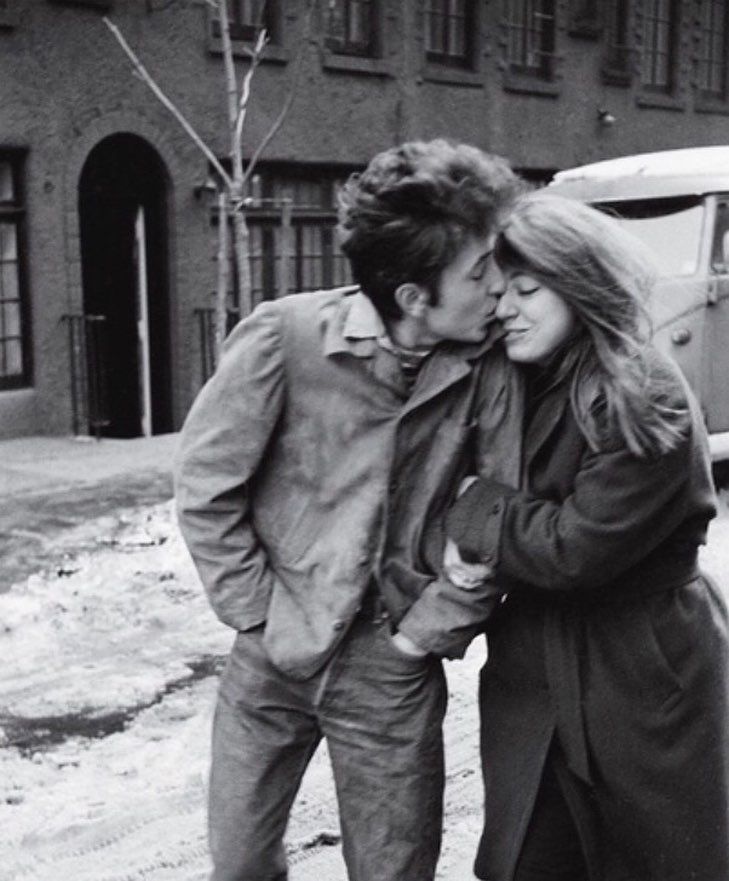
There’s a scene recreating Dylan and Rotolo’s meeting at a 1961 folk-a-thon at the Riverside Church, the historic hub of progressive gathering in New York City. And there is a brief moment when the Russo character explains to a befuddled Dylan that she works at the Congress for Racial Equality (CORE), organizing the Freedom Rides from North to South — in fact one of Rotolo’s jobs in the era.

Facts are also, that in 1963, Dylan walked off the all-important nationally broadcast The Ed Sullivan Show when he was asked not to play his song, “Talkin’ John Birch Society Blues.” For those unacquainted, the John Birch Society is a radical far right group and the song is a satire.

That not much is made of the realities of the causes and concerns that moved both Baez and Rotolo to become immersed in movement work and the folk scene is perhaps understandable: A Complete Unknown is after all, a version of a story of Dylan becoming Dylan. But the gaps in the story of Dylan’s own connections to civil rights and the songs he wrote in their favor are woefully understated in the film, as are his friendships with the people in his circle (where, for example, were the nods to Ramblin’ Jack Elliott? Phil Ochs? Odetta? Lead Belly, at least, appears in an 8×10 photograph). There are also no poets, comedians or jazz musicians in the film’s version of the Village, though they are among those who also contributed to it being America’s bohemian center of its time.

Nor are there any three dimensional Black artists or musicians depicted in the film. The one scene in which a Black musician has a speaking role was made out of whole cloth and is particularly egregious: The fictional bluesman, Jesse Moffette (portrayed by Big Bill Morganfield whose father in real life was blues legend Muddy Waters) is played as a drunken mess when he appears with Dylan on Seeger’s public television show, Rainbow Quest. That Rainbow Quest really existed and featured musicians Rev. Gary Davis, Mississippi John Hurt and Sonny Terry and Brownie McGee is undeniable. The inclusion of any one of those artists would’ve made an interesting, albeit fictional meeting between Black and white, established and next generation musicians. But the creation of a fictionalized and stereotypical bluesman is not only in poor taste, it was a missed opportunity to introduce new listeners to the musicians who influenced Dylan and generations of future folk, blues and rock musicians.

One full episode of Rainbow Quest was devoted to Dylan’s friend and contemporary, Len Chandler, another figure on the Village scene who was eliminated from the story told in A Complete Unknown. It was Chandler who drove Dylan on the back of his motorbike to deliver his first album to Guthrie in the hospital.

“We took out our guitars and played Woody songs,” said Chandler.

Chandler and Dylan hung out, traded songs, learned their trade and celebrated their song publications in folk journals, Broadside and Sing Out! And while Chandler spent considerably more time in the South fighting for the rights of Black Americans (like Baez, it was his calling), it’s significant that Dylan appeared shoulder to shoulder with both of them at the March on Washington (though the film makes a bungle of computer generated imagery to recreate his appearance there).

Considering what could’ve been is a fool’s game but I’ll play it anyway: Dylan’s first recording session was as a harmonica player on another one of his heroes records: Harry Belafonte’s “Midnight Special.” The often told story of Dylan throwing his harps in the trashcan afterward would’ve made a great cinematic moment. The inclusion of a civil rights giant would’ve again been a nice prompt for a young viewer to dig deeper into Belafonte’s role in American civil rights, music and Dylan’s own history.

Oh but there’s more: Dylan famously had a crush of the wanting to marry her kind on Mavis Staples. Here again, was another missed opportunity to demonstrate how the singer’s dreams listening to and playing music with his inspirers became his reality. Instead, there is a Black woman of intrigue in the film who Dylan dumps in short order after her appearance. We have no idea who she is or is supposed to be standing in for, but a little like the nameless “mistress” played by Angela Bassett in Masked in Anonymous, she is there to let us know the main dude is an equal opportunity romancer.

The studio players on Dylan’s recordings, Paul Griffin, Sam Lay, Bruce Langhorne, as well as his producer Tom Wilson, could all have been elevated to characters with even one or two-line speaking roles, if only to let the audience know these cats were not just extras to add color to the cast: These were seasoned professionals hand-picked for the records that transitioned Dylan from solo folky to serious, original artist.

And then there is the short shrift given to Dr. King, whose “I Have A Dream” speech Dylan and Chandler listened to in real time, on the day it was delivered.

“That’s what I remember from the speech, being behind another monument with Dylan and silencing ourselves, and sitting in amazement as we heard that wonderful speech unfold,” Chandler remembered. But the take on historic Black preaching in A Complete Unknown, comes in the form of a man in a fedora and trench coast on a soap box. Listed in the credits as “civil rights speaker,” the character is but a token symbol for the movement that reached its very apex during the era depicted in the film. The scenes at the Newport Folk Festival would take me another viewing to de/reconstruct but they suffer from similar missed opportunities to display Black excellence and inspiration (Lightnin’ Hopkins, Willie Dixon, Fannie Lou Hamer, for God’s sake).

What could’ve been a simple and effective portrait of young Dylan and the ways folk musicians, women, and Black Americans intersected with the Civil Rights Movement and helped to shape the counterculture and ideals that came to define the ’60s, is in the end, just another piece of product, a part of the Dylan Industrial Complex: The books for days, the several documentaries, a museum and archive, a brand of liquor, a Christmas album, ornaments, and a line of bobbleheads…these are but a fraction of the branded, approved, licensed and unlicensed materials on offer in his name. Why should I have wished that a biopic be anything more than a distraction, an entertainment?

In the end, the contributions to the Civil Rights Movement made by women and Black Americans are the real hidden figures and unknowns obscured in the Hollywood retelling of Dylan’s own early ‘60s story. As impenetrable as the “real Dylan” may be or seem to be, I left the film not thinking about him, but wanting to ask the folks living and passed over, how does it feel?

Filed under: anti-capitalist, Arts and Culture, Blues, Bob Dylan, Civil Rights, film, Folk, Greenwich Village, Poetry, Protest Songs, , , , , , , , , , , , , , ,

Rest in Power: Sinéad O’Connor

When I heard the news that Sinéad O’Connor died last week, the news was not terribly surprising – people suffer, they take ill, they die. And yet, the depth of my feeling for the world’s loss of such a prophetic, powerful and perfect singer was startling. Though I’m well-familiar with her work and saw her perform live more than once (she was after all a part of the fabric of the ’80s and ’90s popular culture), I think what struck me hardest was how much of her good work for humankind and her general love of the world’s people had gone unnoticed. Here was a God-loving and spiritually devoted singer who had never turned away from her mission to help others, and yet, others had turned away from her time and again.

And then I remembered her turn as the Virgin Mary in Neil Jordan’s film, The Butcher Boy: There was something about her performance that stayed with me, all these years later. I guess what I mean to say is there is no doubt in my mind that someday, future generations will see Sinéad as the visionary, the prophet, the truthsayer and comforter she was; maybe she’ll even be venerated accordingly.

My full remembrance of O’Connor can be read at the link to Tourworthy.

Filed under: anti-capitalist, anti-racist, anti-war, Arts and Culture, Bob Marley, film, Hip Hop, Immigration Reform, income disparity, Nina Simone, Protest Songs, racism, ,

Poly Styrene’s Time is Now

“When we all got into music, back in the day, we got into it to be anti-establishment,” said punk filmmaker and musician Don Letts. “Nowadays, bands start bands to become part of the establishment.”

Poly Styrene, late ’70s

In the ’70s and ’80s, Letts was an intimate friend and documentarian of the Clash. He was also acquainted with punk empress Poly Styrene, front woman of X-Ray Spex and a witness to her unfurling following a difficult evening spent in the company of Johnny Rotten.

Much has been left uncovered and to the imagination concerning Styrene’s reclusive post-punk life, but the new documentary, Poly Styrene: I Am A Cliché, co-directed by Paul Sng and Styrene’s daughter, Celeste Bell, corrects the record and tells the true tale of an accidental icon.

“People often ask me if she’s a good mum – it’s hard to know what to say,” says Bell in narration of the film, exploring the life, career and spiritual-questing of her mother. Decades later, Styrene is still considered one of punk rock’s mothers and its premiere feminist, anti-capitalist and Afrofuturist.

Expertly weaving archival film with ephemera, testimonials and additional voicing of Styrene’s diaries by actor Ruth Negga, Bell’s very personal story is centered on the art itself, along with a narrative that underscores the artist’s ability to create lasting work in the face of the odds and a world that was built in opposition to her. That the artist was her mother makes for a complex telling but those complicated feelings never get in the way of keeping the focus on Styrene’s values as an artist; her contemporaries like Letts, ska music’s Pauline Black and Rhoda Dakar, and latter-day punk spokespeople like Bikini Kill’s Kathleen Hanna and Sonic Youth’s Thurston Moore are all quick to corroborate her impact. Bell does away with the documentary convention of talking heads which effectively keeps her subject in the spotlight rather than creating a distraction by fixing a camera on so-called experts. A daughter’s understanding of her mother’s role as a pioneering biracial feminist environmentalist with a spiritual directive to deliver a message to the world is a testament to Bell’s own commitment to making a film about art as opposed to conforming to commercial ideas of what makes good entertainment. Read full article here:

Filed under: anti-capitalist, anti-war, Arts and Culture, Environmental Justice, film, Protest Songs, Punk, Women in Rock, , ,

Bloody Sunday: Freedom Highway Revisited

Five songs into their set at Chicago’s New Nazareth Church, the Staple Singers get down to the real, and the reason, they called their gospel meeting on April 9, 1965.

“A few days ago freedom marchers marched on Selma to Montgomery, Alabama,” says Roebuck “Pops” Staples. “And from that march, words were revealed and a song was composed. And we wrote a song about the freedom marchers and we call it the ‘Freedom Highway.’ And we dedicate this number to all the freedom marchers, and it goes something like this.”

Tearing into their new song as if it was a longtime traditional favorite, the Staples evoke the energy and resistance of the historic freedom trail for voting rights, right there at their South Side parish. Though few could’ve predicted or believed that the messages of the Martin Luther King, Jr.-led movement would still be necessary or relevant 50 years on, this timeless performance at the height of the fight has been mercifully preserved, restored and reissued on Legacy’s new Freedom Highway Complete—Recorded Live at Chicago’s New Nazareth Church, April 9, 1965, for all the world to once again bear witness and hear the beauty in a song.

The whole world is wondering what’s wrong with the United States

Yes, we want peace if it can be found

Marching freedom’s highway, 

I’m not gonna turn around…

Stay on freedom’s highway until the day is done

Following an introduction from Pops encouraging folks to sing, clap, and shout amen, the group (accompanied by Al Duncan on drums and Phil Upchurch on bass) eases in parishioners with the familiar invocation, “When The Saints Go Marching In.”  But they waste no time getting to the darker stuff, slipping in the Hank Williams tale of “The Funeral,” concerning the closing of the casket on a little curly-headed boy. The secular movement standard, “We Shall Overcome” is delivered easily enough, serving as the crowd-participatory number it was built to be, though in the Staples’ hands, all is holy. Their originals like “Freedom Highway” and “Tell Heaven,” and the arrangements of spirituals like “He’s All Right” strive to tear the roof off the chapel and touch greener pastures, delivering the listener from all earthly distraction. For gospel singers like the Staples family, “Jesus Is All” (one of the set’s previously unreleased tracks) and “Help Me Jesus” are not just proud declarations of their savior’s name, they are a way of life, a deep faith that does not ask its adherents to acquiesce in God’s presence; it puts the holy spirit in charge, so that the faithful may take action on the streets and in all matters of the everyday, fearlessly and free.

Church was where the gospel group first practiced its faith as family singers—Roebuck, Pervis, Cleotha, Yvonne and Mavis—in the late forties and early fifties, developing an acoustic folk-gospel style with a bluesy feeling, distinguished by soul-solid lead vocals by Mavis and piercing, bending guitar by “Pops.” They recorded for a number of labels including Vee-Jay (famous for releasing blues acts and later, the Beatles) where they had some early success with “Uncloudy Day,” (a song Bob Dylan recently called the “most mysterious thing” he’d ever heard). In later years they joined the Stax label where during the apex of soul music, they enjoyed Top 40 success with funk-based, gospel-powered hits like “Respect Yourself” and “I’ll Take You There.”  In between these distinct eras, the Staples were signed to Epic where their A&R man and producer Billy Sherrill (remembered mostly for his Nashville productions) assisted in the development of merging their sacred and soul sides. For the Freedom Highway session, he arranged the necessary equipment be brought to the church and recorded the service/rally. Mobile units were in their infancy at the time, but the project was not conceived as a “field” recording. Before release, the tracks were edited, telescoped, and worked to conform to studio and broadcast standards, purposefully leaving behind the churchy and ambient parts, though even with the tweaking, the set was a revelation. Becoming one of the era’s most beloved recordings, it was also long left out-of-print, only to become highly sought after (a 1991 Legacy reissue titled Freedom Highway is not the original recording, but rather a compilation).

StapleSinger_cover

Bolstered by the anticipation of the tracks becoming once again available digitally and on vinyl, the new and expanded edition produced by Steve Berkowitz and Nedra Olds-Neal stands to surpass the original’s already relic-like status. By daring to return the tapes to their original form and to recreate the evening from front to back, Freedom Highway becomes all at once a historical document, a spirit-lifting gospel session, and a fist-raising call for freedom now. Accompanied by rock and soul historian Robert Gordon’s liner notes which ascertain the place of race in music and in the country then and now, the Staples brand of “message music” is spelled out for non-believers and anyone else in need of a nudge.

Leaping into faith-based music in times of uncertainty is natural; gospel survives on rock solid melodies and timeless messages of liberation which by design were created to subvert slavery and oppression. And while the marchers in Ferguson, New York and Oakland in recent months may not have exactly had the notes of “Freedom Highway” on their minds when they shut down roadways, its words were already written on their souls.  Built to travel the distance, and as necessary as in the hour they were recorded, these songs performed 50 years ago (and some scored a hundred years before) are available to accompany movement, anytime, anywhere, there is a fight for voting rights, civil rights and human need. These songs’ messages are as urgent now as they were then, as is faith in the idea that the march will ultimately be won, mile by mile, hand in hand.

“Let’s say amen again,” says Pops Staples on the restored set’s recovered audio tracks. “Let’s keep on marchin’…Keep on marchin’ up freedom highway.”

(This review appeared originally in Blurt online, upon the release of the 50th anniversary edition of Freedom Highway)

Filed under: anti-war, Arts and Culture, Black Power,, Bob Dylan, Civil Rights, Folk, Freedom Now, Gospel, Protest Songs, , , , , , , , , , ,

Four Little Girls and Two Songs

On September 15, 1963, four Birmingham, Alabama girls, Addie Mae Collins, Denise McNair, Carole Robertson and Cynthia Wesley, lost their lives during the bombing of the Sixteenth Street Baptist Church.  In 2011, a marker was finally dedicated in their names at the site of the vicious, racially motivated, murderous attack.

Just three months after the murder of Medgar Evers in Jackson, Mississippi, and two weeks after the March on Washington and Dr. King’s momentum-building “I Have a Dream” speech in 1963, the Alabama tragedy became the pivotal event in the Civil Rights Movement. Singer Nina Simone wrote “Mississippi Goddam” in immediate response to hearing the news: “I shut myself up in a room and that song happened,” she said of the song that begins, “Alabama’s got me so upset.” From that moment forward, Simone was committed to writing and performing material that would jolt people awake or into action.  It remains her most enduring work.

Joan Baez had of course walked alongside Dr. King at the marches in the South all along; her tribute was a recording of “Birmingham Sunday” by her brother-in-law, the writer Richard Fariña.  Each girl was remembered by name in the verses, set to the tune of a beautiful folk melody. Fifty-plus years on, both songs remain painful reminders of the brutalities waged by so-called humanity, here and yonder, year in and year out, against women, girls and Black lives.

Filed under: anti-capitalist, anti-war, Arts and Culture, Origin of Song, Protest Songs, racism, , , , , , , , , ,

Willie Says Vote ‘Em Out


With racist violence and murder escalating and the nation well-past its crisis point, the looming midterm election is an eleventh hour opportunity to turn this mess around. Willie Nelson got involved during election season to cut a song with a clear message:  “Vote ‘Em Out.”  The legendary outlaw country star knows where he stands on national issues like immigration policy and gun safety: At home in Texas, he’s supporting Beto O’Rourke for Senate in the statewide race against Ted Cruz. We can’t all write songs and reach hearts and minds like Nelson can at a rally or with a tune, but we can all be effective in our homes and workplaces. We can take time in the next week to canvass or phone bank for the candidates and issues we support. We can speak out when the people we know, including friends and family, try to defend or ignore the racist/sexist sickness that has infected the highest elected and appointed officials in the land.  And on November 6, we will cast our votes: It remains a tool to counteract the hate with nonviolence, or as Willie sings it, “The biggest gun we’ve got is called the ballot box.”

Read this month’s column. And thanks for voting.


Filed under: anti-war, Arts and Culture, Protest Songs, Texas, , , ,

“Lord, they cut George Jackson down”

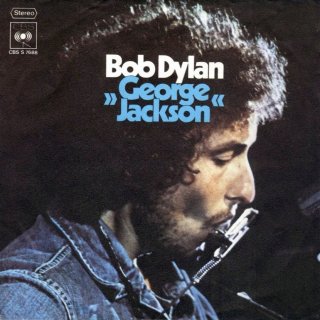
GeorgeJacksonGerFrontBob GeorgeJacksonSpainFrontBob Dylan’s 1971 single, “George Jackson,” a remembrance for the radicalized convict and Black Panther who died in a San Quentin prison shoot-out on August 21, 1971, remains one of his most mysterious recordings.  Not only does “George Jackson” mark the songwriter’s return to topical song form and to touring after a long hiatus, his subject remains as misunderstood to a general audience as does the singer and his songs.
Less than a month after the prison shooting in California, a historic event at Attica Correctional Facility wherein prisoners took control of the prison to protest its poor conditions resulted in more fatalities—an unmistakable call for prison reform. Perhaps it was that call to which Dylan was responding when in November, he cut and released “George Jackson,” a 45-rpm record that reached the Top 40 in January of 1972.
Opening with the blues trope, “I woke up this morning,” Dylan’s “George Jackson” is not a typical blues song, though it surely addresses the larger topic of racial and socio-economic oppression from which a certain style of blues was born. It also leaves a record of Jackson and his story.
“The power of George Jackson’s personal story remains painfully relevant to our nation today, with its persistent racism, its hellish prisons, its unjust judicial system, and the poles of wealth and poverty that are at the root of all that,” wrote historian Howard Zinn in an updated version of Jackson’s Soledad Brother. Wresting larger truths from the events of 1971, Dylan delivered his summation in these often quoted lines from “George Jackson”

Sometimes I think this whole world
Is one big prison yard
Some of us are prisoners
The rest of us are guards

Dylan cut two versions of “George Jackson” for a double sided seven-inch: A “big band” version featuring Kenny Buttrey (drums), Ben Keith (steel guitar), and Leon Russell (bass), and a solo acoustic version. Among the various issues of the single—and there are many—is a picture sleeve with an image of Dylan performing at the Concert for Bangladesh (pictured above, it remains sought-after by record collectors). Here’s a version of Dylan’s song recorded by reggae band, Steel Pulse:

The details of the Jackson case are still debated today by scholars, historians, and those who remember the events. As the story goes, it was a 70-dollar robbery that landed Jackson in state prison, his sentence indeterminate. Guards took an instant dislike to Jackson on the inside and his sentences were extended following events occurring at Soledad State Prison in which three Black inmates and a white guard were killed.  Using his time in solitary to educate himself, Jackson studied psychologist Franz Fanon (The Wretched of the Earth), Marx, and Mao, and came to understand the incarceration of poor Blacks for petty crime in a political context. A leader in moving prisoners to radicalize, Jackson joined the Black Panthers and became one of the group’s most celebrated members, despite  J. Edgar Hoover’s declaration in 1969 that the Black Panthers were public enemy number one.

Published in 1971, Soledad Brother: The Prison Letters of George Jackson, was greeted with a positive reception by intellectuals and political progressives. That Jackson had been framed for conspiring to kill a guard in the Soledad incident was a widely held belief; his defenders were vocal and his case was a cause célèbre. But a few days before the Jackson trial was to begin, a riot broke out in San Quentin in which inmates and guards were again slain and Jackson was among those killed as he ran across the yard in an alleged escape attempt. In 2015, Hugo Pinell, the last incarcerated member of the San Quentin Six, was killed while serving his life sentence, much of it in solitary confinement.

The following is a live recording of Joan Baez singing “George Jackson.”

Advertisements

Occasionally, some of your visitors may see an advertisement here,

Filed under: Angela Davis, Arts and Culture, Black Power,, Bob Dylan, Protest Songs, , , , ,

Remembering Tony Kinman

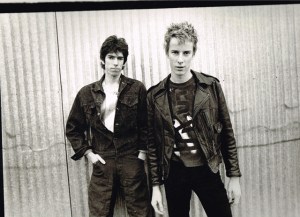
Tony and Chip Kinman, photo by Marcus Leatherdale

There was an anti-authoritarian pulse that coursed through Tony Kinman’s work until the end: When Kinman lost his life to pancreatic cancer in May, rock ’n’ roll lost one of its greatest champions.

Working side by side for decades with his brother Chip Kinman, whether it was in their first wave political punk band The Dils, or producing his brother’s new rock ’n’ blues band, Ford Madox Ford, Kinman left his own unique imprint on rock ‘n’ roll: Working upstream and against trends, he carried a torch for all that was holy and good about the music, always questing for the possibility that it would manifest its original intention to upset and forever change things like it did in its formational 1950s. When that promise didn’t deliver, he dug deeper toward the source, searching for rock’s proverbial lost chord.

READ THE ENTIRE APPRECIATION AT TOURWORTHY.

Filed under: Protest Songs, Punk, , ,

Country Music On The Move

Sometimes inspiration comes from the unlikeliest of sources.  Country music, for example, is not the kind of music I generally turn on when seeking comfort, enjoyment, or consolation. You might say I’m not a big fan. I will admit I’m slightly allergic to the sound of fiddles, banjos, mandolins, or anything that twangs.  That all said, when the lyrics are really saying something and the artist is using their notoriety to make change, I’m all ears.  In this month’s column, we celebrate Sturgill Simpson, Keith Urban, and the other country music artists who’ve decided enough is enough: These musicians are taking a stand against gun violence, misogyny, racism, and the other ills of our nation in decline. Read the entire story at Tourworthy.

Filed under: Arts and Culture, column, Protest Songs, Women's rights, , , ,

Back On The Chain Gang

Dear Readers,

It’s an unusual post where I want to send you away from my site and toward another, but that’s the case this evening…As it happens, I’m back on the rock ‘n’ roll beat and want to point you to a couple of publications where my work is now playing:

Last week, a group of former colleagues launched No Recess! a music and culture site that aims to bring you some good reading on rock ‘n’ roll, resistance, and whatever else they feel like.

8be7a9_985978102dfb4c6b8d2e7afb6a33b6ac~mv2.png

Check my contributions, a column titled What Are We Gonna Do Now? and subtitled Rock and Resist or Rollover.  I also contribute a book review of the new autobiography by the Band’s Robbie Robertson.   And here’s a film review of I Called Him Morgan), and a news brief (an item on John Hurt Jr.)

I’m also filing a monthly column over at Tourworthy.  My first piece is on the Latino psychedelic soulsters with a message, Chicano Batman.   I hope you’ll look deeper into these new publications and lend them your eyes (and ears) as they keep you up-to-date on the sounds that matter, on the music that’s making a difference. As ever, thanks for reading!

Filed under: Protest Songs, rock 'n' roll, video, You Read It Here First

Archives

Recent Posts

Browse by subject or theme