Cambio’s album title, I, Too, Sing America caught my eye for being named after a Langston Hughes poem (his answer to Walt Whitman’s work, “I Hear America Singing”). Cambio’s music caught my ear, too, thanks to a broadcast by Ignacio Palmieri on KPOO San Francisco about a year ago. With allusions to illusions, references to referendums, and tracks built on layers upon sound bites, scratch noises, and clips of speeches, Cambio’s point of view is progressive to the max, and that powerful voice is at the center of the mix.
Californian by birth, Latino by descent, Cambio is from Watsonville while belonging to Quilombo Arte, the international collective of artists, writers and musicians spearheaded by Mexico’s Bocafloja, committed to breaking down barriers and to emancipation for all people.
As a Latino influenced by hip hop, a young man in love with basketball and a speaker of “broken Spanish,” Cambio described himself as “having issues within his own community.” It was through becoming educated and learning the stories of colonization that he began to seek and find his place in the world as an artist. Beginning to record and perform locally, it was by chance that Bocafloja heard Cambio’s recordings and reached out to him. Though he records in English, Cambio has since found an audience for his music in Mexico and throughout Latin America.
An earlier album, Or Does It Explode?, also has a title borrowed from a Hughes poem (“A Dream Deferred”); a newer project, Underground Railroad, of course refers to the network built from slavery to freedom. History, poetry, social movement and music are among the themes in Cambio’s work: One minute he’ll borrow from Malcolm X, Fred Hampton or Che Guevara, the next from Nina Simone or Bob Dylan. Here’s a remix “I Need A Dollar” featuring Bocafloja originally from I, Too, Sing America.
This Saturday afternoon, Cambio and I will be making a presentation on music with a message and music for change at the Oakland Museum of California. If you are interested in hearing more from Cambio, check his Bandcamp page and the archived broadcast of the show I heard. Please support his work and the work of other musicians for change: Positive hip hop is still marginalized but Cambio’s voice, if given a proper hearing could resound all over this land: He, too, sings America.
From her time on the LA scene during the first wave of punk, and through a 25-year solo singer-songwriter career that’s served as inspiration to a new generation of queercore and riot grrrl artists, Phranc is embedded in California’s rich musical landscape. Temporarily sidelined from performing in recent years, Phranc is officially back to art and music and fuels her creativity by pursuing her favorite activities offshore, from swimming and sailing, to surfing.
“Going surfing is a big part of my creative process,” she says. “I’ve surfed since I was nine years old. Leaving land is my favorite part of it. I like being in a separate reality.”
Phranc’s day-to-day reality includes making cardboard art (she shows in galleries and museums on both coasts) and writing songs. Some of her work is topical like “Bloodbath” (which took on apartheid in South Africa) and “Condoleezza”; other creations are more whimsical (“Rodeo Parakeet” comes to mind). But whether whimsical or topical, Phranc’s art and music always has a story to tell.
“It’s still my favorite thing, to listen to a story through a song. It’s like nothing else. A song can preserve time and memory and history in a way that words or a picture alone can’t. A song can capture it all,” she says. In recent years, Phranc wrote about her beloved hometown of LA; like souvenir postcards, she hopes to incorporate the songs in a package that merges her audio and visual media.
Growing up in the beach community of Mar Vista near Venice, California, Phranc took a ’70s pilgrimage to San Francisco, figuring she’d fall in with its world class gay community; instead, she discovered a world of artists, actors, and ne’er-do-wells who introduced her to punk rock. “It was a great time and a life-changing time for me. I felt like I had a peer group. Not only did I identify as far as politics and music, but also age-wise. I had been with people because they were lesbian and women and we had a lot in common but they were all a lot older. So for once, I fit in. Where could a freak fit in? In punk rock!”
Morrissey and Phranc strike a pose
Unable to secure a day job outside of a stint as a nude model at the Art Institute, Phranc returned to LA. “So I came back from San Francisco and the only people I knew here were lesbians, and no way man, I wanted punk rock! I started going out to punk shows. I would put on a little suit and tie and I would go there and try to look so cool though I didn’t know a soul.” Hanging out on the street by herself at a SoCal Avengers show, she was spotted by Edward Stapleton. “He walks up to me and says, ‘Hey, want to be in a band?’ Not, ‘Can you play anything?’ And I’m like ‘Yeah.’ He said, ‘Good. The band’s Nervous Gender, you’d be perfect.'” From keyboards in that band she moved on to guitar in Catholic Discipline, and eventually landed in Castration Squad. You can catch a glimpse of Phranc in Catholic Discipline, alongside bandmates Claude Bessey/Kickboy Face from Slash magazine and Robert Lopez, aka El Vez, in the Penelope Spheeris film, The Decline of Western Civilization.
By this time, it was about 1979, and punk was already changing. “The fashions changed and the politics changed and people were wearing the swastika, which they hadn’t been up to that time. Because I’m Jewish I would notice and it pissed me off. So I wrote a song called ‘Take Off Your Swastika.’ It was right around the same time the Dead Kennedys wrote ‘Nazi Punks F**k Off.’ I wrote the song as a direct personal reaction to the swastikas and I decided to play it on my acoustic guitar. Up ’til then, I’d been playing electric guitar and synthesizer. Nobody in punk was really playing acoustic guitar at that time, and the reason I did it was because I really wanted the words to be heard. Because, as far as I’m concerned, punk rock is the folk music of today… though I didn’t play it at some folk club, I played it at punk rock clubs.”
Phranc was as amazed as anyone when people’s response was overwhelmingly positive. “People would yell and I’d get heckled and stuff, but on the whole it was pretty great. I remember playing at the Whisky and seeing a couple of guys taking off their swastikas.”
In 1985, her solo debut, Folksinger, was released on Rhino Records; she’d recorded the album with money she saved from teaching swimming lessons. It wasn’t long after that she became the designated support act for artists like Morrissey, Hüsker Dü, and the Pogues. “My audience has always been very diverse. People assume because I’ve been out as a dyke that my audience is lesbians and that’s not true. The audience that really supported me and continually has is a mixed bag of men and women, gay and straight. Still to this day, people come up to me because they heard me at college. My songs are for everybody. I like to reach as many different kind of people as I possibly can at one time.”
For Earth Day, I invite you to read the story of how composer and arranger Van Dyke Parks came to produce the 16-man steel pan band, Esso Trinidad, following the Santa Barbara oil spill of 1969. Thanks and congratulations to both Parks and Esso: Not only is their album a foundational contribution to the catalog of music that matters to the earth, the post you will be directed to is the number one most-read on this site, receiving daily views. Thanks for your readership and if you are able, please do something today as a steward of the ground beneath our feet (Mr. Parks suggests planting milkweed, to save the Monarch butterflies).
When 80,000 barrels of oil spilled into the waters of the Santa Barbara Channel in January of 1969, the crude-splattered water, beaches, and birds along the California coast in its aftermath became the symbols of modern eco-disaster. While the ensuing public outcry helped hasten the formalization of the environmental movement as we now know it, for musician Van Dyke Parks, the spill and “the revelation of ecology,” as he calls it, was a very personal, life-altering occasion. “It changed my M.O. and changed my very reason for being,” he says. The Union Oil rig rupture in Santa Barbara made Parks go calypso.
“When I saw the Esso Trinidad Steel Band, I saw myself in a Trojan Horse,” he says. “We were going to expose the oil industry. That’s what my agenda was. I felt it was absolutely essential.” From 1970 to 1975, Parks waged awareness of environmental and race matters through the music and culture of the West Indies, though in the end, “You don’t know whether to laugh or cry. That’s what makes Van Gogh go,” he says, “That’s what great art does.” Though Parks is referring directly to Esso Trinidad’s happy/sad steel drum sounds, he could just as easily be talking about his own experience during his Calypso Years. Read the full story here:
Rubin “Hurricane” Carter passed away on Easter Sunday at the age of 76. “Hurricane” was Bob Dylan’s protest song concerning the story of the middleweight boxer and the flawed judicial process that sent him away for an unjust term. The recording was a landmark: Over eight minutes long, it was released at a time when the media perceived Dylan to have moved away from topical subjects and protest songs; moreover, the song played a contributing role in Carter’s case to have his sentence overturned. Here was clear-cut evidence of music attempting to forge change actually doing so.
As a listener, the song forever changed me: I will never forget the moment I heard the song on the radio, its content crashing with my understanding of the American judicial system, the clarity of the message and the dissonance it created so upending to me as a young person, I froze. For many years, I could only refer to Dylan’s line from the song as a way to describe what I felt: “Couldn’t help but make me feel ashamed to live in a land where justice is a game.” Not knowing what to do or say or think about these matters, without access to organizations for change or discussion about it, “Hurricane” would become why I would write about music with meaning, though I would not know that for many years to come.
The following, reprinted in the spirit of the memory of Carter, picks up threads I’ve written on Dylan’s post-“political period,” the time in which he wrote and recorded “George Jackson” and “Hurricane.”
While Dylan’s late ’60s and early ’70s performances were scarce and scarcely political, his albums Self Portrait and New Morning were the personal reflections of a more inwardly directed songwriter. Though he stepped out with the Band for Planet Waves and a tour in a new era of big-time rock ‘n’ roll concert business, he retreated again, against the backdrop of a marital disintegration that famously produced Blood on the Tracks in 1975. By summer of that year, he was ready to come out again, swinging.
“Here comes the story of the Hurricane
The man the authorities came to blame
For something that he’d never done
Put him in a prison cell but one time
He coulda been the champion of the world”
Speaking to criminal injustice, Dylan took on the plight of Rubin “Hurricane” Carter, serving time on a triple murder conviction in a New Jersey state prison. Impressed with Carter’s book, The Sixteenth Round, in which the boxer outlined his history as a vocal supporter of black rights and his framing by New Jersey law enforcement, Dylan was moved to visit him on the inside. As the story goes, following a five- or six-hour talk with Carter, Dylan set about writing a tribute with Jacques Levy, his collaborator at the time.
“Look, there’s an injustice that’s been done and Rubin’s gonna get out, there’s no doubt about it,” Dylan told author Larry Sloman. “But the fact is, it can happen to anybody.”
This photo is a re-recreation of Dylan’s prison visit to Carter.
“Hurricane” transcends simple topical protest song. Broadcasting as clearly as pistol shots in that New Jersey night, Dylan sets the scene and creates a detailed picture of a world unfamiliar to the majority of his listenership—many of them now younger than his original folk peers, and for the most part unacquainted with the political world, much less the combustible state of race relations in Patterson, New Jersey, circa 1966. Certainly the name Rubin Carter would be remembered in boxing and prison justice activism even if his story had not been the subject of a Dylan song. Yet the song comes by special stature, not only for increasing awareness among rock fans of the shortcomings of a criminal justice system in need of reform, but for reinforcing a perennially misunderstood concept: All human life is of equal value, no matter a person’s race, class or crime–real or imagined.
During his 1975-’76 Rolling Thunder Revue, Dylan and friends performed “Hurricane” onstage every night. The entourage, including Allen Ginsberg, Joan Baez, Joni Mitchell, T Bone Burnett, Bob Neuwirth, and Ramblin’ Jack Elliott, rolled into Madison Square Garden in December of 1975. They were joined that evening by singer Roberta Flack and boxer Muhammad Ali for a benefit billed as “The Night of the Hurricane.” Ali addressed the crowd playfully, in characteristic rhyme. “I’m so glad to see you all with the cause because you have the connection with the complexion to get the protection,” he said from the stage.
Carter also spoke that night, his words delivered through the house PA via telephone. “Muhammad… on a serious note, my brother Bob Dylan once wrote, ‘Walk upside down inside handcuffs, throw up my legs and kick them off. Say all right, I’ve had enough. Now what else can you show me?’” Carter said, quoting from “It’s Alright Ma (I’m Only Bleeding).” “Speaking from deep down in the bowels of the state prison of New Jersey, the fact that I’m speaking to you and the other brothers and sisters in the audience, that’s revolutionary indeed.” Praising the love of his wife and daughter, Carter said his hope was alive. “I knew that if I remained alive, that if I kept myself well… I knew they were going to come to my rescue, and tonight, here you are.”
The song’s intensity, a unity of frantic fiddle and verse, stirs feelings of empathy and compassion; it becomes a companion for believers in the cause to free Rubin Carter, as well as others wrongly imprisoned behind false testimonies and racial bias. Following the release of the song as a single in 1975 and the formation of a grassroots movement for Carter’s freedom based on the false evidence used to convict him, the boxer was released on bail and granted a new trial the following year. His conviction was finally overturned in 1988. Eventually all charges against Carter were dropped and he was exonerated; Carter went on to become an activist for falsely accused prisoners.
Richie Havens, a frequent interpreter of Dylan’s songs who opens all his shows with “All Along the Watchtower” (to name just one of Dylan’s pointed “post-protest” era tunes), says that “Hurricane” remains his favorite among all of Dylan’s songs. “That was an incredible job of going in there and winning, getting him out of there. Unbelievable,” Havens told me in 2008.
“Hurricane” is my favorite song by Dylan too: It spoke to matters for me that as a young person in 1975, I had little experience with, and yet I felt the truth in the lines, especially the one about the criminals in their coats and ties and how they put the wrong man behind bars. I couldn’t wait for the song to come on the radio so I could stop whatever I was doing for an entire eight minutes and be transported, away from whatever real or imagined injustice was happening in my own adolescent world. Dylan’s exciting “return” to protest was my first meaningful engagement with a protest song. Though it took many years for me to unpack its importance to who I am personally and professionally, it was this song that set me in a direction for further discovery of folk and story songs, topical singing, freedom movement, liberation, and message music, the kind that holds secret, hidden histories of ourselves and our country that you won’t often find written about in history text books; rather these relevancies to American social, political and cultural history are handed down in oral tradition, read in books like Carter’s and heard in Bob Dylan’s songs.
a version of this originally published on May 24, 2011 in Crawdaddy!
Chronicling the New Negro Movement of the 1920s and 1930s, Langston Hughes was a leading figure in the Harlem Renaissance. Writing about life in a familiar and authentic vernacular, he incorporated the sound of music into his prose and poems: “Take Harlem’s heartbeat, Make it a drumbeat, Put it on a record, Let it whirl.” Originally a midwesterner with a family history that included mixed-race people and abolitionists, Hughes’ ability to distill truth and outrage while maintaining an uncommon faith in humankind made a deep impression on the voices of the Freedom Movement in the ’60s. His style was a breakthrough in modern literature and its lyricism translated into the development of blacker voices in music, too. Nina Simone, Len Chandler, Richie Havens and Gil Scott-Heron are among the musical artists who say they were profoundly influenced by Hughes’ jazz-inspired work. As decades wore on, his imprint resounded in the work of poets Amiri Baraka, Al Young, Jayne Cortez, Sonia Sanchez, Nikki Giovanni and many more. Decades later, Hughes remains a continuous source of inspiration and influence, his words impacting the work of artists and scholars diverse as Cambio and Dr. Cornel West.
On this day in 1965, Malcolm X was assassinated, shot mulitiple times at the podium of the Audubon Ballroom where he was about to address the Organization of Afro-American Unity. Thousands flocked to Harlem over a three-day period to view his body before the burial.
Malcolm Little was born in Omaha, Nebraska in 1925 into a Baptist family; his father was a follower of Marcus Garvey and educated his son on all matters of black pride. While serving a prison sentence in the 1950s, he learned about the Nation of Islam and began a correspondence with Elijah Muhammed; by the time of his release he’d joined the organization and changed his name to Malcolm X. An immediately charismatic leader at Temples one, 10, 12, and seven, his musician following included Etta James, Johnny Otis and saxophonist Archie Shepp. In 1964, he left the NOI and made his way to Mecca. As a Sunni Muslim, El-Hajj Malik El-Shabazz came to believe that Islam was the way toward racial harmony.
Twenty years after his death, the legacy of Malcolm X had largely not been passed down to the next generation; certainly, his contribution to the black liberation cause had not been fully incorporated into history texts despite the perennial popularity of the considered classic, The Autobiography of Malcolm X, a collaboration with Alex Hayley. But leave it to music—in particular Public Enemy—to recognize and close the gap. The New York hip hop collective began to use Malcolm X’s teachings and speeches in concert with their videos and recordings (Boogie Down Productions and KRS-One and Spike Lee’s film, Malcolm X, also played a major role in the comeback; the efforts were not without controversy at the time).
Chuck D has said Public Enemy was partly founded on the idea of “connecting the dots” for those unfamiliar with the depth of black history; hard information is tightly packed into their raps that raise a fist in the name of consciousness. Of course this all happened back in the highwater era of Reagan and Bush, or what you might call the beginning of the middle of the end: As the nation enjoyed its boom-time and Michael Jackson paid a visit to the White House, the holiday for Dr. King was still left unrecognized by all 50 states, and the disconnect had only just begun. This year, smack dab in the middle of black history month, Nikki Minaj misappropriated the famous image of Malcolm X holding a gun, in defense of his family; Black media voiced its concern, the Shabazz family threatened legal action and Minaj rethought her plan. Hip hop is generally removed from its mission to educate and there is still no holiday in the name of Malcolm X. Instead, his civil and human rights works are officially recognized by films, speeches, books and songs. In addition to the Hayley book, Malcolm X: A Life of Reinvention by Manning Marable is the considered definitive biography. James Cone’s Martin & Malcolm & America: A Dream or A Nightmare is a comparison study of the pair’s liberation strategies. This musical tribute from musician, poet and educator, Archie Shepp, taken from his 1965 album, Fire Music, was recorded as an elegy soon after the assassination. A reading from Keep on Pushing follows.
“I and I vibration is positive (got to have a good vibe),” sang Bob Marley. Nesta Marley was born on February 6, 1946 in the Nine Mile village of St. Ann’s Parish, to a black mother and a white father. Shuttling between two worlds, two homes, Marley translated a fractured urban/rural experience into a music with an alarmingly positive vibration that also sent a message. Born from an expression of outrage at injustice and frustration at western societal values, Marley’s sound was as unique as it was soulful and universal; today, his image serves as an international symbol of peace and liberation. There were of course detractors—people who found fault with Marley’s brand of “Rastaman vibration”, his strength and his convictions. “Government sometimes maybe don’t like what we have to say,” he once said. “Because what we have to say too plain”, while non-believers had little patience for what they heard as platitudinous refrains, along the lines of “Every little thing gonna be alright ” from the song, “Three Little Birds.”
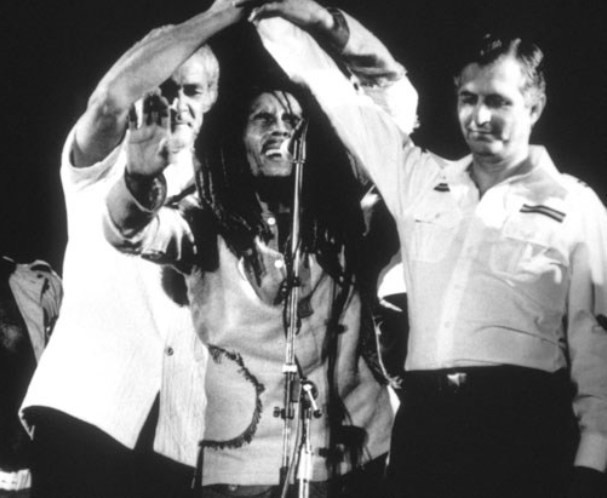
Doom-saying, despair, negativity and futility were not in Marley’s repertoire: “Why not help one another on the way? Make things much easier,” he sang. He also backed up the message in the music with action, as in 1978, when he was called out of exile by Jamaican authorities and asked to return home to Kingston, to join the effort to help quell escalating violence there. At the One Love Peace concert, Marley called opposing party leaders Michael Manley and Edward Seaga to the stage and raised their hands in a show of unity.
Taking his cues from the messaging in the records of Curtis Mayfield and the Impressions, the teachings of Black Nationalist Marcus Garvey (a Rastafari prophet), and with devotion to Ethiopian emperor Haile Selassie whom he believed to be the incarnation of Jah or God, Marley, alongside Bunny Livingston and Peter Tosh, brought reggae music to the world as the Wailers. Their songs provided not only temporary relief from fear, loneliness, isolation and other human conditions, they were also stepping stones toward solutions to world war, poverty, famine, and all forms of human rights violations. A short life with maximum impact, Bob Marley died of cancer in 1981 at the age of 36; his eulogy was delivered by Prime Minster Seaga.
February 4 is the birthday of Rosa Parks, the civil rights activist remembered for refusing to move to the back of the bus: The Montgomery Bus Boycott, in the name of the desegregating public transit, was organized immediately following her arrest on December 1, 1955.
Born Rosa Louise McCauley in Tuskegee, Alabama in 1913, Parks was a student of non-violent protest, an active member of her local chapter of the NAACP in Montgomery and a great admirer of both Dr. King and Malcolm X; her refusal to move on the bus that day was not part of any kind of group action or occupation—she held her seat on her own steam. And yet far from receiving any heroine’s awards, Parks paid the price for asserting her right to ride: In the immediate aftermath of the desegregation effort, she could no longer find work in Montgomery. She and her husband Raymond moved north, eventually settling in Detroit where she worked the better part of her life as a secretary for US Representative John Conyers.
Parks would one day receive the highest honors in the land– from the NAACP’s Spingarn Medal (Harry Belafonte was honored in 2013), to the Presidential Medal of Freedom (awarded to her by President Bill Clinton) and the Congressional Gold Medal. And if you dared to mess with the Mother of the Modern Day Civil Rights Movement and her legacy in a movie or a song, look out: Parks was known for slapping down artists with legal actions and launching her own boycotts against them. But there was one song that met Ms. Parks’ high standards: “Sister Rosa,” a tribute to her by New Orleanians the Neville Brothers, appeared on their 1989 album, Yellow Moon. Produced by Daniel Lanois, and accompanied by The Dirty Dozen Brass Band and Brian Eno for the sessions, Yellow Moon is an exceptional record, even by the Nevilles’ own high standard: Produced by Daniel Lanois, the band transforms two Bob Dylan songs (“With God On Our Side,” “The Ballad of Hollis Brown”), the Carter Family classic “Will the Circle be Unbroken,” Sam Cooke’s civil rights anthem, “A Change is Gonna Come,” and Link Wray’s “Fire and Brimstone” (title self-explanatory, taken from the guitarist’s obscure and brilliant 1971 album). Standing alongside the Neville Brothers’ bayou-fired originals, “Sister Rosa” is their attempt at rap.
Parks passed in 2005, though matters of her personal estate have not been resolved and her detailed personal archive has not yet found a permanent home. She would’ve been 101 this year. For more information on Rosa Parks, visit the Rosa and Raymond Parks Institute.
Today is the birthday of the great R&B singer, performer and songwriter, Etta James. Californian by birth, Jamesetta Hawkins entered this world on January 25, 1938, the child of a wayward mother and a father she liked to say was the pool player, Minnesota Fats (her belief was never exactly disproved). Shipped off to live with relatives who could better care for her in San Francisco’s Fillmore District (“The Harlem of the West”), she was discovered and rechristened Etta James by Greek-American Johnny Otis. Both Otis and James created identities as specifically California blues artists that they grew into international followings. Together they cut “Roll With Me, Henry” (an answer song to Hank Ballard’s “Work With Me, Annie”) and a few more sides before she left Modern Records for her ‘60s tenure with the Chess brothers in Chicago.
Known for her hits “At Last,” “Tell Mama,” “Wang Dang Doodle” and “I’d Rather Go Blind” among many other greats, she was an inspiration to drag queens (the disco artist Sylvester learned how to party in her apartment), rock’n’rollers (most famously Janis Joplin) and anyone with a pair of ears. Etta herself was at one time inspired by the charismatic speaking of Malcolm X; she joined the Black Muslims, as a way to get clean from drugs (it was a battle she waged for the better part of her life). As Jamesetta X, she attended Temple 15 in Atlanta where Louis Farrakhan was minister. ”I became an honorable Elijah Muhammad Muslim…No more slave name.” She believes her example may’ve had some influence on her friend Cassius Clay turning toward the organization, though in her case, the faith didn’t stick (she lived to tell these stories and more in her autobiography, A Rage to Survive). Often sidelined by trouble, she resurfaced in the late ’80s after appearing in the Chuck Berry tribute film, Hail, Hail Rock’n’Roll, to largely resume her career and thrive. She received awards from all quarters, from the Blues Foundation, Grammy, and the Rock and Roll Hall of Fame to the Rockabilly Hall of Fame. She also ultimately got to grips with her addictions. First Lady of the Blues, James passed away a few days shy of her 74th birthday in January of 2012. We miss you Etta James: The blues just ain’t the same without you.
Above, “I’d Rather Go Blind” was written by Ellington Jordan and James, and is among her most beloved recordings. Below, Alicia Keys and Bonnie Raitt paid tribute to James at the 2012 Grammy Awards. Keys was also born on January 25, as was the pre-war Tennessee bluesman, Sleepy John Estes.
Read more about Etta James and Alicia Keys in Keep on Pushing
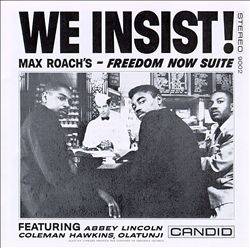
Good Morning, Happy New Year, and Happy Birthday to the Emancipation Proclamation, 151 years old today. Back in ’63, when the document intended to free all slaves was just a spry 100-year-old memory, We Insist! Max Roach’s Freedom Now Suite, was conceived as a performance piece to celebrate that centennial. Freedom Now, as it is more commonly known, is credited for fusing the politics of black liberation with the sound of freedom, much the way Sonny Rollins and hisFreedom Suite of 1958 was the first experiment in liberation sound.
Max Roach was born in rural North Carolina for the record on January 10, 1924 (though by his family’s recollection it was the January 8) and raised in Bedford-Stuyvesant, Brooklyn. But Roach was not only an innovative drummer who revolutionized jazz rhythms, he was actively engaged as a civil rights advocate, and he spoke and performed frequently for the cause. Roach’s epic recorded suite, with vocals by his then-wife Abbey Lincoln (with Coleman Hawkins on sax, Olatunji on congas and lyrics by Oscar Brown Jr.) sounds as radical as the ’60s revolution in words and sound it helped to launch.
The cover art, rendered in bold black and white, was groundbreaking graphically and imagery-wise: Its depiction of three African American men at a lunch counter, a white waiter standing by, is of course a reference to the sit-in on February 1, 1960 at a Greensboro, North Carolina Woolworth’s store that became a pivotal action in the non-violent fight for civil rights. But inside the cardboard sleeve, the vinyl grooves were an assault on the senses, capturing as they did the sound of exploitation, degradation, and ultimately, freedom. A sonically and politically strong statement, the Freedom Now Suite is a cornerstone recording in the history of contemporary black liberation music and remains a challenging, invigorating, and inspiring listen.
Making a link between the oppression of negroes in the US to blacks throughout the world, Roach and other politically motivated American artists like Harry Belafonte and Nina Simone sought to parallel the civil rights movement in the US with the unfolding liberation of Kenya, Ghana, Congo, and Algeria. Dubbed the Year of Africa, 1960 held hope for the continent for independence from France, Britain, and Belgium and the promise that human rights, dignity, and economic health would be restored throughout the land. Fifty-four years later, the people here and there continue the fight for human rights, and the chance to be emancipated from the conditions of poverty, ill-health, environmental crisis, and violence that defines both our lands, while Freedom NowSuite still pounds out the sound of impending liberation.
The following clip depicts black power couple Max Roach and Abbey Lincoln with their band (Clifford Jordan, tenor sax; Coleridge Perkinson, piano; Eddie Khan, bass) performing the suite’s “Triptych (Prayer/Protest/Peace)” on Belgian television in 1964. Roach passed in 2007, though in his lifetime he he’d been a recipient of the USA’s MacArthur genius award, a commandeur in France’s Ordre des Artes et les Lettres, and a RIAA (Grammy) honoree. Read more on both Rollins, Roach, and their respective Freedom Suites in Keep on Pushing.

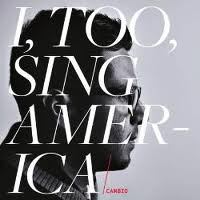 Cambio’s album title, I, Too, Sing America caught my eye for being named after a Langston Hughes poem (his answer to Walt Whitman’s work, “I Hear America Singing”). Cambio’s music caught my ear, too, thanks to a broadcast by Ignacio Palmieri on KPOO San Francisco about a year ago. With allusions to illusions, references to referendums, and tracks built on layers upon sound bites, scratch noises, and clips of speeches, Cambio’s point of view is progressive to the max, and that powerful voice is at the center of the mix.




 Denise Sullivan