In his life, Adam Yauch was known to hip hop and rock fans as MCA of the Beastie Boys; among the three, he was the Spiritual One. In commemoration of the one-year anniversary of his passing on May 4, 2012, Palmetto Playground in Brooklyn Heights will today and forevermore be renamed Adam Yauch Park.
As a member of the Beastie Boys, the Brooklyn native was known for furthering hip hop music as an innovator (the Beasties album Paul’s Boutique brought new depth to their music, as well as to hip hop production in general) and to its worldwide reputation as a New York City invention. As an activist, Yauch established the Milarepa Fund and staged the Tibetan Freedom Concert benefits. His involvement in the Free Tibet cause introduced the plight of nation as well as its form of Buddhism to a swath of hip hop and rock fans, many of whom had their lives changed by the knowledge.
Yauch also had deep ties to world cinema and documentary filmmaking. His production and distribution company, Oscilloscope Laboratories, produced Flow: For the Love of Water, concerning the right to water, The Garden about the imperiled South Central Farm, If A Tree Falls: The Story of The Earth Liberation Front and Youssou N’Dour: I Bring What I Love, among other docs and features.
Adam Yauch Park will provide basketball courts, a community garden, a dog run and open space, among other amenities, to the residents of Brooklyn Heights. It is an ideal local tribute to a world citizen and extremely humble rapper.
Cambio’s album title, I, Too, Sing America caught my eye for being named after a Langston Hughes poem(his answer to Walt Whitman’s work, “I Hear America Singing”). Cambio’s music caught my ear, too, thanks to his talk with Ignacio Palmieri on KPOO last week. With allusions to illusions, references to referendums, and tracks built on layers upon sound bites, scratch noises, and clips of speeches, Cambio’s point of view is progressive to the max, and that powerful voice is at the center of the mix.
Californian by birth, Latino by descent, Cambio is from Watsonville while belonging to Quilombo Arte, the international collective of artists, writers and musicians spearheaded by Mexico’s Bocafloja, committed to breaking down barriers and to emancipation for all people.
As a Latino influenced by hip hop, a young man in love with basketball and a speaker of “broken Spanish,” Cambio described himself as “having issues within his own community.” It was through becoming educated and learning the stories of colonization that he began to seek and find his place in the world as an artist. Beginning to record and perform locally, it was by chance that Bocafloja heard Cambio’s recordings and reached out to him. Though he records in English, Cambio has since found an audience for his music in Mexico and throughout Latin America.
An earlier album, Or Does It Explode?, also has a title borrowed from a Hughes poem (“A Dream Deferred”); a newer project, Underground Railroad, of course refers to the network built from slavery to freedom. History, poetry, social movement and music are among the themes in Cambio’s work: One minute he’ll borrow from Malcolm X, Fred Hampton or Che Guevara, the next from Nina Simone or Bob Dylan. Here’s “Eyes Wander,” featuring Favi and DJ Ethos.
There is so much to like about Cambio, so much more to learn and know, but the music speaks volumes on its own. Listen for yourself on his Bandcamp page. You may also hear the archived broadcast (scroll down) of the show I heard. I encourage you to listen and support cambio: Positive hip hop is marginalized and Cambio’s is a voice that if given a proper hearing could resound all over this land. He, too, sings America.
The following clip features the voice of Langston Hughes reading from the poem that started it all.
Chuck D and Tjinder Singh consistently stick out their necks to make music that matters. Here are their summer jams: Two that will help keep cool, the old school/soul school.
“I Shall Not Be Moved” from the new Public Enemy album, Most of My Heroes Still Don’t Appear on No Stamp
and “Milkin’ It” featuring In Light of Aquarius, from the new Cornershop album, Urban Turban
Today marked 20 years since the LA uprising of 1992. Ignited by the acquittal of the four police officers that had brutally beaten motorist Rodney King, the riot was not surprising given the history of police brutality and misconduct in the under-served community. South Central Los Angeles had been under pressure for at least four decades at the time of the six-day riot: Segregation, lack of services, and poor relations between residents and the law were the usual elements that conspired to combust in urban unrest.
Four years before, the matters of racial profiling, gang violence and more were brought to the world’s attention when in 1988, N.W.A. delivered Straight Outta Compton, a collection of raps concerning life on the street there. Broadcasting their tales of hard and violent times in South Los Angeles, the group caught the attention of the FBI, which in short order made investigative efforts toward shutting them down. Records were pulled from shelves and stickered with warning labels, though eventually an entire industry grew from similarly styled graphic tales of survival fights and criminal scenarios. Ice-T’s sometimes cautionary crime-rapping tales were also associated with the birth of the west coast gangsta boom and he caught his share of resistance too. As it turned out, there was a gigantic market for this reality-art, and as the insurgent sound of N.W.A. went on to define the early era of gangsta rap, the group’s tussles with the law began to echo the lifestyles described in their songs. Here is N.W.A.’s least inflammatory rap, wrapped around the track, “Express Yourself” by Charles Wright & the Watts 103rd St. Rhythm Band:
N.W.A. and gangsta rap would forever alter hip hop. The music’s aims remain embroiled in controversy and even conspiracy theory, yet it is undeniably a moneymaker. In Keep on Pushing, I attempt to untie some of the threads that run through the art of hip hop, commerce, and the dilemma posed by gangsta rap as part of a larger investigation. Shining a light in the corners of music history where the sounds and singers converge with law enforcement, and where incendiary art confronts the force of the market, is part of a larger unfolding exploring the tradition of songs calling for change. I specifically included the music of the late ‘80s Los Angeles in the text to illustrate how hip hop broadcast the news from America’s urban centers in a way that the mainstream media was not able to manage. Hip hop, including the earliest examples of gangsta rap, is a demonstration that there are some songs that go beyond simple entertainment or artistic expression; rather, they have the potential to inspire, record otherwise unwritten histories, deliver the news, and give voice to those who may otherwise go unheard.
“Why get mad at the brother bringing the news? Get mad at the person making it happen,” said Tupac Shakur in the early ‘90s. Anyone who knew hip hop or the conditions in South Central at the time would not have been surprised to hear there was a riot going on in 1992; an uprising was inevitable given the conditions. N.W.A. were simply reporters, the eyes and ears, that brought the noise from Compton to the world. They were not the first, nor will they be the last to bring their experience from South Central to a wider audience through a song.
In the 1920s till the 1950s, Central Avenue was the hub of the LA R&B and jazz scenes, springing such giants as Lionel Hampton and Johnny Otis, Eric Dolphy and Charles Mingus. These were artists whose commitment to music and the fight for racial equality extended beyond entertainment. As a one-time member of Hampton’s band, Central Ave. regular, avant garde piano stylist Horace Tapscott founded the Pan Afrikan People’s Arkestra in 1961. A vocal opponent of racism and advocate for social change, in the ‘60s, Tapscott worked with young artists in coffeehouses and community centers of Watts, the creative center for South LA’s artists and its progressive politics in that decade. Today the spirit of community action and harmony through art lives in Leimert Park. Immediately following the ’92 uprising, some of the area’s visionary citizens banded together to create a safe haven for the preservation of jazz, poetry, theater and visual arts, providing community space for the still under-served and post-riot, imperiled community. The independent film, Leimert Park documents the transition and the extraordinary rebirth of arts and culture in South LA (the name currently in rotation for the area formerly known as South Central, as in South of Central Ave.) since 1992. Here’s a clip from the film, featuring the Pan Afrikan People’s Arkestra, with vocalist Dwight Trible. The group celebrated its 50th anniversary of being last year with a series of concerts.
And so I conclude this entry with a thank you to the artists and advocates, the poets, writers, filmmakers, dancers, actors and musicians of South Los Angeles, for documenting your place, your time and your lives—for extending your art and your hearts—to the world. I truly hope that this April 29, 20 years on, was a good day in the neighborhood.
The story of 15-year-old Emmett Till of Chicago, murdered while on summer vacation in Money, Mississippi, was among the events in the mid-‘50s that mobilized the Civil Rights Movement; the tragedy was chronicled by Bob Dylan in one of his earliest songs. This clip contains a bit of background as well as the audio of the song which tells the story.
Oddly, I had long been holding tickets to attend a staged reading this week of Ifa Bayeza’s play, The Ballad of Emmett Till, in which the scene above with Mose Wright is recreated, as is mother Mamie Till’s testimony. The script was beautifully written and the acting superb, especially by Lorenz Arnell who played Till. But I had a difficult time sitting through the show, in light of the recent events in the Sunshine State, and the information that continues to surface following the death of 17-year-old Trayvon Martin.
Today, as people gather in Union Square in New York City to protest the racially motivated killing of the young man in Sanford, Florida on February 26, his assailant has not yet been arrested or charged. The rally is intended not only to shine a light on injustice—Martin’s murder was clearly a hate crime and needs to be treated with the kind of seriousness that an offense like that demands—but a plea to end the practice of racial profiling.
It’s been fifty years since Dylan sang his song about Emmett Till and it is unthinkable that it should have to be reprised as a mourning song anymore, except to be used as a history lesson. I encourage people unfamiliar with the Trayvon Martin case to read up on it and to listen to Dylan’s song. I hope that all of us will think of Martin and his family, and think of Emmett Till and his kin, and of all the Trayvon Martins and would-be Emmett Tills out there. And if there’s a freedom singer in the town square, maybe he or she will sing these verses loud, so everyone can hear them, all over this land, once and for all.
If you can’t speak out against this kind of thing, a crime that’s so unjust
Your eyes are filled with dead men’s dirt, your mind is filled with dust…
…But if all us folks that thinks alike, if we gave all we could give
We could make this great land of ours a greater place to live.
Read more on “The Death of Emmett Till” in Keep on Pushing
Rapper Chuck D brought the noise, the love and his ministry of music on Sunday to the folks who need it most: The residents of LA’s Skid Row, the largest community of homeless people in the USA.
Chuck D organized Operation: Skid Row with LA CAN (Community Action Network) which provides homes for the homeless and with whom he collaborated on the new book, Freedom Now, concerning the human right to housing. He brought Public Enemy (Flavor Flav, Professor Griff) along to the show which also featured the old school talent of Brother J of X-Clan, Kid Frost, Yo-Yo and Egyptian Lover of “Egypt, Egypt” fame, as well as Money B and Korrupt (read the full report from the LA Times).
“When America has a recession, black America has a depression. When America hits depression, then you have a group of people based on their visual characteristics who are in total desperation,” Chuck D told the Ventura County Reporter last week, though details about the concert were kept vague until the last minute, to keep the focus on homelessness and to discourage gawkers and overzealous fans.
The Skid Row neighborhood is described as having the largest “stable” population of homeless people—approximately 4,000— in the US, though in practical terms, the area is anything but stable: It is under-served, its residents for the most part are unheard, and it exists as a world largely invisible to the greater Angeleno and American population. Filmgoers caught a glimpse of the Hollywood version of Skid Row in the 2009 film, The Soloist, starring Jamie Foxx and Robert Downey, Jr, based on the true story of LA Times reporter Steve Lopez and his relationship with a homeless musician, Nathanial Ayers. At the beginning of 2011, Pulitizer Prize-winning journalist Patt Morrison of KPCC broadcast a two-part series on the area in which she spoke to residents, some of them belonging to families spanning three generations there, as well to law enforcement and emergency and social service personnel who serve the neighborhood. More recently, eyes have been on Skid Row in relation to where its concerns intersect with the Occupy LA movement.
I can think of no better way to honor the work of Dr. Martin Luther King, Jr. on his actual birthdate than by shining some light on the plight of our poorest—the bottom one percent—and making the effort to extend a hand to them. “Feed the people, their minds, body and souls, and hopefully attract attention to make this invisible situation visible,” says Chuck D, now celebrating 25 years since the release of Public Enemy’s Yo! Bum Rush the Show. I have a feeling this is not the last we’ll be hearing from him or from hip hop on the matter of Skid Row.
More on Chuck D, Public Enemy and hip hop consciousness in Keep on Pushing.
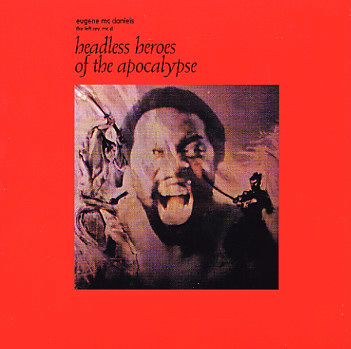
The music of Gene McDaniels was a big inspiration to me before, during and after the writing of Keep on Pushing: In many ways he and his largely untold story was the motivation to write a book that provides not only an overview of intersections between music and social and political movement, but takes a close look at some of the artists/activists who were undermined by a climate and culture ultimately unequipped to support their visionary work. And yet, rare groove chasers know well the name Eugene McDaniels; his 1971 album for Atlantic, Headless Heroes of the Apocalypse is a standard-bearer for psychedelic soul/funk/jazz rhythms and is borrowed frequently for its samples (most famously by the Beastie Boys in “Get It Together”). The album is a fierce statement of black pride, anger, and frustration, equally powered by a super-soul fever, peace, and ultimately love. It’s a showcase for McDaniels breadth as a composer, from folky singer-songwriter styles (“Susan Jane”) to proto-rap (“Supermarket Blues”); McDaniels’s strongest words are demonstrations of righteous indignation, though he also offers spiritual ideas.
The Lord is black, his mood is in the rain,
The people have called he’s coming to make corrections
You can hear his voice blowin’ in the wind
McDaniels is the composer of “Compared to What,” the 1969 jazz-soul wartime protest made famous by Les McCann and Eddie Harris: “Possession is the motivation that’s hangin’ up the goddam nation.” McDaniels was born in Kansas City in 1935, studied at the Omaha Conservatory of Music, and graduated from Omaha University. After forming a band in the 1950s, he signed with Liberty Records and hit in 1961 with “A Hundred Pounds of Clay,” followed by five more Top 40 hits, including “Tower of Strength.” All in all, McDaniels had six Top 40 records in 1961 and 1962 before he turned his focus to writing (he worked closely with Roberta Flack and ultimately wrote her hit “Feel Like Making Love,” among others). By the time he attempted to launch his solo career as a singing and songwriting artist, McDaniels had had the time to chew on what he wanted to say and had an intensely unique way of saying it. He was fearless with his melodies and in his verses. The instrumentation was a wild combination of folk-funk: electric and acoustic bass rubbed against guitar, drums, and piano, and they all combined with lyrics that strike chords of deep recognition. With the fascist-fighting folker’s impeccable style of oration, he injects the song with theatrical and emotional soul power. As he sings, he evokes images of a man increasingly incensed and so confused by injustice that he’s stretched to the point of losing his mind. His elegy for the red man, “The Parasite (For Buffy),” dedicated to Sainte-Marie, is a shining example of his dramaturgical song style that places his subjects in a social, political and psychological context. But McDaniels’s revolution of the mind is a peaceful one; though he paints pictures of hell and all hell breaking loose, his narrator does not advocate use of violence as a solution. Rather, violence is portrayed as the problem. “Supermarket Blues” describes a situation in which a man demands his money back for a can of peas marked as pineapple and ends up with a beating. Somehow he even finds a way to inject dark humor into the mess: “I wish I’d stayed home and got high instead of coming into the street and having this awful fight.” Whatever darkness he’s describing, McDaniels’s point of view remains poised and unique; his higher consciousness and keep-on-pushing spirit bleeds between the notes of each slyly rendered gospel-laced track. Years later, the white-rapping, Tibetan-Freedom-loving Beastie Boys would turn to McDaniels, nicknamed the Left Rev McD, for a sample, as would the Afro-centric, conscious hip-hoppers, A Tribe Called Quest. Last year, John Legend and the Roots brought back a version of “Compared to What.”
During the course of the five years I was writing and researching Keep on Pushing, I attempted to reach McDaniels a number of times, hoping he would answer some of my questions about his early ’70s work and the mysterious stories of conspiracy and suppression that surround it, though my requests remained unanswered. In the book, I attempted to unravel his story the best I could, the facts based on bits and pieces from pre-existing interviews, including information passed on by Pat Thomas who reissued Headless Heroes of the Apocalypse and its predecessor, The Outlaw. With little information available to me, in the end, I came to my own conclusions about McDaniels and his exceptional work, the kind of music that reaches inside, touches the soul, and alters it. The Left Rev. McD made a difference, and mercifully the music remains, though his presence will be missed: Eugene McDaniels made it real—no comparison.

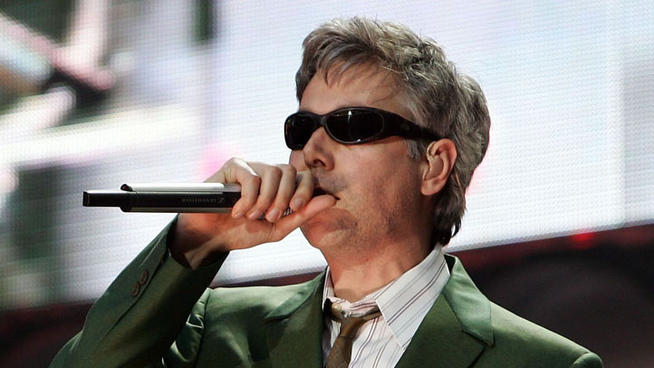
 Adam Yauch Park will provide basketball courts, a community garden, a dog run and open space, among other amenities, to the residents of Brooklyn Heights. It is an ideal local tribute to a world citizen and extremely humble rapper.


 Denise Sullivan