
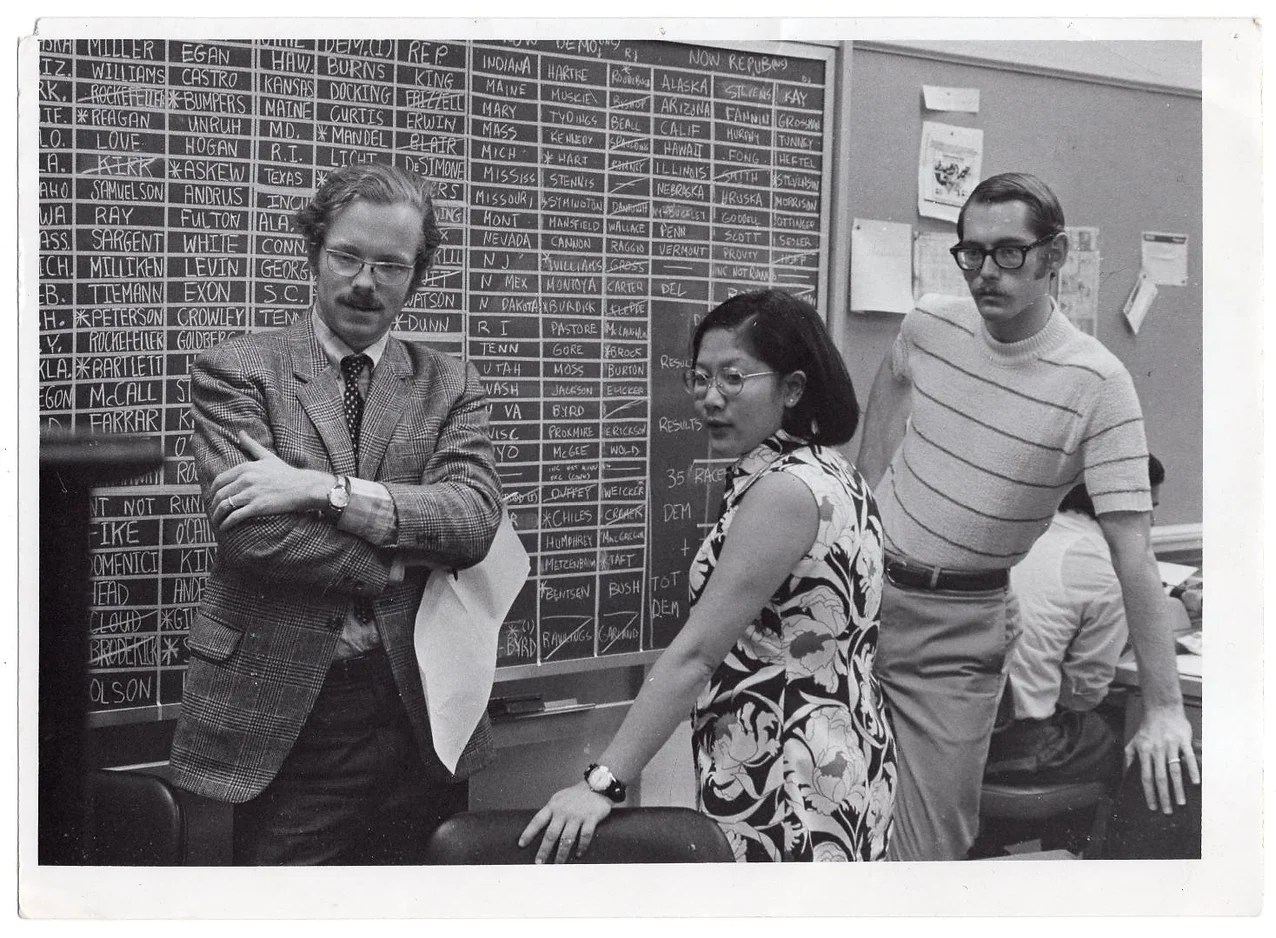
“Rally” is a film about San Francisco political figure, Rose Pak. Her life was extraordinary and the role she has played in our city’s development since the days of Moscone and Milk is perhaps not fully understood or acknowledged. Rooth Tang’s excellent film, which I hope will reach a wider release this year, debuted at the San Francisco Film Festival in April. The photograph above pictures Pak in the ’70s when she was the first Asian American female reporter hired by the San Francisco Chronicle. Tang, an Angeleno, traveled to the center of Pak’s story in the way that perhaps only a Chinatown and San Francisco outsider could, but he had plenty of local insider assistance. As personal, political and documentaries of time and place go, Tang’s film is essential.
Kasey Rios is one of those freethinking and spirited San Franciscans that is the embodiment of our sanctuary city at its best. Serving residents of the Tenderloin and SoMa with a vision of greener and self-sustaining neighborhoods and fair wages for all seems a reasonable part of the solution toward improving our civic direction — a plan that includes all people, not just the wealthiest ones. Rios makes a case for less law enforcement and authority and more autonomy for residents, while paying folks to beautify and clean public spaces one neighborhood at a time. It’s a bottom up rather than a top down system and it is working in places like Mexico City and Paris, so why not here? Building the workforce is key: But such ideas can’t take if workers cannot afford to live here and we perpetuate a cycle of displacement and profits over people.
Like the city itself, the local media continues to experience loss, change and reorganization: Like everywhere, there has been a real drain of alternative news outlets here in recent years, and a co-opting and misunderstanding of what journalism is and can be. But there remains hope: Independent news organizations and reporting are the present and future of the form. As a new contributor to Bay City News Foundation, a local wire service and network of regional news outlets including Local News Matters, I’m happy to continue to do my work delivering under-reported stories to a wider public, as well as through the monthly live stream project, SFLives/Live Talks.
This Sunday, our guest is Malia Spanyol, a small business owner with an eye on keeping safe spaces alive for women and queer folks in the Mission District, a neighborhood that remains in persistent risk of over-gentrification. Next month on June 11, we will be in discussion with the aforementioned Kasey Rios at 10 am. SFLives livestreams on the Bird and Becket Books channel. Please join us and keep your eyes open for more on-the-ground coverage from San Francisco — from myself and other dedicated reporters from our city. We’re still here.
Filed under: Arts and Culture, gentrification, San Francisco News, Women's issues, San Francisco
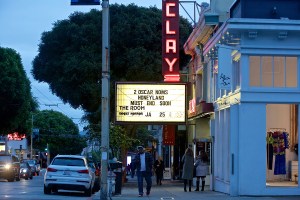
 Once in a great while, a film score really grabs me from the inside out: It’s not just the beauty of the suite or piece of music alone, but when the sounds are perfectly matched with the mood, look, and feel of the story being told on screen and the elements combine to make one extraordinary whole, the inextricable links between music and movie become entwined with the soul, as if we’ve heard these strains somewhere before. The Last Black Man in San Francisco, directed by Joe Talbot with music by Emile Mosseri, is the ideal marriage of sound and image for The City right now. It’s melancholy but not maudlin; it’s shimmering but not overwhelmingly bright and it surprises with its subtlety. I have much to say about the film, and its operatic dimensions cut from indie cloth, but I’m not yet done formulating my thoughts (I’m a little stuck in the real life tragedy of it all). For those of us living here, thinking about the state of our city comes second to surviving it. Living in a place of such extreme, rapid and frankly terrifying gentrification is a job in itself; for those of us born here, we live everyday with the specter of something we love being taken from us — again, and again — rendering our home unrecognizable. The grief is ongoing and it feels like it will never end. It’s a daily discipline simply to get up and out of bed to ready one’s self for the day ahead: Who or what will we lose next? At least now we have a soundtrack to accompany the loss.
 At this time, I wish to personally remember the San Francisco artist Eugene E. White for a couple of reasons: He passed on Friday afternoon February 8, in the hours I was speaking to Mays at the African American Art & Culture Complex [AAACC]. He was a dedicated and groundbreaking painter. For over 60 years, Mr. White ran his gallery, Kujiona: It was an unprecedented achievement for an independently-owned, Afrocentric gallery. In 2013, Mr. White was honored with a group show at the AAACC; it was the rare occasion that he chose to publicly show his work. I can’t stress enough how unique Mr. White was, as a person and as an artist. This
  am I up in the middle of the night, though if I’m working on something strong, it’s been known to happen. What I write is not always for publication and it’s not always for you to know, though occasionally, I will publish work that is outside of the square boxes that keep writers locked in and gatekeepers busy doing the ticking. That box labels me a journalist, a columnist, a music critic, an arts reporter. And yes, I know it’s so confusing but I also review books and films and write extensive profiles of people. Can you imagine that I also have dared to write about politics? Please don’t fret, it’s usually just personal and local though occasionally it reaches out into the world. Crazy, I know! Here’s the thing and you might not be ready for it, but heck, I’m about to tell you anyway: I write writings of all kinds, occasionally sacred and other times sordid (as are most matters for hire, which means I get paid for those pieces). Sometimes I volunteer my time (the pros call it pro bono work. I call it writing). What I’m getting at is the list of themes and assignments is long and frankly, a little unbelievable so I’ll spare you the details, partly because so many of my subjects have crossed over to the other side: They can’t testify for themselves, but among the living, I can tell you that most all the customers report satisfaction. Generally, I specialize in “difficult to categorize” “unwieldy” and “marginal” subjects, though there is one kind of writing to which I lay no claim though have been accused of lately and that’s poetry. Actually some “friends” told me the work, published here and there and most recently in a chapbook, The Rakish Tam, could be called such a thing. I disagree with them. I am a writer, plain and simple. Writers write. So go ahead and call me what you like, just know that square boxes and categorization are not for me. If you care to learn any more about what all my fussing is about, you can send
 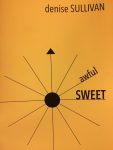 you can decide for yourself. Or not. Though while we’re here: Limited edition reprints of my first chapbook, Awful Sweet, are also available at the same cut-rate. And with that, I thank you for leaving your preconceived ideas about writing in the 20th Century, and as ever, for reading: Because while I’m happy to give away everything on these pages for free for use in classrooms and homes throughout the world, I’m not as happy to post everything I write on the worldwide web for no compensation and a whole lotta unsolicited feedback. Which is why you won’t find anything remotely literary here. Not at all.

 at the water’s edge. Born on an avenue named after the sea, the story goes my parents met at San Francisco’s public beach and I took some of my earliest steps there. Of my not-so-many teenage accomplishments, I took most pride in holding what I think was the land speed record of 30 minutes by Mustang, from high school parking lot to Sunny Cove in Santa Cruz. As an adult, I’ve lived life either blocks away or on a bus line to the water. I’m comfortable wearing the scars of a weather-worn Californian who knows her Coast, from Del Norte to Coronado.
 Denise Sullivan