

Five songs into their set at Chicago’s New Nazareth Church, the Staple Singers get down to the real, and the reason, they called their gospel meeting on April 9, 1965.
“A few days ago freedom marchers marched on Selma to Montgomery, Alabama,” says Roebuck “Pops” Staples. “And from that march, words were revealed and a song was composed. And we wrote a song about the freedom marchers and we call it the ‘Freedom Highway.’ And we dedicate this number to all the freedom marchers, and it goes something like this.”
Tearing into their new song as if it was a longtime traditional favorite, the Staples evoke the energy and resistance of the historic freedom trail for voting rights, right there at their South Side parish. Though few could’ve predicted or believed that the messages of the Martin Luther King, Jr.-led movement would still be necessary or relevant 50 years on, this timeless performance at the height of the fight has been mercifully preserved, restored and reissued on Legacy’s new Freedom Highway Complete—Recorded Live at Chicago’s New Nazareth Church, April 9, 1965, for all the world to once again bear witness and hear the beauty in a song.
The whole world is wondering what’s wrong with the United States
Yes, we want peace if it can be found
Marching freedom’s highway,
I’m not gonna turn around…
Stay on freedom’s highway until the day is done
Following an introduction from Pops encouraging folks to sing, clap, and shout amen, the group (accompanied by Al Duncan on drums and Phil Upchurch on bass) eases in parishioners with the familiar invocation, “When The Saints Go Marching In.” But they waste no time getting to the darker stuff, slipping in the Hank Williams tale of “The Funeral,” concerning the closing of the casket on a little curly-headed boy. The secular movement standard, “We Shall Overcome” is delivered easily enough, serving as the crowd-participatory number it was built to be, though in the Staples’ hands, all is holy. Their originals like “Freedom Highway” and “Tell Heaven,” and the arrangements of spirituals like “He’s All Right” strive to tear the roof off the chapel and touch greener pastures, delivering the listener from all earthly distraction. For gospel singers like the Staples family, “Jesus Is All” (one of the set’s previously unreleased tracks) and “Help Me Jesus” are not just proud declarations of their savior’s name, they are a way of life, a deep faith that does not ask its adherents to acquiesce in God’s presence; it puts the holy spirit in charge, so that the faithful may take action on the streets and in all matters of the everyday, fearlessly and free.
Church was where the gospel group first practiced its faith as family singers—Roebuck, Pervis, Cleotha, Yvonne and Mavis—in the late forties and early fifties, developing an acoustic folk-gospel style with a bluesy feeling, distinguished by soul-solid lead vocals by Mavis and piercing, bending guitar by “Pops.” They recorded for a number of labels including Vee-Jay (famous for releasing blues acts and later, the Beatles) where they had some early success with “Uncloudy Day,” (a song Bob Dylan recently called the “most mysterious thing” he’d ever heard). In later years they joined the Stax label where during the apex of soul music, they enjoyed Top 40 success with funk-based, gospel-powered hits like “Respect Yourself” and “I’ll Take You There.” In between these distinct eras, the Staples were signed to Epic where their A&R man and producer Billy Sherrill (remembered mostly for his Nashville productions) assisted in the development of merging their sacred and soul sides. For the Freedom Highway session, he arranged the necessary equipment be brought to the church and recorded the service/rally. Mobile units were in their infancy at the time, but the project was not conceived as a “field” recording. Before release, the tracks were edited, telescoped, and worked to conform to studio and broadcast standards, purposefully leaving behind the churchy and ambient parts, though even with the tweaking, the set was a revelation. Becoming one of the era’s most beloved recordings, it was also long left out-of-print, only to become highly sought after (a 1991 Legacy reissue titled Freedom Highway is not the original recording, but rather a compilation).

Bolstered by the anticipation of the tracks becoming once again available digitally and on vinyl, the new and expanded edition produced by Steve Berkowitz and Nedra Olds-Neal stands to surpass the original’s already relic-like status. By daring to return the tapes to their original form and to recreate the evening from front to back, Freedom Highway becomes all at once a historical document, a spirit-lifting gospel session, and a fist-raising call for freedom now. Accompanied by rock and soul historian Robert Gordon’s liner notes which ascertain the place of race in music and in the country then and now, the Staples brand of “message music” is spelled out for non-believers and anyone else in need of a nudge.
Leaping into faith-based music in times of uncertainty is natural; gospel survives on rock solid melodies and timeless messages of liberation which by design were created to subvert slavery and oppression. And while the marchers in Ferguson, New York and Oakland in recent months may not have exactly had the notes of “Freedom Highway” on their minds when they shut down roadways, its words were already written on their souls. Built to travel the distance, and as necessary as in the hour they were recorded, these songs performed 50 years ago (and some scored a hundred years before) are available to accompany movement, anytime, anywhere, there is a fight for voting rights, civil rights and human need. These songs’ messages are as urgent now as they were then, as is faith in the idea that the march will ultimately be won, mile by mile, hand in hand.
“Let’s say amen again,” says Pops Staples on the restored set’s recovered audio tracks. “Let’s keep on marchin’…Keep on marchin’ up freedom highway.”
(This review appeared originally in Blurt online, upon the release of the 50th anniversary edition of Freedom Highway)
Filed under: anti-war, Arts and Culture, Black Power,, Bob Dylan, Civil Rights, Folk, Freedom Now, Gospel, Protest Songs, Alabama, Anti-racism, Bloody Sunday, Folk gospel, freedom songs, Gospel, John Lewis, music, Selma, Selma50, Staple Singers
 am I up in the middle of the night, though if I’m working on something strong, it’s been known to happen. What I write is not always for publication and it’s not always for you to know, though occasionally, I will publish work that is outside of the square boxes that keep writers locked in and gatekeepers busy doing the ticking. That box labels me a journalist, a columnist, a music critic, an arts reporter. And yes, I know it’s so confusing but I also review books and films and write extensive profiles of people. Can you imagine that I also have dared to write about politics? Please don’t fret, it’s usually just personal and local though occasionally it reaches out into the world. Crazy, I know! Here’s the thing and you might not be ready for it, but heck, I’m about to tell you anyway: I write writings of all kinds, occasionally sacred and other times sordid (as are most matters for hire, which means I get paid for those pieces). Sometimes I volunteer my time (the pros call it pro bono work. I call it writing). What I’m getting at is the list of themes and assignments is long and frankly, a little unbelievable so I’ll spare you the details, partly because so many of my subjects have crossed over to the other side: They can’t testify for themselves, but among the living, I can tell you that most all the customers report satisfaction. Generally, I specialize in “difficult to categorize” “unwieldy” and “marginal” subjects, though there is one kind of writing to which I lay no claim though have been accused of lately and that’s poetry. Actually some “friends” told me the work, published here and there and most recently in a chapbook, The Rakish Tam, could be called such a thing. I disagree with them. I am a writer, plain and simple. Writers write. So go ahead and call me what you like, just know that square boxes and categorization are not for me. If you care to learn any more about what all my fussing is about, you can send
  you can decide for yourself. Or not. Though while we’re here: Limited edition reprints of my first chapbook, Awful Sweet, are also available at the same cut-rate. And with that, I thank you for leaving your preconceived ideas about writing in the 20th Century, and as ever, for reading: Because while I’m happy to give away everything on these pages for free for use in classrooms and homes throughout the world, I’m not as happy to post everything I write on the worldwide web for no compensation and a whole lotta unsolicited feedback. Which is why you won’t find anything remotely literary here. Not at all.
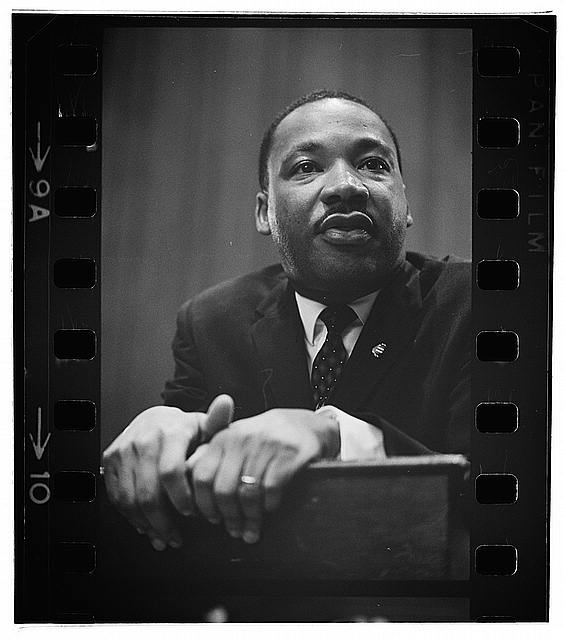
 February 4 is the birthday of Rosa Parks, the rebellious civil rights activist remembered most for refusing to move to the back of the bus: The Montgomery Bus Boycott, in the name of the desegregating public transit, was organized immediately following her arrest on December 1, 1955.
 Denise Sullivan