Denise Sullivan

Author, Arts & Cultural Reporter and Worker

The Complete Unknowns

Martin Luther King Jr., Joan Baez and Harry Belafonte

Joan Baez was a junior at Palo Alto High School when she first heard Martin Luther King, Jr. speak at a conference for young Quakers. She would go on to sing for the non-violent movements for civil rights, social, economic and racial justice and against the war in Vietnam.

“King was giving voice to my passionate and ill-articulated beliefs,” wrote Baez in her memoir. Her “exhilarating sense of ‘going somewhere’ with my pacifism” in the aftermath of that speech would lead her to join King on marches in the Jim Crow south and at the historic March on Washington.

If you don’t already know about Baez’s history as a lifelong activist, you certainly would not get it from a viewing of the ahistorical Bob Dylan biopic, A Complete Unknown, released in US theaters this Christmas.

Loosely based on Dylan’s arrival in New York City in 1961, the film covers the songwriter’s introduction to the Greenwich Village scene, his meetings with Woody Guthrie and Pete Seeger, and his intimate relationships with Baez and the fictional Sylvie Russo, a stand-in for his real life steady, Suze Rotolo.

“During the height of the civil rights era Bob wrote, among other songs, ‘The Lonesome Death of Hattie Carroll,’ ‘The Death of Emmett Till,’ [‘Only A Pawn In Their Game’] and of course, ‘Blowing in the Wind,’ which became a kind of anthem,” Rotolo wrote in her own memoir of the Village in the ‘60s. In the film, “Blowing in the Wind” is framed in his repertoire to be more like an annoyance or an albatross.
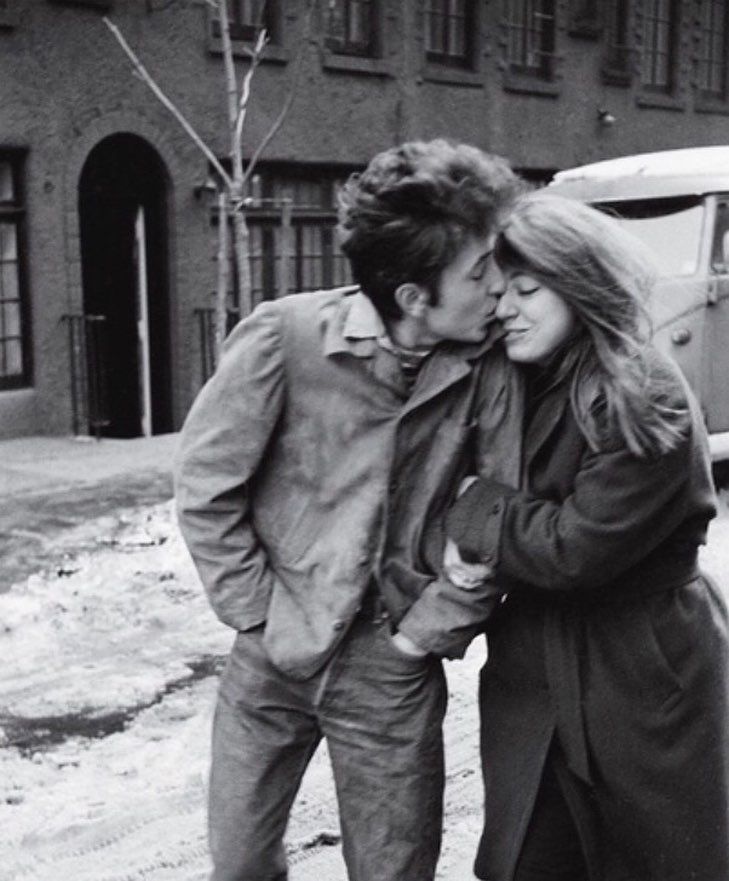
There’s a scene recreating Dylan and Rotolo’s meeting at a 1961 folk-a-thon at the Riverside Church, the historic hub of progressive gathering in New York City. And there is a brief moment when the Russo character explains to a befuddled Dylan that she works at the Congress for Racial Equality (CORE), organizing the Freedom Rides from North to South — in fact one of Rotolo’s jobs in the era.

Facts are also, that in 1963, Dylan walked off the all-important nationally broadcast The Ed Sullivan Show when he was asked not to play his song, “Talkin’ John Birch Society Blues.” For those unacquainted, the John Birch Society is a radical far right group and the song is a satire.

That not much is made of the realities of the causes and concerns that moved both Baez and Rotolo to become immersed in movement work and the folk scene is perhaps understandable: A Complete Unknown is after all, a version of a story of Dylan becoming Dylan. But the gaps in the story of Dylan’s own connections to civil rights and the songs he wrote in their favor are woefully understated in the film, as are his friendships with the people in his circle (where, for example, were the nods to Ramblin’ Jack Elliott? Phil Ochs? Odetta? Lead Belly, at least, appears in an 8×10 photograph). There are also no poets, comedians or jazz musicians in the film’s version of the Village, though they are among those who also contributed to it being America’s bohemian center of its time.

Nor are there any three dimensional Black artists or musicians depicted in the film. The one scene in which a Black musician has a speaking role was made out of whole cloth and is particularly egregious: The fictional bluesman, Jesse Moffette (portrayed by Big Bill Morganfield whose father in real life was blues legend Muddy Waters) is played as a drunken mess when he appears with Dylan on Seeger’s public television show, Rainbow Quest. That Rainbow Quest really existed and featured musicians Rev. Gary Davis, Mississippi John Hurt and Sonny Terry and Brownie McGee is undeniable. The inclusion of any one of those artists would’ve made an interesting, albeit fictional meeting between Black and white, established and next generation musicians. But the creation of a fictionalized and stereotypical bluesman is not only in poor taste, it was a missed opportunity to introduce new listeners to the musicians who influenced Dylan and generations of future folk, blues and rock musicians.

One full episode of Rainbow Quest was devoted to Dylan’s friend and contemporary, Len Chandler, another figure on the Village scene who was eliminated from the story told in A Complete Unknown. It was Chandler who drove Dylan on the back of his motorbike to deliver his first album to Guthrie in the hospital.

“We took out our guitars and played Woody songs,” said Chandler.

Chandler and Dylan hung out, traded songs, learned their trade and celebrated their song publications in folk journals, Broadside and Sing Out! And while Chandler spent considerably more time in the South fighting for the rights of Black Americans (like Baez, it was his calling), it’s significant that Dylan appeared shoulder to shoulder with both of them at the March on Washington (though the film makes a bungle of computer generated imagery to recreate his appearance there).

Considering what could’ve been is a fool’s game but I’ll play it anyway: Dylan’s first recording session was as a harmonica player on another one of his heroes records: Harry Belafonte’s “Midnight Special.” The often told story of Dylan throwing his harps in the trashcan afterward would’ve made a great cinematic moment. The inclusion of a civil rights giant would’ve again been a nice prompt for a young viewer to dig deeper into Belafonte’s role in American civil rights, music and Dylan’s own history.

Oh but there’s more: Dylan famously had a crush of the wanting to marry her kind on Mavis Staples. Here again, was another missed opportunity to demonstrate how the singer’s dreams listening to and playing music with his inspirers became his reality. Instead, there is a Black woman of intrigue in the film who Dylan dumps in short order after her appearance. We have no idea who she is or is supposed to be standing in for, but a little like the nameless “mistress” played by Angela Bassett in Masked in Anonymous, she is there to let us know the main dude is an equal opportunity romancer.

The studio players on Dylan’s recordings, Paul Griffin, Sam Lay, Bruce Langhorne, as well as his producer Tom Wilson, could all have been elevated to characters with even one or two-line speaking roles, if only to let the audience know these cats were not just extras to add color to the cast: These were seasoned professionals hand-picked for the records that transitioned Dylan from solo folky to serious, original artist.

And then there is the short shrift given to Dr. King, whose “I Have A Dream” speech Dylan and Chandler listened to in real time, on the day it was delivered.

“That’s what I remember from the speech, being behind another monument with Dylan and silencing ourselves, and sitting in amazement as we heard that wonderful speech unfold,” Chandler remembered. But the take on historic Black preaching in A Complete Unknown, comes in the form of a man in a fedora and trench coast on a soap box. Listed in the credits as “civil rights speaker,” the character is but a token symbol for the movement that reached its very apex during the era depicted in the film. The scenes at the Newport Folk Festival would take me another viewing to de/reconstruct but they suffer from similar missed opportunities to display Black excellence and inspiration (Lightnin’ Hopkins, Willie Dixon, Fannie Lou Hamer, for God’s sake).

What could’ve been a simple and effective portrait of young Dylan and the ways folk musicians, women, and Black Americans intersected with the Civil Rights Movement and helped to shape the counterculture and ideals that came to define the ’60s, is in the end, just another piece of product, a part of the Dylan Industrial Complex: The books for days, the several documentaries, a museum and archive, a brand of liquor, a Christmas album, ornaments, and a line of bobbleheads…these are but a fraction of the branded, approved, licensed and unlicensed materials on offer in his name. Why should I have wished that a biopic be anything more than a distraction, an entertainment?

In the end, the contributions to the Civil Rights Movement made by women and Black Americans are the real hidden figures and unknowns obscured in the Hollywood retelling of Dylan’s own early ‘60s story. As impenetrable as the “real Dylan” may be or seem to be, I left the film not thinking about him, but wanting to ask the folks living and passed over, how does it feel?

Filed under: anti-capitalist, Arts and Culture, Blues, Bob Dylan, Civil Rights, film, Folk, Greenwich Village, Poetry, Protest Songs, , , , , , , , , , , , , , ,

“We’re Not Going Back”

Now that it’s September and the clouds here in San Francisco have cleared, I have some news to share: A new publication – the slim volume pictured above is on a new press – and it was made not only in memory of a movement hero, but in support of voting rights for all.

The story of Len Chandler is one of a path taken by chance. Among the  countless singers, students and teachers from coast to coast who sat in, stood up and rode freedom’s highway for the voting rights of their fellow Americans in the Jim Crow South, Chandler had an extraordinary knack for topical songwriting and an unwavering dedication to racial justice. From his home in Akron, to the heart of the Greenwich Village folk scene, Chandler was introduced in short order to humorist Hugh Romney  aka Wavy Gravy, poets Bob Kaufman and Langston Hughes, and folksingers Dave Van Ronk and Bob Dylan. Swiftly recruited by Pete Seeger to join the singing organizers with the Student Nonviolent Coordinating Committee, he was sent to Arkansas to register voters.

“You have to take the lead from somewhere and there were only a few performers around who wrote songs, and of them, my favorite was Len Chandler,” said Dylan. Compiled from rare interviews with Chandler by the author, Denise Sullivan’s concise tribute, Shadow Dream Chaser of Rainbows, pays homage to an unsung folk hero and provides instruction and inspiration for artists and activists pushing for change in perilous times.

This project has been long in the making: It started nearly 20 years ago when I embarked on the research for Keep on Pushing. It was resurrected when I was invited by the Bob Dylan Center to contribute an essay to a proposed catalog, and it was completed with the creation of a small press, Lyon Editions. Your purchase of Len Chandler: Shadow Dream Chaser of Rainbows will not only support its makers, it will contribute toward supporting voting rights and poll watching organizers, specifically in Georgia.

Rest assured Chandler is missed this election season, but let’s vote in his memory and in the memory of Medgar Evers, Viola Liuzzo, James Chaney, Andrew Goodman, Michael Schwerner, Martin Luther King, Jr. and others who lost their lives in the name of civil rights. A vote for Kamala Harris will see to it that the John R. Lewis Voting Rights Advancement Act is passed, ending voter suppression in all its forms, once and for all.

Thank you to our friends at Bird and Beckett Books and Records for the proper launch on August 28 as we commemorated 61 years since the March on Washington for Jobs and Freedom, and one year to the day of the passing of Chandler. Full book talk and discussion here. Purchase books here. Thank you.

Filed under: anti-capitalist, anti-racist, anti-war, Arts and Culture, Black Power,, Bob Dylan, Book news, Books, Civil Rights, Dr. Martin Luther King Jr., Folk, Georgia, Harry Belafonte, income disparity, Keep On Pushing, racism, , , ,

Rest In Power, Len Chandler: Shadow Dream Chaser of Rainbows Died on August 28, 2023

images

As anyone with their eyes on the prize knows, the 60th anniversary of the historic March on Washington for Jobs and Freedom was on August 28, 2023.  Among those assembled to help Dr. King push forward his dream of racial harmony and economic justice was Len Chandler (often overlooked in the history of civil rights work), one of the voices in a trio that day which included Bob Dylan and Joan Baez (Chandler appears at about 17 minutes into the following clip, though the whole 25 minutes is worth your time). Unfortunately, I come here today with a heavy heart to belatedly report that Chandler died at home in Los Angeles, on August 28, 60 years to the day of the march.

It was a blessing to have interviewed Len on several occasions for the purpose of documenting his story. I was invited to the home he shared with his wife Olga James, to break bread with him, and to participate in several community functions and political gatherings where he was still singing for freedom in the 21st Century. My deepest condolences to all who loved him. I did not know him well, but his work has continued to move and motivate me, long after first making contact with him more than a decade ago.

It was hoped that Chandler and I would be visiting the Bob Dylan Center in Tulsa this year, to deliver a panel on singing, songwriting, racial justice and voting rights, to coincide with the publication of my essay commissioned by the Center on Chandler. But none of that was to be. Timing, as it’s said, is everything. And racism is still very much alive, very much afoot in America, 2023.

The following is a repost from my previous posts on Chandler

Chandler would march with Dr. King and travel throughout the South in the name of voter registration, informing rural Southerners of their polling rights, often at great risk to his own life. His poems were recognized by Langston Hughes, he wrote the folk standard “Green, Green Rocky Road” with poet Bob Kaufman, and recorded two albums for Columbia Records, but little is known about him or his life.  I sought out Chandler when I wrote Keep on Pushing, my text that tracks the origins and evolution of freedom music, and its roots in African American resistance and liberation movement.

Originally from Akron, Ohio, and studying on scholarship at Columbia in the ’50s, Chandler made his way to Greenwich Village folk music by accident: Lured to the sounds of Washington Square Park by the downtown youths he was mentoring, he easily fell into the scene with his natural ear for songwriting and his familiarity with the songs of Lead Belly, Big Bill Broonzy, and Woody Guthrie.  Following a performance at the popular Village coffeehouse, the Gaslight Cafe,  Chandler landed a contract to go to Detroit, writing and performing topical songs for local television. A few months later, when he returned to New York, the folk thing was in full swing:  Bob Dylan was the latest arrival to town and the pair started to trade ideas and songs.

“I hadn’t yet begun writing streams of songs like I would, but Len was, and everything around us looked absurd—there was a certain consciousness of madness at work,” wrote Dylan in his book Chronicles.  Chandler remembers it like this in Keep on Pushing:  “The first song I ever heard of Dylan’s was ‘Hey ho, Lead Belly, I just want to sing your name,’ stuff like that.”  Dylan used Chandler’s melody for his song, “The Death of Emmett Till.” “Len didn’t seem to mind,” Dylan wrote.

Chandler went on to record two albums for Columbia:  To Be a Man and The Loving People. He continued to work as a topical songwriter, a peace and civil rights advocate, and as a songwriting teacher; his tour of Pacific Rim bases with Donald Sutherland, Jane Fonda, Holly Near and Paul Mooney was documented in the Francine Parker film, FTA, a must-see for anyone interested in US history and anti-war efforts within military ranks. Catch a glimpse of Chandler at the end of this trailer for the film:

It was an extreme privilege (and I have since found out a rare opportunity) to meet one of the true unsung heroes of singing activism (as well as his wife Olga James, a pioneering performer in her own right), and have him tell his story to me. Though largely retired from performing, he remains well- informed on human rights, politics, and the arts and will step up and step out for civil rights. You can read a portion of our talks in Keep on Pushing, and someday I will post the complete unedited transcripts, though for now, enjoy the voice of Chandler from back in the day, when singing was a huge part of moving the movement forward.

Filed under: anti-capitalist, anti-racist, anti-war, Arts and Culture, Black Power,, California, Civil Rights, Folk, racism, ,

Bloody Sunday: Freedom Highway Revisited

Five songs into their set at Chicago’s New Nazareth Church, the Staple Singers get down to the real, and the reason, they called their gospel meeting on April 9, 1965.

“A few days ago freedom marchers marched on Selma to Montgomery, Alabama,” says Roebuck “Pops” Staples. “And from that march, words were revealed and a song was composed. And we wrote a song about the freedom marchers and we call it the ‘Freedom Highway.’ And we dedicate this number to all the freedom marchers, and it goes something like this.”

Tearing into their new song as if it was a longtime traditional favorite, the Staples evoke the energy and resistance of the historic freedom trail for voting rights, right there at their South Side parish. Though few could’ve predicted or believed that the messages of the Martin Luther King, Jr.-led movement would still be necessary or relevant 50 years on, this timeless performance at the height of the fight has been mercifully preserved, restored and reissued on Legacy’s new Freedom Highway Complete—Recorded Live at Chicago’s New Nazareth Church, April 9, 1965, for all the world to once again bear witness and hear the beauty in a song.

The whole world is wondering what’s wrong with the United States

Yes, we want peace if it can be found

Marching freedom’s highway, 

I’m not gonna turn around…

Stay on freedom’s highway until the day is done

Following an introduction from Pops encouraging folks to sing, clap, and shout amen, the group (accompanied by Al Duncan on drums and Phil Upchurch on bass) eases in parishioners with the familiar invocation, “When The Saints Go Marching In.”  But they waste no time getting to the darker stuff, slipping in the Hank Williams tale of “The Funeral,” concerning the closing of the casket on a little curly-headed boy. The secular movement standard, “We Shall Overcome” is delivered easily enough, serving as the crowd-participatory number it was built to be, though in the Staples’ hands, all is holy. Their originals like “Freedom Highway” and “Tell Heaven,” and the arrangements of spirituals like “He’s All Right” strive to tear the roof off the chapel and touch greener pastures, delivering the listener from all earthly distraction. For gospel singers like the Staples family, “Jesus Is All” (one of the set’s previously unreleased tracks) and “Help Me Jesus” are not just proud declarations of their savior’s name, they are a way of life, a deep faith that does not ask its adherents to acquiesce in God’s presence; it puts the holy spirit in charge, so that the faithful may take action on the streets and in all matters of the everyday, fearlessly and free.

Church was where the gospel group first practiced its faith as family singers—Roebuck, Pervis, Cleotha, Yvonne and Mavis—in the late forties and early fifties, developing an acoustic folk-gospel style with a bluesy feeling, distinguished by soul-solid lead vocals by Mavis and piercing, bending guitar by “Pops.” They recorded for a number of labels including Vee-Jay (famous for releasing blues acts and later, the Beatles) where they had some early success with “Uncloudy Day,” (a song Bob Dylan recently called the “most mysterious thing” he’d ever heard). In later years they joined the Stax label where during the apex of soul music, they enjoyed Top 40 success with funk-based, gospel-powered hits like “Respect Yourself” and “I’ll Take You There.”  In between these distinct eras, the Staples were signed to Epic where their A&R man and producer Billy Sherrill (remembered mostly for his Nashville productions) assisted in the development of merging their sacred and soul sides. For the Freedom Highway session, he arranged the necessary equipment be brought to the church and recorded the service/rally. Mobile units were in their infancy at the time, but the project was not conceived as a “field” recording. Before release, the tracks were edited, telescoped, and worked to conform to studio and broadcast standards, purposefully leaving behind the churchy and ambient parts, though even with the tweaking, the set was a revelation. Becoming one of the era’s most beloved recordings, it was also long left out-of-print, only to become highly sought after (a 1991 Legacy reissue titled Freedom Highway is not the original recording, but rather a compilation).

StapleSinger_cover

Bolstered by the anticipation of the tracks becoming once again available digitally and on vinyl, the new and expanded edition produced by Steve Berkowitz and Nedra Olds-Neal stands to surpass the original’s already relic-like status. By daring to return the tapes to their original form and to recreate the evening from front to back, Freedom Highway becomes all at once a historical document, a spirit-lifting gospel session, and a fist-raising call for freedom now. Accompanied by rock and soul historian Robert Gordon’s liner notes which ascertain the place of race in music and in the country then and now, the Staples brand of “message music” is spelled out for non-believers and anyone else in need of a nudge.

Leaping into faith-based music in times of uncertainty is natural; gospel survives on rock solid melodies and timeless messages of liberation which by design were created to subvert slavery and oppression. And while the marchers in Ferguson, New York and Oakland in recent months may not have exactly had the notes of “Freedom Highway” on their minds when they shut down roadways, its words were already written on their souls.  Built to travel the distance, and as necessary as in the hour they were recorded, these songs performed 50 years ago (and some scored a hundred years before) are available to accompany movement, anytime, anywhere, there is a fight for voting rights, civil rights and human need. These songs’ messages are as urgent now as they were then, as is faith in the idea that the march will ultimately be won, mile by mile, hand in hand.

“Let’s say amen again,” says Pops Staples on the restored set’s recovered audio tracks. “Let’s keep on marchin’…Keep on marchin’ up freedom highway.”

(This review appeared originally in Blurt online, upon the release of the 50th anniversary edition of Freedom Highway)

Filed under: anti-war, Arts and Culture, Black Power,, Bob Dylan, Civil Rights, Folk, Freedom Now, Gospel, Protest Songs, , , , , , , , , , ,

Freedom Singer Len Chandler and the March on Washington

images

Today marks the 57th anniversary of the historic March on Washington for Jobs and Freedom.  Among those assembled to help Dr. King push forward his dream of racial harmony and economic justice was Len Chandler (often overlooked in the history of civil rights work), one of the voices in a trio that day which included Bob Dylan and Joan Baez (he appears at about 17 minutes into the following clip, though the whole 25 minutes is worth your time).


Chandler would march with Dr. King and travel throughout the South in the name of voter registration, informing rural Southerners of their polling rights, often at great risk to his own life. His poems were recognized by Langston Hughes, he wrote the folk standard “Green, Green Rocky Road” with poet Bob Kaufman, and recorded two albums for Columbia Records, but little is known about him or his life.  I sought out Chandler when I wrote Keep on Pushing, my text that tracks the origins and evolution of freedom music, and its roots in African American resistance and liberation movement: a fraction of what we discussed was included in the book. I remain curious why nearly 10 years after publication, few scholars have pursued the lead and why so little is known about him…

Originally from Akron, Ohio, and studying on scholarship at Columbia in the ’50s, Chandler made his way to Greenwich Village folk music by accident: Lured to the sounds of Washington Square Park by the downtown youths he was mentoring, he easily fell into the scene with his natural ear for songwriting and his familiarity with the songs of Lead Belly, Big Bill Broonzy, and Woody Guthrie.  Following a performance at the popular Village coffeehouse, the Gaslight Cafe,  Chandler landed a contract to go to Detroit, writing and performing topical songs for local television. A few months later, when he returned to New York, the folk thing was in full swing:  Bob Dylan was the latest arrival to town and the pair started to trade ideas and songs.

“I hadn’t yet begun writing streams of songs like I would, but Len was, and everything around us looked absurd—there was a certain consciousness of madness at work,” wrote Dylan in his book Chronicles.  Chandler remembers it like this in Keep on Pushing:  “The first song I ever heard of Dylan’s was ‘Hey ho, Lead Belly, I just want to sing your name,’ stuff like that.”  Dylan used Chandler’s melody for his song, “The Death of Emmett Till.” “Len didn’t seem to mind,” Dylan wrote (today, as it happens, is the anniversary of the murder of Emmett Till).

Chandler went on to record two albums for Columbia:  To Be a Man and The Loving People. He continued to work as a topical songwriter, a peace and civil rights advocate, and as a songwriting teacher; his tour of Pacific Rim bases with Donald Sutherland, Jane Fonda, Holly Near and Paul Mooney was documented in the Francine Parker film, FTA, a must-see for anyone interested in US history and anti-war efforts within military ranks. Catch a glimpse of Chandler at the end of this trailer for the film:

It was an extreme privilege (and I have since found out a rare opportunity) to meet one of the true unsung heroes of singing activism (as well as his wife Olga James, a pioneering performer in her own right), and have him tell his story to me. Though largely retired from performing, he remains well- informed on human rights, politics, and the arts and will step up and step out for civil rights. You can read a portion of our talks in Keep on Pushing, and someday I will post the complete unedited transcripts, though for now, enjoy the voice of Chandler from back in the day, when singing was a huge part of moving the movement forward.


Filed under: anti-capitalist, anti-war, Arts and Culture, Bob Dylan, Civil Rights, Folk, Freedom Now, , , ,

Musical activism in the pandemic age: Betty Soo on safe distancing

Hello faithful family of friends and readers: First things first, I wish you health and safety in these troubling times. I’ve been keeping my head down, safe distancing and generally following the recommendation of my state and local leaders to shelter in place. Here in San Francisco, we went on the unfortunately termed “lockdown” at midnight on March 16 in an effort to “flatten the curve.” There is so much left to learn and know about this virus. I will continue to cover its impact from my usual arts and cultural perspective as long as necessary.
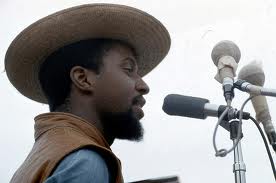
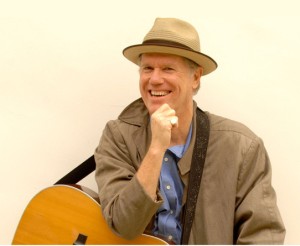
During early March when measures to control the coronavirus had still not widely limited performances at bars and nightclubs and elder states-players like Patti Smith and Elvis Costello carried on with gigs from the Fillmore in San Francisco to the Hammersmith Apollo in London, Austin-based singer-songwriter Betty Soo (pictured above) put the brakes on her live performance schedule to reflect on the potential hazards of proceeding with cramming people into confined spaces in the time of a pandemic.  I hope you’ll read my profile of Soo and the other musicians who led the way in the movement to seek alternatives to live performance in the time of the pandemic, not only to keep themselves healthy, but their fans, and you at home too.  Read the full column in this month’s edition of Tourworthy.

Filed under: Arts and Culture, Folk, Texas, Women in Rock, , , , , , , ,

Len Chandler: He, too, sang at the March on Washington

images

photo of Len Chandler at Newport Folk Festival, 1964, by John Rudoff

Today marks the 55th anniversary of the historic March on Washington for Jobs and Freedom.  Among those assembled to help Dr. King push forward his dream of racial harmony and economic justice was Len Chandler (often overlooked in the history of civil rights work), one of the voices in a trio that day which included Bob Dylan and Joan Baez (he appears at about 17 minutes into the following clip, though the whole 25 minutes is worth your time).


Chandler would march with Dr. King and travel throughout the South in the name of voter registration, informing rural Southerners of their polling rights, often at great risk to his own life. His poems were recognized by Langston Hughes, he wrote the folk standard “Green, Green Rocky Road” with poet Bob Kaufman, and recorded two albums for Colombia Records, but little is known about him or his life.  I sought him out when I wrote Keep on Pushing, my text that tracks the origins and evolution of freedom music, and its roots in African American resistance and liberation movement: a fraction of what we discussed was included in the book. I remain curious why seven years after publication, few scholars have pursued the lead and why so little is known about him…

Originally from Akron, Ohio, and studying on scholarship at Columbia in the ’50s, Chandler made his way to Greenwich Village folk music by accident: Lured to the sounds of Washington Square Park by the downtown youths he was mentoring, he easily fell into the scene based on his natural ear for songwriting and his familiarity with the songs of Lead Belly, Big Bill Broonzy, and Woody Guthrie.  Following a performance at the popular Village coffeehouse, the Gaslight Cafe,  Chandler landed a contract to go to Detroit, writing and performing topical songs for local television. A few months later, when he returned to New York, the folk thing was in full swing:  Bob Dylan was the latest arrival to town and the pair started to trade ideas and songs.

“I hadn’t yet begun writing streams of songs like I would, but Len was, and everything around us looked absurd—there was a certain consciousness of madness at work,” wrote Dylan in his book Chronicles.  Chandler remembers it like this in Keep on Pushing:  “The first song I ever heard of Dylan’s was ‘Hey ho, Lead Belly, I just want to sing your name,’ stuff like that.”  Dylan used Chandler’s melody for his song, “The Death of Emmett Till.” “Len didn’t seem to mind,” Dylan wrote (today, as it happens, is the anniversary of the murder of Emmett Till).

Chandler went on to record two albums for Columbia:  To Be a Man and The Loving People. He continued to work as a topical songwriter, a peace and civil rights advocate, and as a songwriting teacher; his tour of Pacific Rim bases with Donald Sutherland, Jane Fonda, Holly Near and Paul Mooney was documented in the Francine Parker film, FTA, a must-see for anyone interested in US history and anti-war efforts within military ranks. Catch a glimpse of Chandler at the end of this trailer for the film:

It was an extreme privilege (and I have since found out a rare opportunity) to meet one of the true unsung heroes of singing activism (as well as his wife Olga James, a pioneering performer in her own right), and have him tell his story to me. Though largely retired from performing, he remains well- informed on human rights, politics, and the arts and will step up and step out for civil rights. You can read a portion of our talks in Keep on Pushing, and someday I will post the complete unedited transcripts, though for now, enjoy the voice of Chandler from back in the day, when singing was a huge part of moving the movement forward.


Filed under: anti-capitalist, anti-war, Arts and Culture, Bob Dylan, Civil Rights, Dr. Martin Luther King Jr., Folk, Keep On Pushing, , , , , ,

Loudon Wainwright’s Terrifying Vision

DMP_Loudon-Wainright-542x445A righteous pundit, Loudon Wainwright III has been pursuing music since the late ’60s, debuting with a self-titled album in 1970. Aside from his honest and deeply felt songs on relationships and life circumstances, he’s long written satirical work, a style he calls “musical journalism,” best demonstrated over an album’s length on 1999’s Social Studies (he sticks it to O.J. Simpson, Tonya Harding, and Jesse Helms). For awhile he was the in-house songsmith for Nightline and is occasionally commissioned songs for NPR. His latest is a hilarious nightmare vision of this year’s U.S. Presidential election.

Read The Entire Post and Hear The Song At Down With Tyranny!

Filed under: anti-war, Arts and Culture, Folk, Protest Songs, , , ,

Indigenous Musicial Sheroes: Buffy Sainte-Marie and Debora Iyall

Buffy Sainte-Marie is one of the central figures in Keep on Pushing: As unique musically as she is direct lyrically, Sainte-Marie was born on the Piapot Cree Indian reservation in Saskatchewan and adopted by a family in Maine. She says that as a child she was artistic innately, as well by necessity. Befriended by a Narragansett couple who lived near her family in Maine, it was from them she learned about cultural handcrafts and kindness. “They didn’t sit around and give me Indian lessons,” she said, “But on the other hand, they didn’t chase me away.”  As a young student, Sainte-Marie was drawn to philosophy and religion, while she simultaneously developed her musical side, as a folk performer. Her unique vibrato and innovative song style are what first drew me to finding out more about her story; what I found, moved me to the core, from the volume of hardship and turmoil she described, to her refusal to study war, which landed her among Nixon’s enemies.  “I don’t think many people, even today, understand how much blacklisting has gone on of artists in the record business,” she says.  In the face of the hassles, Sainte-Marie continued to innovate, as an electronic musician as well as a computer-based visual artist. Committed to teaching, to passing on what was given freely to her as well as what she fought to achieve, Sainte-Marie’s work still offers a pointed critique of war, greed, injustice and the anti-people policies that impact indigenous people all over this land.

Debora Iyall is one of the artists  directly descended from Sainte-Marie’s example of native creativity:  A singer, a songwriter, a poet, and a visual artist, Iyall’s story also unfolds throughout Keep on Pushing, beginning with her time as a teenager during the Indians of All Tribes’ Occupation of Alcatraz.  Her punk-rooted style bears little resemblance to Sainte-Marie’s folk roots (Iyall was most influenced by Patti Smith), but a close connection to arts education and her roots in the Cowlitz tribe made her a unique presence in San Francisco art-punk band, Romeo Void. Iyall had the guidance of elders—her mother and the Natives she met at pow-wows and on Alcatraz—who supported her creative discoveries. “I felt like I had these little nuggets of information or culture to hang on to,” she said.  Today, Iyall exudes confidence in her work as a performer and visual artist and is also a teacher and advocate, for artists of all colors and dimensions.

I was honored and humbled to have been allowed access to the lives of both Debora Iyall and Buffy Sainte-Marie—two women whose works have uplifted and inspired, not only their brothers and sisters native to the Americas, but their fellow artists and anyone who’s ever been broke or hungry, tired, or cast aside, and helped them to keep on keeping on: Their complete stories are told in Keep on Pushing.

Filed under: anti-war, Arts and Culture, Folk, Punk, Women's rights, , , , ,

Remembering The Outlaw: Eugene McDaniels

A portion of this post originally appeared here as an obituary in July, 2011.8765 It has been updated and amended as a remembrance.

Rare groove chasers know well the name Eugene McDaniels; his 1971 album for Atlantic, Headless Heroes of the Apocalypse is a standard-bearer for psychedelic soul/funk/jazz rhythms and is borrowed frequently for its samples (most famously by A Tribe Called Quest and the Beastie Boys). The album is a fierce statement of Black pride, anger, and frustration, equally powered by a super-soul fever, a yearning for world peace, and ultimately love. A showcase for McDaniels’s breadth as a composer, from folky singer-songwriter styles (“Susan Jane”) to proto-rap (“Supermarket Blues”), his strongest words are demonstrations of righteous indignation (“The Lord is Black, his mood is in the rain…he’s coming to make corrections”).  His reward for creating such a unique piece of work was to have it recalled from the shelves and suppressed by Nixon’s White House; it remains a lost classic and is a story waiting to be told.

McDaniels is also the composer of “Compared to What,” the jazz-soul wartime protest made famous by Les McCann and Eddie Harris, a worldwide hit in 1969.

Born in Kansas City in 1935, McDaniels studied at the Omaha Conservatory of Music, and graduated from Omaha University. After forming a band in the 1950s, and singing with the McCann trio, he signed with Liberty Records and hit in 1961 with “A Hundred Pounds of Clay,” followed by five more Top 40 hits, including “Tower of Strength.” With six hit records to his credit, McDaniels turned his focus to writing (he worked closely with Roberta Flack and ultimately wrote her hit “Feel Like Making Love,” among others). Following the success of “Compared to What,” by the time he attempted to relaunch his solo career as a singing and songwriting artist with his 1970 album The Outlaw, McDaniels had developed an intensely personal and pointed new style and direction. Fearless with his melodies and in his verses, the instrumentation on his early ’70s companion albums was a wild combination of folk-funk: electric and acoustic bass brushed against guitar, drums, and piano. The arrangements combined with the lyrics to strike inner chords of deep recognition, touching places in the heart  only music can reach. McDaniels injects each song with theatrical and emotional soul power, delivering the verses with a fascist-fighting folker’s impeccable style of oration.  Incensed and confused by injustice, his notes echo and stretch, like the sound of someone losing his mind. His elegy for the genocide of America’s indigenous population, “The Parasite (For Buffy),” dedicated to Native American and folksinger Buffy Sainte-Marie, is a shining example of his dramaturgical song style that places his subjects in a social, political. and psychological context. But McDaniels’s revolution of the mind is a peaceful one; though he paints pictures of hell and all hell breaking loose, his narrator does not advocate use of violence as a solution. Rather, violence is portrayed as the problem.

In Keep on Pushing: Black Power Music From Blues to Hip Hop, I touched on McDaniels’s status as one of Nixon’s Enemies. It was in fact his story that in part inspired me to probe 50 years of freedom singing, and how resistance in song is received (or not) by a mass audience.  I remain deeply curious on the subject, but when my faith in music and in people is lagging, I pull out Headless Heroes of the Apocalypse and find it restores and inspires me. Whatever darkness he’s describing, the McDaniels point of view remains poised and unique; his higher consciousness and keep-on-pushing spirit bleeds between the notes of each slyly rendered gospel-laced track. Years later, the Beastie Boys would turn to McDaniels, nicknamed the Left Rev McD, for a sample, as would the Afro-centric, conscious hip-hoppers, A Tribe Called Quest who used a piece of “Jagger The Dagger” throughout People’s Instinctive Travels and the Paths of Rhythm. John Legend and the Roots brought back a version of “Compared to What,” which was most recently updated by the trumpet player and bandleader Terence Blanchard (with E-Collective featuring PJ Morton).

Eugene McDaniels made it real—no comparison. Listen below to “Supermarket Blues,” his musical statement from 1971 on racial profiling, police violence, and white supremacy: It sounds as fresh as the day it was recorded.

Filed under: Arts and Culture, Books, Eugene McDaniels, Folk, Jazz, Keep On Pushing, Protest Songs, Roots of Rock'n'Soul, , ,

Archives

Recent Posts

Browse by subject or theme