Denise Sullivan

Author, Arts & Cultural Reporter and Worker

The Complete Unknowns

Martin Luther King Jr., Joan Baez and Harry Belafonte

Joan Baez was a junior at Palo Alto High School when she first heard Martin Luther King, Jr. speak at a conference for young Quakers. She would go on to sing for the non-violent movements for civil rights, social, economic and racial justice and against the war in Vietnam.

“King was giving voice to my passionate and ill-articulated beliefs,” wrote Baez in her memoir. Her “exhilarating sense of ‘going somewhere’ with my pacifism” in the aftermath of that speech would lead her to join King on marches in the Jim Crow south and at the historic March on Washington.

If you don’t already know about Baez’s history as a lifelong activist, you certainly would not get it from a viewing of the ahistorical Bob Dylan biopic, A Complete Unknown, released in US theaters this Christmas.

Loosely based on Dylan’s arrival in New York City in 1961, the film covers the songwriter’s introduction to the Greenwich Village scene, his meetings with Woody Guthrie and Pete Seeger, and his intimate relationships with Baez and the fictional Sylvie Russo, a stand-in for his real life steady, Suze Rotolo.

“During the height of the civil rights era Bob wrote, among other songs, ‘The Lonesome Death of Hattie Carroll,’ ‘The Death of Emmett Till,’ [‘Only A Pawn In Their Game’] and of course, ‘Blowing in the Wind,’ which became a kind of anthem,” Rotolo wrote in her own memoir of the Village in the ‘60s. In the film, “Blowing in the Wind” is framed in his repertoire to be more like an annoyance or an albatross.
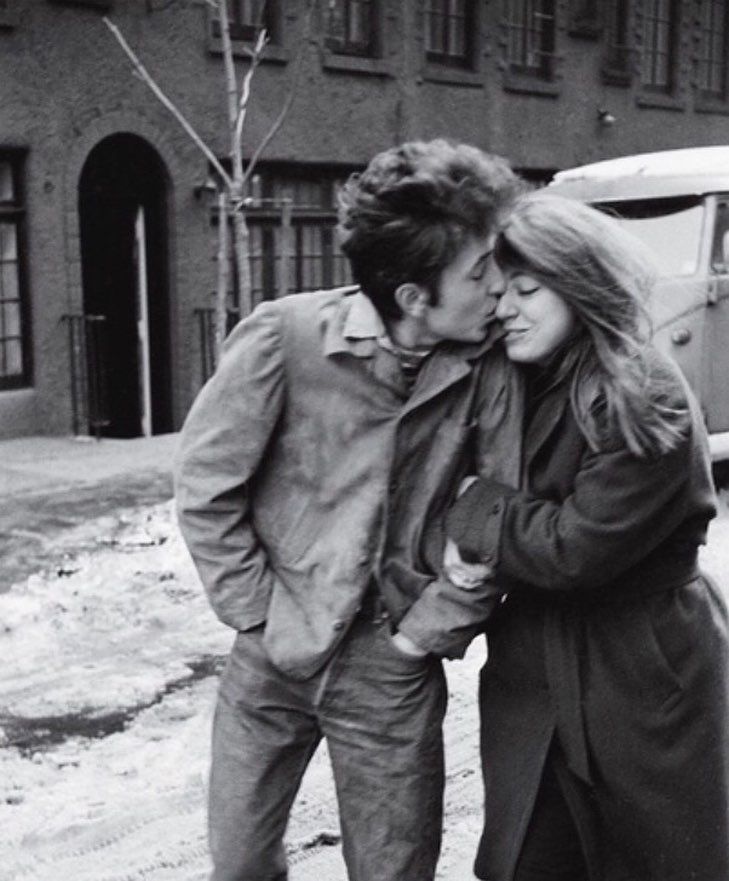
There’s a scene recreating Dylan and Rotolo’s meeting at a 1961 folk-a-thon at the Riverside Church, the historic hub of progressive gathering in New York City. And there is a brief moment when the Russo character explains to a befuddled Dylan that she works at the Congress for Racial Equality (CORE), organizing the Freedom Rides from North to South — in fact one of Rotolo’s jobs in the era.

Facts are also, that in 1963, Dylan walked off the all-important nationally broadcast The Ed Sullivan Show when he was asked not to play his song, “Talkin’ John Birch Society Blues.” For those unacquainted, the John Birch Society is a radical far right group and the song is a satire.

That not much is made of the realities of the causes and concerns that moved both Baez and Rotolo to become immersed in movement work and the folk scene is perhaps understandable: A Complete Unknown is after all, a version of a story of Dylan becoming Dylan. But the gaps in the story of Dylan’s own connections to civil rights and the songs he wrote in their favor are woefully understated in the film, as are his friendships with the people in his circle (where, for example, were the nods to Ramblin’ Jack Elliott? Phil Ochs? Odetta? Lead Belly, at least, appears in an 8×10 photograph). There are also no poets, comedians or jazz musicians in the film’s version of the Village, though they are among those who also contributed to it being America’s bohemian center of its time.

Nor are there any three dimensional Black artists or musicians depicted in the film. The one scene in which a Black musician has a speaking role was made out of whole cloth and is particularly egregious: The fictional bluesman, Jesse Moffette (portrayed by Big Bill Morganfield whose father in real life was blues legend Muddy Waters) is played as a drunken mess when he appears with Dylan on Seeger’s public television show, Rainbow Quest. That Rainbow Quest really existed and featured musicians Rev. Gary Davis, Mississippi John Hurt and Sonny Terry and Brownie McGee is undeniable. The inclusion of any one of those artists would’ve made an interesting, albeit fictional meeting between Black and white, established and next generation musicians. But the creation of a fictionalized and stereotypical bluesman is not only in poor taste, it was a missed opportunity to introduce new listeners to the musicians who influenced Dylan and generations of future folk, blues and rock musicians.

One full episode of Rainbow Quest was devoted to Dylan’s friend and contemporary, Len Chandler, another figure on the Village scene who was eliminated from the story told in A Complete Unknown. It was Chandler who drove Dylan on the back of his motorbike to deliver his first album to Guthrie in the hospital.

“We took out our guitars and played Woody songs,” said Chandler.

Chandler and Dylan hung out, traded songs, learned their trade and celebrated their song publications in folk journals, Broadside and Sing Out! And while Chandler spent considerably more time in the South fighting for the rights of Black Americans (like Baez, it was his calling), it’s significant that Dylan appeared shoulder to shoulder with both of them at the March on Washington (though the film makes a bungle of computer generated imagery to recreate his appearance there).

Considering what could’ve been is a fool’s game but I’ll play it anyway: Dylan’s first recording session was as a harmonica player on another one of his heroes records: Harry Belafonte’s “Midnight Special.” The often told story of Dylan throwing his harps in the trashcan afterward would’ve made a great cinematic moment. The inclusion of a civil rights giant would’ve again been a nice prompt for a young viewer to dig deeper into Belafonte’s role in American civil rights, music and Dylan’s own history.

Oh but there’s more: Dylan famously had a crush of the wanting to marry her kind on Mavis Staples. Here again, was another missed opportunity to demonstrate how the singer’s dreams listening to and playing music with his inspirers became his reality. Instead, there is a Black woman of intrigue in the film who Dylan dumps in short order after her appearance. We have no idea who she is or is supposed to be standing in for, but a little like the nameless “mistress” played by Angela Bassett in Masked in Anonymous, she is there to let us know the main dude is an equal opportunity romancer.

The studio players on Dylan’s recordings, Paul Griffin, Sam Lay, Bruce Langhorne, as well as his producer Tom Wilson, could all have been elevated to characters with even one or two-line speaking roles, if only to let the audience know these cats were not just extras to add color to the cast: These were seasoned professionals hand-picked for the records that transitioned Dylan from solo folky to serious, original artist.

And then there is the short shrift given to Dr. King, whose “I Have A Dream” speech Dylan and Chandler listened to in real time, on the day it was delivered.

“That’s what I remember from the speech, being behind another monument with Dylan and silencing ourselves, and sitting in amazement as we heard that wonderful speech unfold,” Chandler remembered. But the take on historic Black preaching in A Complete Unknown, comes in the form of a man in a fedora and trench coast on a soap box. Listed in the credits as “civil rights speaker,” the character is but a token symbol for the movement that reached its very apex during the era depicted in the film. The scenes at the Newport Folk Festival would take me another viewing to de/reconstruct but they suffer from similar missed opportunities to display Black excellence and inspiration (Lightnin’ Hopkins, Willie Dixon, Fannie Lou Hamer, for God’s sake).

What could’ve been a simple and effective portrait of young Dylan and the ways folk musicians, women, and Black Americans intersected with the Civil Rights Movement and helped to shape the counterculture and ideals that came to define the ’60s, is in the end, just another piece of product, a part of the Dylan Industrial Complex: The books for days, the several documentaries, a museum and archive, a brand of liquor, a Christmas album, ornaments, and a line of bobbleheads…these are but a fraction of the branded, approved, licensed and unlicensed materials on offer in his name. Why should I have wished that a biopic be anything more than a distraction, an entertainment?

In the end, the contributions to the Civil Rights Movement made by women and Black Americans are the real hidden figures and unknowns obscured in the Hollywood retelling of Dylan’s own early ‘60s story. As impenetrable as the “real Dylan” may be or seem to be, I left the film not thinking about him, but wanting to ask the folks living and passed over, how does it feel?

Filed under: anti-capitalist, Arts and Culture, Blues, Bob Dylan, Civil Rights, film, Folk, Greenwich Village, Poetry, Protest Songs, , , , , , , , , , , , , , ,

Rest in Power: Sinéad O’Connor

When I heard the news that Sinéad O’Connor died last week, the news was not terribly surprising – people suffer, they take ill, they die. And yet, the depth of my feeling for the world’s loss of such a prophetic, powerful and perfect singer was startling. Though I’m well-familiar with her work and saw her perform live more than once (she was after all a part of the fabric of the ’80s and ’90s popular culture), I think what struck me hardest was how much of her good work for humankind and her general love of the world’s people had gone unnoticed. Here was a God-loving and spiritually devoted singer who had never turned away from her mission to help others, and yet, others had turned away from her time and again.

And then I remembered her turn as the Virgin Mary in Neil Jordan’s film, The Butcher Boy: There was something about her performance that stayed with me, all these years later. I guess what I mean to say is there is no doubt in my mind that someday, future generations will see Sinéad as the visionary, the prophet, the truthsayer and comforter she was; maybe she’ll even be venerated accordingly.

My full remembrance of O’Connor can be read at the link to Tourworthy.

Filed under: anti-capitalist, anti-racist, anti-war, Arts and Culture, Bob Marley, film, Hip Hop, Immigration Reform, income disparity, Nina Simone, Protest Songs, racism, ,

Poly Styrene’s Time is Now

“When we all got into music, back in the day, we got into it to be anti-establishment,” said punk filmmaker and musician Don Letts. “Nowadays, bands start bands to become part of the establishment.”

Poly Styrene, late ’70s

In the ’70s and ’80s, Letts was an intimate friend and documentarian of the Clash. He was also acquainted with punk empress Poly Styrene, front woman of X-Ray Spex and a witness to her unfurling following a difficult evening spent in the company of Johnny Rotten.

Much has been left uncovered and to the imagination concerning Styrene’s reclusive post-punk life, but the new documentary, Poly Styrene: I Am A Cliché, co-directed by Paul Sng and Styrene’s daughter, Celeste Bell, corrects the record and tells the true tale of an accidental icon.

“People often ask me if she’s a good mum – it’s hard to know what to say,” says Bell in narration of the film, exploring the life, career and spiritual-questing of her mother. Decades later, Styrene is still considered one of punk rock’s mothers and its premiere feminist, anti-capitalist and Afrofuturist.

Expertly weaving archival film with ephemera, testimonials and additional voicing of Styrene’s diaries by actor Ruth Negga, Bell’s very personal story is centered on the art itself, along with a narrative that underscores the artist’s ability to create lasting work in the face of the odds and a world that was built in opposition to her. That the artist was her mother makes for a complex telling but those complicated feelings never get in the way of keeping the focus on Styrene’s values as an artist; her contemporaries like Letts, ska music’s Pauline Black and Rhoda Dakar, and latter-day punk spokespeople like Bikini Kill’s Kathleen Hanna and Sonic Youth’s Thurston Moore are all quick to corroborate her impact. Bell does away with the documentary convention of talking heads which effectively keeps her subject in the spotlight rather than creating a distraction by fixing a camera on so-called experts. A daughter’s understanding of her mother’s role as a pioneering biracial feminist environmentalist with a spiritual directive to deliver a message to the world is a testament to Bell’s own commitment to making a film about art as opposed to conforming to commercial ideas of what makes good entertainment. Read full article here:

Filed under: anti-capitalist, anti-war, Arts and Culture, Environmental Justice, film, Protest Songs, Punk, Women in Rock, , ,

How to support small presses, indie films and theaters during the pandemic

Notes, Contacts, Name CQ's here

Liam Curley, warehouse manager at the Small Press Distribution, Berkeley, CA. During the high season of the pandemic’s shelter-in-place orders, it was lonely in SPD’s warehouse where Curley worked by himself, receiving and shipping orders by hand at a fraction of his usual pace.(Photo by Carlos Avila Gonzalez/The Chronicle)

During the early phase of the coronavirus shutdown, small publishers and the Northern California distributor that ships those books to market were doing all right, operating with scaled down staffs and shipping customer orders direct. But as the fall publishing season approaches, with no end to the virus in sight, the closures indefinite, and college course texts and bookstore futures shaky, the small press industry is navigating the same uncertain future as everyone else. If there is a silver lining to this catastrophe, small presses are generally more attuned to matters of race, gender and class than the big five publishing houses: There is a demand for books authored, edited and published by Black, Indigenous and People of Color (BIPOC). I wrote about the longstanding spirit and principle of intersectionality in small press publishing for the San Francisco Chronicle. I hope you’ll read the full story here.

SFE-SFLives

Documentary filmmaker Anne Flatte stands outside the Roxie Theater in San Francisco. Her film,  “River City Drumbeat,” is about a year in the life of drum corps in Louisville, Kentucky.  (Photo by Kevin N. Hume/S.F. Examiner)

Some of the changes from digitization that impacted publishing even before the pandemic also reverberate through the art of producing, making and presenting independent film – a corner of the film business where woman traditionally find more opportunity than they do in Hollywood.  For the small art houses that regularly show movies by and about subjects that might not otherwise be seen on the big screen, the pandemic closures threaten to wipe out old time cinemas and movie-going entirely, though the best makers and curators are adapting.  Here in San Francisco, we can stream directly from our beloved Roxie, Balboa and Vogue Theaters, among others.  Filmmaker Anne Flatté is screening her latest work, River City Drumbeat, via virtual cinema. She and her co-director chose a youth drum corps as their compelling subject and made a visually captivating and emotionally powerful film about cultural legacy and survival. As a viewer, you can choose to watch indie films like River City Drumbeat in a way that supports local businesses instead of using your typical streaming services. Why would you? Well, the main multi-media/marketplace exploits its workers.  And the business models of the big streaming services also steal a disproportionate amount of revenue from the people who actually make the art. Those fat cats don’t need your money and artists need to be compensated for their work. Read more here.

Please support a small local press, filmmaker, theater or business today or this week: They need us – and we need them – if ever we’re going to get through this mess.

Filed under: Arts and Culture, Book news, film, San Francisco News, , , , , ,

Summer Film Score: The Last Black Man in San Francisco

Once in a great while, a film score really grabs me from the inside out: It’s not just the beauty of the suite or piece of music alone, but when the sounds are perfectly matched with the mood, look, and feel of the story being told on screen and the elements combine to make one extraordinary whole, the inextricable links between music and movie become entwined with the soul, as if we’ve heard these strains somewhere before. The Last Black Man in San Francisco, directed by Joe Talbot with music by Emile Mosseri,  is the ideal marriage of sound and image for The City right now. It’s melancholy but not maudlin; it’s shimmering but not overwhelmingly bright and it surprises with its subtlety. I have much to say about the film, and its operatic dimensions cut from indie cloth, but I’m not yet done formulating my thoughts (I’m a little stuck in the real life tragedy of it all). For those of us living here, thinking about the state of our city comes second to surviving it. Living in a place of such extreme, rapid and frankly terrifying gentrification is a job in itself; for those of us born here, we live everyday with the specter of something we love being taken from us — again, and again — rendering our home unrecognizable. The grief is ongoing and it feels like it will never end. It’s a daily discipline simply to get up and out of bed to ready one’s self for the day ahead: Who or what will we lose next?  At least now we have a soundtrack to accompany the loss.
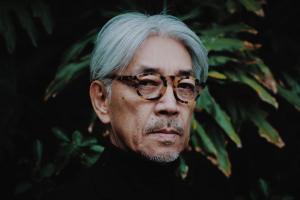
Full interview with Emile Mosseri in this month’s Tourworthy.

Filed under: Arts and Culture, film, gentrification, San Francisco News, , , , , , ,

San Francisco filmmaker Jeanne Hallacy

Director Jeanne Hallacy and refugee children in Myanmar

Fall has been a busy season for me, jumping from stories on musicians, photographers, painters and visual anthropologists: I get so caught up in the words, music and lives of my subjects, it can be easy to forget to take a breath and assess the day in and day out of what’s right in front of me (and remember to post updates here).

One of the stories that took some deep research and extra transitioning for me was my piece on human rights filmmaker, Jeanne Hallacy. Born in San Francisco, she’s lived in Bangkok since the ’90s but returns occasionally to screen her work and check in with friends and family. When I asked Jeanne what she made of her hometown these days, given that this year the United Nations declared it in violation of the human rights of its thousands of citizens who sleep on the street without adequate shelter or sanitation, she offered some deep responses that I’ve carried with me since speaking to her last month. I hope you’ll read my story on Jeanne in the new edition of CurrentSF and see her film, Mother, Daughter, Sister, about the women of Myanmar who are taking a stand against the state violence waged against them and their children that’s earned the country a place on U.N.’s “list of shame.” More posts much sooner than later, I promise.

Filed under: anti-war, film, San Francisco News, Women's issues, Women's rights, , , , , ,

Ryuichi Sakamoto: Eco-Warrior

Japanese composer, pianist, and electronic music innovator, Ryuichi Sakamoto, has had a celebrated career, to be sure, though the new documentary, Ryuichi Sakamoto: Coda, is less about his personal biography and high achievement and more about his process, what drives him, and what he hopes to leave behind.
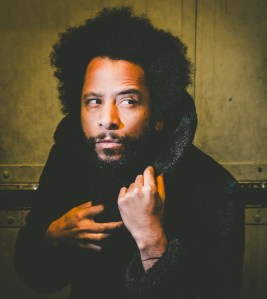
The film, directed by Stephen Nomura Schible in quiet, understated style that echoes his subject, begins with Sakamoto exploring the aftermath at Fukushima. At times dressed in full hazmat gear, he checks out the landscape for any remaining sounds of life and discovers he likes the tuning of a piano that was damaged and washed ashore, post-tsunami.

Through the course of the film, intimate discussion between filmmaker and composer reveal the genesis of Sakamoto’s initial interest in environmental concerns; he likens his ’90s awakening to climate change to a kind of knowing or vision common to artists. The story also asserts Sakamoto’s longtime interest in the rub between the natural world and the industrialized, high-tech tools of his trade, the latter popularized and pioneered by his own Yellow Magic Orchestra. Since the ’90s, he’s composed several pieces inspired by communing with the natural world: his soundscapes are more fully informed by it than one might realize upon casual listening (and there is audio and visual documentation of the process on offer in the film). And then there’s the cancer that gripped him in recent years and the challenges of navigating his condition alongside the complicated business of maintaining vitality over decades as an artist.

In one sample sequence, he is thrilled to have received a call from Alejandro González Iñárritu — one of his favorite directors — asking for a score to The Revenant; Sakamoto can’t contain his urge to get back to work, despite the demands on his health. And while the archival footage of him as a young performer/composer/actor and conductor underscores the impressive breadth of his career and his ability to have it all, the soul of the film rests in his Sakamoto’s creative flow in the face of his own mortality and the illness of planet earth, whether war or nuclear disaster. Despite the grim forecast, the musician not only manages to find joy, but delight in the act of creation, whether found in the natural world or in his own sound designs. His pleasure at discovering a new pop, squeak or jangle is ably captured on screen every time, and every time, it appears just as genuine and new to Sakamoto as the discovery before it.

The Coda in the movie’s subtitle seems to imply this may be the beginning of the final act in Sakamoto’s unique and esteemed career, yet it’s also the perfect introduction to his influential life in art and activism. And while this career-spanning summation with its unique focus zeroes-in on the art-making that’s ultimately the meat of any artist’s life, it may also serve as a prayer for Sakamoto to continue his work, for as long as it takes to get it done.


Filed under: anti-war, Arts and Culture, Earth Day Music, Environmental Justice, film, , , ,

Boots Riley: The Coup, Sorry To Bother You & The Art of Anti-capitalism

Boots Riley, director of Sorry to Bother You. Courtesy of Sundance Institute | photo by Amelia Kennedy.

Readers of Keep on Pushing, published in the Summer of 2011, may remember I briefly noted The Coup as hip hop artists who use ideas and art to make change. When I was writing the book over a five-year-period mid-decade, times were such in post-9/11 USA that “political music” was annexed to the sidelines, largely unheard by the mainstream. “Movement building” was something to be considered a leftover idea from another dimension. Things have changed: Now even your grandma is woke (though chances are your other grandma and maybe even your ma or pa are among the third of folks still living in American dreamland, the one that still doesn’t/never did exist).

Before a handful of musicians rallied behind the Occupy and Black Lives Matter movements, and decades before the current moment of resistance, there was Boots Riley.

Born into the movement in Oakland, California, Riley was politicized from the gate. Since the early ‘90s he’s used his innate talent and acquired knowledge to make change as a community worker and as a hip hop artist, leading The Coup.  The activist and auteur’s latest project, is the film he wrote and directed, Sorry to Bother You.  It’s an important surreal and absurd social satire, at once entertaining and disturbing (because it hits so close to home, which is also one of its strengths).

Riley, who studied film at university, also understands the wages of capitalism and the politics of labor and the economy; the lyrics he spit with the Coup were loaded with often cinematic displays of the details of his interests. For this month’s column, I delivered a sweeping overview of his band’s catalog as a sort of prelude to the film: I hope every working American will see it.

Read the entire article at Tourworthy.

Filed under: anti-capitalist, anti-war, Arts and Culture, California, film, Keep On Pushing, , , ,

Peace Punks, Hate Speech & Berkeley

Green Day at Gilman, photo by Murray Bowles

In 1988, the peace punks who congregated at 924 Gilman Street in Berkeley, California, had a choice to make: To meet encroaching skinheads with violence or to fight back with the tactics of non-violence. Choices were made, the inevitable schisms from within ensued, and life went on, as the new documentary, Turn It Around: The Story of East Bay Punk, tells. While the story and other tales of punk rock glory illustrate punk’s inherent contradictions and what happens when utopian ideals like egalitarianism and rule-by-committee are put to the test, the film is also in perfect synch with the hate speech controversy happening on the UC campus this fall.

“The film played in Charlottesville a few weeks back,” explained its director, Corbett Redford. “Someone from the audience commented, ‘This is how allies work. Allies stand up.’”

The punks of Gilman, far more of them straight, white, and male than queer, people of color, or women, did indeed stand up to the Nazi strain in their midst. And yet, the politics of waging peace and the how music fits into those politics is often more nuanced and complicated than taking up of pitchforks, tiki torches, or baseball bats.

READ THE WHOLE STORY AT DOWN WITH TYRANNY!

Filed under: Arts and Culture, film, Punk, , , , , ,

Rumble: The Indians Who Rocked The World Is A Revelatory New Documentary

Forget everything you think you know or have been told about the birth of the blues and the histories of jazz and rock ‘n’ roll: Rumble – The Indians Who Rocked The World has a different story to tell and by the sound of it, much of what’s been handed down to us about North American music and its origins has been wrong.
The sound of the American South – the rush of its waters, the song of the bird, the crack of thunder and the rain that follows – informs the sound of Native American music, the root of all other American forms.

Take the story of the Mississippi Delta’s Charley Patton, widely acknowledged to be the father of the country blues. An existing photograph of him reveals he is likely a man of mixed race origins, though without clear proof, historians have remained inconclusive in their findings. Rumble reveals through interviews, research, and recordings, that Patton’s blood ties are to the Chocktaw nation and moreover, his connection to Native American music contributed to the rhythmic and vocal patterns of what we know as country blues. In the film, musician Pura Fé (Tuscarora) a/b’s his technique with a turntable and her voice: “That’s Indian music with a guitar,” she says. Calling on a kind of pre-blues origin of his sound, the assembled scholars and musicians, including modern day bluesmen Corey Harris and Alvin Youngblood Hart, go into deeper explanation of Patton’s relationship to Dockery Plantation, the setting where he developed a showstopping style living among Black, Choctaw, and European farmworkers. He went on to pass on what he knew to other area musicians like Son House and visiting players like the young Roebuck Staples and Chester Burnette (who of course became Howlin’ Wolf). So why is Patton’s history generally painted so sketchily in the history books? READ THE ANSWER & THE ENTIRE ARTICLE in Down With Tyranny!

Filed under: Arts and Culture, film, , , , , , , ,

Archives

Recent Posts

Browse by subject or theme