Denise Sullivan

Author, Arts & Cultural Reporter and Worker

Hold on to your dreams

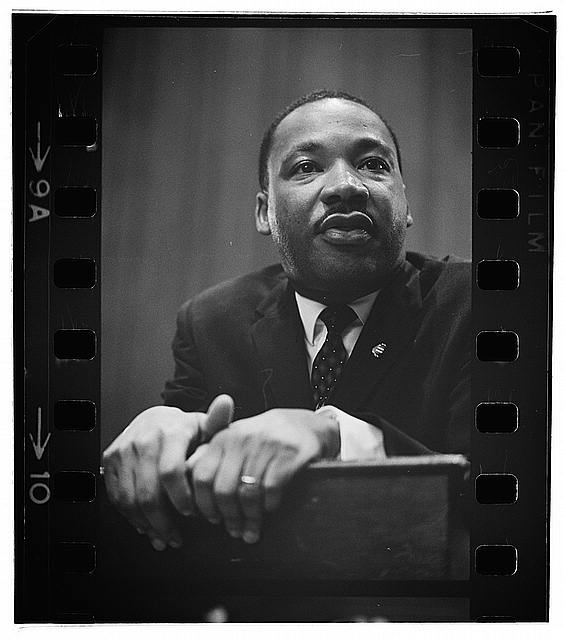
January 15 would have been the 96th birthday of Dr. Martin Luther King, Jr. born in 1929 in Atlanta, Georgia. It was a long road to the third Monday of the month when all 50 states observe the federal holiday named in his honor. Largely owed for making the dream of MLK Day a reality is Stevie Wonder: Back in 1980, he wrote the pointed song, “Happy Birthday,” then launched a 41-city U.S. tour (and invited Gil Scott-Heron along) to promote the idea which was first mooted by Rep. John Conyers in 1968. The musical efforts were ultimately the key in collecting the millions of citizen signatures that had a direct impact on Congress passing the law signed by President Ronald Reagan in 1983, declaring a day for MLK.

Observed for the first time in 1986, some states were late to participate, however, by the turn of the 21st Century, all were united in some form of remembrance of the civil rights giant. “Happy Birthday,” which served as Wonder’s King holiday campaign theme (and is now the “official” King holiday tune) is the last track on Hotter Than July. The album also features “Master Blaster,” Wonder’s tribute to Bob Marley (Marley had been scheduled for the tour until he fell too ill which was how Scott-Heron came to participate). In his memoir The Last Holiday, Scott-Heron details his own journey with music and activism, as he retraces the long and winding road Wonder took to bring home the last US federal holiday, with the help of a song.

The Hotter Than July tour brought Scott-Heron and Wonder to Oakland, where they played in the name of King, along with Rodney Franklin and Carlos Santana. In a weird turn of events, the concert on December 8, 1980, coincided with the night John Lennon was killed. The musicians and crew learned of the tragedy from a backstage television, and the job fell to Wonder, with Scott-Heron and the other musicians at his side, to deliver the shocking news to an arena of music fans.

“For the next five minutes he spoke spontaneously about his friendship with John Lennon: how they’d met, when and where, what they had enjoyed together, and what kind of man he’d felt Lennon was,” wrote Scott-Heron.  “That last one was key, because it drew a line between what had happened in New York that day and what had happened on that motel balcony in Memphis, Tennessee, a dozen years before.  And it drew a circle around the kind of men who stood up for both peace and change.”   Scott-Heron devotes the final pages of The Last Holiday to a remembrance of how the murder of Lennon fueled the final drive to push for a federal observance of the official MLK Day.

The politics of right and wrong make everything complicated

To a generation who’s never had a leader assassinated

But suddenly it feels like ’68 and as far back as it seems

One man says “Imagine” and the other says “I have a dream” -Gil Scott-Heron

Scott-Heron was a lifelong campaigner and champion for human rights himself, beginning on his 1970 live album Small Talk at 125th and Lenox. There is no doubt he would have much to say of the unfortunate confluence of this year’s King holiday with the inauguration and the project known as 2025. The parenthetical title refrain from his song, “Alien (Hold On To Your Dreams)” (see clip below following his topical poem, “Whitey on the Moon/(Mars)”) has been spinning around in my head, alongside the words of Dr. King collected from one of his sermons from the early ’60s. Whatever confronts us today, whatever dangers real or perceived that touch our friends, families and fellow humans in these perilous times, in these words and songs may you find comfort and be inspired to act in love.

Returning hate for hate multiplies hate, adding deeper darkness to a night already devoid of stars. Darkness cannot drive out darkness; only light can do that. Hate cannot drive out hate; only love can do that. Hate multiplies hate, violence multiplies violence, and toughness multiplies toughness in a descending spiral of destruction. – MLK, Jr.

Hold on to the dream.

Filed under: anti-racist, anti-war, Arts and Culture, Bob Marley, Concerts, Dr. Martin Luther King Jr., Gil Scott-Heron, Immigration Reform, income disparity, Poetry, , , , , , , , ,

On Stevie Wonder, Gil Scott-Heron & the federal holiday in the name of MLK, Jr.

01269r-1

Today is the observance of a day for Dr. Martin Luther King, Jr. born January 15, 1929 in Atlanta, Georgia. It was a long road to the third Monday of the month when all 50 states would observe a federal holiday named in his honor.  Largely owed for making the dream of a King holiday a reality is Stevie Wonder, who back in 1980, wrote the pointed song, “Happy Birthday,” then launched a 41-city U.S. tour (and invited Gil Scott-Heron along) to promote the idea which was first mooted by Rep. John Conyers in 1968. The musical efforts were ultimately the key in collecting the millions of citizen signatures that had a direct impact on Congress passing the law signed by President Ronald Reagan in 1983, declaring a day for MLK. Observed for the first time in 1986, some states were late to the party, however, by the turn of the 21st Century, all were united in some form of remembrance of the civil rights giant. “Happy Birthday,” which served as the Wonder-campaign theme (and is now the “official” King holiday tune) is  the last track on Hotter Than July. The album also features “Master Blaster,” Wonder’s tribute to Bob Marley (Marley had been scheduled for the tour until he fell too ill to participate). Stepping into the breach was Scott-Heron whose 2011, posthumously published memoir The Last Holiday, details his own journey with music and activism, and helps retrace the long and winding road Wonder took to bring home the last US federal holiday, with the help of a song.

The Hotter Than July tour brought Scott-Heron and Wonder to Oakland, where they played in the name of King, along with Rodney Franklin and Carlos Santana. In a weird turn of events, the concert on December 8, 1980, coincided with the shocking night John Lennon was killed. The musicians and crew learned of the tragedy from a backstage television; the job fell to Wonder,  with Scott-Heron and the other musicians at his side, to deliver the news to the arena of assembled music fans. “For the next five minutes he spoke spontaneously about his friendship with John Lennon:  how they’d met, when and where, what they had enjoyed together, and what kind of man he’d felt Lennon was,” wrote Scott-Heron.  “That last one was key, because it drew a line between what had happened in New York that day and what had happened on that motel balcony in Memphis, Tennessee, a dozen years before.  And it drew a circle around the kind of men who stood up for both peace and change.”   Scott-Heron devotes the final pages of The Last Holiday  to a remembrance of how the murder of Lennon fueled the final drive to push for a federal observance of an official MLK Day.

The politics of right and wrong make everything complicated

To a generation who’s never had a leader assassinated

But suddenly it feels like ’68 and as far back as it seems

One man says “Imagine” and the other says “I have a dream”

Filed under: anti-capitalist, anti-war, Arts and Culture, Black Power,, Blues, Bob Marley, Civil Rights, Dr. Martin Luther King Jr., Georgia, Gil

Filed under: anti-war, Arts and Culture, , , , , ,

On Stevie Wonder, Gil Scott-Heron & the federal holiday in the name of MLK, Jr.

01269r-1

Today is the observance of a day for Dr. Martin Luther King, Jr. born January 15, 1929 in Atlanta, Georgia. It was a long road to the third Monday of the month when all 50 states would observe a federal holiday named in his honor.  Largely owed for making the dream of a King holiday a reality is Stevie Wonder, who back in 1980, wrote the pointed song, “Happy Birthday,” then launched a 41-city U.S. tour (and invited Gil Scott-Heron along) to promote the idea which was first mooted by Rep. John Conyers in 1968. The musical efforts were ultimately the key in collecting the millions of citizen signatures that had a direct impact on Congress passing the law signed by President Ronald Reagan in 1983, declaring a day for MLK. Observed for the first time in 1986, some states were late to the party, however, by the turn of the 21st Century, all were united in some form of remembrance of the civil rights giant. “Happy Birthday,” which served as the Wonder-campaign theme (and is now the “official” King holiday tune) is  the last track on Hotter Than July. The album also features “Master Blaster,” Wonder’s tribute to Bob Marley (Marley had been scheduled for the tour until he fell too ill to participate). Stepping into the breach was Scott-Heron whose 2011, posthumously published memoir The Last Holiday, details his own journey with music and activism, and helps retrace the long and winding road Wonder took to bring home the last US federal holiday, with the help of a song.

The Hotter Than July tour brought Scott-Heron and Wonder to Oakland, where they played in the name of King, along with Rodney Franklin and Carlos Santana. In a weird turn of events, the concert on December 8, 1980, coincided with the shocking night John Lennon was killed. The musicians and crew learned of the tragedy from a backstage television; the job fell to Wonder,  with Scott-Heron and the other musicians at his side, to deliver the news to the arena of assembled music fans. “For the next five minutes he spoke spontaneously about his friendship with John Lennon:  how they’d met, when and where, what they had enjoyed together, and what kind of man he’d felt Lennon was,” wrote Scott-Heron.  “That last one was key, because it drew a line between what had happened in New York that day and what had happened on that motel balcony in Memphis, Tennessee, a dozen years before.  And it drew a circle around the kind of men who stood up for both peace and change.”   Scott-Heron devotes the final pages of The Last Holiday  to a remembrance of how the murder of Lennon fueled the final drive to push for a federal observance of an official MLK Day.

The politics of right and wrong make everything complicated

To a generation who’s never had a leader assassinated

But suddenly it feels like ’68 and as far back as it seems

One man says “Imagine” and the other says “I have a dream”

Filed under: anti-capitalist, anti-war, Arts and Culture, Black Power,, Blues, Bob Marley, Civil Rights, Dr. Martin Luther King Jr., Georgia, Gil

Filed under: anti-war, Arts and Culture, , , , , ,

The Last Holiday: On Stevie Wonder, Gil Scott-Heron and the Dream of an MLK Birthday Observance Made a Reality

150119092427-restricted-02-mlk-0119-super-169Today is the birthday of Dr. Martin Luther King, Jr. who was born in Atlanta, Georgia in 1929. It was a long road to the third Monday in January when all 50 states will observe a federal holiday named in his honor.  Largely owed for making the dream of a King holiday a reality is Stevie Wonder, who back in 1980, wrote the pointed song, “Happy Birthday,” then launched a 41-city U.S. tour (and invited Gil Scott- Heron along) to promote the idea which was first mooted by Rep. John Conyers in 1968. The musical efforts were ultimately the key in collecting the millions of citizen signatures that had a direct impact on Congress passing the law signed by President Ronald Reagan in 1983, declaring a day for MLK. Observed for the first time in 1986, some states were late to the party, however, by the turn of the 21st Century, all were united in some form of remembrance of the civil rights giant. “Happy Birthday,” which served as the Wonder-campaign theme (and is now the “official” King holiday tune) is  the last track on Hotter Than July. The album also features “Master Blaster,” Wonder’s tribute to Bob Marley (he’d been scheduled for the tour until he fell too ill to participate). Stepping into the breach was Scott-Heron whose 2011, posthumously published memoir The Last Holiday, details his own journey with music and activism, and helps retrace the long and winding road Wonder took to bring home the last US federal holiday, with the help of a song.

The Hotter Than July tour brought Gil and Stevie to Oakland, where they played in the name of King, along with Rodney Franklin and Carlos Santana. In a weird turn of events, the concert on December 8, 1980, coincided with the shocking night John Lennon was killed. The musicians and crew learned of the tragedy from a backstage television; the job fell to Wonder,  with Scott-Heron and the other musicians at his side, to deliver the news to the arena of assembled music fans. “For the next five minutes he spoke spontaneously about his friendship with John Lennon:  how they’d met, when and where, what they had enjoyed together, and what kind of man he’d felt Lennon was,” wrote Scott-Heron.  “That last one was key, because it drew a line between what had happened in New York that day and what had happened on that motel balcony in Memphis, Tennessee, a dozen years before.  And it drew a circle around the kind of men who stood up for both peace and change.”   Scott-Heron devotes the final pages of The Last Holiday  to a remembrance of how the murder of Lennon fueled the final drive to push for a federal observance of an official MLK Day.

The politics of right and wrong make everything complicated

To a generation who’s never had a leader assassinated

But suddenly it feels like ’68 and as far back as it seems

One man says “Imagine” and the other says “I have a dream”

Filed under: anti-capitalist, anti-war, Arts and Culture, Black Power,, Blues, Bob Marley, Civil Rights, Dr. Martin Luther King Jr., Georgia, Gil Scott-Heron, ,

The Last Holiday: On Stevie Wonder, Gil Scott-Heron and the MLK Observance They Turned From Dream to Reality

150119092427-restricted-02-mlk-0119-super-169

It was a long road to the third Monday in January when all 50 states observe the birth of Martin Luther King, Jr. and the day named in his honor.  Largely owed for making the dream of a King holiday a reality is Stevie Wonder, who back in 1980, wrote the pointed song, “Happy Birthday,” then launched a 41-city U.S. tour (and invited Gil Scott- Heron along) to promote the idea which was first mooted by Rep. John Conyers in 1968. The musical efforts were ultimately the key in collecting the millions of citizen signatures that had a direct impact on Congress passing the law signed by President Ronald Reagan in 1983, declaring a day for MLK. Observed for the first time in 1986, some states were late to the party, however, by the turn of the 21st Century, all were united in some form of remembrance of the civil rights giant. “Happy Birthday,” which served as the Wonder-campaign theme (and is now the “official” King holiday tune) is  the last track on Hotter Than July. The album also features “Master Blaster,” Wonder’s tribute to Bob Marley (he’d been scheduled for the tour until he fell too ill to participate). Stepping into the breach was Scott-Heron whose 2011, posthumously published memoir The Last Holiday, details his own journey with music and activism, and helps retrace the long and winding road Wonder took to bring home the last US federal holiday, with the help of a song.


The Hotter Than July tour brought Gil and Stevie to Oakland, where they played in the name of King, along with Rodney Franklin and Carlos Santana. In a weird turn of events, the concert on December 8, 1980, coincided with the shocking night John Lennon was killed. The musicians and crew learned of the tragedy from a backstage television; the job fell to Wonder,  with Scott-Heron and the other musicians at his side, to deliver the news to the arena of assembled music fans. “For the next five minutes he spoke spontaneously about his friendship with John Lennon:  how they’d met, when and where, what they had enjoyed together, and what kind of man he’d felt Lennon was,” wrote Scott-Heron.  “That last one was key, because it drew a line between what had happened in New York that day and what had happened on that motel balcony in Memphis, Tennessee, a dozen years before.  And it drew a circle around the kind of men who stood up for both peace and change.”  This year marks the 50th remembrance of Dr. King’s assassination on April 4. Scott-Heron devotes the final pages of The Last Holiday  to a remembrance of how the murder of Lennon fueled the final drive to push for a federal observance of an official MLK Day.

The politics of right and wrong make everything complicated

To a generation who’s never had a leader assassinated

But suddenly it feels like ’68 and as far back as it seems

One man says “Imagine” and the other says “I have a dream”

Filed under: anti-war, Arts and Culture, Black Power,, Civil Rights, Dr. Martin Luther King Jr., Georgia, income disparity, racism, , , , ,

The Last Holiday: Remembering Dr. MLK, Jr.


mlkIt was a long road to the third Monday in January when all 50 states observe the birth of Martin Luther King, Jr. and the day named in his honor.  Largely owed for making the dream of a King holiday a reality is Stevie Wonder, who back in 1980, wrote the pointed song, “Happy Birthday,” then launched a 41-city U.S. tour (and invited Gil Scott- Heron along) to promote the idea which was first mooted by Rep. John Conyers in 1968. The musical efforts were ultimately the key in collecting the millions of citizen signatures that had a direct impact on Congress passing the law signed by President Ronald Reagan in 1983, declaring a day for MLK. Observed for the first time in 1986, some states were late to the party, however, by the turn of the 21st Century, all were united in some form of remembrance of the civil rights giant. “Happy Birthday,” which served as the Wonder-campaign theme (and is now the “official” King holiday tune) is  the last track on Hotter Than July. The album also features “Master Blaster,” Wonder’s tribute to Bob Marley (he’d been scheduled for the tour until he fell too ill to participate). Stepping into the breach was Scott-Heron whose 2011, posthumous memoir The Last Holiday, details his own journey with music and activism, and helps retracethe long and winding road Wonder took to bring home the last US federal holiday, with the help of a song.

https://www.youtube.com/watch?v=8lL31NCLeDs
The Hotter Than July tour brought Gil and Stevie to Oakland, where they played in the name of King, as did Rodney Franklin and Carlos Santana. In a weird turn of events, the concert coincided with the shocking night John Lennon was killed. The musicians and crew learned of the tragedy from a backstage television; the job fell to Wonder,  with Scott-Heron and the other musicians at his side, to deliver the news to the arena of assembled music fans. “For the next five minutes he spoke spontaneously about his friendship with John Lennon:  how they’d met, when and where, what they had enjoyed together, and what kind of man he’d felt Lennon was,” wrote Scott-Heron.  “That last one was key, because it drew a line between what had happened in New York that day and what had happened on that motel balcony in Memphis, Tennessee, a dozen years before.  And it drew a circle around the kind of men who stood up for both peace and change.”  Scott-Heron devotes the final pages of The Last Holiday  to a remembrance of how the murder of Lennon fueled the final drive to push for a federal observance of an official MLK Day.

The politics of right and wrong make everything complicated

To a generation who’s never had a leader assassinated

But suddenly it feels like ’68 and as far back as it seems

One man says “Imagine” and the other says “I have a dream”

Filed under: anti-war, Arts and Culture, Books, Civil Rights, Concerts, Dr. Martin Luther King Jr., video, , , ,

In The Name of MLK

mlkIn one of those weird, under-reported facts, the origin of the third Monday in January when all 50 states are set to observe the birth of Dr. Martin Luther King, Jr. (January 15, 1929) is not widely acknowledged, but it is in fact a musician we may largely thank for the creation of a federal holiday in the name of MLK.  Back in 1980, Stevie Wonder wrote his pointed song “Happy Birthday,” then launched a 41-city U.S. tour (and invited Gil Scott- Heron along) to promote an idea first mooted by Rep. John Conyers in 1968. The city to city tour was ultimately the key in collecting the millions of citizen signatures which had a direct impact on Congress passing the law signed by President Ronald Reagan in 1983, declaring the day for MLK. Of course it took some more years, more activist effort, more songs, and more applied pressure for the idea to catch on and the day to become a reality.

“Happy Birthday,” which served as the Wonder-campaign theme (and is now the “official” King holiday tune) is the last track on Wonder’s Hotter Than July album which also features “Master Blaster,” his tribute to Bob Marley.  The reggae giant was also scheduled for the tour until he fell too ill to participate. Stepping into the breach was Scott-Heron whose 2011, post-humously published memoir, The Last Holiday, details his own journey with music and activism; he retraces the long and winding road Wonder took to bring home a US federal holiday with the help of a song.  In a a strictly horrific twist of fate, the tour brought Gil and Stevie to Oakland, California, where they were playing in the name of King (as did Rodney Franklin and Carlos Santana) on the night John Lennon was assassinated.  The story of the evening is better read in Scott-Heron’s book, though here’s a clip of Wonder delivering the news to the assembled crowd, back in the time before we carried our own tracking devices.

Observed for the first time in 1986, some states were late to the party, however, by the turn of the 21st Century, all were united in some form of remembrance. On Monday January 20, cities all across the country will attempt to honor Dr. King’s dream the best they can, given our nation’s state of economic and moral poverty.  In King’s birthplace of Atlanta, Georgia,  the King Center, has a full weekend schedule of events culminating on Monday (the King Center’s events are dedicated to discussing and teaching non-violence). In San Francisco on January 20, there is an all-day celebration of King’s life, its theme Now is the Time, at Yerba Buena Center for the Arts from 11 a.m. — 5 p.m. Among the events scheduled are author readings sponsored by Marcus Books, America’s oldest black-owned bookstore engaged in a final push to preserve culture and community in the City’s historic Fillmore District. San Francisco is generally struggling with displacement of its African American population, as well as other issues related to the City’s techsploitation of housing and services. City of Santa Monica hosts Southern California’s largest King Day event; this year’s theme is Unity in the Community. I am permanently dumfounded by the American shame that is Skid Row LA:  Just spitting distance from the unfathomable displays of wealth that define Beverly Hills, Hollywood and the Westside, human life and dignity are compromised there everyday.

Much like Dr. King’s vision, justice and equality in our democracy remain very much a dream. But wherever we go, whatever we do that day, let us not only continue to dream of love and peace, but to take an action toward eradicating poverty, eliminating racial injustice, and loving our fellows, in the name of MLK.

Filed under: anti-war, Arts and Culture, Bob Marley, Concerts, Dr. Martin Luther King Jr., Georgia, income disparity, Origin of Song, , , , , , ,

Happy Birthday Dr. Martin Luther King, Jr.

mlkIt was a long road to the third Monday in January when all 50 states will observe the birth of Martin Luther King, Jr. and the day named in his honor in their own unique ways.  Largely owed for making the dream of a King holiday a reality is Stevie Wonder, who back in 1980, wrote the pointed song “Happy Birthday,” then launched a 41-city U.S. tour (and invited Gil Scott- Heron along) to promote the idea which was first mooted by Rep. John Conyers in 1968. The musical efforts were ultimately the key in collecting the millions of citizen signatures that had a direct impact on Congress passing the law signed by President Ronald Reagan in 1983, declaring a day for MLK. Observed for the first time in 1986, some states were late to the party, however, by the turn of the 21st Century, all were united in some form of remembrance of the civil rights giant. “Happy Birthday”, which served as the Wonder-campaign theme (and is now the “official” King holiday tune) is  the last track on Hotter Than July. The album also features “Master Blaster”, Wonder’s tribute to Bob Marley who had been scheduled for the tour until he fell too ill to participate. Stepping into the breach was Scott-Heron whose 2011, post-humously published The Last Holiday, details his own journey with music and activism, while it retraces the long and winding road Wonder took to bring home a US federal holiday with the help of a song.  The tour brought Gil and Stevie to Oakland, where they played in the name of King, as did Rodney Franklin and Carlos Santana, on the shocking night John Lennon was killed (though that is a story better read in Scott-Heron’s memoir).

In King’s birthplace of Atlanta, Georgia,  the King Center, has a full schedule of events currently underway; the  celebrations and various symposiums are of course dedicated to the King’s teachings in non-violence. In San Francisco on January 21, there will be an all-day celebration of King’s life at Yerba Buena Center for the Arts from 11 a.m. — 5 p.m.  The City of Santa Monica also has a full weekend schedule of events beginning on Friday.  The photo above was of course taken during the historic “I Have a Dream” speech, delivered on August 28, 1963 at the March on Washington now in its 50th anniversary year. Had he lived, Dr. King would’ve been 84 today—and still dreaming.

Filed under: anti-war, Bob Marley, Civil Rights, Dr. Martin Luther King Jr., Gil Scott-Heron, Harry Belafonte, Keep On Pushing, MLK 84th birthday celebration, video, , , ,

Happy Birthday Dr. King

http://www.youtube.com/watch?v=wY0OVWJbKlc

It was a long road to the third Monday in January when all 50 states observe Martin Luther King, Jr. Day in their own unique ways.  Largely owed for making the dream of a King holiday a reality is Stevie Wonder, who back in 1980, wrote the pointed song “Happy Birthday” then launched a 41-city U.S. tour (and invited Gil Scott- Heron along) to promote the idea which was first mooted by Rep. John Conyers in 1968. The musical efforts were ultimately the key in collecting the millions of citizen signatures that had a direct impact on Congress passing the law signed by President Ronald Reagan in 1983, declaring a day for MLK. Observed for the first time in 1986, some states were late to the party, however, by the turn of the 21st Century, all were united in some form of remembrance of the civil rights giant. “Happy Birthday”, which served as the Wonder-campaign theme (and is now the “official” King holiday tune) is  the last track on Hotter Than July. The album also features “Master Blaster”, Wonder’s tribute to Bob Marley who had been scheduled for the tour till he fell too ill to participate. Stepping into the breach was Scott-Heron whose new book, The Last Holiday, is part memoir/part the story of how Wonder used a song to bring home a US federal holiday. Born in Atlanta Georgia on January 15, 1929, Dr. King would’ve been 83 this year.

Filed under: Concerts, Gil Scott-Heron, , , , , , ,

Archives

Recent Posts

Browse by subject or theme