Denise Sullivan

Author, Arts & Cultural Reporter and Worker

The Complete Unknowns

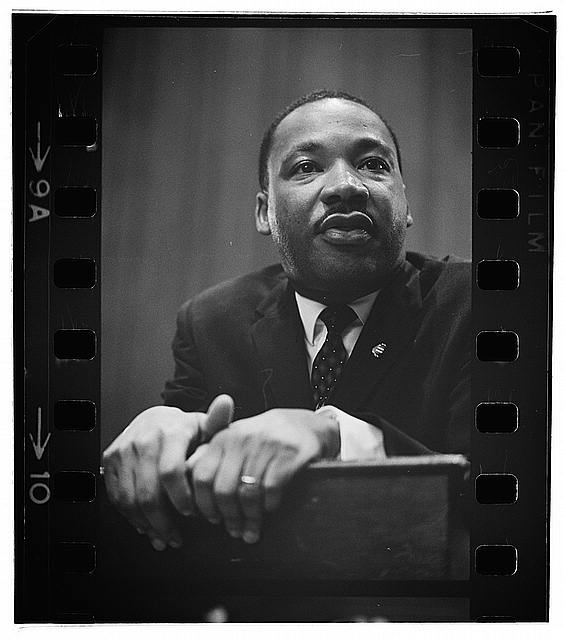
Martin Luther King Jr., Joan Baez and Harry Belafonte

Joan Baez was a junior at Palo Alto High School when she first heard Martin Luther King, Jr. speak at a conference for young Quakers. She would go on to sing for the non-violent movements for civil rights, social, economic and racial justice and against the war in Vietnam.

“King was giving voice to my passionate and ill-articulated beliefs,” wrote Baez in her memoir. Her “exhilarating sense of ‘going somewhere’ with my pacifism” in the aftermath of that speech would lead her to join King on marches in the Jim Crow south and at the historic March on Washington.

If you don’t already know about Baez’s history as a lifelong activist, you certainly would not get it from a viewing of the ahistorical Bob Dylan biopic, A Complete Unknown, released in US theaters this Christmas.

Loosely based on Dylan’s arrival in New York City in 1961, the film covers the songwriter’s introduction to the Greenwich Village scene, his meetings with Woody Guthrie and Pete Seeger, and his intimate relationships with Baez and the fictional Sylvie Russo, a stand-in for his real life steady, Suze Rotolo.

“During the height of the civil rights era Bob wrote, among other songs, ‘The Lonesome Death of Hattie Carroll,’ ‘The Death of Emmett Till,’ [‘Only A Pawn In Their Game’] and of course, ‘Blowing in the Wind,’ which became a kind of anthem,” Rotolo wrote in her own memoir of the Village in the ‘60s. In the film, “Blowing in the Wind” is framed in his repertoire to be more like an annoyance or an albatross.
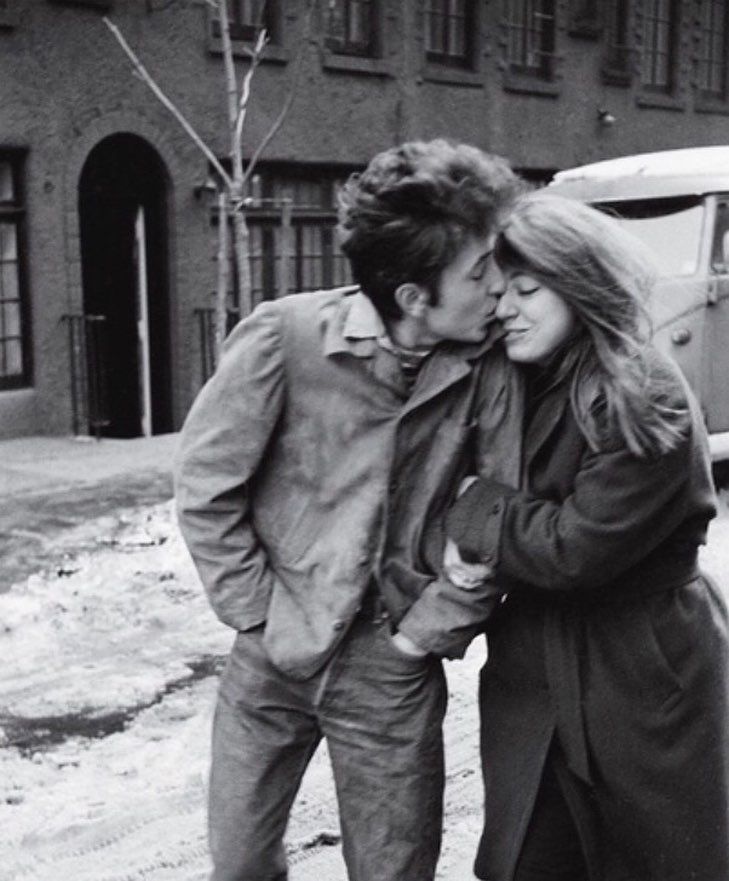
There’s a scene recreating Dylan and Rotolo’s meeting at a 1961 folk-a-thon at the Riverside Church, the historic hub of progressive gathering in New York City. And there is a brief moment when the Russo character explains to a befuddled Dylan that she works at the Congress for Racial Equality (CORE), organizing the Freedom Rides from North to South — in fact one of Rotolo’s jobs in the era.

Facts are also, that in 1963, Dylan walked off the all-important nationally broadcast The Ed Sullivan Show when he was asked not to play his song, “Talkin’ John Birch Society Blues.” For those unacquainted, the John Birch Society is a radical far right group and the song is a satire.

That not much is made of the realities of the causes and concerns that moved both Baez and Rotolo to become immersed in movement work and the folk scene is perhaps understandable: A Complete Unknown is after all, a version of a story of Dylan becoming Dylan. But the gaps in the story of Dylan’s own connections to civil rights and the songs he wrote in their favor are woefully understated in the film, as are his friendships with the people in his circle (where, for example, were the nods to Ramblin’ Jack Elliott? Phil Ochs? Odetta? Lead Belly, at least, appears in an 8×10 photograph). There are also no poets, comedians or jazz musicians in the film’s version of the Village, though they are among those who also contributed to it being America’s bohemian center of its time.

Nor are there any three dimensional Black artists or musicians depicted in the film. The one scene in which a Black musician has a speaking role was made out of whole cloth and is particularly egregious: The fictional bluesman, Jesse Moffette (portrayed by Big Bill Morganfield whose father in real life was blues legend Muddy Waters) is played as a drunken mess when he appears with Dylan on Seeger’s public television show, Rainbow Quest. That Rainbow Quest really existed and featured musicians Rev. Gary Davis, Mississippi John Hurt and Sonny Terry and Brownie McGee is undeniable. The inclusion of any one of those artists would’ve made an interesting, albeit fictional meeting between Black and white, established and next generation musicians. But the creation of a fictionalized and stereotypical bluesman is not only in poor taste, it was a missed opportunity to introduce new listeners to the musicians who influenced Dylan and generations of future folk, blues and rock musicians.

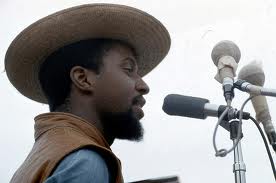
One full episode of Rainbow Quest was devoted to Dylan’s friend and contemporary, Len Chandler, another figure on the Village scene who was eliminated from the story told in A Complete Unknown. It was Chandler who drove Dylan on the back of his motorbike to deliver his first album to Guthrie in the hospital.

“We took out our guitars and played Woody songs,” said Chandler.

Chandler and Dylan hung out, traded songs, learned their trade and celebrated their song publications in folk journals, Broadside and Sing Out! And while Chandler spent considerably more time in the South fighting for the rights of Black Americans (like Baez, it was his calling), it’s significant that Dylan appeared shoulder to shoulder with both of them at the March on Washington (though the film makes a bungle of computer generated imagery to recreate his appearance there).

Considering what could’ve been is a fool’s game but I’ll play it anyway: Dylan’s first recording session was as a harmonica player on another one of his heroes records: Harry Belafonte’s “Midnight Special.” The often told story of Dylan throwing his harps in the trashcan afterward would’ve made a great cinematic moment. The inclusion of a civil rights giant would’ve again been a nice prompt for a young viewer to dig deeper into Belafonte’s role in American civil rights, music and Dylan’s own history.

Oh but there’s more: Dylan famously had a crush of the wanting to marry her kind on Mavis Staples. Here again, was another missed opportunity to demonstrate how the singer’s dreams listening to and playing music with his inspirers became his reality. Instead, there is a Black woman of intrigue in the film who Dylan dumps in short order after her appearance. We have no idea who she is or is supposed to be standing in for, but a little like the nameless “mistress” played by Angela Bassett in Masked in Anonymous, she is there to let us know the main dude is an equal opportunity romancer.

The studio players on Dylan’s recordings, Paul Griffin, Sam Lay, Bruce Langhorne, as well as his producer Tom Wilson, could all have been elevated to characters with even one or two-line speaking roles, if only to let the audience know these cats were not just extras to add color to the cast: These were seasoned professionals hand-picked for the records that transitioned Dylan from solo folky to serious, original artist.

And then there is the short shrift given to Dr. King, whose “I Have A Dream” speech Dylan and Chandler listened to in real time, on the day it was delivered.

“That’s what I remember from the speech, being behind another monument with Dylan and silencing ourselves, and sitting in amazement as we heard that wonderful speech unfold,” Chandler remembered. But the take on historic Black preaching in A Complete Unknown, comes in the form of a man in a fedora and trench coast on a soap box. Listed in the credits as “civil rights speaker,” the character is but a token symbol for the movement that reached its very apex during the era depicted in the film. The scenes at the Newport Folk Festival would take me another viewing to de/reconstruct but they suffer from similar missed opportunities to display Black excellence and inspiration (Lightnin’ Hopkins, Willie Dixon, Fannie Lou Hamer, for God’s sake).

What could’ve been a simple and effective portrait of young Dylan and the ways folk musicians, women, and Black Americans intersected with the Civil Rights Movement and helped to shape the counterculture and ideals that came to define the ’60s, is in the end, just another piece of product, a part of the Dylan Industrial Complex: The books for days, the several documentaries, a museum and archive, a brand of liquor, a Christmas album, ornaments, and a line of bobbleheads…these are but a fraction of the branded, approved, licensed and unlicensed materials on offer in his name. Why should I have wished that a biopic be anything more than a distraction, an entertainment?

In the end, the contributions to the Civil Rights Movement made by women and Black Americans are the real hidden figures and unknowns obscured in the Hollywood retelling of Dylan’s own early ‘60s story. As impenetrable as the “real Dylan” may be or seem to be, I left the film not thinking about him, but wanting to ask the folks living and passed over, how does it feel?

Filed under: anti-capitalist, Arts and Culture, Blues, Bob Dylan, Civil Rights, film, Folk, Greenwich Village, Poetry, Protest Songs, , , , , , , , , , , , , , ,

“We’re Not Going Back”

Now that it’s September and the clouds here in San Francisco have cleared, I have some news to share: A new publication – the slim volume pictured above is on a new press – and it was made not only in memory of a movement hero, but in support of voting rights for all.

The story of Len Chandler is one of a path taken by chance. Among the  countless singers, students and teachers from coast to coast who sat in, stood up and rode freedom’s highway for the voting rights of their fellow Americans in the Jim Crow South, Chandler had an extraordinary knack for topical songwriting and an unwavering dedication to racial justice. From his home in Akron, to the heart of the Greenwich Village folk scene, Chandler was introduced in short order to humorist Hugh Romney  aka Wavy Gravy, poets Bob Kaufman and Langston Hughes, and folksingers Dave Van Ronk and Bob Dylan. Swiftly recruited by Pete Seeger to join the singing organizers with the Student Nonviolent Coordinating Committee, he was sent to Arkansas to register voters.

“You have to take the lead from somewhere and there were only a few performers around who wrote songs, and of them, my favorite was Len Chandler,” said Dylan. Compiled from rare interviews with Chandler by the author, Denise Sullivan’s concise tribute, Shadow Dream Chaser of Rainbows, pays homage to an unsung folk hero and provides instruction and inspiration for artists and activists pushing for change in perilous times.

This project has been long in the making: It started nearly 20 years ago when I embarked on the research for Keep on Pushing. It was resurrected when I was invited by the Bob Dylan Center to contribute an essay to a proposed catalog, and it was completed with the creation of a small press, Lyon Editions. Your purchase of Len Chandler: Shadow Dream Chaser of Rainbows will not only support its makers, it will contribute toward supporting voting rights and poll watching organizers, specifically in Georgia.

Rest assured Chandler is missed this election season, but let’s vote in his memory and in the memory of Medgar Evers, Viola Liuzzo, James Chaney, Andrew Goodman, Michael Schwerner, Martin Luther King, Jr. and others who lost their lives in the name of civil rights. A vote for Kamala Harris will see to it that the John R. Lewis Voting Rights Advancement Act is passed, ending voter suppression in all its forms, once and for all.

Thank you to our friends at Bird and Beckett Books and Records for the proper launch on August 28 as we commemorated 61 years since the March on Washington for Jobs and Freedom, and one year to the day of the passing of Chandler. Full book talk and discussion here. Purchase books here. Thank you.

Filed under: anti-capitalist, anti-racist, anti-war, Arts and Culture, Black Power,, Bob Dylan, Book news, Books, Civil Rights, Dr. Martin Luther King Jr., Folk, Georgia, Harry Belafonte, income disparity, Keep On Pushing, racism, , , ,

For MLK Day: Len Chandler’s Shadow Dream – in memory of a singer, a movement & its leader

Len Chandler was a protest singer, movement worker and unsung hero from the Civil Rights Era, a frontline campaigner in the fight for voting rights, racial and economic justice and against wars of aggression. He performed with Bob Dylan and Joan Baez at the March on Washington For Jobs and Freedom in 1963 where Dr. Martin Luther King, Jr. delivered his historic “I Have A Dream” speech. In 2021, I was commissioned to write a piece on Chandler and his relationship to Bob Dylan in front of the opening of the Bob Dylan Center in Tulsa, OK. The essay is emerging here for the first time before its publication as a commemorative limited edition booklet on the life of Chandler (with expanded content). A portion of the book’s earnings will be contributed to voting rights organizations. Order here: Len Chandler: Shadow Dream Chaser of Rainbows/In memory of a movement hero

“You have to take the lead from somewhere and there were only a few performers around who wrote songs, and of them, my favorite was Len Chandler,” wrote Bob Dylan in his book, Chronicles.

Among the singing foot soldiers in the civil rights movement, the students and teachers from coast to coast who sat in, stood up and rode on freedom’s highway, and of all the folksinging pamphleteers and poets who swarmed Greenwich Village in the late ‘50s and early ‘60s, only Len Chandler emerged from that fabled period an under-looked groundbreaker and a foundational freedom singer, a kind of cosmic twin to Bob Dylan.

“We talked all the time,” said Chandler. “I can’t remember what we talked about but half the time, it would be philosophical, our different approaches to things. We could talk for two days on whether it’s a straight line or circle,” he said, recalling that vortex, that wrinkle in time in Greenwich Village where the cultural happenings of the ‘60s were beginning to reveal themselves. “I’d argue today that it’s a circle. The circle is built into everything. It’s built into our DNA, it’s built into the way the cosmos is formed. Everything is circular.”

The Village swirled with poets, playwrights, and artists of all stripes, mixed with locals and others from afar, far-out people who sought a fluid place to become who they thought they were meant to be – the kind of place and kind of time where young Len Chandler (from Ohio) and young Bob Dylan (from Minnesota) could meet, become friends and learn how to frame, shape and deliver a song.

“He sang quasi-folk stuff with a commercial bent and was energetic, had that thing that people call charisma,” Dylan wrote. “Len performed like he was mowing down things. His personality overrode his repertoire. Len also wrote topical songs, front-page things.”

Ordering info Len Chandler: Shadow Dream Chaser of Rainbows

Filed under: anti-racist, anti-war, Bob Dylan, Civil Rights, Dr. Martin Luther King Jr., Poetry, , , ,

Rest In Power, Len Chandler: Shadow Dream Chaser of Rainbows Died on August 28, 2023

images

As anyone with their eyes on the prize knows, the 60th anniversary of the historic March on Washington for Jobs and Freedom was on August 28, 2023.  Among those assembled to help Dr. King push forward his dream of racial harmony and economic justice was Len Chandler (often overlooked in the history of civil rights work), one of the voices in a trio that day which included Bob Dylan and Joan Baez (Chandler appears at about 17 minutes into the following clip, though the whole 25 minutes is worth your time). Unfortunately, I come here today with a heavy heart to belatedly report that Chandler died at home in Los Angeles, on August 28, 60 years to the day of the march.

It was a blessing to have interviewed Len on several occasions for the purpose of documenting his story. I was invited to the home he shared with his wife Olga James, to break bread with him, and to participate in several community functions and political gatherings where he was still singing for freedom in the 21st Century. My deepest condolences to all who loved him. I did not know him well, but his work has continued to move and motivate me, long after first making contact with him more than a decade ago.

It was hoped that Chandler and I would be visiting the Bob Dylan Center in Tulsa this year, to deliver a panel on singing, songwriting, racial justice and voting rights, to coincide with the publication of my essay commissioned by the Center on Chandler. But none of that was to be. Timing, as it’s said, is everything. And racism is still very much alive, very much afoot in America, 2023.

The following is a repost from my previous posts on Chandler

Chandler would march with Dr. King and travel throughout the South in the name of voter registration, informing rural Southerners of their polling rights, often at great risk to his own life. His poems were recognized by Langston Hughes, he wrote the folk standard “Green, Green Rocky Road” with poet Bob Kaufman, and recorded two albums for Columbia Records, but little is known about him or his life.  I sought out Chandler when I wrote Keep on Pushing, my text that tracks the origins and evolution of freedom music, and its roots in African American resistance and liberation movement.

Originally from Akron, Ohio, and studying on scholarship at Columbia in the ’50s, Chandler made his way to Greenwich Village folk music by accident: Lured to the sounds of Washington Square Park by the downtown youths he was mentoring, he easily fell into the scene with his natural ear for songwriting and his familiarity with the songs of Lead Belly, Big Bill Broonzy, and Woody Guthrie.  Following a performance at the popular Village coffeehouse, the Gaslight Cafe,  Chandler landed a contract to go to Detroit, writing and performing topical songs for local television. A few months later, when he returned to New York, the folk thing was in full swing:  Bob Dylan was the latest arrival to town and the pair started to trade ideas and songs.

“I hadn’t yet begun writing streams of songs like I would, but Len was, and everything around us looked absurd—there was a certain consciousness of madness at work,” wrote Dylan in his book Chronicles.  Chandler remembers it like this in Keep on Pushing:  “The first song I ever heard of Dylan’s was ‘Hey ho, Lead Belly, I just want to sing your name,’ stuff like that.”  Dylan used Chandler’s melody for his song, “The Death of Emmett Till.” “Len didn’t seem to mind,” Dylan wrote.

Chandler went on to record two albums for Columbia:  To Be a Man and The Loving People. He continued to work as a topical songwriter, a peace and civil rights advocate, and as a songwriting teacher; his tour of Pacific Rim bases with Donald Sutherland, Jane Fonda, Holly Near and Paul Mooney was documented in the Francine Parker film, FTA, a must-see for anyone interested in US history and anti-war efforts within military ranks. Catch a glimpse of Chandler at the end of this trailer for the film:

It was an extreme privilege (and I have since found out a rare opportunity) to meet one of the true unsung heroes of singing activism (as well as his wife Olga James, a pioneering performer in her own right), and have him tell his story to me. Though largely retired from performing, he remains well- informed on human rights, politics, and the arts and will step up and step out for civil rights. You can read a portion of our talks in Keep on Pushing, and someday I will post the complete unedited transcripts, though for now, enjoy the voice of Chandler from back in the day, when singing was a huge part of moving the movement forward.

Filed under: anti-capitalist, anti-racist, anti-war, Arts and Culture, Black Power,, California, Civil Rights, Folk, racism, ,

Freedom Singer Len Chandler and the March on Washington

images

Today marks the 57th anniversary of the historic March on Washington for Jobs and Freedom.  Among those assembled to help Dr. King push forward his dream of racial harmony and economic justice was Len Chandler (often overlooked in the history of civil rights work), one of the voices in a trio that day which included Bob Dylan and Joan Baez (he appears at about 17 minutes into the following clip, though the whole 25 minutes is worth your time).


Chandler would march with Dr. King and travel throughout the South in the name of voter registration, informing rural Southerners of their polling rights, often at great risk to his own life. His poems were recognized by Langston Hughes, he wrote the folk standard “Green, Green Rocky Road” with poet Bob Kaufman, and recorded two albums for Columbia Records, but little is known about him or his life.  I sought out Chandler when I wrote Keep on Pushing, my text that tracks the origins and evolution of freedom music, and its roots in African American resistance and liberation movement: a fraction of what we discussed was included in the book. I remain curious why nearly 10 years after publication, few scholars have pursued the lead and why so little is known about him…

Originally from Akron, Ohio, and studying on scholarship at Columbia in the ’50s, Chandler made his way to Greenwich Village folk music by accident: Lured to the sounds of Washington Square Park by the downtown youths he was mentoring, he easily fell into the scene with his natural ear for songwriting and his familiarity with the songs of Lead Belly, Big Bill Broonzy, and Woody Guthrie.  Following a performance at the popular Village coffeehouse, the Gaslight Cafe,  Chandler landed a contract to go to Detroit, writing and performing topical songs for local television. A few months later, when he returned to New York, the folk thing was in full swing:  Bob Dylan was the latest arrival to town and the pair started to trade ideas and songs.

“I hadn’t yet begun writing streams of songs like I would, but Len was, and everything around us looked absurd—there was a certain consciousness of madness at work,” wrote Dylan in his book Chronicles.  Chandler remembers it like this in Keep on Pushing:  “The first song I ever heard of Dylan’s was ‘Hey ho, Lead Belly, I just want to sing your name,’ stuff like that.”  Dylan used Chandler’s melody for his song, “The Death of Emmett Till.” “Len didn’t seem to mind,” Dylan wrote (today, as it happens, is the anniversary of the murder of Emmett Till).

Chandler went on to record two albums for Columbia:  To Be a Man and The Loving People. He continued to work as a topical songwriter, a peace and civil rights advocate, and as a songwriting teacher; his tour of Pacific Rim bases with Donald Sutherland, Jane Fonda, Holly Near and Paul Mooney was documented in the Francine Parker film, FTA, a must-see for anyone interested in US history and anti-war efforts within military ranks. Catch a glimpse of Chandler at the end of this trailer for the film:

It was an extreme privilege (and I have since found out a rare opportunity) to meet one of the true unsung heroes of singing activism (as well as his wife Olga James, a pioneering performer in her own right), and have him tell his story to me. Though largely retired from performing, he remains well- informed on human rights, politics, and the arts and will step up and step out for civil rights. You can read a portion of our talks in Keep on Pushing, and someday I will post the complete unedited transcripts, though for now, enjoy the voice of Chandler from back in the day, when singing was a huge part of moving the movement forward.


Filed under: anti-capitalist, anti-war, Arts and Culture, Bob Dylan, Civil Rights, Folk, Freedom Now, , , ,

Len Chandler: He, too, sang at the March on Washington

images

photo of Len Chandler at Newport Folk Festival, 1964, by John Rudoff

Today marks the 55th anniversary of the historic March on Washington for Jobs and Freedom.  Among those assembled to help Dr. King push forward his dream of racial harmony and economic justice was Len Chandler (often overlooked in the history of civil rights work), one of the voices in a trio that day which included Bob Dylan and Joan Baez (he appears at about 17 minutes into the following clip, though the whole 25 minutes is worth your time).


Chandler would march with Dr. King and travel throughout the South in the name of voter registration, informing rural Southerners of their polling rights, often at great risk to his own life. His poems were recognized by Langston Hughes, he wrote the folk standard “Green, Green Rocky Road” with poet Bob Kaufman, and recorded two albums for Colombia Records, but little is known about him or his life.  I sought him out when I wrote Keep on Pushing, my text that tracks the origins and evolution of freedom music, and its roots in African American resistance and liberation movement: a fraction of what we discussed was included in the book. I remain curious why seven years after publication, few scholars have pursued the lead and why so little is known about him…

Originally from Akron, Ohio, and studying on scholarship at Columbia in the ’50s, Chandler made his way to Greenwich Village folk music by accident: Lured to the sounds of Washington Square Park by the downtown youths he was mentoring, he easily fell into the scene based on his natural ear for songwriting and his familiarity with the songs of Lead Belly, Big Bill Broonzy, and Woody Guthrie.  Following a performance at the popular Village coffeehouse, the Gaslight Cafe,  Chandler landed a contract to go to Detroit, writing and performing topical songs for local television. A few months later, when he returned to New York, the folk thing was in full swing:  Bob Dylan was the latest arrival to town and the pair started to trade ideas and songs.

“I hadn’t yet begun writing streams of songs like I would, but Len was, and everything around us looked absurd—there was a certain consciousness of madness at work,” wrote Dylan in his book Chronicles.  Chandler remembers it like this in Keep on Pushing:  “The first song I ever heard of Dylan’s was ‘Hey ho, Lead Belly, I just want to sing your name,’ stuff like that.”  Dylan used Chandler’s melody for his song, “The Death of Emmett Till.” “Len didn’t seem to mind,” Dylan wrote (today, as it happens, is the anniversary of the murder of Emmett Till).

Chandler went on to record two albums for Columbia:  To Be a Man and The Loving People. He continued to work as a topical songwriter, a peace and civil rights advocate, and as a songwriting teacher; his tour of Pacific Rim bases with Donald Sutherland, Jane Fonda, Holly Near and Paul Mooney was documented in the Francine Parker film, FTA, a must-see for anyone interested in US history and anti-war efforts within military ranks. Catch a glimpse of Chandler at the end of this trailer for the film:

It was an extreme privilege (and I have since found out a rare opportunity) to meet one of the true unsung heroes of singing activism (as well as his wife Olga James, a pioneering performer in her own right), and have him tell his story to me. Though largely retired from performing, he remains well- informed on human rights, politics, and the arts and will step up and step out for civil rights. You can read a portion of our talks in Keep on Pushing, and someday I will post the complete unedited transcripts, though for now, enjoy the voice of Chandler from back in the day, when singing was a huge part of moving the movement forward.


Filed under: anti-capitalist, anti-war, Arts and Culture, Bob Dylan, Civil Rights, Dr. Martin Luther King Jr., Folk, Keep On Pushing, , , , , ,

Poet Bob Kaufman and the Here and Now

bobKaufmanIt’s been 30 years since Beat poet Bob Kaufman passed on, a few months shy of his 61st birthday. The often underlooked surrealist was a contemporary of Allen Ginsberg and William Burroughs; he lived in the North Beach and the Mission Districts of San Francisco for much of his life. In the spirit of National Poetry Month and in commemoration of what would’ve been his 91st birthday today, his work was celebrated here last week, a demonstration that it is never too late or too early to appreciate a visionary artist.

Speaking to Kaufman’s influence on the wider world of poetry and his deep imprint on them, poets Anne Waldman and Will Alexander, though only briefly acquainted with him personally, read Kaufman’s work aloud, accompanied by saxophonist David Boyce and percussionist Kevin Carnes. Sponsored by the Before Columbus Foundation and the San Francisco Public Library, members of Kaufman’s family traveled from Mississippi and Louisiana to be present and to honor his memory.

Listening to Waldman and Alexander, you could hear why Kaufman’s poems are best experienced aloud and accompanied by the jazz he loved. Kaufman’s epic “The Ancient Rain,” written after his famous vow of silence (following the Kennedy assassination and until the end of the Vietnam war) was read by Waldman, as she sounded out the blows empire wages against humankind, and on bodies Black and Brown. Readings were also selected and extracted from “I, Too, Know What I Am Not,” “Rue Miro,” and “Afterwards, They Shall Dance,” among others (I did not hear my favorite, “Hollywood,” though that doesn’t mean it wasn’t read).

Kaufman gave up writing down his poetry in 1978, but his words survived thanks to friends, fellow poets and his wife Eileen who taped and cobbled together the pieces collected in the works published after his death. Though
Kaufman’s poems foretold the persistent dilemmas of our age—the surveillance state, police violence (he was arrested over 30 times), media irresponsibility, a collapsing democracy and unnecessary poverty in a nation of great wealth—with his vision came the cost of direct engagement with such disturbing truth.

In his introduction to the posthumous Kaufman collection, Cranial Guitar, writer David Henderson noted that Kaufman’s life was unusual for a man of letters in that he left very little in the way of written materials or correspondence; just three published volumes, the broadsides Abomunist Manifesto, Second April and Does The Secret Mind Whisper? and some songs. One of those songs, “Green Rocky Road”  has enjoyed a long tenure as a folk music standard; most recently it was revived in the Coen Brothers film, Inside Lleweyn Davis. Co-written with Len Chandler, and popularized by Dave Van Ronk, the song bears the dreamlike, compelling qualities that are the hallmark of Kaufman’s poems; Chandler adapted the melody from a slave-era song quite possibly from the Georgia Sea Islands.

Kaufman’s most easily accessed works in libraries and bookstores are generally Solitudes Crowded with Loneliness, The Ancient Rain: Poems 1956–1978 and Cranial Guitar: Selected Poems by Bob Kaufman as well as Mel Clay’s Jazz Jail and God: Impressionistic Biography of Bob Kaufman. A new film, debuting at the San Francisco International Film Festival, And When I Die, I Won’t Stay Dead (Billy Woodberry, 2015), burrows into some of Kaufman’s secret history, from his beginnings as a union organizer, to the shock therapy at Bellevue that contributed to his silent years; there was substance and alcohol abuse and he was an absent father, though his magnitude as a poet is not open to debate. Artist and translator Mary Beach says, “I think he was one of the greatest of the 20th Century, frankly.”

I think of Kaufman’s poem,  “Afterwards, They Shall Dance,”  just about everyday. It begins like this:

In the City of St. Francis they have taken down the statue of

      St. Francis,

And the hummingbirds all fly forward to protest, humming

     feather poems.

The following is a rare, brief clip of Kaufman at work (likely at San Francisco Art Institute).

https://www.youtube.com/watch?v=1aP8-MpCC_8


Filed under: anti-war, Arts and Culture, Jazz, North Beach, Poetry, , , ,

We’re On The Freedom Side

There’s a new version of the labor standard, “Which Side Are You On?” going around: Sung at the Black Lives Matter and Blackout Coalition actions, it’s also been used as the intro and outro marching song at some of the Black Brunch protests.

Malcolm X was a freedom fighter
And he taught us how to fight
We go’n’ fight all day and night
Until we get it right
Which side are you on, my people? Which side are you on?

https://www.youtube.com/watch?v=xTVUKexfro0

In the early ’30s when the United Mine Workers of America began to organize around Eastern Kentucky (in an effort to end practices like payment in scrip and pay docking toward rent in substandard housing) it was Florence Reece, a Kentucky miner’s daughter and wife who wrote the original lyrics to “Which Side Are You On?”.  It remains a labor movement standard.

They say in Harlan County
There are no neutrals there
You’ll either be a union man
Or a thug for J.H. Blair

Blair was the sheriff who rousted Reece’s family during the strike among Harlan County mine workers, just one of the struggles which contributed toward the region earning its nickname “Bloody Harlan County.”   In the ‘70s, workers struck again and Reece reprised the song for striking miners (preserved in this clip from Barbara Kopple’s Academy Award-winning documentary, Harlan County U.S.A.).

https://www.youtube.com/watch?v=WYr09q9dHSo

The song’s melody is said to be based on a hymn, “Lay the Lily Low.” Some researchers believe it is the same song that forms the basis for the traditional “Jack-a-Roe,” (also known as “Jack Munro”), its best-known version performed by the Grateful Dead. But I think that somewhere in the Kentucky mountains, singers have been intoning this strange melody for hundreds of years, its deep minor tones more reminiscent of the mystic drone of a Gregorian chant than anything known to folk or gospel. Whatever its melody’s true origins, “Which Side Are You On?” was first repurposed during the Civil Rights Movement by topical singer-songwriter Len Chandler (you can hear his recorded version on the album, WNEW’S Story of Selma).

Come all you Northern liberals,
Take a Klansman out to lunch
But when you dine instead of whine
You should serve nonviolent punch
Which side are you on? Which side are you on?

Chandler told me his story, of how he came to be a topical singer in Greenwich Village, then moved on to marching with Dr. King from, Selma to Montgomery (he appears in archival footage in the new film, Selma). “I’d write a song like that and then I’d be singing it in a mass meeting that night. People would be playing and singing for forty five minutes, until you were just worn out,” he said. Fifty years later, he remains in pursuit of social justice through action and song (Chandler’s full story appears in Keep on Pushing). I learned from listening to Chandler’s songs and to his songtalk, and by studying the work of freedom singers like Odetta, Bernice Johnson and voting rights activist Fannie Lou Hamer, that group singing among activists gives people who may start the night as strangers a chance to bond. Communing over songs, we become more bound to purpose. Singing together is energizing, nourishing, and feeds the spirit; it provides strength to move forward, together as one. But group singing for justice serves a further purpose beyond what some mock as a moment to join hands and sing “Kumbaya”:  In the fight for non-violence, singing has the ability to disarm.

Hamer practiced the power of song when she sang alongside Chandler and other SNCC volunteers at the mass meetings and marches, through her representation of the Mississippi Freedom Democratic Party at the 1964 Democratic Convention and on to the passage of the Voting Rights Act of 1965. Women at the forefront of workers organizing, who’ve pushed for voting and employment rights, and led the fights to end war, poverty, and racism across the planet all know well the power of song: Whether Hamer, Reece, or Ani DiFranco (who updated the song in 2012 then titled her collection of socially conscious songs, ¿Which Side Are You On?) or the Black Lives Matter and Blackout Coalition organizers, women are allied in a long and storied legacy of traditional and gospel song.  With songs we have contributed to toppling apartheid in South Africa, had voting rights granted in the US, fought warlords in Liberia and begun to make corrections to the broken justice system in the USA. With songs that have traveled the road from blues to hip hop, we will continue toward freedom for all people. It’s good to hear the timeless soundtrack to justice making a comeback. Now, which side are you on?

Filed under: anti-war, Civil Rights, Coal Mining Songs, Dr. Martin Luther King Jr., Origin of Song, , , , , ,

Promenade in Green

(UPDATE, December 19: I have since seen the film in its entirety and the “Green Green Rocky Road” scene is the best part. Though Len Chandler and the histories of some of the other folksingers of color on the scene—Odetta, Richie Havens, Buffy Sainte-Marie—have been well-documented, the filmmakers chose to render invisible their counterparts or composites in their deeply cynical look at Greenwich Village folk).

Inside Llewyn Davis, the new Coen Brothers film concerning a fictional folksinger from the early ‘60s Greenwich Village scene (based loosely in post-modern style on some incidents from the life of actual folksinger Dave Van Ronk and other figures of the Village scene) opened in select theaters this weekend.

http://www.youtube.com/watch?v=eWEkvU7nwYY

I have not yet seen the film, but gathered from the soundtrack the title character played by Oscar Isaac, performs “Green, Green Rocky Road,” which Van Ronk himself went as far as to call his “theme song.”  With melodic and rhythm roots in the Georgia Sea Islands and before that, West Africa, readers of Keep on Pushing will remember the songwriting credit for “Green, Green Rocky Road” belongs to Len Chandler and Robert Kaufman (yes, as in Beat poet, Bob Kaufman).

I had the great and rare honor to interview songwriter and activist Chandler in 2007; large portions of our interview appeared throughout Keep on Pushing and on this site.  Chandler spoke highly of Kaufman, Van Ronk, and of course Bob Dylan, who detailed their shared history and collaborations in his book, Chronicles. And yet, it is “Green, Green Rocky Road,” a song Chandler never recorded, that may be one of his most enduring achievements, despite the fact he was a singing hero of the Civil Rights Movement (his contributions to African American/US political and social history remain obscured and inexplicably, largely unsung).

Here’s a clip of Van Ronk performing the song, followed by a clip of Chandler performing his own “Keep on Keepin’ On,” from his rare Columbia album, To Be A Man.

Filed under: Bob Dylan, film, Folk, Greenwich Village, Poetry, video, , , , , , , ,

Len Chandler: Fifty Years of Marching and Singing the Songs of Freedom

As most readers know, today is the 50th anniversary of the the historic March on Washington for Jobs and Freedom.  What you may not know, even as an astute observer of civil rights and music history and where they meet, is the name Len Chandler:  He was among those assembled to help Dr. King push forward his dream of racial harmony and economic justice on that day, as well as on the marches in the Southern States.  At the March on Washington, Chandler was one of the voices in a trio that included Bob Dylan and Joan Baez. He marched with Dr. King and traveled through the South in the name of voter registration, informing rural Southerners of their polling rights, at risk to his own life. It was a now-you-see-it-now-you- don’t YouTube clip of Chandler’s inspirational performance of “Eyes on the Prize” that contributed to inspiring me to track him down and move forward with the writing of Keep on Pushing, my text that unpacks the origins of freedom music, and its roots in African American struggle and triumph.images

Originally from Akron, Ohio, and studying on scholarship at Columbia in the ’50s, Chandler made his way to Greenwich Village folk music a bit by accident. Lured to the sounds of Washington Square Park by the downtown youths he was mentoring, he easily fell into the scene based on his natural ear for songwriting and his familiarity with the songs of Lead Belly, Big Bill Broonzy, and Woody Guthrie.  Following a performance at the popular Village coffeehouse, the Gaslight Cafe,  Chandler landed a contract to go to Detroit, writing and performing topical songs for local television. A few months later when the gig was through, he returned to New York to find the folk thing in full swing:  Bob Dylan was the latest arrival to town and the pair started to trade ideas and songs. “I hadn’t yet begun writing streams of songs like I would, but Len was, and everything around us looked absurd—there was a certain consciousness of madness at work,” wrote Dylan in his book Chronicles, remembering when.  Chandler remembers it like this in Keep on Pushing:  ”The first song I ever heard of Dylan’s was ‘Hey ho, Lead Belly, I just want to sing your name,’ stuff like that.”  Dylan used Chandler’s melody for his song, “The Death of Emmett Till.” “Len didn’t seem to mind,” wrote Dylan.

Chandler went on to record two albums for Columbia:  To Be a Man and The Loving People.  He continued to work as a topical songwriter, a peace and civil rights advocate, and as a songwriting teacher; his tour of Pacific Rim bases with Donald Sutherland, Jane Fonda, Holly Near and Paul Mooney was documented in the Francine Parker film, FTA, a must-see for anyone interested in US history and anti-war efforts within military ranks. Catch a glimpse of Chandler at the end of this trailer for the film:

Today, Chandler is largely retired from performing, but he remains well- informed on human rights, politics, and the arts, and can write and perform songs that still pack a punch.  I must say it was a privilege to meet one of the true unsung singing activists of my lifetime (as well as his wife Olga James, a pioneering performer in her own right), and have him tell his story in Keep on Pushing (which is where you will find more straight talk from Chandler, as well as my own perspectives on his contribution to civil rights history). I had hoped to see him on television today,  in the crowd in Washington, or better yet, onstage with Peter and Paul, reviving a freedom song for our times. Perhaps I missed him, but Len Chandler belongs on the guest list of esteemed names assembled for any kind of 50th anniversary commemoration of the March, the Civil Rights Era, and anywhere Freedom Songs are still sung.

Filed under: anti-war, Arts and Culture, Bob Dylan, Dr. Martin Luther King Jr., Folk, Freedom Now, Greenwich Village, Keep On Pushing, , , , ,

Archives

Recent Posts

Browse by subject or theme