Denise Sullivan

Author, Arts & Cultural Reporter and Worker

Remembering those who perished and those who survived the A-Bomb that dropped 80 years ago

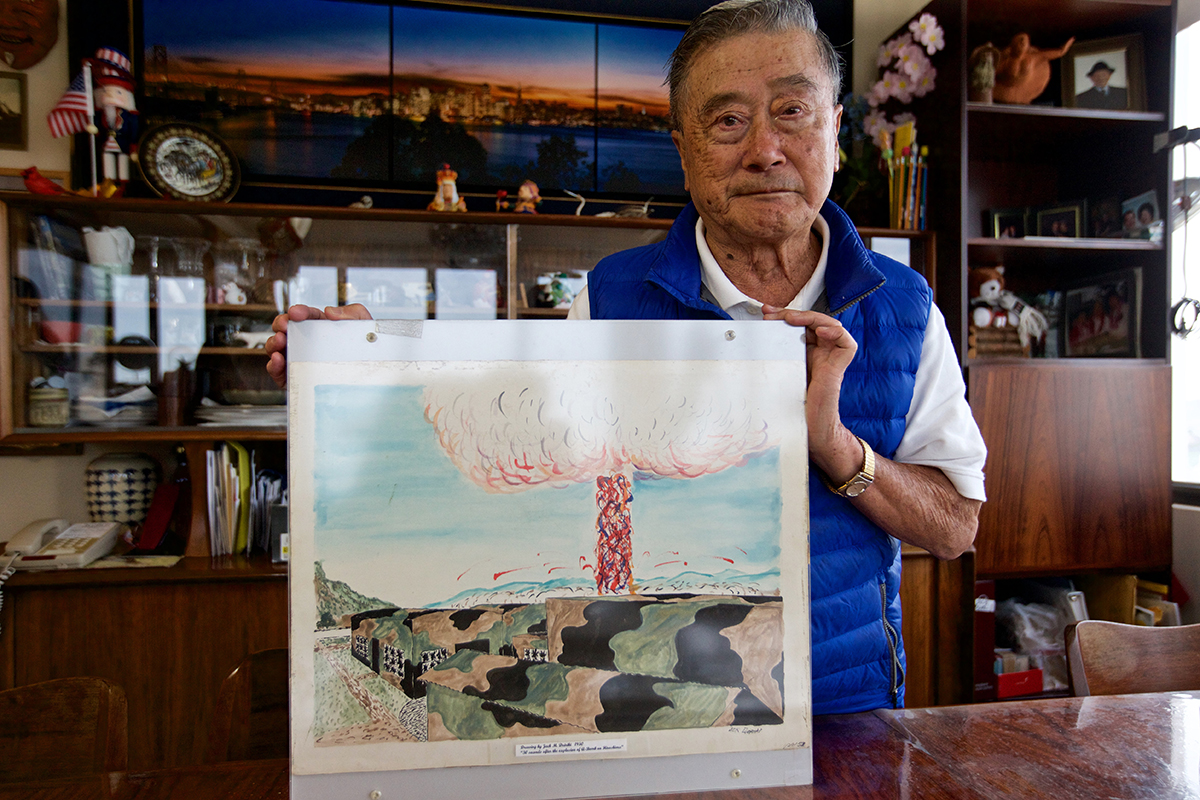
“I will never forget the image nor the smell of death,” are the words of Jack Dairiki, survivor of the attack on Hiroshima on August 6, 1945. In my long career as a reporter, I will never forget the opportunity I had to speak to Dairiki at the San Francisco home he shares with his wife Jun. There, he told me his life story as an American, detained in Japan when war broke out. He spoke of his eventual return to the Bay Area, of his attendance at Cal and his enrollment in a free drawing class. “This is what came out,” he said, holding his depiction of a mushroom cloud. In 2024, Nihon Hidankyo, the Japanese confederation of organizations recognizing A and H-Bomb sufferers, also known as the, hibakusha/survivors, was awarded the Nobel Peace Prize. Since the bombings, Dairiki has worked for peace in our time. It is with great appreciation and thanks to Karen Kai and the Dairikis that I once again offer this remembrance of all who perished from the blasts and live with the trauma of being forced into US concentration camps The full interview with atomic bomb survivor Jack Dairiki is available at this link. Thanks for remembering.

(photo by Kevin Hume)

Jack Dairiki, a Japanese-American who survived the atomic bombing of Hiroshima at age 14, holds a framed drawing of his memory of the explosive atomic mushroom cloud that he made in 1950 at his senior living apartment on the edge of Japantown on Monday, Jan. 28, 2019. (Kevin N. Hume/S.F. Examiner)

Filed under: anti-racist, anti-war, , , ,

One of The Survivors: 75th Remembrance

190202-sfe-sflives-005Jack Dairiki is an old-time Californian: His maternal grandfather was a hotelier and grocer in Sacramento. But in 1941, as a firstborn son, he was called with his father to the rural village outside of Hiroshima where his father was originally from.

“We received a letter in the mail that my grandfather was ill,” he explained. “We planned a summer vacation trip.” Traveling by ship to Yokohama, they proceeded to Tokyo and into the lush, green countryside where aunts, uncles and cousins he didn’t even realize existed eagerly awaited the arrival of their American relatives.

“My experience of seeing Japan for the first time was I noticed everything was petite: The cars, the railroad,” said Dairiki, while pouring into crystal glasses water and green tea for us to share. He recalled the culture shock upon his arrival.

“The only time I ate with chopsticks was in Chinese restaurants,” he said. He was unaccustomed to taking off his shoes and sitting on the floor, to the sliding doors and the tatami mats.

“I criticized my father for taking his shoes off,” he remembered. “We don’t do that in the United States, I told him, but my father had grown up in Japan. It was like being home for him.” One summer of running through rice fields and swimming in streams passed quickly. Dairiki was ready to return: to Sacramento, to Lincoln Grammar School, to his mother, his brothers and his sister. And then, World War II.

“My father tried to secure our passage back and was told we couldn’t go,” he said.
At home, his mother and siblings had been rounded up and taken to the Tulelake detention center; his younger brother died while in custody.
Read the rest of my interview with A-Bomb survivor, Jack Dairiki of San Francisco in the San Francisco Examiner as we remember with horror the US attack on Hiroshima and Nagasaki. The bomb killed somewhere between 100-200,000 people, most all civilians, this week 75 years ago. “When will we ever learn?”

Filed under: anti-war, San Francisco News, , , , , , , , , ,

Archives

Recent Posts

Browse by subject or theme