Denise Sullivan

Author, Arts & Cultural Reporter and Worker

The world according to Les McCann

Jazz musician Les McCann died of pneumonia in Los Angeles on December 29, 2023 at age 88. As a leader and sideman, he recorded countless albums and made major contributions to the soul-jazz music of the ’60s and ’70s. His piano work has also been sampled frequently in the modern hip hop era. McCann has been most often remembered and celebrated for his performance of the Eugene McDaniels song, “Compared To What.” Performed live with Eddie Harris at the Montreux Jazz Festival in 1969 and released on their album, Swiss Movement, McCann on vocals and piano gave the song a certain punch and swagger. This is an edited transcript of my talk with McCann, about the origin of the song widely considered to be the greatest protest song of the Vietnam eraand his thoughts on life in 2016, from his then 80-year-old vantage point. May he rest in peacewith condolences to his surviving loved ones and friends.

“When I began my career in LA we had immediate attention. And whenever you have attention, you have other people coming around, trying to get your attention. I was performing with my trio at LA City College and Eugene McDaniels came by one night. I didn’t know who he was, but he liked what were doing and started hanging out. I thought he was the greatest male voice I’d ever heard. I invited him to join my group.

We started working together, and the money wasn’t good, but it was the beginning of us being professionals. He was different from all of us. He could speak English. A lot of people who didn’t like him, didn’t like him because of that. He was a very bright man, very clever. He knew what he was doing and he went after it. I believe he was the son of a pastor.

We were kinda like friends, he’d sit in, but we also hung out. We had a vocal group, a choir, and we’d get together and sing, 12 people, but all were potentially looking for their own career. When he came to us, and said, “I got a record deal, they gave me a lot of money,” we were happy for him, but not only did he stop singing the music we loved for him to do, he started doing all these other things. When they offered him the big money, some people thought he was being a traitor to jazz. But we were all just trying to make it. I was his reminder, the one who told him, don’t forget where you came from, don’t forget why you’re here.

He didn’t know he was a songwriter, but he’d ask me what I thought: Everything he showed me was unbelievable. I didn’t know he loved Bob Dylan. When I first heard “Compared To What,” it was just a set of words, there was no music. It had the words “God dammit” in it, and it was one of the reasons stations wouldn’t play it. No one had ever done that before. They were his words and I was speaking them: This was Gene son of a preacher, questioning whether he should speak his truth, which involved speaking words a preacher’s son shouldn’t say. It also involved a man speaking perfect English and being Black.

I could do what I wanted on my record label and so I recorded the song. But it was nothing like it was six years later when we did it on Swiss Movement. All that happened right there. We were just doing what we thought was great. It took me six years, but the way everyone now hears it happened in a moment, instantly onstage.

_____

“We think we’re unique, that nobody knows what we go through, but it’s not about the singing it’s about being a human, living in this world. These are lessons on learning how to love, trying to find our place and be who we are…You need to deal with the fear and the bullshit. We’re taught to be afraid of everything. Don’t do this or that: It’s said on purpose, part of the curriculum of this earthly school. Everyone has a blueprint, everyone sets out to do their thing. It’s all here, for us to learn. I’ve never stopped learning.

Earth ain’t meant to be heaven. We’re all angels having an earthly experience. Everything you can think of happens right here on this earth. If it wasn’t for sex and money and fighting, there would be no problems. It’s all how you look at things. We all have intuition.The real truth is in the quiet of who you are. I walk hand in hand with who I really am.

I remember my other lifetimes. I don’t want to do the same things over and over. It might take many times but the choice is whether we decide to live in love or in the things we fear.

Every time you do an interview, ask yourself the questions you want the answers to, ask everything you want to know of yourself: You’ll hear things you never heard before. You already know all this. It’s not anything you haven’t heard before.

Fear or love.

You have go through it and deal with it.

It’s how get to where we want to be by the time we die.

Did we really answer the call?

Did you live the life you wanted to live?”

c. 2016, Denise Sullivan

Filed under: anti-racist, anti-war, Arts and Culture, Jazz, Obituary, Origin of Song, Soul, , , , ,

Remembering The Outlaw: Eugene McDaniels

A portion of this post originally appeared here as an obituary in July, 2011.8765 It has been updated and amended as a remembrance.

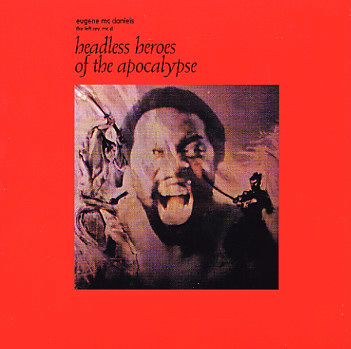
Rare groove chasers know well the name Eugene McDaniels; his 1971 album for Atlantic, Headless Heroes of the Apocalypse is a standard-bearer for psychedelic soul/funk/jazz rhythms and is borrowed frequently for its samples (most famously by A Tribe Called Quest and the Beastie Boys). The album is a fierce statement of Black pride, anger, and frustration, equally powered by a super-soul fever, a yearning for world peace, and ultimately love. A showcase for McDaniels’s breadth as a composer, from folky singer-songwriter styles (“Susan Jane”) to proto-rap (“Supermarket Blues”), his strongest words are demonstrations of righteous indignation (“The Lord is Black, his mood is in the rain…he’s coming to make corrections”).  His reward for creating such a unique piece of work was to have it recalled from the shelves and suppressed by Nixon’s White House; it remains a lost classic and is a story waiting to be told.

McDaniels is also the composer of “Compared to What,” the jazz-soul wartime protest made famous by Les McCann and Eddie Harris, a worldwide hit in 1969.

Born in Kansas City in 1935, McDaniels studied at the Omaha Conservatory of Music, and graduated from Omaha University. After forming a band in the 1950s, and singing with the McCann trio, he signed with Liberty Records and hit in 1961 with “A Hundred Pounds of Clay,” followed by five more Top 40 hits, including “Tower of Strength.” With six hit records to his credit, McDaniels turned his focus to writing (he worked closely with Roberta Flack and ultimately wrote her hit “Feel Like Making Love,” among others). Following the success of “Compared to What,” by the time he attempted to relaunch his solo career as a singing and songwriting artist with his 1970 album The Outlaw, McDaniels had developed an intensely personal and pointed new style and direction. Fearless with his melodies and in his verses, the instrumentation on his early ’70s companion albums was a wild combination of folk-funk: electric and acoustic bass brushed against guitar, drums, and piano. The arrangements combined with the lyrics to strike inner chords of deep recognition, touching places in the heart  only music can reach. McDaniels injects each song with theatrical and emotional soul power, delivering the verses with a fascist-fighting folker’s impeccable style of oration.  Incensed and confused by injustice, his notes echo and stretch, like the sound of someone losing his mind. His elegy for the genocide of America’s indigenous population, “The Parasite (For Buffy),” dedicated to Native American and folksinger Buffy Sainte-Marie, is a shining example of his dramaturgical song style that places his subjects in a social, political. and psychological context. But McDaniels’s revolution of the mind is a peaceful one; though he paints pictures of hell and all hell breaking loose, his narrator does not advocate use of violence as a solution. Rather, violence is portrayed as the problem.

In Keep on Pushing: Black Power Music From Blues to Hip Hop, I touched on McDaniels’s status as one of Nixon’s Enemies. It was in fact his story that in part inspired me to probe 50 years of freedom singing, and how resistance in song is received (or not) by a mass audience.  I remain deeply curious on the subject, but when my faith in music and in people is lagging, I pull out Headless Heroes of the Apocalypse and find it restores and inspires me. Whatever darkness he’s describing, the McDaniels point of view remains poised and unique; his higher consciousness and keep-on-pushing spirit bleeds between the notes of each slyly rendered gospel-laced track. Years later, the Beastie Boys would turn to McDaniels, nicknamed the Left Rev McD, for a sample, as would the Afro-centric, conscious hip-hoppers, A Tribe Called Quest who used a piece of “Jagger The Dagger” throughout People’s Instinctive Travels and the Paths of Rhythm. John Legend and the Roots brought back a version of “Compared to What,” which was most recently updated by the trumpet player and bandleader Terence Blanchard (with E-Collective featuring PJ Morton).

Eugene McDaniels made it real—no comparison. Listen below to “Supermarket Blues,” his musical statement from 1971 on racial profiling, police violence, and white supremacy: It sounds as fresh as the day it was recorded.

Filed under: Arts and Culture, Books, Eugene McDaniels, Folk, Jazz, Keep On Pushing, Protest Songs, Roots of Rock'n'Soul, , ,

The Outlaw, The Left Rev. McD, and Musical Warrior, Eugene McDaniels, RIP 1935-2011

The music of Gene McDaniels was a big inspiration to me before, during and after the writing of Keep on Pushing: In many ways he and his largely untold story was the motivation to write a book that provides not only an overview of intersections between music and social and political movement, but takes a close look at some of the artists/activists who were undermined by a climate and culture ultimately unequipped to support their visionary work. And yet, rare groove chasers know well the name Eugene McDaniels; his 1971 album for Atlantic, Headless Heroes of the Apocalypse is a standard-bearer for psychedelic soul/funk/jazz rhythms and is borrowed frequently for its samples (most famously by the Beastie Boys in “Get It Together”). The album is a fierce statement of black pride, anger, and frustration, equally powered by a super-soul fever, peace, and ultimately love. It’s a showcase for McDaniels breadth as a composer, from folky singer-songwriter styles (“Susan Jane”) to proto-rap (“Supermarket Blues”); McDaniels’s strongest words are demonstrations of righteous indignation, though he also offers spiritual ideas.

The Lord is black, his mood is in the rain,

The people have called he’s coming to make corrections 

You can hear his voice blowin’ in the wind

McDaniels is the composer of “Compared to What,” the 1969 jazz-soul wartime protest made famous by Les McCann and Eddie Harris: “Possession is the motivation that’s hangin’ up the goddam nation.” McDaniels was born in Kansas City in 1935, studied at the Omaha Conservatory of Music, and graduated from Omaha University. After forming a band in the 1950s, he signed with Liberty Records and hit in 1961 with “A Hundred Pounds of Clay,” followed by five more Top 40 hits, including “Tower of Strength.” All in all, McDaniels had six Top 40 records in 1961 and 1962 before he turned his focus to writing (he worked closely with Roberta Flack and ultimately wrote her hit “Feel Like Making Love,” among others). By the time he attempted to launch his solo career as a singing and songwriting artist, McDaniels had had the time to chew on what he wanted to say and had an intensely unique way of saying it. He was fearless with his melodies and in his verses. The instrumentation was a wild combination of folk-funk: electric and acoustic bass rubbed against guitar, drums, and piano, and they all combined with lyrics that strike chords of deep recognition. With the fascist-fighting folker’s impeccable style of oration, he injects the song with theatrical and emotional soul power. As he sings, he evokes images of a man increasingly incensed and so confused by injustice that he’s stretched to the point of losing his mind. His elegy for the red man, “The Parasite (For Buffy),” dedicated to Sainte-Marie, is a shining example of his dramaturgical song style that places his subjects in a social, political and psychological context. But McDaniels’s revolution of the mind is a peaceful one; though he paints pictures of hell and all hell breaking loose, his narrator does not advocate use of violence as a solution. Rather, violence is portrayed as the problem. “Supermarket Blues” describes a situation in which a man demands his money back for a can of peas marked as pineapple and ends up with a beating. Somehow he even finds a way to inject dark humor into the mess: “I wish I’d stayed home and got high instead of coming into the street and having this awful fight.” Whatever darkness he’s describing, McDaniels’s point of view remains poised and unique; his higher consciousness and keep-on-pushing spirit bleeds between the notes of each slyly rendered gospel-laced track. Years later, the white-rapping, Tibetan-Freedom-loving Beastie Boys would turn to McDaniels, nicknamed the Left Rev McD, for a sample, as would the Afro-centric, conscious hip-hoppers, A Tribe Called Quest. Last year, John Legend and the Roots brought back a version of “Compared to What.”

During the course of the five years I was writing and researching Keep on Pushing, I attempted to reach McDaniels  a number of times, hoping he would answer some of my questions about his early ’70s work and the mysterious stories of conspiracy and suppression that surround it, though my requests remained unanswered. In the book, I attempted to unravel his story the best I could, the facts  based on bits and pieces from pre-existing interviews, including information passed on by Pat Thomas who reissued Headless Heroes of the Apocalypse and its predecessor, The Outlaw. With little information available to me, in the end, I came to my own conclusions about McDaniels and his exceptional work, the  kind of music that reaches inside, touches the soul, and alters it. The Left Rev. McD made a difference, and mercifully the music remains, though his presence will be missed: Eugene McDaniels made it real—no comparison.

Filed under: Eugene McDaniels, Hip Hop, Soul, , , , , , , , ,

Archives

Recent Posts

Browse by subject or theme