Denise Sullivan

Author, Arts & Cultural Reporter and Worker

Howie Klein: One of a kind

Howie Klein 1948-2025

Writer, political activist, broadcaster, and record man Howie Klein’s life was large, unique and apparently complete as it came to a close on December 24. The work, his work–what some might call magic–was largely invisible, so much of it occurring out of the public eye, yet he leaves an indelible imprint on politics and culture, both on the underground and in the mainstream, as well on the individual lives he touched. Boiling down his life and legacy to a few paragraphs or simple words isn’t possible, especially today, Christmas, one day after he left our present reality for parts unknown. It’s particularly poignant that he should exit at this time of year when I think he secretly loved the holiday (his longtime annual Christmas shift as Howie Klaus on KUSF-FM was the giveaway).

Following an outstanding career in the record business in which he became known as an artist and First Amendment advocate, he spent the past 20 years fighting fascism as a commentator and as an ally for politically progressive candidates, while tending to several bouts of long term illness.

I met Howie about 45 years ago, when I was still a teenager, though before that, I heard his voice on the radio, broadcasting on KSAN-FM from the Sex Pistols final concert at Winterland. Lucky for us, he’s left behind a catalog of his life and times on the hippie trail, at Harvey Milk’s camera store, at Neil Young’s Broken Arrow Ranch and on the White House dancefloor, in writing and images, all to be compiled for publication as a memoir (more news on that in the new year). For now, I send love and condolences to all who knew and cared for him and leave you with his own words, on what it means to write and remember.

HOWIE KLEIN: So, as you probably know, I’m trying to write this memoir… but I don’t have the greatest memory in the world. Neither do most of my friends. Neither do most people in general it turns out. I explained how this has been impacting my work when I wrote about DEVO and Dolly Parton last month. How did “Mr B’s Ballroom” get written? My recollection was that I brought DEVO there and they wrote the song. My friend Michael Snyder, who I brought there, said DEVO wasn’t with us and that we told DEVO about the place and Mark Mothersbaugh wrote the song afterwards. I called Mark and he confirmed Michael’s version. I had such vivid “memories” of DEVO aghast at “Mr. B’s!”

I don’t remember exactly when I read Anne Rice’s Interview With A Vampire but I remember where I read it— San Francisco… and I remember discussing it with Harvey Milk, who was assassinated in 1978, so it was probably that year or the year before. No one had to tell me that the vampire myth was a metaphor for homosexuality long before Anne Rice came along and I was explaining that to Harvey while I was reading the book, which isn’t nearly as queer as the new TV series running on AMC now.

In that series (the 3rd episode), Daniel Molloy is interviewing Louis de Pointe du Lac in his Dubai penthouse and Louis seems to say that Lestat was the actual creator of “Wolverine Blues,” the jazz classic by Jelly Roll Morton, recorded in 1923. Daniel gets pissed off and accuses Louis of being an unreliable witness. As a defense, Louis explains the theory of the “odyssey of recollection” by reading from Daniel’s own memoir: “I am in my Buick, staring in the rearview mirror at my daughter in the car seat, an hour after I gave Derek, a guy I don’t know, the last 30 bucks I had. My editor reminds me, it’s seven years before car seats are mandatory. My ex-wife reminds me, I never owned a Buick. This is the odyssey of recollection.”

Sometimes there’s irrefutable— more or less— evidence, proof. That Iceland story I wrote was based on a daily diary I kept of our visit to the island early in 1969. When I asked Martha, now an internationally renowned neuroscientist, then my girl friend and traveling companion, what she thought of the page I posted about the trip, she had no recollection of Mario and Frances, the two American professors we met on the plane who asked us to chip in with them for a car and explore the country. We were with them for over a week, had plenty of adventures and dramas. Martha couldn’t even recall their existence.

I also sent [a] photo of Martha and Autumn Haze at our off-campus house in Rocky Point on Long Island (probably 1967 or ’68). Martha and Autumn didn’t like each other at all; they kind of tolerated each other. So this was a sweet and rare photo I found of them. I asked Martha what she recalls about the photo. She immediately remembered her blouse, she told me. She said she doesn’t recall I had a dog.

Memory does not work like a recording device. Elizabeth Loftus is a psychologist and memory expert, specializing in studying false memories. She explains her work in this TED Talk in Scotland, which has been viewed by over 5.8 million people on the Ted Talk site and another 2 million on YouTube. “Our memories,” she said, “are constructive. They’re reconstructive. Memory works a little bit more like a Wikipedia page: You can go in there and change it, but so can other people.” She discusses misinformation in this talk three years before Trump slithered into the White House.

She concluded her talk with the kind of statement that must be the bane of every memoir writer: “Most people cherish their memories, know that they represent their identity, who they are, where they came from. And I appreciate that. I feel that way too. But I know from my work how much fiction is already in there. If I’ve learned anything from these decades of working on these problems, it’s this: just because somebody tells you something and they say it with confidence, just because they say it with lots of detail, just because they express emotion when they say it, it doesn’t mean that it really happened. We can’t reliably distinguish true memories from false memories. We need independent corroboration.”

In 1802 William Wordsworth wrote “The Rainbow” (also known as ‘My Heart Leaps Up’) which was published in 1807. In high school we were asked to memorize the last three lines, which are also featured in the even more famous “Ode: Imitations of Immortality,” which Wordsworth started the day after he wrote “The Rainbow.”

My heart leaps up when I behold

A rainbow in the sky:

So was it when my life began;

So is it now I am a man;

So be it when I shall grow old,

Or let me die!

The Child is father of the Man;

I could wish my days to be

Bound each to each by natural piety.

©Howie Klein

Filed under: Obituary, Punk, rock 'n' roll, , , , , , , ,

Local Writers Make Good

It takes an extraordinary effort to write a book and see it through to completion. That might seem like an obvious and plain thing to say, but it’s true: Though many folks like to think they can do it or try to, fewer actually do. Perhaps that is why publication day and month is most always a big deal for writers: Congratulations cards, flowers and gifts are in order! Short of those things, I’ve got a couple of articles I wrote about two very different writers with two very different books celebrating mutual publication dates to share with you.

“Sexy Life, Hello!” is the first book for Michelle Kircherer. Her debut novella is also the premiere release of her independent publishing venture, Banana Pitch Press. Kicherer is an ambitious performer, writing coach and instructor and has a big vision for her multimedia venture, without any of the yuckiness associated with the big three publishing houses. She will be reading from her book and discussing it at Green Apple on the Park in San Francisco on March 6 and at Clio’s in Oakland on March 8. You can read more about Michelle in my profile of her for the San Francisco Chronicle.

“The Mansion” (Gnashing Teeth Publishing) is the tenth collection of poems by Dee Allen. A performance poet, Dee has been writing and performing his work in San Francisco, Oakland and beyond for over 20 years. I had the good fortune to first hear him read in 2012, or maybe it was 2013 — at any rate, that was several books ago for Dee. I try never to miss his publications and readings, but they are coming so fast and furious, I accidentally skipped 2024’s collection “Discovery.” It’s time to catch up and that’s exactly what we’ll be doing during a live-streamed conversation from Bird and Beckett Books and Records on Sunday March 9 at 10 a.m. A sneak preview of what’s likely to come up is in this profile for Bay City News, published today.

Congratulations to Michelle and Dee on their respective new publications. Though writing is its own reward, sometimes it helps to know there are those of us reading and appreciating the work, respecting what goes into the process and identifying with it. Thanks to this pair of authors for making our Bay Area literary community particularly unique, for making my job reporting on them easy, and for helping to keep the spirit of independent publishing alive in these unreal times.

Filed under: Arts and Culture, Book news, Books, California, San Francisco News, , , , , , , , , ,

Litquake at 25

updated from a previous post on Litquake at 20

This week San Francisco’s literary festival, Litquake, celebrates 25 years of supporting writers, publishers, bookstores and the literary arts here in the Bay Area.

Running October 10-26, Litquake is the big event of the year for the Bay Area’s literary community. The mostly free readings and panels during Litquake and Litcrawl have become starting places for some of our writers and remain a testing and resting ground for those with more experience in need of a little recharge. These days, I mostly write about books, but when the festival rolls around, it’s a chance to remind myself, I too am a writer of books.

The festival’s co-founders, Jack Boulware and Jane Ganahl are my kind of people: Journalists and authors by trade, they dared to dream beyond the newsroom and share their love of the writing life with their immediate community. As their cohort of writers grew to include novelists, memoirists, biographers, sexperts, technologists and performance poets, the festival grew and grew, blossoming into its current incarnation as year round foundation and a 10+ day fest, culminating with an evening LItcrawl. Boulware and Ganahl have since stepped down as directors and as of this year, the organization welcomes its new director, Norah Piehl. Litquake is also powered by a small staff and tons of volunteers.

Though the years, I’ve been lucky to participate in the annual festival as a reader. Litquake has always been a place to try out new ideas and styles and as a writer I’ve test run biography, memoir and poetry, to get a feel for how the work sits with an audience of listeners. Litquake month has also served as a time of the year to create new work, to reset and reclaim one’s writing life, and affirm, that we are still readers and writers, no matter where the day or our lives may take us.

In more recent years, I’ve volunteer-organized and curated readings at Litquake in support of independent bookstores, particularly during San Francisco’s gentrification crisis. In 2014 we celebrated 55 years of Marcus Books. In 2015 and 2016, we honored the Mission District booksellers Modern Times Bookstore Collective, Alley Cat, Dog Eared and Adobe Books with standing-room-only events at the Make Out Room as fundraisers for Litquake and the grassroots United Booksellers (UBSF has since disbanded, but not before publishing a series of chapbooks, The City Is Already Speaking in collaboration with poet laureate Kim Shuck and featuring contributions by Tongo Eisen-Martin, Alejandro Murguía and other Bay Area poets). This year, the festival honors bookstores citywide at its opening night fundraiser, the Bookseller’s Ball. We are lucky to have so many bookstores here in San Francisco (my go-to is Bird & Beckett Books and Records). Despite digitization, the pandemic, extreme rent and operating costs (like insurance), San Francisco’s independent bookstores are strong and thriving.

It was at Bird and Beckett in 2019, that we hosted a full house for a comeback discussion with author David Talbot on Between Heaven and Hell: The Story of My Stroke, which he survived in 2017 and lived to write about. Talbot, a longtime supporter of independent booksellers and up and coming authors, has since survived a second stroke. You may offer financial support to him and his family by linking here.

As a literary community, I like to think we are mindful of supporting authors in need, as well as our elder writers and readers. For the last five years, I’ve been associated with Litquake as a teaching artist with The Elder Project, a community writing program offered to older adults. Facilitating these groups, meeting writers and hearing their stories has been an unexpected source of inspiration. The program continues to grow and each season we welcome new writers at all levels of their practice. It’s a great joy and privilege to carry on the work, conceived by poet, Jessie Scrimager Galloway, with our participants and my fellow teaching artists.

I had hoped to return to this year’s festival to read from my new book, Len Chandler: Shadow Dream Chaser of Rainbows, along with some as yet unpublished work. Due to a conflict, I will not be reading as scheduled, though I hope to find an alternative venue to test drive the new writings. Stay tuned to this space for updates and until then, I will see you at the festival. As always, thanks for reading and for your support of this webpage.

Filed under: Book news, California, San Francisco News, , , , ,

War is Over! If You Want It

Every day I look at a framed poster on my office wall, its message of love and peace beaming down, from John and Yoko. The poster was a gift from a beloved friend who I haven’t seen in quite some time – I wish the circumstances weren’t so. “War is over if you want it.”

There are plenty of us, people and countries and friends and relatives who long for peace. And while I do believe I have to want it, I may also have to work for peace – make it my job. And yet, I choose to believe everything is in alignment just as it is (excepting that is, man-made disasters like war crimes, genocide, climate emergency, inequality and other conditions “unhealthy for children and other living things”). Severed ties, no replies, disappointments and other communication breakdowns may also fall into the category of human failings. So this year of our lord, 2023, certainly didn’t turn out the way I planned it, but my gracious, that is likely for the best (!). With that in mind I make the choice to carry on and employ whatever abilities I have accordingly. What I mean to say is, artists and writers, maybe more so than others but maybe not, use the skills we have to strike back. I mean, doctors help sick people. Caregivers give care. Billionaires could be of help, but often, they go the other way. Just thinking out loud here, but it’s been said writers write, so there’s that.

Pandemics, economic downturns and waiting for the long arc of the moral universe to bend toward justice have historically been periods of great discovery and learning, that is for those who seek knowledge. Turbulent times are valuable to artists and writers and thinkers and doers; it gives us space to get down to the real work of visualizing and implementing change and exercising resistance. And yes, both work and resistance require resilience, and resilience requires care and attention to self. Big questions, like how to tend to our own needs without turning our backs on the wider world at war or away from the people who need us will arise. And yes…I agree, that’s a fine line to walk, and there are times I fail miserably.

Lucky, and I am oh so lucky, living in the Bay Area, I am surrounded by people who provide living examples of the balancing act. I’m thinking right now of artist and activist Megan Wilson. I’ve had the opportunity to interview her several times, most recently about her curatorial and creative role with the Clarion Alley Mural Project’s current installation, Manifest Differently. Successfully merging the political and personal, community organizing and creativity into a holistic vision of making art with a message, Wilson and CAMP point the way for future directions of arts communities to flourish in perilous times. You can link to my full profile of the artist at Bay City News.

Despite the unforeseen this and that, these and those throughout the globe, I struck gold this year when my reporter self found an outlet to tell the stories I want to tell, uncensored and unbothered by market-driven concerns or an editorial board whose political leanings or voting record does not match my own. Independent, non-profit media was not always on my radar. Growing up in capitalism, caught between survival and Aquarian idealism, most of the time I chose survival. That often meant working for people and places I found shall we say, less than savory. Minimum wage in America is not a living wage as anyone who has worked or still works at that rate of pay well knows. Low wage work is painful and it is essential for the world to run as we know it. But maybe, things are changing. I see people rising up, organizing, reasserting their right to unionize and crowding the streets in protest – that makes me hopeful.

In the early part of this century, I was dreaming of people-powered movements coming to life again, the kind the world saw in the Sixties. I began researching and writing a book calling for change – fueled by the power of music. Keep on Pushing published in 2011, a couple of months before the Occupy Wall Street Movement and before Black Lives Matter hit the streets. The book was a vision. The time arrived. The moment passed. We keep working.

My day job as a writing instructor is often a night job. My “students” (strange to call such competent adult writers students) do great work and teaching has become an unexpected source of joy and gratification — the perfect adjunct to the writing life that keeps me engaged with trends and topics writers are interested in exploring and developing. But if I may speak the truth, and you know I will, my own work often takes a back seat to the job. I have once again failed to achieve mastery of life’s balancing act. Some personal and longer term projects were side-burnered, not always of my own choice or making, but so be it. Projects will likely reach completion in the new year and I hope at that time to share them with you. A way will be made.

I hope 2024 brings us all more work and more jobs to do. For now, I’ll leave you with links to my most recent assignments for hire, a review of Sonic Life, by Thurston Moore for the San Francisco Chronicle Datebook, a profile of Nathalie Lermitte and the songs of Edith Piaf, and the aforementioned profile of Wilson. I’m grateful for the weeks when paycheck and passions intersect, and mindful of my privilege to pursue both — in peace.

Filed under: anti-capitalist, anti-racist, anti-war, , , , , , ,

Surrender Bono: There’s No Band Like U2

During U2’s earliest shows in San Francisco, a ritual developed: Bono would lift a child from the crowd onto the stage and prop her on his shoulders. The girl’s name was Megan and I was acquainted with her family; they ran the Psychedelic Shop on Market Street, a remnant of the hippie days and an essential stop on our ‘80s routes as one of the few places in town that sold rock ’n’ roll badges. I haven’t seen Megan or her family for years but she appears at about the forty minute mark in U2’s live set from California Hall, May 15, 1981, just two months after their first San Francisco appearance at the Old Waldorf on March 20.

The band gave small nightclub performances with stadium energy. Their gestures – well at least one member’s – were at once big and grand, generous and self-indulgent, a harbinger of a future self. These were also the things I came to love and not so much love about Bono. In passage over passage in Surrender, Bono’s recently published memoir, the singer knows this about himself – he is a the ultimate showman and a humble servant to the stage. The two extremes come packed with the character traits that make him a frontman: He runs mostly in the red. I think I would have rejected him and the band entirely back then had I not felt like what my generation needed was a rock star of our own- not Bob Dylan or Patti Smith, the Ramones, or the Clash but boys and girls – just  like us – who seemed capable of making something happen, of getting something done in the face of a new age of nihilism. The earnest young men of U2 seemed like contenders – a “nice bunch of Christian boys,” as photographer Chester Simpson characterized them. The band fulfilled its promise and then Bono went beyond the call of duty to become the most charitable of rock stars of my generation. His faith is estimable, though he is a man and U2 is a band of contradictions. There is much more to tell. Full story at the the link to Tourworthy.

Filed under: anti-war, Arts and Culture, rock 'n' roll, , , , , , , ,

Which side are you on, boys?

The stats are in: 66 songs, 110 writers, four songs performed by women and seven written by them. The woman pictured between Little Richard and Eddie Cochran is Alis Lesley, an obscure pioneer of rock ‘n’ roll. Nicknamed “The Female Elvis Presley,” she recorded one single and left the business before ever getting started. Lesley is a footnote in rock history and a link in the chain of so many women before, and thousands more after, who helped shape modern song as we know it today.

But this is not a further critique of the exclusion of women in Bob Dylan’s The Philosophy of Modern Song: you may read my review and plenty more elsewhere (though they don’t get much better than this one). In fact, in the best case scenario, the book’s omission of women is an invitation to further exploration – an opportunity to learn more about say, Sharon Sheeley, Cochran’s occasional co-writer and girlfriend and the youngest woman to reach the top of the charts with “Poor Little Fool,” the song she wrote for Ricky Nelson. But I’m not so sure it’s that simple. Or complicated…

“It seems reasonable to hope that an artist of Dylan’s magnitude would publish words in solidarity with half of humankind in this critical hour of rights rescinded, rather, he chooses demeaning stereotypes,” I wrote in the San Francisco Chronicle. “There are also several admonishments on “political correctness” that, given the current moment of extreme polarization, are disappointing, especially coming from an artist who is known for his care with language.”

There is hardly anything that bothers me more than a missed opportunity: A book publishing in yet another long, wintry season in America could’ve served as a chance to lift up women when we really need some light – allies, friends and champions. What we want are equal rights and justice. What we need is for men to stand with us. What this woman can’t use are more vulgar characterizations, slights and crude names leveled at us – whether in the name of art or satire. The world is cruel enough. Yes, for the historical record, there have been many demeaning names for women, and Dylan chose to use as many as could be called to mind. He did not choose to do the same with racist epithets throughout the book.

“As a people, we tend to feel very proud of ourselves because of democracy,” writes Dylan in his essay on the song, “War,” one of the book’s central pieces. “We walk into that booth and cast our votes and wear that that adhesive “I Voted” sticker as if it is a badge of honor. But the truth is more complex. We have as much responsibility coming out of the booth as going in.”

Dylan is writing here about voters electing officials who will wage peace instead of war. Much of the content of the passage regarding personal responsibility for war echoes the old song “Universal Soldier,” written by Buffy Sainte-Marie. There is no mistaking Dylan’s point of view: He’s taking a clear stance on a divisive issue as old as time. My sadness, on this election day in the US, is that he didn’t make a similarly clear, simple and strong statement toward a collective responsibility to women and our never ending war with an unjust system.

Filed under: anti-war, Arts and Culture, Books, Buffy Sainte-Marie, Civil Rights, Editorial, Women's issues, Women's rights, , ,

Antiracism isn’t only an idea, it’s an action

As one who writes at the intersection of culture and social issues – racism, sexism, income disparity – I appreciated the opportunity to speak to comic, W. Kamau Bell and human rights historian Kate Schatz about their collaborative project, Do The Work! An Antiracism Activity Book. Not only was it an opportunity to learn by doing the work to become more antiracist, but it was a chance to ask the authors some of my specific questions about language, how to use it, and what steps we can all take today to be better people in a country mired in a history of racism that is yet to be fully reckoned with.

“We were thinking of people who want to know what to do but who are overwhelmed because they may be short on time or didn’t grow up around other cultures,” Schatz said. The workbook addresses white people, but its exercises may be of interest to anyone seeking to up their game and take action when it comes to identifying and abolishing systemic racism.

“One thing you learn from being Black in America is that a good preacher is also funny,” Bell said. “You have to have a sense of humor to the message. My mother was the first person who demonstrated to me the humor to keeping it real.”

I hope you will read with interest the entire article in today’s San Francisco Chronicle Datebook.

Filed under: anti-capitalist, anti-war, Arts and Culture, , ,

Real SF Lives Talk Real: New Series!

First Stop/Last Stop photo by Denise Sullivan

If you read the national news- or even some of our local papers – you might think San Francisco is beyond redemption. I blame it on seven dollar coffee and toast (the fourteen dollar snack). Some will tell you it’s the corruption inside city hall, the mishandling of affordable housing, and the public school system, and I would believe them: All of it part of the unfinished jigsaw of our city’s story and there is more to it than that. But one thing we handled, and handled well, was the pandemic. So thanks for that, to the medical professionals and city officials, essential workers and everyday citizens who did their part to mask up and slow the spread. Though it might be fair to say the statewide reopening on June 15 felt hasty and confusing to those who adhered to the guidelines for the duration -no non-essential travel, social or business activity, six feet of distance, masking and no gathering. The mask off and the rush back to life is stress-inducing and no-wonder: There is so little known about the mutation of the virus, the variants; as it is, hospitalizations are up in some California counties…

In an effort to air some of the public’s immediate practical and emotional concerns and to feel uplifted during the transition, on June 13, a couple of days before “reopening,” we kicked off a livestreamed discussion series with our fellow San Franciscans, hosted by Bird & Beckett Books and Records. Our first guest was artist Anna Lisa Escobedo, an extraordinary San Franciscan with an LA background and a story to tell. Our second guest was columnist and independent publisher, Kelly Dessaint. Future guests will include many of the subjects of my column, SFLives, which runs every other week in the San Francisco Examiner: The folks I cover and tend to want to speak to in-depth are our on-the-ground leaders and everyday workers in arts, culture and various essential jobs that make San Francisco the place we call home.

In recent columns, I’ve covered the controversy surrounding the opening of the Great Highway from a very personal perspective; I’ve spoken to photojournalist/filmmaker Lou Dematteis, musician/composer Jon Jang, artist/urban farmer/community historian Lisa Ruth Elliott and Japantown community leader Grace Horikiri (You can peruse nearly 100 columns at the Examiner’s website).

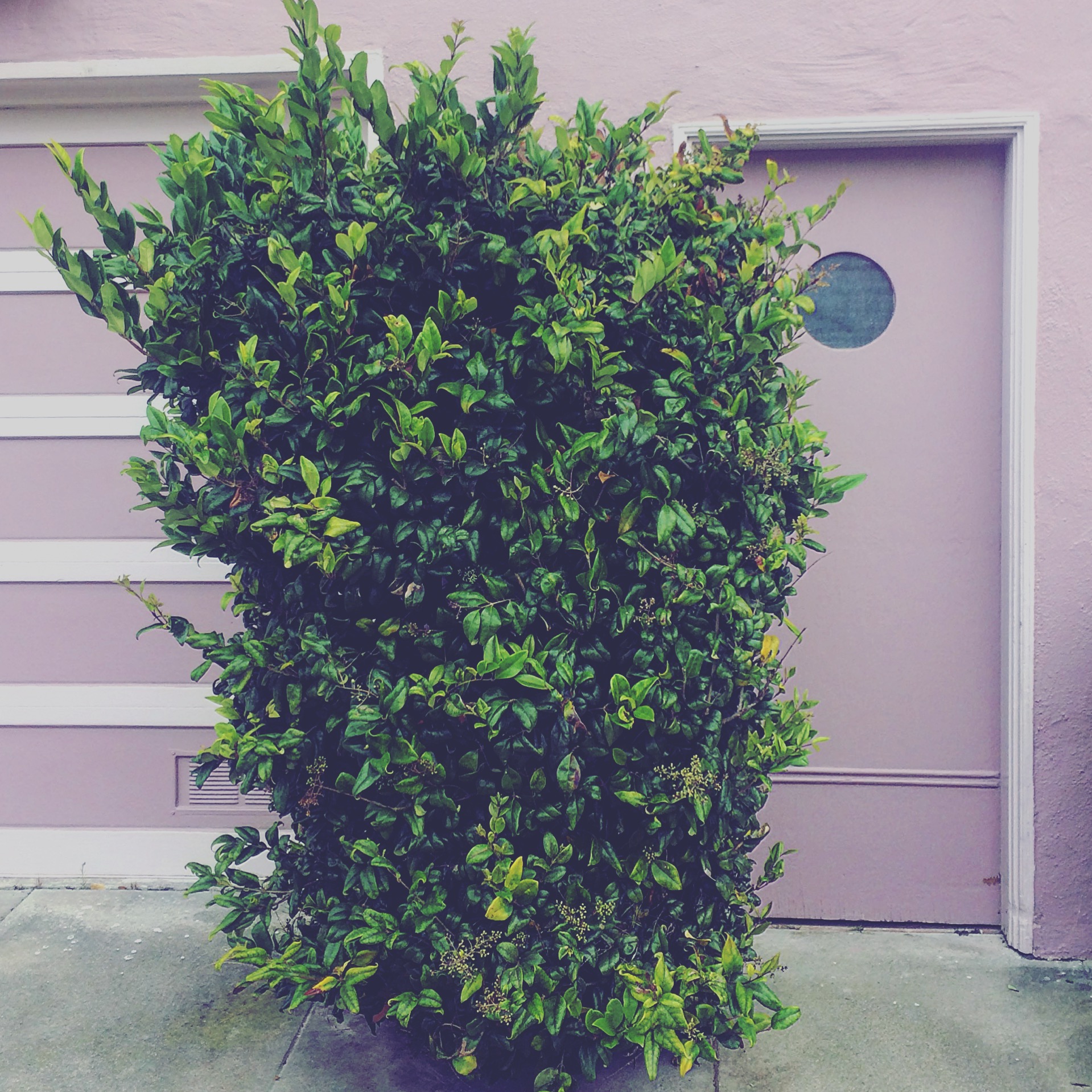
Porthole photo by Denise Sullivan

In some of these talks we take on gentrification issues, the ways in which the city has ceded the people’s interests to newly minted tech barons and their minions and pretty much successfully destroyed our international reputation as a sanctuary for artists and outsiders. Yes, that. But mostly in 2020 and beyond it, we confronted pandemic issues, how we coped and how our hometown did that aforementioned exemplary job at keeping the spread under control, even though we as a city continue to fail our most vulnerable — those without homes, seniors without families, and developmentally and physically disabled folks. As for the rocky “reopening,” we’ll be talking about that too: Nobody really knows how to handle the summer rush. There are no workers for low-wage jobs. And as the unvaxed and unmasked descend upon us, the most committed lovers of this place are at the brink: There are stories we’re moving out in droves, moving to Tahoe (and ruining the way of life there). A recent New York Times story about organized shoplifting crimes at Walgreen’s is the latest outrage, meanwhile, children remain out of school while a dysfunctional school board (we voted for) squabbles over….don’t ask, most of us have lost the plot; discontent –no, rage–directed at the district attorney (we voted for) has degenerated into moms shouting down other moms at the neighborhood farmer’s markets. Finally, the web of deep corruption within city hall and other city agencies continues to be investigated by the feds. These are just a few of the challenges confronting us in perilous times. Yes, this place is for the birds. And where isn’t right now?

What I feel like I’ve failed to put into words, ever, but especially in these times, is there is nowhere else I would rather be. This is that elusive place called home. There is something about waking up in the City and County of San Francisco seeing the sun (or at this time of year, fog), and feeling in your bones it’s the right place to be; that there is something to be said for enduring our cold summer winters, days like these. And on other days, one peek at the sky, if it’s that particular shade of blue I have not yet found words to describe, with clouds that seem to move as I go, the contentment and acceptance that I’m in San Francisco turns to deep joy and gratitude that I’m San Franciscan. In the blue, I can breathe more deeply, though why that is I haven’t yet discovered. So until then, I’ll keep talking about this place with you. And taking photos. And writing about it. Here’s to another day in the beautiful city. I have so much left to learn.

Please join the conversation with San Francisco’s artists, essential service providers and and everyday people as we talk about this place we call home. Coming up, Sunday August 8, 10 a.m. live from Bird and Beckett, filmmaker Eric Goodfield.

Filed under: Arts and Culture, California, photography, San Francisco News, serial, Tales of the Gentrification City, , ,

The City Is Already Speaking, Vol 3

As National Poetry Month comes to a close, our local independent bookseller’s coalition, United Booksellers of San Francisco, has managed to publish our third chapbook in one calendar year with the cooperation of San Francisco Poet Laureate Kim Shuck. In what she calls our chapthology series, we bring you volume three of The City Is Already Speaking, featuring Cathy Arellano, Jorge Argueta, Kitty Costello, JoAnn DeLuna, Lourdes Figueroa, Sandra Garcia Rivera, Charlie Getter, Lauren Emiko Ito, David Kubrin, César Love, Naomi Quiñonez, Tiny (Lisa Gray-Garcia) and Katie Tomzynski.  So far, we have published new and previously published work by San Francisco Bay Area poets Josiah Luis Alderete, Dee Allen, Simon Crafts, Tongo Eisen-Martin, Flavia Elisa, E.K. Keith, Thea Matthews, Alejandro Murguía, Linda Noel, Raul Ruiz, Kim Shuck, Ricardo Tavarez, Avotcja, Charles Curtis Blackwell, bloodflower, Paul Corman-Roberts, norm mattox, Gail Mitchell, Leroy F. Moore, Jr., Richard Sanderell, Norma Smith, Maurisa Thompson, and René Vaz, Featured visual artists have included Michael Roman, Kate Razo, Veronica Solis and Anna Lisa Escobedo. As one of three co-editors and a contributor to the project, I can tell you the effort is truly gratifying when we see the faces of the contributors as well as our readers upon publication.  This is a labor of love by our local community of poets and the bookstores who support their work.  I’d like to thank everyone, especially the readers who make the continued publication of this series possible.  Because we are a grassroots, non-proift/break-even project, we’ve gone into the red on this edition, but you can help us by placing your order at United Booksellers or stopping by one of our participating stores (Alley Cat, Adobe Books, Green Arcade, Bird & Beckett) and purchasing your copy. You can also attend a reading (a live reading of this work will take place on May 12 at 4 PM at Adobe Bookshop in San Francisco). With appreciation for all you do to support the literary arts in the Bay Area and in your area, we thank you for

Filed under: Arts and Culture, Poetry, San Francisco News, Tales of the Gentrification City, ,

Much More Than Just Music in Chrissie Hynde’s Memoir, Reckless

I think of Chrissie Hynde’s stunning “My City Was Gone” just about everyday as I stalk the streets of Sanchrissie-hynde-reckless-h724-1 Francisco, searching for meaning and life in a place I used to and sometimes still do call home. The song’s themes of urban destruction and environmental decline in the name of so-called progress are threaded throughout Hynde’s new memoir, Reckless: My Life As A Pretender, among other unexpected twists to her rock star’s back pages, but then Hynde was never one to do the expected. The fact she let Rush LImbaugh get away with using the opening notes of “My City Was Gone,” for his radio show for years still boggles the mind: Rationalizing her parents were fans, with folks like that, is it any wonder she had to leave Akron?

Read entire review at DOWN WITH TYRANNY!

Filed under: Arts and Culture, Reviews, rock 'n' roll, Women in Rock, , , , , , ,

Archives

Recent Posts

Browse by subject or theme