Sixty two years ago today, when Bob Dylan, Joan Baez and Len Chandler gathered onstage to sing “Keep Your Eyes on the Prize,” at the March on Washington for Jobs and Freedom, conditions world and nationwide were less than ideal and in many cases grim. And yet, the mass gathering of people of all ages, ethnicities, and beliefs, the speech by Dr. King, and all that singing of freedom songs, delivered a sense of hope that the world could mend and change.
Baez has continued to sing for liberation causes. Though she’s announced her retirement, she shows up to Bay Area protests and events to lend her voice, from the stage and from the crowd. Dylan isn’t so much a protest singer anymore as something more: A Nobel laureate. Chandler died an activist and freedom singer, on this day in 2023. He used his voice to raise money for progressive candidates and causes until the end.
In today’s top news in protest music, last night, Neil Young performed a new song, “Big Crime,” live for the first time with his band, the Chrome Hearts. Young has been very much on the front line of street protest this time around and uses his voice as a performer to fight fascism. He has particularly waged a fight against his music being used for commercial ventures and especially preventing it from being co-opted by the right.
Fifty five years ago, following the massacre of four unarmed students by Ohio’s National Guard at Kent State University on May 4, Young famously wrote “Ohio,” recorded by Crosby, Stills, Nash & Young. Young has of course made some missteps in his political action though for the most part, he has been on the people’s side, in favor of environmental wellness, human rights and against wars.
On the heels of the life-changing events at Kent State, Devo — first a concept, then a band — formed. With a point of view, something to say, Devo attempted not to lose sight of what it meant to remind us: that humankind has been heading in the wrong direction for some time and the devolution we were warned about is upon us (A new documentary on the group tells that story very well). That members of Devo were also present on that day at Kent State and collaborators with Young was no coincidence: They are artists interested in bringing the news.
That both styles of music, the old guard and the new, reached me at the right time of life, as a young person seeking answers through songs, makes me a lucky listener. I’m always listening for messages in songs, as well as appreciating music for the sheer joy and beauty it brings into the mixed bag of life. Throughout the ’80s, ‘90s and ’00s, there was plenty to protest and music from which to choose, from Dylan, Young, Devo and countless others: Punk resisted right-wingism and racism and so did hip hop. Public Enemy’s Chuck D rightly nailed it when he noted rap and hip hop were broadcasting the news from Black America. The long history of resistance music spans the globe and will not be silenced. It’s just that sometimes, the noise of the news is so loud, it’s harder to hear the music. Once in awhile, a song or video cuts through (insert your favorite here).
From 2007-2011 I worked on a book about the different strands of resistance music and how the form was faring at the turn of the 21st Century. It seemed to me to be a latent period for American protest movement and music. But then, the revival: Occupy Wall Street and Black Lives Matter put organizing and the music that goes with it, back into the public consciousness. You might even say the movements were a wake-up call after a long slumber that included the invasion of Iraq, the bail out of the banks and an increased awareness of police brutality because of phones and social media broadcasting the horrors. That’s a pretty offhand, incomplete characterization of those years, but if you’re reading this, you have a general idea of what I’m talking about, even if I don’t…
Yet this is to say: This is why we don’t stop. This is what is meant by keeping one’s eyes on the prize. This is why I am writing this today, on the anniversary of the March and on the day after Young debuted a new protest song. We are no longer on the precipice…we are immersed. The need for protest and the music that goes with it in this country has never gone away. There have been and always will be artists like Tom Morello and M.I.A. and Chris Pierce and Jesse Wells and Carsie Blanton, out there getting the job done. When a new song drops in the heat of a moment, by an artist old or young or in the middle, I’m always pleased to hear it, as a fan of music with a desire for change. It’s a chance to pause and say thanks to everyone who is unafraid to take a stand. Today, it’s thanks to Neil, for staying in the game. As a song, “Big Crime” is unlikely to change the world or become an anthem, but then, again, we don’t know what will. We simply have to believe in a more hopeful future and be willing to work toward it.
Allen Ginsberg claimed he wept when he heard it for the first time.
Folksinger Len Chandler started to play it when the words and music were first published in Sing Out!, the folk song magazine, at the end of 1962. Patti Smith performed the song when Bob Dylan received the Nobel Prize in Literature in 2016.
Among the timeless songs he wrote in his early period, Dylan characterizes “A Hard Rain’s A-Gonna Fall” and others as “all one long funeral song.”
And while it was not specifically written to confront nuclear winter, Kronos Quartet and the Hard Rain Collective released two versions of “Hard Rain” last week, to commemorate 80 years since the first atomic bomb was detonated as a test on July 16 in Alamogordo, New Mexico.
A second drop, “Hard Rain (Drone)” — as in the style of music — is a spoken word version. The collective recordings include voicings by Laurie Anderson, Ocean Vuong, Charlotte Gainsbourg, Satomi Matsuzaki, Willie Nelson, Iggy Pop, Asha Boshle and many more. Terry Riley’s raga, “Komal Reshab Asavari” is central to the theme (read more about the project and other songs devoted to world health and the biosphere at Redhot).
“You know, it’s remarkable that a 21-year-old singer-songwriter wrote this song in 1962 and how — when you observe and know the words of this song very clearly, how important it is to our time right now,” Kronos founder David Harrington told Democracy Now.
Harrington was joined on the program by physicist Daniel Holz, chair of the Science and Security Board of the Bulletin of the Atomic Scientists and one of the organizers of the assembly which gathered Nobel laureates and nuclear experts to raise awareness of the growing (yes, growing) risk of nuclear war, particularly against a backdrop of climate change.
“…The likelihood that we’ll sort of stumble into a nuclear war and the end of civilization … has gone way up… We’re bringing together Nobel laureates and nuclear experts and trying to find a way forward, a way to reduce the risk, get the messages out to the public and also to leaders that here are steps that can be taken to reduce this. We need to get the awareness back, and we need to do everything we can to prevent the sort of nuclear annihilation that would impact literally everyone on the planet,” said Holz.
It’s understandable if you missed the 80 year commemoration of the Trinity test, given the week that was. But there is still time to prepare for a suitable remembrance of August 6 and 9: It’s been 80 years since bombs were dropped on Hiroshima and Nagasaki. There are very few survivors, or hibakusha, as they are known, left to speak about the horrors of the A-bomb. In 2019, I spoke to one — an American citizen detained at age 14 in Japan while visiting relatives when World War II broke out.
Today, the planet – not just the region impacted – but the entire planet will simply not survive a nuclear explosion. The sun will not sun. Famine will ensue. The past is our future. War is still unhealthy for children and other living things. Please contact your representatives and support candidates accordingly.
Martin Luther King Jr., Joan Baez and Harry Belafonte
Joan Baez was a junior at Palo Alto High School when she first heard Martin Luther King, Jr. speak at a conference for young Quakers. She would go on to sing for the non-violent movements for civil rights, social, economic and racial justice and against the war in Vietnam.
“King was giving voice to my passionate and ill-articulated beliefs,” wrote Baez in her memoir. Her “exhilarating sense of ‘going somewhere’ with my pacifism” in the aftermath of that speech would lead her to join King on marches in the Jim Crow south and at the historic March on Washington.
If you don’t already know about Baez’s history as a lifelong activist, you certainly would not get it from a viewing of the ahistorical Bob Dylan biopic, A Complete Unknown, released in US theaters this Christmas.
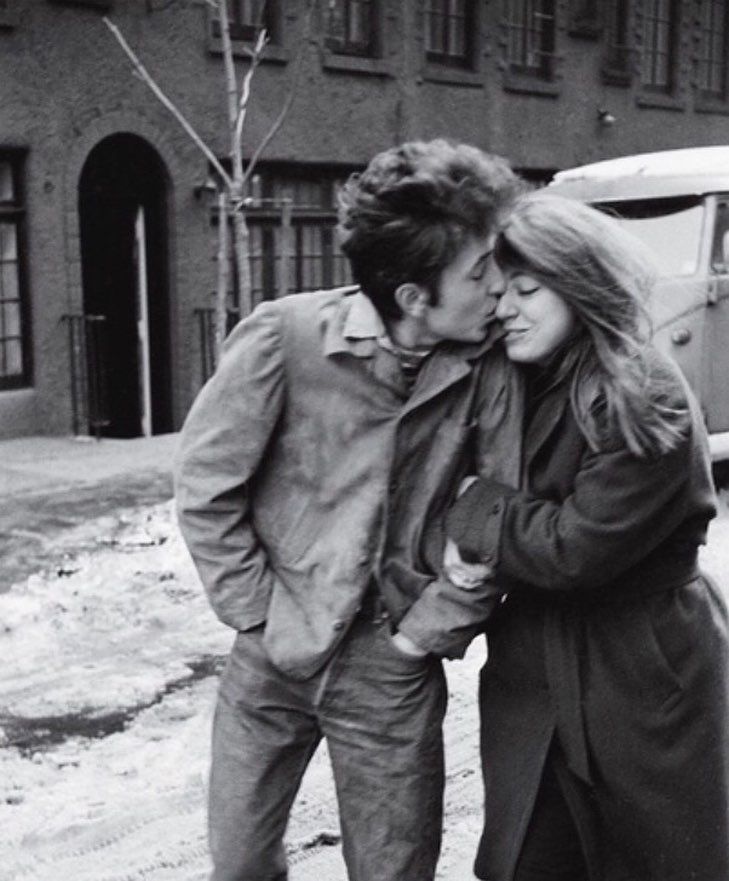
Loosely based on Dylan’s arrival in New York City in 1961, the film covers the songwriter’s introduction to the Greenwich Village scene, his meetings with Woody Guthrie and Pete Seeger, and his intimate relationships with Baez and the fictional Sylvie Russo, a stand-in for his real life steady, Suze Rotolo.
“During the height of the civil rights era Bob wrote, among other songs, ‘The Lonesome Death of Hattie Carroll,’ ‘The Death of Emmett Till,’ [‘Only A Pawn In Their Game’] and of course, ‘Blowing in the Wind,’ which became a kind of anthem,” Rotolo wrote in her own memoir of the Village in the ‘60s. In the film, “Blowing in the Wind” is framed in his repertoire to be more like an annoyance or an albatross.
There’s a scene recreating Dylan and Rotolo’s meeting at a 1961 folk-a-thon at the Riverside Church, the historic hub of progressive gathering in New York City. And there is a brief moment when the Russo character explains to a befuddled Dylan that she works at the Congress for Racial Equality (CORE), organizing the Freedom Rides from North to South — in fact one of Rotolo’s jobs in the era.
Facts are also, that in 1963, Dylan walked off the all-important nationally broadcast The Ed Sullivan Show when he was asked not to play his song, “Talkin’ John Birch Society Blues.” For those unacquainted, the John Birch Society is a radical far right group and the song is a satire.
That not much is made of the realities of the causes and concerns that moved both Baez and Rotolo to become immersed in movement work and the folk scene is perhaps understandable: A Complete Unknown is after all, a version of a story of Dylan becoming Dylan. But the gaps in the story of Dylan’s own connections to civil rights and the songs he wrote in their favor are woefully understated in the film, as are his friendships with the people in his circle (where, for example, were the nods to Ramblin’ Jack Elliott? Phil Ochs? Odetta? Lead Belly, at least, appears in an 8×10 photograph). There are also no poets, comedians or jazz musicians in the film’s version of the Village, though they are among those who also contributed to it being America’s bohemian center of its time.
Nor are there any three dimensional Black artists or musicians depicted in the film. The one scene in which a Black musician has a speaking role was made out of whole cloth and is particularly egregious: The fictional bluesman, Jesse Moffette (portrayed by Big Bill Morganfield whose father in real life was blues legend Muddy Waters) is played as a drunken mess when he appears with Dylan on Seeger’s public television show, Rainbow Quest. That Rainbow Quest really existed and featured musicians Rev. Gary Davis, Mississippi John Hurt and Sonny Terry and Brownie McGee is undeniable. The inclusion of any one of those artists would’ve made an interesting, albeit fictional meeting between Black and white, established and next generation musicians. But the creation of a fictionalized and stereotypical bluesman is not only in poor taste, it was a missed opportunity to introduce new listeners to the musicians who influenced Dylan and generations of future folk, blues and rock musicians.
One full episode of Rainbow Quest was devoted to Dylan’s friend and contemporary, Len Chandler, another figure on the Village scene who was eliminated from the story told in A Complete Unknown. It was Chandler who drove Dylan on the back of his motorbike to deliver his first album to Guthrie in the hospital.
“We took out our guitars and played Woody songs,” said Chandler.
Len Chandler and Bob Dylan at Newport Folk Festival, 1964, photo by Jim Marshall
Chandler and Dylan hung out, traded songs, learned their trade and celebrated their song publications in folk journals, Broadside and Sing Out! And while Chandler spent considerably more time in the South fighting for the rights of Black Americans (like Baez, it was his calling), it’s significant that Dylan appeared shoulder to shoulder with both of them at the March on Washington (though the film makes a bungle of computer generated imagery to recreate his appearance there).
Considering what could’ve been is a fool’s game but I’ll play it anyway: Dylan’s first recording session was as a harmonica player on another one of his heroes records: Harry Belafonte’s “Midnight Special.” The often told story of Dylan throwing his harps in the trashcan afterward would’ve made a great cinematic moment. The inclusion of a civil rights giant would’ve again been a nice prompt for a young viewer to dig deeper into Belafonte’s role in American civil rights, music and Dylan’s own history.
Oh but there’s more: Dylan famously had a crush of the wanting to marry her kind on Mavis Staples. Here again, was another missed opportunity to demonstrate how the singer’s dreams listening to and playing music with his inspirers became his reality. Instead, there is a Black woman of intrigue in the film who Dylan dumps in short order after her appearance. We have no idea who she is or is supposed to be standing in for, but a little like the nameless “mistress” played by Angela Bassett in Masked in Anonymous, she is there to let us know the main dude is an equal opportunity romancer.
The studio players on Dylan’s recordings, Paul Griffin, Sam Lay, Bruce Langhorne, as well as his producer Tom Wilson, could all have been elevated to characters with even one or two-line speaking roles, if only to let the audience know these cats were not just extras to add color to the cast: These were seasoned professionals hand-picked for the records that transitioned Dylan from solo folky to serious, original artist.
And then there is the short shrift given to Dr. King, whose “I Have A Dream” speech Dylan and Chandler listened to in real time, on the day it was delivered.
“That’s what I remember from the speech, being behind another monument with Dylan and silencing ourselves, and sitting in amazement as we heard that wonderful speech unfold,” Chandler remembered. But the take on historic Black preaching in A Complete Unknown, comes in the form of a man in a fedora and trench coast on a soap box. Listed in the credits as “civil rights speaker,” the character is but a token symbol for the movement that reached its very apex during the era depicted in the film. The scenes at the Newport Folk Festival would take me another viewing to de/reconstruct but they suffer from similar missed opportunities to display Black excellence and inspiration (Lightnin’ Hopkins, Willie Dixon, Fannie Lou Hamer, for God’s sake).
What could’ve been a simple and effective portrait of young Dylan and the ways folk musicians, women, and Black Americans intersected with the Civil Rights Movement and helped to shape the counterculture and ideals that came to define the ’60s, is in the end, just another piece of product, a part of the Dylan Industrial Complex: The books for days, the several documentaries, a museum and archive, a brand of liquor, a Christmas album, ornaments, and a line of bobbleheads…these are but a fraction of the branded, approved, licensed and unlicensed materials on offer in his name. Why should I have wished that a biopic be anything more than a distraction, an entertainment?
In the end, the contributions to the Civil Rights Movement made by women and Black Americans are the real hidden figures and unknowns obscured in the Hollywood retelling of Dylan’s own early ‘60s story. As impenetrable as the “real Dylan” may be or seem to be, I left the film not thinking about him, but wanting to ask the folks living and passed over, how does it feel?
As anyone with their eyes on the prize knows, the 60th anniversary of the historic March on Washington for Jobs and Freedom was on August 28, 2023. Among those assembled to help Dr. King push forward his dream of racial harmony and economic justice was Len Chandler (often overlooked in the history of civil rights work), one of the voices in a trio that day which included Bob Dylan and Joan Baez (Chandler appears at about 17 minutes into the following clip, though the whole 25 minutes is worth your time). Unfortunately, I come here today with a heavy heart to belatedly report that Chandler died at home in Los Angeles, on August 28, 60 years to the day of the march.
It was a blessing to have interviewed Len on several occasions for the purpose of documenting his story. I was invited to the home he shared with his wife Olga James, to break bread with him, and to participate in several community functions and political gatherings where he was still singing for freedom in the 21st Century. My deepest condolences to all who loved him. I did not know him well, but his work has continued to move and motivate me, long after first making contact with him more than a decade ago.
It was hoped that Chandler and I would be visiting the Bob Dylan Center in Tulsa this year, to deliver a panel on singing, songwriting, racial justice and voting rights, to coincide with the publication of my essay commissioned by the Center on Chandler. But none of that was to be. Timing, as it’s said, is everything. And racism is still very much alive, very much afoot in America, 2023.
The following is a repost from my previous posts on Chandler
Chandler would march with Dr. King and travel throughout the South in the name of voter registration, informing rural Southerners of their polling rights, often at great risk to his own life. His poems were recognized by Langston Hughes, he wrote the folk standard “Green, Green Rocky Road” with poet Bob Kaufman, and recorded two albums for Columbia Records, but little is known about him or his life. I sought out Chandler when I wrote Keep on Pushing, my text that tracks the origins and evolution of freedom music, and its roots in African American resistance and liberation movement.
Originally from Akron, Ohio, and studying on scholarship at Columbia in the ’50s, Chandler made his way to Greenwich Village folk music by accident: Lured to the sounds of Washington Square Park by the downtown youths he was mentoring, he easily fell into the scene with his natural ear for songwriting and his familiarity with the songs of Lead Belly, Big Bill Broonzy, and Woody Guthrie. Following a performance at the popular Village coffeehouse, the Gaslight Cafe, Chandler landed a contract to go to Detroit, writing and performing topical songs for local television. A few months later, when he returned to New York, the folk thing was in full swing: Bob Dylan was the latest arrival to town and the pair started to trade ideas and songs.
“I hadn’t yet begun writing streams of songs like I would, but Len was, and everything around us looked absurd—there was a certain consciousness of madness at work,” wrote Dylan in his book Chronicles. Chandler remembers it like this in Keep on Pushing: “The first song I ever heard of Dylan’s was ‘Hey ho, Lead Belly, I just want to sing your name,’ stuff like that.” Dylan used Chandler’s melody for his song, “The Death of Emmett Till.” “Len didn’t seem to mind,” Dylan wrote.
Chandler went on to record two albums for Columbia: To Be a Man and The Loving People. He continued to work as a topical songwriter, a peace and civil rights advocate, and as a songwriting teacher; his tour of Pacific Rim bases with Donald Sutherland, Jane Fonda, Holly Near and Paul Mooney was documented in the Francine Parker film, FTA, a must-see for anyone interested in US history and anti-war efforts within military ranks. Catch a glimpse of Chandler at the end of this trailer for the film:
It was an extreme privilege (and I have since found out a rare opportunity) to meet one of the true unsung heroes of singing activism (as well as his wife Olga James, a pioneering performer in her own right), and have him tell his story to me. Though largely retired from performing, he remains well- informed on human rights, politics, and the arts and will step up and step out for civil rights. You can read a portion of our talks in Keep on Pushing, and someday I will post the complete unedited transcripts, though for now, enjoy the voice of Chandler from back in the day, when singing was a huge part of moving the movement forward.
The stats are in: 66 songs, 110 writers, four songs performed by women and seven written by them. The woman pictured between Little Richard and Eddie Cochran is Alis Lesley, an obscure pioneer of rock ‘n’ roll. Nicknamed “The Female Elvis Presley,” she recorded one single and left the business before ever getting started. Lesley is a footnote in rock history and a link in the chain of so many women before, and thousands more after, who helped shape modern song as we know it today.
But this is not a further critique of the exclusion of women in Bob Dylan’s The Philosophy of Modern Song: you may read my review and plenty more elsewhere (though they don’t get much better than this one). In fact, in the best case scenario, the book’s omission of women is an invitation to further exploration – an opportunity to learn more about say, Sharon Sheeley, Cochran’s occasional co-writer and girlfriend and the youngest woman to reach the top of the charts with “Poor Little Fool,” the song she wrote for Ricky Nelson. But I’m not so sure it’s that simple. Or complicated…
“It seems reasonable to hope that an artist of Dylan’s magnitude would publish words in solidarity with half of humankind in this critical hour of rights rescinded, rather, he chooses demeaning stereotypes,” I wrote in the San Francisco Chronicle. “There are also several admonishments on “political correctness” that, given the current moment of extreme polarization, are disappointing, especially coming from an artist who is known for his care with language.”
There is hardly anything that bothers me more than a missed opportunity: A book publishing in yet another long, wintry season in America could’ve served as a chance to lift up women when we really need some light – allies, friends and champions. What we want are equal rights and justice. What we need is for men to stand with us. What this woman can’t use are more vulgar characterizations, slights and crude names leveled at us – whether in the name of art or satire. The world is cruel enough. Yes, for the historical record, there have been many demeaning names for women, and Dylan chose to use as many as could be called to mind. He did not choose to do the same with racist epithets throughout the book.
“As a people, we tend to feel very proud of ourselves because of democracy,” writes Dylan in his essay on the song, “War,” one of the book’s central pieces. “We walk into that booth and cast our votes and wear that that adhesive “I Voted” sticker as if it is a badge of honor. But the truth is more complex. We have as much responsibility coming out of the booth as going in.”
Dylan is writing here about voters electing officials who will wage peace instead of war. Much of the content of the passage regarding personal responsibility for war echoes the old song “Universal Soldier,” written by Buffy Sainte-Marie. There is no mistaking Dylan’s point of view: He’s taking a clear stance on a divisive issue as old as time. My sadness, on this election day in the US, is that he didn’t make a similarly clear, simple and strong statement toward a collective responsibility to women and our never ending war with an unjust system.
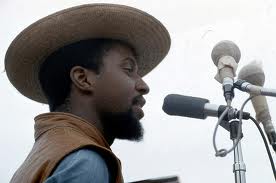
photo of Len Chandler at Newport Folk Festival, 1964, by John Rudoff
Today marks the 55th anniversary of the historic March on Washington for Jobs and Freedom. Among those assembled to help Dr. King push forward his dream of racial harmony and economic justice was Len Chandler (often overlooked in the history of civil rights work), one of the voices in a trio that day which included Bob Dylan and Joan Baez (he appears at about 17 minutes into the following clip, though the whole 25 minutes is worth your time).
Chandler would march with Dr. King and travel throughout the South in the name of voter registration, informing rural Southerners of their polling rights, often at great risk to his own life. His poems were recognized by Langston Hughes, he wrote the folk standard “Green, Green Rocky Road” with poet Bob Kaufman, and recorded two albums for Colombia Records, but little is known about him or his life. I sought him out when I wrote Keep on Pushing, my text that tracks the origins and evolution of freedom music, and its roots in African American resistance and liberation movement: a fraction of what we discussed was included in the book. I remain curious why seven years after publication, few scholars have pursued the lead and why so little is known about him…
Originally from Akron, Ohio, and studying on scholarship at Columbia in the ’50s, Chandler made his way to Greenwich Village folk music by accident: Lured to the sounds of Washington Square Park by the downtown youths he was mentoring, he easily fell into the scene based on his natural ear for songwriting and his familiarity with the songs of Lead Belly, Big Bill Broonzy, and Woody Guthrie. Following a performance at the popular Village coffeehouse, the Gaslight Cafe, Chandler landed a contract to go to Detroit, writing and performing topical songs for local television. A few months later, when he returned to New York, the folk thing was in full swing: Bob Dylan was the latest arrival to town and the pair started to trade ideas and songs.
“I hadn’t yet begun writing streams of songs like I would, but Len was, and everything around us looked absurd—there was a certain consciousness of madness at work,” wrote Dylan in his book Chronicles. Chandler remembers it like this in Keep on Pushing: “The first song I ever heard of Dylan’s was ‘Hey ho, Lead Belly, I just want to sing your name,’ stuff like that.” Dylan used Chandler’s melody for his song, “The Death of Emmett Till.” “Len didn’t seem to mind,” Dylan wrote (today, as it happens, is the anniversary of the murder of Emmett Till).
Chandler went on to record two albums for Columbia: To Be a Man and The Loving People. He continued to work as a topical songwriter, a peace and civil rights advocate, and as a songwriting teacher; his tour of Pacific Rim bases with Donald Sutherland, Jane Fonda, Holly Near and Paul Mooney was documented in the Francine Parker film, FTA, a must-see for anyone interested in US history and anti-war efforts within military ranks.Catch a glimpse of Chandler at the end of this trailer for the film:
It was an extreme privilege (and I have since found out a rare opportunity) to meet one of the true unsung heroes of singing activism (as well as his wife Olga James, a pioneering performer in her own right), and have him tell his story to me. Though largely retired from performing, he remains well- informed on human rights, politics, and the arts and will step up and step out for civil rights. You can read a portion of our talks in Keep on Pushing, and someday I will post the complete unedited transcripts, though for now, enjoy the voice of Chandler from back in the day, when singing was a huge part of moving the movement forward.
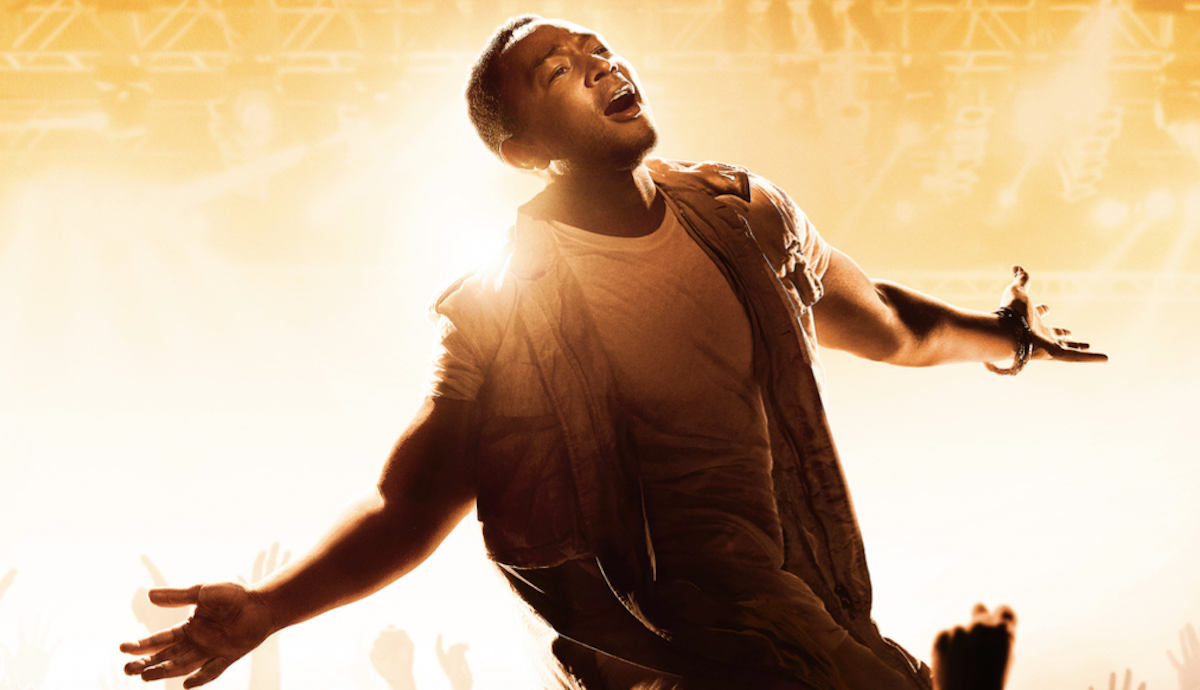
In light of this year’s revival of Jesus Christ Superstar (to be broadcast on live TV Easter Sunday, starring John Legend in the title role) I’m re-posting this piece which I wrote about 10 years ago on the ’70s Jesus-rock boom the Andrew Lloyd Webber and Tim Rice concept album had a hand in creating.
In 1969, Norman Greenbaum had a worldwide hit and US #3 record with “Spirit in the Sky.” Greenbaum sold over two million copies of the single in which he claimed he had a “friend in Jesus,” never mind he was Jewish. “Spirit in the Sky” was not the first or the last time Jesus hit the charts, but its success marked the unofficial beginning of a Jesus movement in and outside of rock in the ’70s that impacted the popular arts, from Broadway to Bob Dylan.
Partly a reaction to the hippie culture and also a part of it, the Jesus people, or Jesus freaks, as they were proudly known within their movement, generally sought to return Christianity to its origins. The seeds of today’s Christian right as well as its progressive left-wing were both sown in the loosely established communities/communes, and in some cases cults, which sought to throw off religious strictures as well as its staid music. Ironically, the so-called devil’s music conservatives railed against is massively marketed today as Contemporary Christian Music (CCM), a major tool to keep young people interested in faith, though that isn’t the subject of this post. Rather, this is an overview of the songs sung by generally secular rockers who went sacred at the height of the Jesus music movement of the ’70s, a 10-year period bookended by ’69’s “Spirit in the Sky” and “Gotta Serve Somebody” (1979, the last time Dylan had a high-charting single at #24).
In 1966, John Lennon joked the Beatles were bigger than Jesus and caught hell for it, though by the time he invoked Christ’s name and sang of his own crucifixion in 1969′s “The Ballad of John and Yoko”, all was forgiven and only a few outlets banned it, branding it sacrilegious. By the end of the year, the Beatles were all but said and done, and it was the Quiet One who revealed himself to be the spiritual seeker of the group. Sporting a look that was rather Christ-like, George Harrison spent four weeks at #1 in the US and five weeks at #1 in the UK at the end of 1970 and the beginning of 1971 with “My Sweet Lord,” the song that kicked off a kind of Jesus-mania in ’70s rock.
Speaking to his Krishna consciousness, while throwing in a couple of hallelujahs, Harrison was famously accused of copping the “doo-lang” backgrounds from the Chiffons’ “He’s So Fine” (a song about a boy which has been known to double as a spiritual). And yet, Harrison disavowed the influence, claiming his inspiration came from “Oh Happy Day”, a top five 1969 hit for the Edwin Hawkins Singers. “Oh Happy Day” grew from a Northern California gospel choir’s homemade record derived from an English hymn dating back to the 18th Century (Spiritualized also revived “Oh Happy Day” in the late 20th Century).
Gospel music had been rocking souls since at least the 18th century in the Americas, where African rhythms joined field, work, and folk songs, to old hymns from the British Isles, and made way for a new form of expression giving voice to the inner lives of the oppressed. In his book People Get Ready!A New History of Black Gospel Music, author Robert Darden speaks to the theological ideas and arguments behind the music: By evoking a more powerful spirit, gospel-inspired music served to fight the demonic institutions of slavery and Jim Crow law. The 20th Century story of how church singers like Aretha Franklin, Sam Cooke, Curtis Mayfield, and more turned gospel into soul is among the greatest stories in music history ever told, as is the origin story of the blues, a music where heaven and hell, and Jesus and the devil, go head to head regularly. Rock ‘n’ soul were built on this gospel and blues foundation and remain inextricably intertwined, their resonances in rock proving to be everlasting (I write about gospel, blues, soul and music’s connection to people’s liberation extensively throughout this site and in my book, Keep on Pushing).
Here’s an example of how a song traveled in the Year of Our Lord, 1971, a big one for Jesus and his greatest hits: In May, Gene MacLellan’s song “Put Your Hand in the Hand,” the title song from the debut album by Canadian rock group Ocean, became a million-seller and high-charting Billboard hit (I’ve seen it listed as a #2 as well as #3). The song was originally cut by Anne (“Snowbird”) Murray and went on to be recorded by Jesus-loving artists from Elvis Presley to Loretta Lynn. “Put Your Hand in the Hand” hearkens back to the first gospel song to score a number one crossover hit: “He’s Got the Whole World in His Hands,” as done by Laurie London in 1958. Mahalia Jackson—gospel’s reigning queen of soul during the civil rights era—would also put the song in Billboard’s Top 100. The Jesus rock of Ocean did not turn out to be quite as enduring or memorable, though the Jesus music movement continued to gain momentum in the ’70s thanks to, well, Jesus, and the 1970 Andrew Lloyd Weber and Tim Rice album project turned hit Broadway play bearing his name.
In May of 1971, songs from Jesus Christ Superstar with Ian Gillan (Deep Purple) in the role of Jesus were also making their way to the charts. Murray Head (as Judas) and his version of “Superstar” were sitting at #20 and peaked at #14 in the US in June. Another song from the show, “I Don’t Know How to Love Him,” the “Him” being Jesus, and the “I” being Mary Magdalene (as sung by Yvonne Elliman) rose to #28, also in 1971.
Even the Rolling Stones got into the Jesus spirit that year: After the darkness that marked Altamont, they traded “Sympathy for the Devil” for when the Lord gets ready and “You Got To Move” by Mississippi Fred McDowell (from their Sticky Fingers album). Here’s a clip of them in 1975 performing it with Ollie Brown and Billy Preston joining on vocals.
In 1972, the gospel-based Staple Singers busted the crossover charts with Be Altitude, featuring the hits, “I’ll Take You There,” “Respect Yourself,” and the lesser-known “Who Do You Think You Are (Jesus Christ the Superstar)?”
In 1972, the Off-Broadway play, Godspell, scored a hit off its original cast album with “Day By Day” which went to #13 on the pop charts. Following the West End success of Jesus Christ Superstar in 1973 it was turned into a hit film, directed by Norman Jewison. Here’s a clip of Carl Anderson in the role of Judas, rockin’ the Jehovah out of the title song, followed by Murray Head’s chart hit version.
Curiously, it’s another Norman—not Jewison nor Greenbaum but Larry—who is widely considered to be the godfather of the aforementioned contemporary Christian rock. Bob Dylan followed his work, and the Pixies’ Black Francis grew up on it. A bit of a wild card, Larry Norman is generally well-regarded as an artist, remembered as a risk-taker, an experimentalist, and an iconoclast who didn’t cotton to the status quo in rock or Christian music. Also contributing to the coalescence of contemporary Christian music was Explo ’72, a festival concert that gathered over 75,000 young Jesus people in Dallas to see Johnny Cash, Kris Kristofferson, Larry Norman, and gospel artist Andrae Crouch for a kind of “religious Woodstock,” so-called by the Reverend Billy Graham, who was in attendance. According to author Andrew Beaujon’s book Body Piercing Saved My Life: Inside the Phenomenon of Christian Rock, Explo set in motion the beginnings of the contemporary Christian music industry. Soon after, specialty labels formed, and the contemporary Christian music market was born to boom. “Why Should the Devil Have All the Good Music” was Norman’s answer to conservatives, who thought rockin’ for Jesus was not in concordance with the road to salvation. Though surely as the Jesus rockers were dismissed from the inner sanctum of evangelical Christiandom, they had also impacted the sound of church hymns too: Catholic mass went “folk” in the ’70s and some of those freshly arranged hymns remain in church repertoire today.
In 1972, Rhodes Scholar Kris Kristofferson sang “Jesus Was a Capricorn” on the album of the same title. He didn’t stay a Jesus rocker for long, though he had a definite claim in Jesus, given he was named for him—twice. “Morning Has Broken”, a Top 10 Cat Stevens hit in 1972, was based on the Gaelic hymn “Bunnesan” that’s been sung in churches as “Morning Has Broken” since at least 1930s. The Englishman of Greek origin has long since converted to Islam, first as a non-singer, now singing again. “Jesus is Just Alright” as covered by the Doobie Brothers was also a chart hit in 1972, though the Byrds had already recorded the Art Reynolds song in 1969.
Though by far, the biggest news in Jesus rock of the ’70s was Bob Dylan’s conversion to Christianity. Before developing his own distinct song style in the mid-‘60s, his lyrics vigorously opposed to injustice, Dylan had started out his career adapting old spirituals for his own form of protest song. By the mid-‘70s his Rolling Thunder Revue was as devoted to seeking justice for falsely accused prisoner Ruben “Hurricane” Carter as it was to an excessive rock ‘n’ roll lifestyle. Following that harrowing passage, Dylan, in characteristic retreat mode, embraced Christianity. Born again, he cut two gospel albums, 1979’s Slow Train Coming and Saved (1980) produced by self-proclaimed Jewish atheist, Jerry Wexler.
“Gotta Serve Somebody” from Slow Train Coming won the Best Male Rock Vocal Grammy and has since been covered by gospel artist Shirley Caesar, blueswoman Etta James, Neville brother Aaron, Texas troubadour Willie Nelson, marvelous Mavis Staples, and Hammond B-3 giant Booker T. with the M.G.’s. while John Lennon (“Serve Yourself”), and Devo (undercover as a Christian rock act, Dove) famously parodied it. At the time of recording, Dylan was pilloried: His 14-night stand at San Francisco’s Warfield Theater in 1979 featured nightly picketers stationed outside the theater. The reviews were radically divided. On 1981’s Shot of Love, Dylan answered some of his critics on songs which mixed secular and sacred and yielded at least one of his most enduring spiritual works, “Every Grain of Sand.”
In part owed to the controversy inspired by Bob Dylan’s gospel period, some believers choose to keep distinctly sacred references to Jesus out of their songs while others use his name as an invocation. Dylan faithful Patti Smith famously opened her rendition of “Gloria” with the line, “Jesus died for somebody’s sins but not mine”; she titled a song and an album “Easter”, while “Ghost Dance” features the holy incantation, “we shall live again.” Her friend and collaborator Robert Mapplethorpe’s Catholicism left its fingerprint on her; she continues to be inspired by poet and artist William Blake whose portraits of the divine move beyond confines of religious dogma.
Punk and alternative rock depictions of Jesus are not unheard of: Joey Ramone sang “I’m Not Jesus”, and Jesus rode beside Paul Westerberg in “Can’t Hardly Wait”, while a rather unholy trinity of bands, the Jesus and Mary Chain, the Jesus Lizard, and Jesus Jones all named themselves after the big man. Flaming Lips, Ministry, and Spacemen 3 have got their Jesus songs too; they are but a small sample of alterna-Jesus references. Indie rock has its share of artists like Pedro the Lion and Sufjan Stevens whose Jesus-inspired work stays more on the downlow, like that of U2, Bruce Cockburn, Moby, Midnight Oil, Polyphonic Spree, and Lambchop: All make allusions to JC and Christianity while enjoying success in the secular world.
In hip hop, the Lord’s name is occasionally given a shout-out, but none took on Jesus better than Kanye “Yeezus” West whose 2004 single, “Jesus Walks” dared to speak of the very subject we’re talking about: With the Jesus movement in rock long in decline, to sing about him was often considered the equivalent of career suicide, yet West’s success was an exception. “Jesus Walks” peaked at #11 Pop and #2 R&B, sold over half a million copies, and was certified gold.
In 2008, the gospel songs of Dylan were compiled by the music’s greatest stars on Gotta Serve Somebody. The career of gospel songstress Mavis Staples has achieved a full-blown rock revival and continues to grow stronger following her contemporary albums produced by Ry Cooder and Jeff Tweedy. Southern California roots band Dead Rock West revived the Staples classic, “This May Be the Last Time” (the song the Rolling Stones borrowed for “The Last Time”), alongside works by Blind Willie Johnson and the Jesus and Mary Chain on their gospel-inspired collection Bright Morning Stars. Though the charts may never again see the high number of Jesus jams the ‘70s saw, if you’ve got the time to seek, you’ll find plenty more from where these came.
Happy Easter to all Jesus rockers, readers, and to people of all faiths: May your spirit be refreshed as you continue in the struggle for peace and justice (A version of this column originally ran in Crawdaddy! as The Origin of Song and appears elsewhere on this site annually).
The following is an extract from, Keep on Pushing, Black Power Music From Blues to Hip Hop, a perhaps unlikely source for a chapter featuring a mini, concise history of punk rock, with a San Francisco-bias. It’s a subject I’ve been interested in since Patti Smith’s Horses reached me in the Summer of 1976. On September 24, I will be among the panelists at SF Punk Renaissance for Punk: What Went Wrong…or Right?a discussion on the music and movement that inspired my generation.
All over the world, youth were collectively inspired to take back rock and put it into the hands of their generation, and they did it themselves, without corporations or websites or even a whole lot of love behind them. They did it with spit, muscle, sweat, and even Sid Vicious’s blood, and a couple of copies of Raw Power between them.
“It seemed like it had to go back to the three-minute song, something immediate and direct,” says Buzzcocks’ Steve Diggle. “And from that people came alive again.”
Among punk rock’s targets was the comfortable numbness of quotidian life, partially provided by expensively produced (Pink Floyd, the Eagles, Steely, Dan, and Fleetwood Mac) and lightweight (James Taylor and Carly Simon) rock. The back-to-basics music style combined with the anti-authority philosophy meant punk was largely a scene without leaders, organization or infrastructure. It can’t be said enough that in the United States there was virtually no commercial airplay for the music and there was very little in the way of favorable aboveground rock press for it either. But self-starting had its own rewards.
“People gained confidence in who they were, even ourselves, even with all our insecurities,” says Diggle. “It wasn’t like we were the big show business act to come to entertain people, it was more like…These guys are the same as us,” he says. “It was real people singing about real things and when we go up on stage we just put on guitars and there’s no big act.”
The do-it-yourself directive also lead to the resurgence and proliferation of the self-released seven-inch single, a format that had virtually become extinct with the popularization of seventies album rock. Buzzcocks was one of the first bands of the punk surge in England to release its own record, debuting with their Spiral Scratch EP in January of 1977. That spring the Ramones, with the Nerves and Pere Ubu, took the first murmurings of punk all across the USA. Though at the surface the punk pop of the Buzzcocks wasn’t political, “It was about personal politics,” explains Diggle. “It questioned things on many levels.” A song like “Autonomy” was about “self-rule.” And ‘Fast Cars’ was about the business of having a fast car,” he says.
Whether it was the words they sang—at once passionate and dispassionate—the way they sang them, or the fact that they sang them at all, songs like “Fast Cars” telegraphed something that went beyond the general speed limit: It confronted individuality and choice in a market-driven culture. “I hate fast cars!” was a radical statement, a rejection of values prized by a capitalist society.
The Ramones and the Sex Pistols have both been called the Johnny Appleseeds of punk, crisscrossing their respective countries and crossing the Atlantic while punk bands were breaking out like a spotty rash in places likely (London) and unlikely (Akron, Ohio). The Ramones brought their show to San Francisco’s Savoy Tivoli in 1976 and inspired a few artists and musicians to form bands of their own. The Sex Pistols did the same, bringing their show to the United States in early 1978, though the resulting media circus marked the end of the Pistols and the death of the early phase of punk. Penelope Houston’s band the Avengers opened the last-ever Sex Pistols show at Winterland in San Francisco. Less influenced by the entertainment of the Sex Pistols and the fun of the Ramones, Houston was a punk rocker of the battling kind. “I definitely recognized that Dylan was fighting against the things he saw as wrong but I would say my biggest singing influence would be Patti Smith,” she says.
The blank generation, a term coined by poet Richard Hell, found its muse, its voice, and its generation’s answer to Bob Dylan in Smith who released her first punk single in 1974. Having escaped a New Jersey childhood for the Chelsea Hotel, the young poet was also the girlfriend of photographer Robert Mapplethorpe and together they made art before she ever had the idea of making a record. Through the course of her bookstore clerk days and Max’s Kansas City nights, Smith emerged an androgynous, rock ‘n’ roll type, a person with more in common with Dylan and Keith Richards than any woman in rock.
Smith went to the San Francisco Bay Area in 1974—high Watergate season—to perform at Rather Ripped Records on the North Side of Berkeley campus. At the time, it was one of the few places you could buy an independent seven-inch record, what you might call the broadside of the late seventies. Smith’s new single was “Hey Joe,” the song with which Jimi Hendrix had ended his fateful set at Woodstock in 1969. The A-side began with a poem titled Sixty Days:
“Patty, you know what your daddy said, Patty, he said, he said, Well, sixty days ago she was such a lovely child , and how here she is with a gun in her hand.”
The Patty to whom she referred was Patricia Campbell Hearst, the newspaper heiress who’d taken the name Tania following her abduction by the Symbionese Liberation Army, an armed band of radicals, one group among a host of urban predators and terrorists raising hell in the Bay Area during the protracted aftermath of the Summer of Love. Tania had seemingly joined her captors in the class war struggle; “Hey Joe,” marked the official arrival of the new generation.
“I’m nobody’s million dollar baby, I’m nobody’s Patsy anymore, and I feel so free.”
From the decaying urbanscapes epitomized by the rotting Big Apple and the Rust Belt cities, and especially in hippie haven San Francisco, the post-sixties air of revolution hung heavy; Smith was the something new that blew in, wild, from the streets. San Francisco would remain the scene of more high times and inexplicable crimes throughout the decade. Home to the historic free speech and antiwar movement gatherings in the sixties, the Bay Area continued to be a place where minds behind movement and invention—whether high tech or slow food—converged. Its consecration as a gay mecca at that time is well known, while the role disco music played in gay liberation movement, and the role San Francisco played in the development of the punk rock movement, remain less documented. Perhaps these stories go some way toward providing necessary connections, as might the next section on punk’s relationship to reggae and hip hop.
Bob Dylan’s relationship to the political world and the matters he chooses to champion or protest have been the subject of much debate, discussion, and inspiration for over 50 years now. His arrival in Greenwich Village in 1961, to a scene informed as equally by poetry and politics as it was jazz and folk, marked the beginning of his relationship with topical song, followed by a famous retreat from it, as well as his resistance to the tag, “voice of a generation.” And yet, as the ‘70s began, Dylan was once again plucking his subject matter from the news, returning to his roots as a social justice singer with “George Jackson”, a memorial for the radicalized convict and Black Panther who died in a San Quentin prison shoot-out on August 21, 1971.
Against a backdrop of escalating war in Vietnam and social and political mayhem to accompany it at home, by the late ’60s and early ’70s, the climate made necessary topical rock and soul songs which documented the times. John Lennon put forth “Imagine”, the follow-up to his and Yoko Ono’s initial bursts of song devoted to giving peace a chance. Marvin Gaye voiced his concerns in “Inner City Blues (Makes Me Wanna Holler)”, “What’s Going On?”, and “Mercy, Mercy Me (The Ecology)”, while Cat Stevens boarded the “Peace Train” that would ultimately take him to study the Qur’an and inspire a conversion to Islam. It was also more or less expected that in these times of trouble, serious artists would weigh in on the events with a song. From the chart-busting Motown artists who began to draw from a repertoire that was blacker and stronger, to the rush-released recording by Crosby, Stills, Nash and Young of “Ohio” concerning the shooting tragedy at Kent State, the appetite for topical songs in the US was fuelled by chart successes. Bob Dylan’s early ‘60s pro-civil rights and anti-war songs were largely the catalyst for the strain of rock music with a message that thrived throughout the decade. And while it’s true that from 1966 through much of 1971 Dylan remained in self-imposed exile from touring, leaning more towards poetical and philosophical lyric forms, rather than those polemical or topical, “George Jackson” was his wildly unexpected return form.Performing in public for the first time since his Isle of Wight concert in 1969, Dylan appeared at Madison Square Garden on August 1st at the Concert for Bangladesh, the model for today’s all-star rock charity events. Organized by George Harrison and Ravi Shankar, the rally for Bangladesh raised awareness and funds for the residents of East Pakistan and Bengal India, regions beset by complications of war plus a cyclone and the flooding and famine that followed. An already troubled region was now devastated, and as Shankar outlined the situation for concert-goers, Dylan helped to draw them, performing “A Hard Rain’s A-Gonna Fall”, as well as a handful of more apolitical songs.
Later that month at San Quentin in the summer of 1971, George Jackson was shot to death during an alleged escape attempt following a prison riot in which five inmates and a guard were killed. Less than a month after the Jackson incident in California, a historic event at Attica Correctional Facility wherein prisoners took control of the prison to protest its poor conditions resulted in more fatalities—an unmistakable call for prison reform. Perhaps it was the call to which Dylan was responding when in November, he cut and released “George Jackson”, a 45-rpm record that reached the Top 40 in January of 1972. Opening with the blues trope, “I woke up this morning,” Dylan’s “George Jackson” is not a typical blues song, though it surely addresses the larger topic of racial and socio-economic oppression from which a certain style of blues was born. It also tells the story of Jackson.
Having made it to California from the streets of Chicago, a 70-dollar robbery landed Jackson in prison, his sentence indeterminate. He found trouble on the inside when guards took an immediate dislike to him; his sentences were extended—chiefly behind events occurring at Soledad State Prison in which three black inmates and a white guard were killed. Using his time in solitary to educate himself, he studied psychologist Franz Fanon (The Wretched of the Earth), Marx, and Mao, and came to understand the incarceration of poor Blacks for petty crimes in a political context. A leader in moving prisoners to radicalize, Jackson joined the Black Panthers and became one of the group’s most celebrated members. However by 1969, J. Edgar Hoover—declaring the Black Panthers to be public enemy number one—had set out to decimate them, and other groups like them. Nevertheless, Soledad Brother: The Prison Letters of George Jackson was published in 1971 and was greeted by a positive reception by intellectuals and political progressives. That Jackson had been framed for conspiring to kill a guard in the Soledad incident was a widely held belief; his defenders were vocal and his case was a cause celebre. But a few days before his trial was to begin, a riot broke out in San Quentin in which inmates and guards were again slain; this time it was Jackson who was shot while running across the yard in an alleged escape attempt.
“The power of George Jackson’s personal story remains painfully relevant to our nation today, with its persistent racism, its hellish prisons, its unjust judicial system, and the poles of wealth and poverty that are at the root of all that,” wrote historian Howard Zinn in an updated version of Jackson’s Soledad Brother. Wresting larger truths from the events of 1971, Dylan delivered his summation in these often quoted lines from “George Jackson”:
“Sometimes I think this whole world
Is one big prison yard
Some of us are prisoners
The rest of us are guards”
Dylan cut two versions of “George Jackson” for a double sided seven-inch: A “big band” version featuring Kenny Buttrey (drums), Ben Keith (steel guitar), and Leon Russell (bass), and a solo acoustic version. Among the various issues of the single—and there are many—is a picture sleeve with an image of Dylan performing at the Concert for Bangladesh; it remains sought-after by record collectors.
The details of the George Jackson case are still debated today by scholars, historians, and those who remember the events. Just this month, the last incarcerated member of the San Quention Six, Hugo Pinell, was killed while serving his life sentence, much of it in solitary confinement.
The following is a live recording of Joan Baez singing “George Jackson.”
Bob Neuwirth is one of those characters from the secret history of rock ‘n’ roll; if you know, you know. In 2011, on the occasion of a retrospective of his paintings showing in LA, I seized a rare opportunity to interview him for Crawdaddy! and got a few words on the state of 21st Century music and art.
Update: Neuwirth died on May 18, 2022. With deepest condolences to his partner, his family and many friends, I’m reposting this brief in his memory.
“I think it was Matisse who said artists should have their tongues cut out,” says Bob Neuwirth. As a visual artist and songwriter, his large abstract canvases are rarely shown, but enjoyed by collectors privately, while his solo singer-songwriter albums Back to the Front and 99 Monkeys are appreciated by connoisseurs of the form.
A great teller of tales, as opposed to a tale-teller, Neuwirth has remained largely in the shadows since his ’60s and ’70s associations at the epicenter of music and culture, but through the years, he’s played a unique role in the lives of his fellows: He’s served as an ear and inspirer to friends in the arts for five decades. Often the a catalyst to epic songs, he lived the moments we read about in history books.
“Art is everywhere,” explains Neuwirth. “Though it takes a different set of eyes to recognize it. If it’s music, it’s a different set of ears…Just because something is reproduced in multiples doesn’t make it good,” he says. “Turn on the radio. What you hear on the radio is for people who aren’t really listening.”
Sometimes what Neuwirth is rapping sounds as cryptic as a zen koan, though he’s earned a right to wax on as one who actually pulled-off the great American hat trick of living a rich artist’s life while remaining under the radar of mass success. An original hipster—back when it was still cool to be cool—his tales of beatnik glory took him from Boston’s Back Bay, hanging out with folk guitarist Sandy Bull, to checking into art school (“but not for long,” as he sings in his semi-autobiographical song, “Akron,” the rubber city from which he ran). From Boston it was on to busking in Paris with Ramblin’ Jack Elliott; from there, to Berkeley where he developed his abstract-expressionist painting and tried winging it as a folksinger who “couldn’t sing and couldn’t play,” he says.
In his time, he was insulted by Lenny Bruce, kissed on the mouth by Miles Davis, and invited to meet the Beatles while on tour with Bob Dylan in England, a trip he took in exchange for art supplies.
“He said I’ll give you a leather jacket and all the canvas you can paint on,” remembers Neuwirth of the deal with Dylan. The resulting tour was documented in D.A. Pennebaker’s milestone rock documentaries, Don’t Look Back and the follow-up, Eat the Document, which Neuwirth also had a hand in technically assisting. He remained a confidante of Dylan’s (he was there when they switched on the electricity at Newport, and was also invited on board the Rolling Thunder Revue). He’s been a compadre to Kris Kristofferson, a friend to Janis Joplin (he co-wrote “Mercedes Benz”), a companion to Jim Morrison and a filmmaker for the Doors.
In the ’70s Neuwirth moved on to pre-punk New York and the Max’s Kansas City scene, a legendary hanging place for visual artists. He brought in songwriters like Willie Nelson and Waylon Jennings (who weren’t as well-appreciated in that period as they are now), and contributed to the club’s culture while making music and gathering more fuel for his great untold stories of rock’n’roll.
“Then the New York Dolls showed up, and that was pretty much it,” he says of the temporary displacement of folk-inspired, singer-songwriters from Manhattan. And yet, Neuwirth had a direct hand in the changing of the guard when he advised one of the club’s regulars, Patti Smith, to turn her poems into songs: “Next time I see you I want a song out of you,” is how Smith remembered his encouragement in her autobiography, Just Kids.
Going on to collaborate with John Cale on The Last Day on Earth, a prescient musical theater piece concerning the apocalypse, and working on projects that took him from Cuba (Havana Midnight) to Appalachia (Down From the Mountain), Neuwirth remained in the orbit of collaboration with musicians and artists of all stripes. There are plenty more stories where these came from, though between his brushes with greatness, Neuwirth stayed devoted to his own art, attempting to collage and paint his masterpiece. Bumping around from studio to studio, he lived in a loft (“rat-infested,” by his description) formerly occupied by jazzman Eric Dolphy. By then, New York and the art scene had changed. The roads for struggling artists to take had gradually began to close down and the art and music inspired by the ideas that emerged in the ‘60s and ‘70s were subsumed into a new age of mass consumerism. Could Neuwirth imagine the culture returning to a time when artists and musicians held as much influence as 15 minutes of Internet fame do today?
“In the 21st Century, everyone thinks they’re an artist,” he says, “But trying to do anything good is harder than it looks. There’s lots of good around but that doesn’t make it excellent and it doesn’t make it art. Someone actually just said to me that they thought banking was an art,” he says.
So where does one find art in the culture today?
“If people want art, they have to look for art,” he says. “There are plenty of musicians with things to say. There’s plenty of jazz…classical….there are really good paintings around—maybe not for sale. ”
“There’s something to be said for beauty being in the eye of the beholder,” he says, staking his claim. “Bad art is better than good bombs.”








 Denise Sullivan