Denise Sullivan

Author, Arts & Cultural Reporter and Worker

“Five to One” Again

(Preview of the book,  Shaman’s Blues: The Art and Influences Behind Jim Morrison and the Doors, by Denise Sullivan, coming soon)

“Five to One,” was the outgrowth of a philosophical conversation among enthusiastic film students Jim Morrison, Ray Manzarek, and their friend Alain Ronay. Though it remains a lyric that was never fully explicated by Morrison for the record, the original conversation among student artists reportedly concerned a generation at odds with the established order at the height of the Vietnam era (“they got the guns but we got the numbers”). Driven by drummer John Densmore’s strict timing, there is a tension evoked as Morrison explodes into rebellious nuggets of truth— “Trading your hours for a handful of dimes”—blowing holes in the bubble once known as the American Dream. The song is also the source of the epigraphic phrase that would go on to be associated with Morrison and the Doors for all time: “No one here gets out alive.”

Morrison’s  twist on the subject of power, his credibility as an outlaw street poet, and the Doors’ deep grooves would eventually weave their ways into the rebel music of the next generation and beyond, from punk rock  to hip hop. Like Morrison at his finest, hip hop artists tell stories, some real, others fantastical, born from urban legend and rooted in folk and oral tradition. Hip hop’s more conscious artists seek to shine a light on societal ills, and work toward changing and correcting them; many have paid a price for their points of view by becoming ostracized from the mainstream or hunted by law enforcement. Like the bluesmen and rebel poets before him, Morrison shall remain a touchstone for the  those who work in the tradition of prophetic and poetic verse, though his impact on hip hop, remains largely overlooked and under-explored.

The Cactus Album by 3rd Bass was an early example of the Doors’ embrace by hip hop artists (samples of “Peace Frog” and An American Prayer were used for its Bomb Squad-produced tracks in 1989). Since that early appropriation, DJs, producers, and emcees continue to pay homage with samples, mash-ups, and even covers (Snoop Dogg played with “dog without a bone,” in his own “Riders on the Storm”); there would likely be even more were the Doors not extremely protective of its legacy and cautious of approving tracks. “I’m the main spoiler in that area,” admits Densmore. He was however, willing to make a big exception.

In 2001, the Doors’ music made a massive leap into hip hop consciousness when producer Kanye West pulled a sample of “Five to One” to create the music bed for “Takeover” by Jay-Z. Conceived as a dis of fellow rapper Nas, “Takeover” launched a rap battle royale and series of answer songs and copycat tracks. “He sent me…a letter, explaining how what they were trying to do was what we were trying to do in the ‘60s, talk about social change, and I went, ‘Wow, and I got educated,” said Densmore who has done his best to maintain the integrity of the Doors’ catalog by holding out on commercial uses.

“You know a long time ago, Jim Morrison kinda blew up at us, because we were considering, “C’mon Buick, light my fire.’…Because the dough looked good and we were young,” he recalled.  “Jim didn’t primarily write that song, and I thought God, he cares about the catalog, what we represent in general, the whole thing. And he’s dead. And I’m not. So I’m not gonna forget that.”

Jim Morrison died on July 3, 1970 in Paris, France. Largely estranged from his bandmates, family and friends who were in the midst of the US Fourth of July weekend, final arrangements for his burial at the Père Lachaise  Cemetary were postponed until July 7.

Filed under: anti-war, Blues, cross cultural musical experimentation, France, Hip Hop, , , , ,

Free Marcus Books

June 2013

Western San Francisco, June 2013

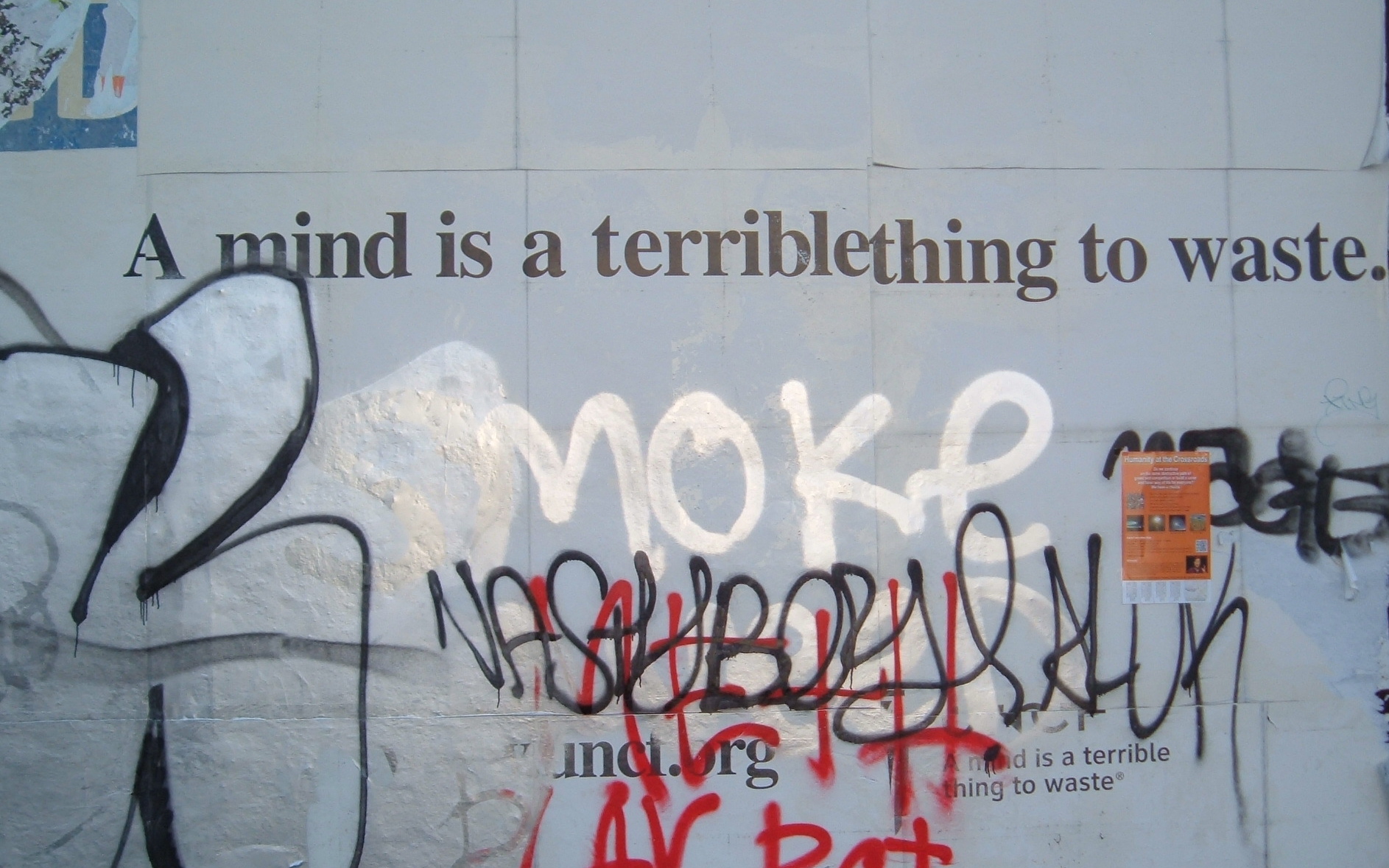
GOOD OL’ USA–June has been quite a month so far:  Bradley Manning’s trial kick-off was the first troubling thing, while jury selection for the George Zimmerman case must’ve been way more than just troubling for the family of Trayvon Martin. For those strung out on the injustice of the young man’s  killing in 2012, it is post-traumatic revisitation time.  Then there was the terrible mass shooting in Santa Monica. Just as my heart broke in two, thinking of friends and old neighbors we’d left behind there, we got the news (?) the N.S.A. is surveilling just plain folks on the regular. I thought we knew this already and so I just figure time is going backwards now. Incidentally, while all this was going down,  I saw a defaced billboard/piece of street art that seemed to fit the mood ’round these parts.

“I have so much trouble on my mind,” I told my husband, not even counting the day to day personal challenges of survival.  “I know,”  he said, though at least we could laugh at me quoting Chuck D accidentally without irony. Meanwhile, a national historic landmark, located in San Francisco, was moving into jeopardy.

The Richardson-Johnson family,  proprietors of the Marcus Book Store in the Fillmoreslider-2 district, have been on a course of change for over 50 years here and have survived those changes royally. Founders Julian and Raye Richardson were directly invested in the struggle for civil rights and equality, first with their Success printing company, followed by the opening of their bookstore.  To cite just one example: During the historic student strike at SF State in 1968, they used their home as collateral, to pay the bail for those arrested in the demonstration. They also printed the student paper when no one else would touch it. The result of the student action, by the way, are today’s multicultural studies departments and diversity programs  enjoyed on college campuses from here to Timbuktu (and when I say Timbuktu I do mean Timbuktu, quite literally).

Marcus Books, named after Marcus Garvey, specializes in books about Africa and African Americans, books by and about black people, among other things.  The authors they’ve hosted are those great writers, thinkers, poets, and humanitarians of the 2oth Century: James Baldwin, Amiri Baraka, Angela Davis, Ishmael Reed, and those are just a few of them. Toni Morrison, Nikki Giovanni, bell hooks, Wanda Coleman, Cornel West, Tavis Smiley, Walter Mosely and Oprah Winfrey have also passed through the doors at one of their two locations (the other is in Oakland). In San Francisco, the purple building stands near the corner of Post,  at the former location of Jimbo’s Bop City, the Fillmore’s premier jazz spot, back in the day.  I mention all this on the first day of what I expect will be a long hot summer here in our chilly little town, because some of us are concerned about such things. Yes, it’s for some of the usual reasons small businesses and booksellers have been struggling in the Amazonian jungle for a decade, exacerbated by the economy’s mess, but the wages of income disparity have also come to bear, the way it makes some people in town go boom while the rest of us go bust are also mixed up in it. You can read more about the store’s situation; as these circumstances do not resolve overnight, the fight to save Marcus Books has really only just begun.

As a native daughter of western San Francisco, I’ve recently returned home following some years in Atlanta, Los Angeles and on another side of town, and Marcus Books has since became my new favorite old place here. There are only a handful of places like that here, where I find it harder and harder to recognize the people and places I used to know as uniquely San Francisco. But some of what I remember best about our town’s openness, and willingness, I re-found at Marcus. There, if you are so inclined, you might talk to Karen Johnson about James Jamerson. Or Charles Mingus, Soul Train and Don Cornelius; Fillmore Street’s jazz heritage, quantum physics, Marvin Gaye and the beginning of all life in Africa. Self-reliance, self-knowledge, the rise and fall of Egypt, astrology, numerology; Harry Belafonte, Smokey and Stevie may come up, depending how you go. I don’t know about you but there aren’t too many places in town where people are conversant in the things I want to talk about and that’s just my own personal reason for wanting Marcus to hang around. The other is that I care about Karen, her family, and of course the general community in the Sucka Free City, served by the book store.

It has been said that the Fillmore is the heart and soul of San Francisco; certainly I have been witness to those flavors at work at Marcus Books in the hands of the Richardson-Johnson family. And because there is hardly any other place on earth I’d rather be than in a friendly neighborhood book or record store, chances are if you’ve read this far, I suspect you feel the same way too. So please, if you will, sign the petition to help Marcus Books, the oldest African American Bookstore in the United States stay around not only to educate the young and curious, the avid reader and casual seeker, but to stand as one of the longest standing community safe places for black authors and black people, and all folks, even those who are white, like me.

A gathering of concerned customers and citizens will convene at the store on Saturday June 22 at noon. Marcus Books is located at 1712 Fillmore Street in San Francisco.

Filed under: Book news, Harry Belafonte, income disparity, , , , , ,

For Father’s Day: Kind of Blue

I have an image of him in the late ’50s: Still underage, he sneaks through the curtains at the front door of the hungry i, the Keystone Korner or the Purple Onion, slinks into one of the seats in back, and gets lost in music.

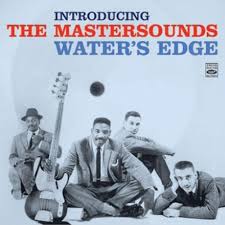
He must’ve told me of the nights he went to hear Dave Brubeck, Gil Evans, Gerry Mulligan, and The Mastersounds, with Wes Montgomery. But it wasn’t until he died that I understood what it meant to be there at that time: North Beach, San Francisco, probably 1958 or ’59.  The Beats had arrived by then–outlaw heroes like Jack Kerouac and Allen Ginsberg passed through as did my dad, the cleanest cut kid in the joint. Lenny Bruce would’ve called him “Jim,” the comedian’s nickname for a straight, but my dad was no square: I like to think of the original hipsters welcoming him in, an innocent among them for the night.

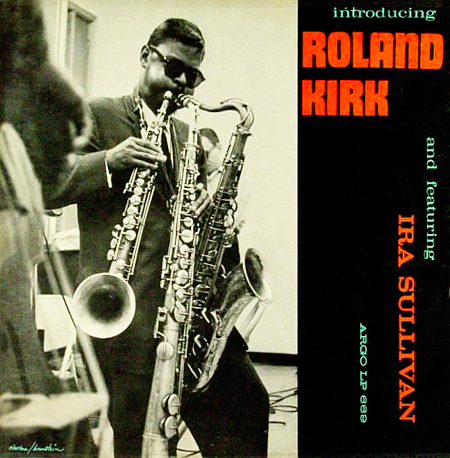
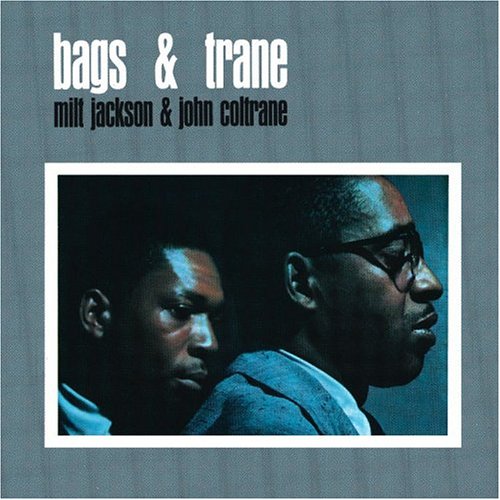
As a child, I didn’t grasp that my dad was a jazz fan, though his stack of interesting looking records were his only possessions I ever admired. I realize now that his was a modest-sized collection, though it was very tidy, very specific and literally very, very cool. It was Cool Jazz, also known as West Coast, that my dad favored. He had every recording by the Modern Jazz Quartet featuring Milt Jackson. I guess he liked Jackson’s vibraphone because Cal Tjader’s records were also well represented, as were MJQ sound-a-likes the Mastersounds with Buddy Montgomery on vibes, and his brother Monk on bass, and sometimes Wes on guitar. Piano jazz also rated on his scale–Brubeck was a hero, as was iconoclast Ahmad Jamal. And there were even stranger sounding names to this kid–Joao Gilberto, Antonio Carlos Jobim and Laurindo Almeida–with their pronunciations that confounded me, and their breezy bossa nova guitars that captured the scene at Ipanema Beach. And then there were the Stans: Getz and Kenton, alongside tenor sax man, Rahsaan Roland Kirk (who was still just Roland back then). Flipping through the stacks, I felt like I knew these jazzmen, in a way other kids might’ve known Frank Sinatra or Bob Dylan; they were a part of the family. 


It was the colorful, modern art-inspired album covers on the Verve, Prestige, Argo, and Fantasy labels that first drew me in, long before I knew anything about musical shapes, colors or subtleties, and all the shades they could throw. I think of putting one of those records on the turntable now, pouring over the liner notes and getting lost myself, while holding an actual Blue Note or Impulse! sleeve, instead of a reissued imitation. And yes, I could pick up a copy of one or two at a vintage vinyl store but it’s my dad’s records I want, with his energy, the stories of their purchase, and a recounting of the historic gigs where the songs came alive for him. I also want his enthusiasm for my taste for the avant-garde and for my similarly small, tidy and very cool stack of Alice Coltrane, Ornette Coleman and Sun Ra. But even if he were here to sit with me, I don’t know that he’d be all that interested in talking jazz because somewhere along the way he left behind his passion for it.

By the mid ‘60s, more and more fans of Cool Jazz had turned to hard bop and rock’n’roll. Times had changed, The City, as it’s known, had been psychedelicized.  My dad was now living as a young suburban family man.  A periodic drinker who put down the bottle long enough to regain his vision from time to time, he became a health food nut, a jogger and a tennis bum, long before all three things helped define the laidback ‘70s. “Over-committed,” is how he referred to the house, the yard, the two kids and three cars— his life, between jobs, outside San Francisco. Naturally there was no nightlife to pursue, no trips to town to hear music; most of the old clubs had gone dark by then anyway. And so he spent a fair share of time at home, sleeping in the hammock, sitting at the kitchen table, pouring coffee, typing mysterious reports and letters on the old Royal, watering the lawn, but never touching the stack of vinyl or the phonograph, even though it was positioned to be within easy reach of the California-style kitchen-family room-patio. It was as if the simple act of putting a needle to a record was too much trouble.

Occasionally, he’d ignite the old jazz flame: He once took me to see Cal Tjader locally, though teenage me couldn’t understand why a so-called legend should be playing in the St. Francis High School gym. My brother has a similar story: Was it Milt Jackson at the Grand Opening of the Mayfield Mall? I don’t know, I have to ask him. And if dad ever dug the music in the air, he’d partake of that strange jazzer’s custom, the finger click (shoulders hunched). Sometimes while driving, he’d find the jazz spot on the radio and start bopping, gesturing with an occasional air-cymbal crash. For me, these small acts were simultaneously embarrassing and ethereal: Jazz made life bearable for a moment as we floated, refreshed, for a couple of beats or bars.

When my dad moved out of the house at the end of the ‘70s my mom gave his records to a young jazz enthusiast, a boy she thought would appreciate them; our jazz days were over and so was our family. And yet the LPs—their covers, their vibraphone, horn and piano sounds, and their longwinded notes on the people who played  them—occupy a significant space in my heart and light my way in the darkness.  Sometimes I wonder had he lived, if my dad would’ve rediscovered his passion for jazz. And if only it had occurred to me when he died in the ‘80s to have played a little Louis Armstrong at his funeral. If he was with us today, would he have succumbed to the Quiet Storm? Or would he hold strong and enjoy classic Mingus and Monk with me? For sure we would agree that Duke is the king, and we certainly would’ve gone to see Ahmad Jamal when he rolled through town last week. But would he still put on that ridiculous posture as he be-bopped down the hall, and would I reflexively roll my eyes like I did as a teenager when he paused by my bedroom door, approving of the horn charts of Blood, Sweat and Tears and Chicago? Hard to say. I’ll never know. Though whatever the mood, and  whether we agreed or not, it would all be ok by me—if only he was here right now. Because what I really need to ask him, what I really want to know, is if he can remember the moment he stopped listening.

Filed under: Jazz, , , ,

Never Forget: NAACP Field Secretary, Medgar Evers (June 12, 1963)

It’s been 50 years since civil rights leader Medgar Evers was slain in his driveway, returning home from a meeting over matters in the NAACP. Following the cold-blooded killing by a white supremacist, and coinciding with the period of ever-intensifiying racial hostility in the South, writers got more and more direct with their songs of southern hate.  “The Ballad of Megar Evers” is an a cappella spiritual by the Freedom Singers (a different group than the one founded by Cordell Reagon); Bob Dylan covered the Evers tragedy and its political ramifications in “Only a Pawn in Their Game;”

Phils Ochs weighed in with “Too Many Martyrs.”

Perhaps most famously, there was Nina Simone’s “Mississippi Goddam.”

Though it was the bombing of the four little girls at Sixteenth Street Baptist that forced Simone’s lyric,  the situation in Mississippi culminating in the assassination of Evers earned the song its title.  Evers’ killer was finally convicted in 1994.

Filed under: Bob Dylan, Keep On Pushing, Never Forget, Nina Simone, Protest Songs, video, ,

Ron Franklin is Gasoline Silver

If you listen closely to Ron Franklin’s music, you may experience space and time jumping the tracks. It can happen when he switches from an electric rhythm guitar blast and picks up a lonesome slide lead, or when his wrangly, whisper-from-the-past vocals kick in, then choogle off into the distance. Shifting into another dimension, you may hear contemporary imagery and language brushing against old time themes, and a definite restlessness, rustling through his sensory-laden lyrics that echo the music and travel together in perfect unity—original but familiar; inviting but opaque, heavy but with heart.

Franklin’s self-titled set for Alive Records, City Lights for the Memphis International label, and a limited edition special pressing of Blue Shadows Falling, are demonstrations of the lengths he’s gone for a song. Schooled by Memphis music greats from Willie Mitchell to Jim Dickinson, learning from the hands and words of Otha Turner, Arthur Lee and Solomon Burke, Franklin’s a man of history, just now coming of age with Gasoline Silver, a thoroughly modern, electric album and band. With classic song styles that recall the Doc Pomus-inspired sound of the city, Ron Franklin stands alongside the timeless, gypsy souls of rock’n’roll—the Heartbreakers, Patti Smith and Suicide—and comes up swinging. With his poetry of the street, and southern R&B bona fides, he is readymade for the great rock’n’roll shakedown.

Franklin’s enigmatic stories, about blue devils, hill country picnics, and girls lost to footprints in the snow, are rooted in real life, then spun into musical universes of their own. Occupied by  different cars, different characters, and different versions of the American dream or nightmare, every verse is as right for a country night as it is for urban lights. Like time travelers passing in the night, sometimes the worlds collide and connect up, a little like the way real life and its players begin to reveal themselves: Stranger than fiction stories, unfathomable coincidences and outcomes impossible to predict. His surreal yet believable subjects concern a certain kind of dream and dreamer, the ones with romance and melody in their hearts, and trouble in mind. Franklin refuses to check his intellect or his wit at the door when he sings,  “There are no free refills for the taking / There ain’t no four winds that blow strong,”  as he does in “Dear Marianne,” an epic that speaks to the betrayal of the Americas, late 20th Century-style. And yet, riding side by side with his realist is a seeker and eternal optimist, stoking the fire of “Black Lightening.” To hear him sing “If you don’t see me tonight, I’m underneath the stars so bright / Listenin’ to that black smokestack lightnin’ blow again,” is to travel to where the black smoke is rising and the train whistles blow, manifesting a space where the images are as real as the record and the player on which they’re spinning.

See and hear Gasoline Silver live on the West Coast, June 14-22. Check local listings for details.

Filed under: Concerts, Solomon Burke, You Read It Here First, , , , , , ,

We Shall Overcome (Again)

This piece is adapted from an column that appeared in Paste in late 2011.

Alongside organizers, activists and orators, music people of all orientations have long brought the soul, sound, and heart to social and political movements. During 2011’s income disparity protests, the lionhearts of contemporary music  turned out for the Occupation: Ever-ready artist/activist Michael Franti showed up to “Yell Fire.” Talib Kweli, longtime resident in the trenches of conscious hip hop, dropped some rhymes, weighing in with a powerful piece called “Distraction”: “Skip the religion and the politics and head straight for the compassion, everything else is a distraction,” he rapped. Tom Morello, who as The Nightwatchman, shows up with his ax wherever injustice is served, came out to lead a chorus of “This Land is Your Land,” the old Woody Guthrie song that’s easy enough to sing along to, even if you don’t know the words. And the generally apolitical Jeff Mangum of Neutral Milk Hotel delivered a rare, impromptu set of songs to the delight of Occupiers. In particular, the line “we know who are enemies are” from the fan favorite, “Oh Comely,” drew cheers from the crowd. Mangum’s appearance, if not his topically unspecific songs, provided the people with entertainment and support, the kind of unique companionship that only a song can provide in the cold, cold night.

“Our idea was to go down and raise their spirits,” said David Crosby, who with Graham Nash sang for the Zuccotti Park crowd. “What music is doing is unifying the people, bringing them together,” Nash told Rolling Stone.

“Everybody has a point, everybody has an idea everybody has a perspective on the world,” said rapper Lupe Fiasco when asked about musician participation in OWS. Stressing that celebrities are just like the rest of the occupiers, except in a higher tax bracket, he noted, “The leader is Occupy; it is the movement.”

Hip hop organizer and mogul Russell Simmons was among those on the street with the 99 percent; part of his role there was shepherding visitors like the Rev. Al Sharpton and Kanye West through the New York encampment.

The historic Occupy moment for social and economic equality was called by scholar Cornel West a “democratic awakening,” while throughout history, every freedom movement has had its own soundtrack or anthem for the long march home. And yet, there was not one dominant or lead song to emerge from the throng, an echo perhaps of the mass chorus of a movement without one soloist. Back in the high days of student organizations, protest and topical songs—the ’60s civil rights, free speech, anti-war and black power movements—marchers relied on folk tradition (reviving the old songs with the intention of forging something new). Rewriting spirituals for the secular world—or at least a world in which all faiths and traditions get equal respect—was an area mined by Pete Seeger, who along with Joan Baez, helped to turn “We Shall Overcome,” into an unofficial anthem of the Civil Rights Movement (most memorably, Baez sang it at the 1963 historic March on Washington; Seeger sang it at OWS).

Originally based on the gospel song, “I’ll Overcome Some Day,” composed by the Rev. Charles Albert Tinley and dating back to the African American Methodist Episcopal Church of the early 1900s, “We Shall Overcome” has changed shape through the years; also contributing to the version as we know it were elements of the spiritual “We’ll Overcome (I’ll Be All Right)”, another hymn from the immediate post-slavery period. But it wasn’t long after its arrival in church hymnals that “I’ll Overcome Some Day” was picked up by striking miners and laborers who went on to use it throughout their organizing fights in the ’20s, ’30s and ’40s. Sung by miners in the North as well as tobacco workers in the South, “We Shall Overcome” became a staple at the Highlander Folk School, the training ground for civil rights workers. Highlander teacher Guy Carawan helped to popularize the song among the forming Student Nonviolent Coordinating Committee (SNCC) in 1960 and the song was spread far and wide by Seeger who changed up the verses a bit. By and by, the melody to “We Shall Overcome” came closer to echoing another slave time spiritual, “No More Auction Block” (once sung by Paul Robeson and Odetta and used by Bob Dylan as the tune for “Blowin’ in the Wind”) than Tinley’s “I Shall Overcome” did. In essence, two folk standards emerged from one spiritual.

But more than its fairly tame melody, the strength of “We Shall Overcome” lies in its extraordinarily bold lyrical affirmations: We are not afraid/the truth shall make us free/we shall live in peace. These sentiments are as ripe for the current moment, as they were when the United Farm Workers used it in their fight for their rights, as when South Africans sang it in their struggle against Apartheid, and when Czechs sang it during the Velvet Revolution that overthrew communism. “We Shall Overcome” has been deployed in struggles in India and Ireland. It’s been sung by Bruce Springsteen and was recorded for his Seeger Sessions; Seeger, now in his ’90s, is still singing it. Though I’d say it’s time for someone from the youngest generation of American singers, songwriters and activists to adopt and adapt it, and lead the singalong. “We Shall Overcome” needn’t be consigned to folk’s moldy or buttoned-up past; rather, it’s protest gold, a song that hasn’t lost its value for over 50 years and counting. If it seems strange, update it. If it seems square, give it a beat. But traditional songs need to get sung and sung loud, as if your life depended on them because in fact there are people whose do: Overseas wars cost not only money but lives; poverty is killing people here at home. Workplace and housing discrimination, poor schools, environmental degradation, job disintegration—these are just some of the grievances that will end up in songs as the movement keeps moving on.

Dr. Martin Luther King Jr. knew what music could bring to a non-violent protest effort: he asked gospel great Mahalia Jackson to accompany him and Harry Belafonte to help organize his efforts. Belafonte’s life is a demonstration of just how important a role a singer can play in effecting change as well as how education in the arts can save young lives Nina Simone; Curtis Mayfield; Bob Marley; Peter, Paul and Mary; Sam Cooke; and many, many more singers and musicians contributed to positive social change and quite possibly political change with their music. You may laugh at this notion of change, but people from all walks of life, all genders, all religious backgrounds, colors and sexual orientation, here and elsewhere in the world, are standing up to the indignities served up to their communities.

So here’s to you, activists and musicians: To Michael Franti, Pete Seeger, Tom Morello, Talib Kweli, Boots Riley, Ozomatli and Ben Harper:  Every movement, from abolition to women’s suffrage to labor and civil rights has its songs, and this moment in time has its songs too. Thank you—to the singers and your songs—songs that one night might be the only thing between the darkness, cold, tear gas and rubber bullets raining on someone’s soul. Thank you for singing, so that we shall all overcome, someday.

Origin of Song columnist Denise Sullivan is the author of Keep on Pushing: Black Power Music From Blues to Hip-Hop.

Filed under: anti-war, Hip Hop, income disparity, Occupy Wall Street, Origin of Song, Protest Songs, Songs for the Occupation

This Morning, Palmetto Playground Officially Became Adam Yauch Park

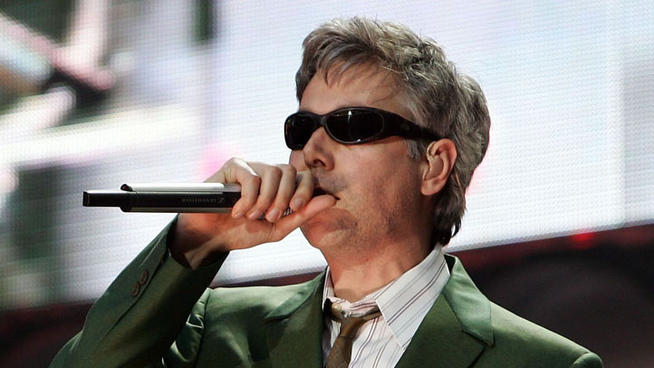
In his life, Adam Yauch was known to hip hop and rock fans as MCA of the Beastie Boys; among the three, he was the Spiritual One. In commemoration of the one-year anniversary of his passing on May 4, 2012, Palmetto Playground in Brooklyn Heights will today and forevermore be renamed Adam Yauch Park.

As a member of the Beastie Boys, the Brooklyn native was known for furthering hip hop music as an innovator (the Beasties album Paul’s Boutique brought new depth to their music, as well as to hip hop production in general) and to its worldwide reputation as a New York City invention. As an activist, Yauch established the Milarepa Fund and staged the Tibetan Freedom Concert benefits. His involvement in the Free Tibet cause introduced the plight of nation as well as its form of Buddhism to a swath of hip hop and rock fans, many of whom had their lives changed by the knowledge.

Yauch also had deep ties to world cinema and documentary filmmaking.  His production and distribution company, Oscilloscope Laboratories, produced Flow: For the Love of Water, concerning the right to water, The Garden about the imperiled South Central Farm, If A Tree Falls:  The Story of The Earth Liberation Front and Youssou N’Dour: I Bring What I Love, among other docs and features.

Adam Yauch Park will provide basketball courts, a community garden, a dog run and open space, among other amenities, to the residents of Brooklyn Heights. It is an ideal local tribute to a world citizen and extremely humble rapper.

Filed under: Environmental Justice, Hip Hop, , , ,

RIP Musician-Activist Richie Havens (January 21, 1941–April 22, 2013)

Extraordinary musician and activist Richie Havens has passed today, Earth Day, following a heart attack. Havens was a performing songwriter, though by his own admission, specialized in performing the songs of other writers. Havens’ life and how he came to be an activist through song throughout his career was central to the narrative of my book, Keep on Pushing; starting as a Doo-wop singer in Bed-Stuy, his curiosity led him to the Greenwich Village clubs of the late ’50s where he was exposed to folk music and poetry, and was encouraged  by Allen Ginsberg to perform. His journey through the heart of the counter culture was the source of much inspiration as I wrote, and I will forever be grateful for the gift of our conversation, along with the beautiful songs he left us. Havens will be missed by music lovers and friends of the earth throughout the world.  I would like to send my condolences to his family, friends, and fans, and will take the rest of this precious day to honor his memory by doing something for the earth. Thank you, Richie Havens, for your soulful lifetime contributions to our planet, Earth.

Update: There will be a public memorial for Richie Havens on Monday, April 29, at City Winery in New York City.

Filed under: anti-war, Earth Day Music, Environmental Justice, Obituary, Poetry, video, ,

Earth Day and Esso

When 80,000 barrels of oil spilled into the waters of the Santa Barbara Channel in January of 1969, the crude-splattered water, beaches, and birds along the California coast in its aftermath became the symbols of modern eco-disaster. While the ensuing public outcry helped hasten the formalization of the environmental movement as we now know it, for musician Van Dyke Parks, the spill and “the revelation of ecology,” as he calls it, was a very personal, life-altering occasion. “It changed my M.O. and changed my very reason for being,” he says. The Union Oil rig rupture in Santa Barbara made Parks go calypso.

“When I saw the Esso Trinidad Steel band, I saw myself in a Trojan Horse,” he says. “We were going to expose the oil industry. That’s what my agenda was. I felt it was absolutely essential.” From 1970 to 1975, Parks waged awareness of environmental and race matters through the music and culture of the West Indies, though in the end, “You don’t know whether to laugh or cry. That’s what makes Van Gogh go,” he says, “That’s what great art does.” Though Parks is referring directly to Esso Trinidad’s happy/sad steel drum sounds, he could just as easily be talking about his own experience during his Calypso Years.

My interview with Van Dyke Parks originally appeared in the pages of Crawdaddy! in 2009. Four years later, the story of one man’s adventures in art and activism The Day Van Dyke Parks Went Calypso, remains the most most-read and most searched piece here at denisesullivan.com. Parks had a goal and an idea ahead of its time: To forge environmental healing through music made by instruments made of cast-off oil drums. Read the full story here or at the link above.  And happy Earth Day.

Filed under: Bob Dylan, Bob Marley, Calypso, Civil Rights, Earth Day Music, Environmental Justice, Protest Songs, video, , ,

Cambio: He, Too, Sings America

Cambio’s album title,  I, Too, Sing America caught my eye for being named after a Langston Hughes poem (his answer to Walt Whitman’s work, “I Hear America Singing”). Cambio’s music caught my ear, too, thanks to his talk with Ignacio Palmieri on KPOO last week.  With allusions to illusions, references to referendums, and tracks built on layers upon sound bites, scratch noises, and clips of speeches, Cambio’s point of view is progressive to the max, and that powerful voice is at the center of the mix.

Californian by birth, Latino by descent, Cambio is from Watsonville while belonging to Quilombo Arte,  the international collective of artists, writers and musicians spearheaded by Mexico’s Bocafloja,  committed to breaking down barriers and to emancipation for all people.

As a Latino influenced by hip hop, a young man in love with basketball and a speaker of “broken Spanish,” Cambio described himself as “having issues within his own community.” It was through becoming educated and learning the stories of colonization that he began to seek and  find his place in the world as an artist. Beginning to record and perform locally, it was by chance that Bocafloja heard Cambio’s recordings and reached out to him.  Though he records in English, Cambio has since found an audience for his music in Mexico and throughout Latin America.

An earlier album,  Or Does It Explode?, also has a title borrowed from a Hughes poem (“A Dream Deferred”); a newer project, Underground Railroad, of course refers to the network built from slavery to freedom. History, poetry, social movement and music are among the themes in Cambio’s work:  One minute he’ll borrow from Malcolm X, Fred Hampton or Che Guevara, the next from Nina Simone or Bob Dylan. Here’s  “Eyes Wander,” featuring Favi and DJ Ethos.

There is so much to like about Cambio, so much more to learn and know, but the music speaks volumes on its own. Listen for yourself on his Bandcamp page.  You may also hear the archived broadcast (scroll down) of the show I heard. I encourage you to listen and support cambio: Positive hip hop is marginalized and Cambio’s is a voice that if given a proper hearing could resound all over this land.  He, too, sings America.

The following clip features the voice of Langston Hughes reading from the poem that started it all.

Filed under: Bob Dylan, cross cultural musical experimentation, Hip Hop, Immigration Reform, Latino culture, Malcolm X, Mexican American/Latino Rock, Poetry, Protest Songs, , , , , ,

Archives

Recent Posts

Browse by subject or theme