Denise Sullivan

Author, Arts & Cultural Reporter and Worker

Just Got Back From Texas…

Preservation of the stories of music’s most unsung participants is my job, though there are times I’ve questioned the motivation and sanity behind my choice in career.  Thanks to a quick trip to Texas, MEOWcon_header-e1365515867432 I can recommit to my own calling, writing the stories of the under-looked and unjustly underappreciated people of  arts and letters who make history everyday by living creatively and pursuing their own truth, sometimes at great risk:  They are paying the wages of our liberation.  The freedom singers profiled in Keep on Pushing had plenty of experience with perseverance and faith-keeping; it’s partly why I went in search of their stories at such a deeply troubled time in our history.  I also could venture a guess that ninety percent of the interviews archived here feature artists who persist, despite the revelation, there are no free refills for the taking: They are the ones who inspire me not only to write and storytell, but to live authentically myself.
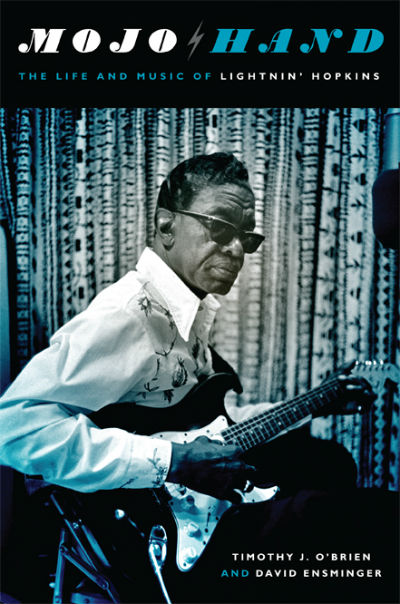
Following a four-day weekend in Austin for MEOWCon  and Texas Book Festival,  the  importance of documenting our untold stories and the theme of living history were driven home to me at every turn. It was a much-needed validation and dare I say vindication of a life spent in music’s trenches, a role which author, folklorist and professor David Ensminger assures me is vital and necessary.  As “culture workers,” we share a passion for recording and preserving the contributions made by artists who have gone unembraced by mainstream media and the consumer culture, while digging for lesser-told stories by musiciains of renown. mojo-hand book 0419 Ensminger also maintains the Center for Punk Arts and holds a vast archive of flyers and ephemera, most of it viewable online. Appearing in conversation at the Texas Book Festival on Sunday to talk with me about his two new music history books:  Left of the Dial, a collection of interviews with punk legends, and Mojo Hand: The Life and Times of Lightnin’ Hopkins,  the biography he co-authored with Tim O’Brien, as people who experienced punk’s dawn firsthand, we agreed we can identify with the outsiders who conceived, lived, breathed its ethos but more importantly, made the music. They aren’t much different from the outlaw blues heroes of yore who also adhered to an anti-authoritarian credo,  while kicking against the confines of a society designed to keep them on the outside (or in the parlance of the prison system, on the inside). And yet, these cross generational musicians not only survived the system, they lived to make life-changing music;  in many cases they also did it with incomparable style (particularly in the case of the one-of-a-kind playing and haberdashery of Lightin’). As we talked, Ensminger and I tuned into Texas musicians who found the heat on them so oppressive, they migrated to California, where it was easier to be themselves. And yet, wherever these Lone Stars roamed,  their spirit shone through in the music, with its yowling chords of liberation and the harmonica of injustice, never veering far from South-bound roots.  In an interesting twist, Ensminger and I delivered our talk on fringe musicmakers in chambers at the State Capitol (we had no doubt the irony of our presence there would not be lost on our subjects from Lightnin’ and the Big Boys, to the Dicks, the Stains and MDC, while I prayed it would not be noticed by the state’s right wing nut cases).

Across town at MEOWCon, a couple hundred women convened for the first-ever event organized to honor women’s history and contribution to rock, roll, and other popular music, with the intention of bringing along younger women and empowering them with tools for equal opportunity. After 50 years of taking part in rock’n’roll collectively, many of us still find rock’s smoke, mirrors and glass ceiling firmly in place, discouraging our participation in it on all levels, from music to media.  It’s only when we come together that we realize, we can and have done every aspect of the business well, and yet the history of our success has largely gone unrecorded. This theme of under-documentation emerged again and again at the three-day conference.  It was present while Suzi Quatro suzi-quatro-col-3played (where was the national press for this rare stateside appearance by one of rock’s living, vital foremothers?); it took a direct hit during Kathy Valentine’s keynote address (as she pointedly asked why she and her band the Go-Gos still hold the record for being the only female band to have written and recorded a number one album?) and it was upended during the panel and performance by the women of These Streets:  Seattle grunge players who’ve taken it upon themselves to document the scene they were wholly a part of, yet the role of women rarely gets a mention in texts devoted to the ’90s music explosion there.  I would say the same for the Q&A with Frightwig, the reunited band from ‘80s San Francisco who though under-appreciated in their first incarnation will go down as vastly influential, especially as they continue to bring new meaning to what it means to be a mid-life, punk generation woman playing on in the 21st Century.

Meeting and mingling with women who paved the road for us, from Patricia Kennealy Morrison and Robin Lane, to solid sisters like Julie Christensen, and young women like Aly Tadros, Shelby Figueroa, and Wendy Griffiths of Changing Modes to whom we hand the torch, was an experience I hope to repeat, and document more extensively.  Thanks to Carla DeSantis Black for the putting together the whole shebang:  Many years ago, the editor/publisher of ROCKRGIRL printed my piece on Jane Weidlin, and today it lives in an anthology titled A Girl’s Guide to Taking Over the World: Writings From the Girl Zine Revolution.  I’m humbled to have witnessed and survived that revolution, and recommit to finding more untold stories of women—and the men who support us—rising, as we document and preserve our herstory.

Filed under: Arts and Culture, Blues, video, Women's rights, , , , , , , ,

Remembering Paul Williams and His Greatest Hits (Again)

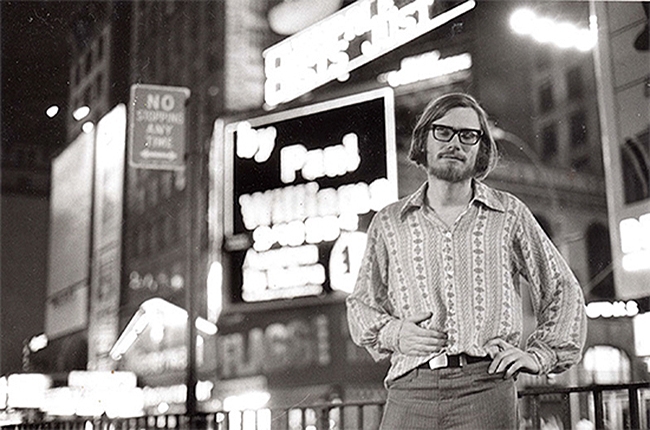
Crawdaddy Litquake PosterTonight is the Lit Crawl, the final night of San Francisco’s annual festival of books, Litquake. For the occasion, I organized a tribute to writer Paul Williams  who at age 17 founded Crawdaddy! the first national magazine of serious rock criticism.  From John and Yoko’s bed-in for peace, to the back-to-the-land movement, and a literary association with Philip K. Dick, Williams wrote over 25 books on his travels through rock ‘n’roll and underground culture. The night’s offerings by, about, and inspired by Williams were prepared by Trina Robbins, Rudy Rucker, James Greene Jr., Ron Colone and Williams’ wife, Cindy Lee Berryhill, who (with the exception of Robbins) will be there to read them. The following is a repost of my remembrance of Paul Williams on the occasion of his passing on March 27, 2013, at the age of 64. 

Crawdaddy! founder Paul Williams, widely considered to be the creator of modern rock’n’roll criticism, has died in Encinitas, California, following a long struggle with early onset dementia, the result of traumatic brain injury sustained following a bicycling accident in 1995.

In 1966, a 17-year-old Williams wrote, edited and distributed Crawdaddy! from his dorm room at Swarthmore College.  As a young man at the epicenter of ‘60s music and movement, Williams had what is now recognized as incredible access as a journalist on the scene, whether taking calls from Bob Dylan, sitting in on a studio session and riding a plane with Jim Morrison and the Doors, partying with Beach Boy Brian Wilson, or running a gubernatorial campaign for Timothy Leary.

Here’s a clip of Paul with John Lennon and Yoko Ono at the celebrated Bed-in for Peace (he’s wearing a brown shirt, back-to-the-camera, front and center).

Williams had keen powers of observation and while his intellect was sharp, it was the emotional content of music that he attempted to unravel in his writing. Over time, Williams grew Crawdaddy! into a magazine with a circulation of 25,000—about the right size to serve his niche audience of music geeks, the diehards who lived the counterculture rock ‘n’ roll lifestyle. Williams, however, turned out to be more of a back-to-the-land guy. He left the city and turned over the magazine to capable hands while he pursued other roads—like a love of literary science fiction and tracing the evolving career of Bob Dylan as a live performer.  Eventually becoming executor of the Philip K. Dick estate and editing a book of Theodore Sturgeon stories, the science fiction community also mourns the loss of Williams today.

In the ‘90s, Williams revived Crawdaddy! briefly as a newsletter; compiled by hand and from the heart, much the way he started it, his close-knit and handcrafted care contributed to Crawdaddy! maintaining its cachet through the years. It was in his middle period, of attending Bob Dylan concerts that I became acquainted with Williams while I was  attempting to get my own career as a music writer up and running.  He encouraged me to write my first book and introduced me to my first publisher. Williams was the closest person I had as a mentor among rock writers, though how I ended up writing for the online edition of Crawdaddy! from 2007-2011 was not related to our acquaintance.  By that time, Williams had sold the rights to his magazine to an entity known as Wolfgang’s Vault and they hired me as a contributor there where it was my privilege to interview a crazy-long list of rock legends who gave me access largely based on the reputation of the magazine produced by Williams. Richie Havens, Yoko Ono, Van Dyke Parks, Eddie Kramer, Janis Ian, and John Sinclair, among others, all remembered howCrawdaddy! contributed to shaping the culture of music fan journalism, and all were happy to give back what Williams had so freely given to them with his magazine and with his words.paul-williams-crawdaddy-650-1

My interactions with Williams, a couple of handfuls of times over two decades, and just twice during his extended illness, were marked by a spark of familiarity—the kind that is shared by people who live and write inside the music, among a community of friends whose own lives are intertwined with art and music, the beauty of the everyday, and the struggle to survive it. Through the years, I closely observed Williams, watching as he maintained his dignity, despite the diminishing returns encountered by his rock writing.  I noticed that he refused to compromise, that he did things for love instead of money, and admired that he remained a fan while maintaining his professional status on the inside track. As it turned out, taking a path like that is no way to make a living in the rock ‘n’ roll business, but it was a great way to live a rich life, full of love and friendship, full of writing, and full of rock’n’roll.

His passing last night comes as little surprise; the grieving process for family and friends had begun some years ago when Williams could no longer care for himself and became confined to an assisted living facility not far from the home he shared with his wife, singer-songwriter Cindy Lee Berryhill, and their son, Alexander. Last weekend in New York, Williams and his life’s work was celebrated at a one-day show of his manuscripts at the Boo-Hooray Gallery, organized by the Patti Smith Group’s Lenny Kaye. The intention of the exhibit was to shine a light on the vast literary contribution Williams made to rock journalism, science fiction, and to the study of Bob Dylan’s evolution as a performing artist in the late 20th Century.

Goodbye, Paul, with love and thanks to you for all you gave to the music, to the encouragement you gave to me as a writer, and with condolences to your friends, your sons, and your devoted wife, Cindy Lee.

Here’s a link to a piece I wrote about the love shared by Berryhill and Williams and how his longterm illness impacted and ultimately inspired her music. Some of text of this remembrance was borrowed from the piece that originally appeared in Crawdaddy! online in July 2011.

Filed under: anti-war, Arts and Culture, Bob Dylan, Book news, Books, Obituary, , , , , , , , ,

Goodbye Columbus: Hello Buffy Sainte-Marie and Debora Iyall

Buffy Sainte-Marie is one of the central figures in Keep on Pushing: As unique musically as she is direct lyrically, Sainte-Marie was born on the Piapot Cree Indian reservation in Saskatchewan and adopted by a family in Maine. She says that as a child she was artistic innately, as well by necessity. Befriended by a Narragansett couple who lived near her family in Maine, it was from them she learned about cultural handcrafts and kindness. “They didn’t sit around and give me Indian lessons,” she said, “But on the other hand, they didn’t chase me away.”  As a young student, Sainte-Marie was drawn to philosophy and religion, while she simultaneously developed her musical side, as a folk performer. Her unique vibrato and innovative song style are what first drew me to finding out more about her story; what I found, moved me to the core, from the volume of hardship and turmoil she described, to her refusal to study war, which landed her among Nixon’s enemies.  “I don’t think many people, even today, understand how much blacklisting has gone on of artists in the record business,” she says.  In the face of the hassles, Sainte-Marie continued to innovate, as an electronic musician as well as a computer-based visual artist. Committed to teaching, to passing on what was given freely to her as well as what she fought to achieve, Sainte-Marie’s work still offers a pointed critique of war, greed, injustice and the anti-people policies that impact indigenous people all over this land.

Debora Iyall is one of the artists  directly descended from Sainte-Marie’s example of native creativity:  A singer, a songwriter, a poet, and a visual artist, Iyall’s story also unfolds throughout Keep on Pushing, beginning with her time as a teenager during the Indians of All Tribes’ Occupation of Alcatraz.  Her punk-rooted style bears little resemblance to Sainte-Marie’s folk roots (Iyall was most influenced by Patti Smith), but a close connection to arts education and her roots in the Cowlitz tribe made her a unique presence in San Francisco art-punk band, Romeo Void. Iyall had the guidance of elders—her mother and the Natives she met at pow-wows and on Alcatraz—who supported her creative discoveries. “I felt like I had these little nuggets of information or culture to hang on to,” she said.  Today, Iyall exudes confidence in her work as a performer and visual artist and is also a teacher and advocate, for artists of all colors and dimensions.

I was honored and humbled to have been allowed access to the lives of both Debora Iyall and Buffy Sainte-Marie—two women whose works have uplifted and inspired, not only their brothers and sisters native to the Americas, but their fellow artists and anyone who’s ever been broke or hungry, tired, or cast aside, and helped them to keep on keeping on: Their complete stories are told in Keep on Pushing.

Filed under: anti-war, Arts and Culture, Buffy Sainte-Marie, Folk, Punk, Women's rights, , , , ,

50 Years Ago: Four Little Girls and Two Songs

It was 50 years years ago that the four Birmingham, Alabama girls, Addie Mae Collins, Denise McNair, Carole Robertson and Cynthia Wesley, lost their lives during the bombing of the Sixteenth Street Baptist Church.  In 2011, a marker was finally dedicated in their names at the site of the vicious, racially motivated attack.

Just three months after the murder of Medgar Evers in Jackson, Mississippi, and two weeks after the March on Washington and Dr. King’s momentum-building “I Have a Dream” speech in 1963, the Alabama tragedy became the pivotal event in the Civil Rights Movement. Singer Nina Simone wrote “Mississippi Goddam” in immediate response to hearing the news: “I shut myself up in a room and that song happened,” she said of the song that begins, “Alabama’s got me so upset.”  From that moment forward, Simone was committed to writing and performing material that would jolt people awake or into action.  It remains her most enduring work.

Joan Baez,  had of course walked alongside Dr. King at the marches in the South all along; her tribute was a recording of “Birmingham Sunday” by her brother-in-law, the writer Richard Fariña.  Each girl was remembered by name in the verses, set to the tune of a beautiful folk melody. Fifty years on, both songs remain painful reminders of the brutalities waged here and yonder, year in and year out, by so-called humanity.

Filed under: Angela Davis, Arts and Culture, Dr. Martin Luther King Jr., Freedom Now, Keep On Pushing, Nina Simone, Protest Songs, , ,

Len Chandler: Fifty Years of Marching and Singing the Songs of Freedom

As most readers know, today is the 50th anniversary of the the historic March on Washington for Jobs and Freedom.  What you may not know, even as an astute observer of civil rights and music history and where they meet, is the name Len Chandler:  He was among those assembled to help Dr. King push forward his dream of racial harmony and economic justice on that day, as well as on the marches in the Southern States.  At the March on Washington, Chandler was one of the voices in a trio that included Bob Dylan and Joan Baez. He marched with Dr. King and traveled through the South in the name of voter registration, informing rural Southerners of their polling rights, at risk to his own life. It was a now-you-see-it-now-you- don’t YouTube clip of Chandler’s inspirational performance of “Eyes on the Prize” that contributed to inspiring me to track him down and move forward with the writing of Keep on Pushing, my text that unpacks the origins of freedom music, and its roots in African American struggle and triumph.images

Originally from Akron, Ohio, and studying on scholarship at Columbia in the ’50s, Chandler made his way to Greenwich Village folk music a bit by accident. Lured to the sounds of Washington Square Park by the downtown youths he was mentoring, he easily fell into the scene based on his natural ear for songwriting and his familiarity with the songs of Lead Belly, Big Bill Broonzy, and Woody Guthrie.  Following a performance at the popular Village coffeehouse, the Gaslight Cafe,  Chandler landed a contract to go to Detroit, writing and performing topical songs for local television. A few months later when the gig was through, he returned to New York to find the folk thing in full swing:  Bob Dylan was the latest arrival to town and the pair started to trade ideas and songs. “I hadn’t yet begun writing streams of songs like I would, but Len was, and everything around us looked absurd—there was a certain consciousness of madness at work,” wrote Dylan in his book Chronicles, remembering when.  Chandler remembers it like this in Keep on Pushing:  ”The first song I ever heard of Dylan’s was ‘Hey ho, Lead Belly, I just want to sing your name,’ stuff like that.”  Dylan used Chandler’s melody for his song, “The Death of Emmett Till.” “Len didn’t seem to mind,” wrote Dylan.

Chandler went on to record two albums for Columbia:  To Be a Man and The Loving People.  He continued to work as a topical songwriter, a peace and civil rights advocate, and as a songwriting teacher; his tour of Pacific Rim bases with Donald Sutherland, Jane Fonda, Holly Near and Paul Mooney was documented in the Francine Parker film, FTA, a must-see for anyone interested in US history and anti-war efforts within military ranks. Catch a glimpse of Chandler at the end of this trailer for the film:

Today, Chandler is largely retired from performing, but he remains well- informed on human rights, politics, and the arts, and can write and perform songs that still pack a punch.  I must say it was a privilege to meet one of the true unsung singing activists of my lifetime (as well as his wife Olga James, a pioneering performer in her own right), and have him tell his story in Keep on Pushing (which is where you will find more straight talk from Chandler, as well as my own perspectives on his contribution to civil rights history). I had hoped to see him on television today,  in the crowd in Washington, or better yet, onstage with Peter and Paul, reviving a freedom song for our times. Perhaps I missed him, but Len Chandler belongs on the guest list of esteemed names assembled for any kind of 50th anniversary commemoration of the March, the Civil Rights Era, and anywhere Freedom Songs are still sung.

Filed under: anti-war, Arts and Culture, Bob Dylan, Dr. Martin Luther King Jr., Folk, Freedom Now, Greenwich Village, Keep On Pushing, , , , ,

The Long Distance Revolutionary: Mumia Abu-Jamal

freedom

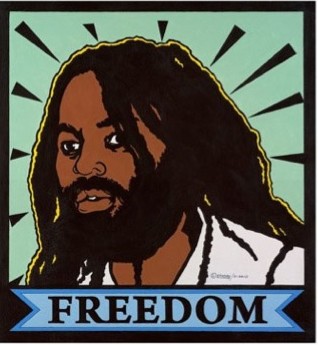
There is only one voice like Mumia Abu-Jamal’s, its tone perfect for professional broadcasting, its message carrying necessary information for our times.  But Abu-Jamal, as most people know, is no longer primarily an announcer by trade.  Better known as Mumia to the worldwide community of human rights activists who support his case, the former radio journalist has been serving time in prison for over 30 years now. He has spent much of that time writing and appealing his case.

In the documentary Long Distance Revolutionaryfilmmaker Stephen Vittoria and co-producer/Prison Radio sound recordist Noelle Hanrahan, make a compelling case that Mumia’s situation as a prisoner for life is more than a miscarriage of justice:  Rather than retell the circumstances that lead to the incarceration of the journalist/activist (whose views forced him to moonlight as a cabbie, just to survive), they shine a light on how he’s used misfortune as opportunity, to become a prophetic voice for the voiceless.

Angela Davis, Amy Goodman, Alice Walker, Cornel West, Tariq Ali, Ruby Dee and James Cone are among the scholars, theologians, journalists, actors, activists, writers, colleagues, and family members who testify in the film on the important role Mumia—the writer as political prisoner—plays on the world stage, reflecting the revolutionary’s role in contemporary American society. Through interviews, news reel footage, photographs and most of all, interviews and sound recordings of Abu-Jamal, Long Distance Revolutionary tells the story of an intuitive and self-described “nerd” of a child, Wesley Cook, who journeyed into the Black Panthers, then followed his call to report on his city as he saw it, much to the distaste of its notoriously racist law enforcement. Of course, that’s business as usual in the land of the free, while the mystery that unfolds onscreen in Long Distance Revolutionary is more to a specific point: Just how does a death row inmate as sharp as Abu-Jamal  keep his mind in shape and his spirit alive while the state does its job squeezing the life out of him? Of particular note are the words of literary agent Frances Goldin who I’m unable to quote here, but who talks of how she was sufficiently moved by Mumia’s prose to take a chance on him in the book market.  But the most convincing voice of all is Mumia’s own which can be read in his multiple books in print all over the world and heard on Prison Radio, still recorded by Noelle Hanrahan.  At the film’s premiere in Mill Valley, California last October,  Mumia delivered an address, especially recorded for the Bay Area. He remembered its “luscious sun,” and the Bay as a place where he,  “a tall, skinny, dark sunflower,” could be among some of the “best, boldest, blackest, sweetest” brothers and sisters he claims to have known.

Curiously, the film’s only musical voice in the chorus is M-1 of Dead Prez. Used to be musicians sang out for injustice, the way that Bob Dylan once did for Rubin “Hurricane” Carter (who also appears in the film); in that case, the musical association indirectly lead to Carter’s exoneration. But the music community has largely remained silent on the subject of Abu-Jamal. So where are the other contemporary Musicians for Mumia? According to director Vittoria, the usual suspects were approached, but only Eddie Vedder responded to the urgency of the call.  “Please know that I (and my co-producers) tried hard to get…and a number of other musicians into the mix—on numerous occasions and through numerous fronts—but not one of them would agree to interview (except M-1) and/or offer a musical piece or new selection,” Vittoria wrote in an email to me.  Vedder’s song “Society” (previously associated with the feature film, Into the Wild,  concerning environmentalist/adventurer, Christopher McCandlessserves as the film’s closing theme. “I was fortunate that Eddie allowed us to grace the film with his powerful song,” added Vittoria.

Abu-Jamal was taken off death row late last year; he remains sentenced for life without possibility of parole and lives among the general prison population at the Pennsylvania State Correctional Institution at Mahanoy. But the system has not vanquished his spirit or his message. Mumia is still on move: Long Distance Revolutionary has been on the festival circuit and in general release throughout the year. It opens August 23 at the Roxie Theatre in San Francisco and next month at Spokane’s Magic Lantern.  Here’s the trailer:

Filed under: Angela Davis, anti-war, Arts and Culture, Bob Dylan, Book news, film, France, Never Forget, Now Playing, Poetry, , , , , ,

Update: Free Marcus Books

UnknownMarcus Books and its supporters won a small victory in the ongoing fight to save the store when this week, the San Francisco Board of Supervisors unanimously passed a resolution supporting the preservation of the historic building.  In business for over 50 years, Marcus is America’s oldest black-owned bookstore and a San Francisco literary institution that’s hosted James Baldwin, Malcolm X, and Toni Morrison, among countless other writers and thinkers; it is a huge part of the City’s African American heritage. Before it became a bookstore, the Victorian building originally located on Post Street was home to Jimbo’s Bop City, the legendary Fillmore District club that staged Billie Holiday, Miles Davis, and John Coltrane, among other jazz giants. The resolution put forth by Supervisors London Breed and Malia Cohen, and supported by Supervisors of all districts, urges the new owners of the property to “uphold the building’s community serving purpose.”

At a rally and press conference Tuesday afternoon, hours before the resolution was passed, about 100 community and church leaders, as well as activists, artists and supporters gathered on the steps of City Hall (never mind the persistent sound of horns you will hear in this clip—in a separate but related issue, cab drivers were protesting the rogue transportation companies that have taken over the roadways in the face of SF’s latest tech boom).

“Tell everyone you know who loves truth and justice and tell them to get involved,” said Archibishop Franzo King of Saint John Coltrane African Orthodox Church. The Fillmore has historically been the scene of systematic removal of it residents, whether the internment of Japanese Americans in the ‘40s or the ‘50s and ‘60s relocation of its African American dwellers who were promised housing that never materialized. After a decades-long, so-called redevelopment project (which is now widely and finally acknowledged at the city government level as a failed undertaking), the Fillmore has rebuilt and rebooted more than once, but the well-documented exodus of middle to low-income people of color, and the working and artist classes from throughout San Francisco continues unabated. To state the  plainly obvious, unlike buildings, people cannot be replaced.

“This isn’t just about the bookstore,” said Marcus Books owner Greg Johnson.  “It’s about humanity.”

“This is about transfer of wealth, out of the hands of working class black folk…” said Rev. Arnold Townsend, Vice President of the local NAACP, at Tuesday’s press conference.

Most all of the speakers noted the persistent effort to save Marcus Books goes beyond highlighting the failing of brick and mortar book stores in the 21st Century; it touches realms of historical preservation of culture and ideas, and bores straight into matters regarding maintenance of a community hub. Literacy, education, and generally freely traded  knowledge of self and others are also at stake.

“When we lose our artists, we lose our stories,” said Tony Robles of grassroots arts organization, POOR Magazine.

“I would not be where I am without this book store,” stated devorah major, author, educator, and a San Francisco poet laureate.

The Marcus situation is sadly indicative of the changing demographics of the so-called sanctuary City of St. Francis, “with its widely advertised liberal and cosmopolitan tradition.”   But San Francisco’s track record with its African American population is not good, a contradiction that did not escape the notice of James Baldwin who participated in a film specially broadcast on public television station KQED in 1963.  I recommend the entire series of clips that follow from Take This Hammer.  And I especially commend San Francisco’s elected officials for taking the matter of Marcus Books and the larger problems it represents with the seriousness it demands.

For updates on the effort to Support  Marcus Books,  visit the Alliance of Californians for Community Empowerment.

Filed under: Books, James Baldwin, San Francisco News, video, , , , ,

This Business of Music is a Buzzkiller

Injustice in the music business is one of the themes shared by three summer music documentaries now playing in theaters or on demand. Twenty Feet From Stardom, A Band Called Death and Big Star: Nothing Can Hurt Me all concern the lives of musicians who did not reap the benefits of success their superstar counterparts or even their industry’s executives enjoy. These tales of a typically unkind, fickle and often unethical music business are told far too often:  There is of course a long tradition of broke and hungry blues singers and ripped-off rock’n’rollers; perhaps most famous are the Funk Brothers, creators of the Motown sound, whose untold history became Standing in the Shadows of Motown, the blueprint for these kind of behind the veil stories. And yet, the background vocalists of Twenty Feet… and the musicians of the ironically named ‘70s bands, Death and Big Star, though largely overlooked, unsung, and often underpaid themselves, also delivered life-giving music of lasting value—music far more focused and accomplished than many of their more successful name brand peers.

Much to the younger generation of musicians in their family’s delight, the Hackney brothers co-created punk rock in early ‘70s Detroit.  A Band Called Death is their story, as told by surviving brothers Bobby and Dannis, with credit due to brother David for the vision. Inspired by their minister dad’s insistence they watch the Beatles on Ed Sullivan, the boys formed a band; as rock evolved, so did their sound. David aimed to combine the guitar chords of Pete Townshend of the Who with the leads of  Jimi Hendrix. With Bobby’s vocals and bass, and Dannis’ agility on drums central to the crunch, David’s idea came into focus, though it had also been shaped by forces much stranger than spine-chilling rock’n’roll.  Impacted by the accidental death of their father, David’s idea—a hard rock threesome named Death with a triangular mind-body-spirit logo was an entire  concept, though it turned out to be a bit much for listeners to metabolize in the post-‘60s hour of segregated rock and soul.  It is generally agreed among band and family, record industry personnel and public perception that David’s extreme construct did the band no favors, particularly when they were very close to getting a record deal with Clive Davis and David wouldn’t budge. “First you let them change your name and then…” You may as well surrender your soul is the implication, and there is truth in those words. Though he and his brothers’ band were consigned to the rare and forgotten records rack for 30 years, David’s vision, that Death would one day be poplar after he was gone, turned out to be prophecy. A Band Called Death lets that story unfold, as it unleashes the power and excitement of the music, highlighting its timelessness and virtuosity. For non-believers, their pure rock’n’roll single, “Keep on Knocking,” may be the convincer:  I never tire of it and could happily spin it over and over and over again.

If there is such a thing as rock justice, revived career status may also be in the balance for some of the singers profiled in Twenty Feet From Stardom, a look at the ladies (and one man) who sing the background vocals to the soundtrack of your life.  To their tremendous credit, director Morgan Neville and producer and industry vet Gil Friesen don’t flinch from the cruelty of the record business, a model that has historically cheated its true talent while rewarding mediocre copycats. The film debuted at the Sundance Festival and screened earlier this year at the San Francisco International Film Festival and is told by the vocalists Darlene Love, Merry Clayton, Claudia Lennear, their contemporary counterparts, Lisa Fischer and Judith Hill,  and the musicians they sing for (Stevie Wonder, Bruce Springsteen, Sting and Mick Jagger). With differing degrees of yearning for the spotlight, each woman shares her own tale of what it was like to sing behind Ray Charles, the Rolling Stones and Michael Jackson and in the case of Love, for producer Phil Spector (now serving a prison sentence for murder).  Both Fischer and Lennear, emerge as the pair who crave little more than what they have: Fischer’s devoted to her gift and married to the music and a life on a road. Lennear stepped back and became a teacher, though as a result of the film and revisiting her years alongside George Harrison, Joe Cocker, and Ike and Tina Turmer, she’s been inspired to reclaim her place in the spotlight.  Here’s her version of the Beatles song, “Let It Be.”

Perhaps most depressing in this downbeat trio of tales is Big Star: Nothing Can Hurt Me, a story of unrequited loves and life let downs. Chris Bell, who alongside Alex Chilton, was a principle songwriter on the Memphis group’s first album, left the fold under what the film portrays as mysterious circumstances. What’s clear however, is that he was touched by substance abuse, and sexual and religious confusion, and all the troubles conspired to takeaway his life at the cursed rock’n’roll age of 27. It didn’t help that Big Star’s record label, Ardent, was affiliated with Stax, though while giants of the soul industry were experiencing business and reorganization troubles just as they crossed the bridge toward releasing rock’n’roll records. And then there is Chilton, a vocal talent with qualities so chameleon-like, and a reticence to be interviewed, that he’s hard to pin down. The teenaged soul singer of “The Letter” shifted gears in Big Star, and yet again in his post-band, punkish years; he passed away in 2010 before the completion of the film, and his presence in it is confined to audio and performance clips.  It would’ve been interesting to hear what he might say of his former band from a 60-year-old’s vantage point, but without him or Bell to speak for themselves, the real story of Big Star largely remains a mystery, to be filed under bands that never made it, but could have, if only the stars had aligned in their favor. Though their story is grim, their recording legacy is the prize: “The Ballad of El Goodo” from #1 Record, is a collaborative effort between Chilton and Bell, a power-pop freedom song:

Though I would not characterize any one of these music documentaries as uplifting, within the frames of each reel, and certainly within the individual stories, there are flashes of reverence, bright spots of humor, and in all cases, impeccable music. There is no shortage of stories like these, ready to unspool and cast the music business as it was once known in its true, unflattering light.  I don’t want to say I’m happy that everyone can see for themselves the hit parade of human sacrifice, left in the wake of what it takes to create superstar entertainment for the masses. Nor do I delight in the music industry’s complete and total rupture.  But it’s no doubt valuable for music consumers, just like consumers of other goods, to know a little bit more about what goes into the making of product they love so much. The music business is a killer, with very little to do with the art of its creators. Certainly it has shown little to no compassion for the health and welfare of musicians, without whom, there would be no primary product.  Perhaps it’s best we no longer fool ourselves into thinking that talent and excellence are qualifications for success, no matter what business we may find ourselves. The artist or worker without a killer instinct, will need to make a choice: Take a backseat willingly, or be content, to be left standing in the shadows.

Filed under: Arts and Culture, film, Now Playing, Roots of Rock'n'Soul, video, , , , , , , ,

Never Forget: Emmett Till, born July 25, 1941

The story of Chicago’s 15-year-old Emmett Till (born today in 1941), murdered while on summer vacation in Money, Mississippi, was among the events in the mid-‘50s that mobilized the Civil Rights Movement; the tragedy was chronicled by Bob Dylan in one of his earliest songs. This clip contains a bit of background as well as the audio of the song which tells the story.

Following the recent events in Florida, where George Zimmerman was acquitted of the murder of Trayvon Martin, the names Emmett Till, as well as slain NAACP field secretary Medgar Evers have been invoked by civil rights leaders.  It is unthinkable, though entirely possible, that a generation of young folk are unfamiliar with these names, icons of the civil rights movement that marched on, throughout the South and toward Washington in the Summer of ’63. But there remains similarities in the cases: Like the families of  Till and Evers, in the face of extreme tragedy, Martin’s mother, Sybrina Fulton, and his father Tracy, are working with the civil rights communities for justice. And like Till and Evers, the death of Trayvon Martin has moved artists to tell his story, in an effort to increase knowledge and inspire action. Here are but two, “Trayvon” by Jasiri X, and “Justice (If You’re 17)” by Wyclef Jean.

In this 50th anniversary year of Freedom Summer and the March on Washington, while we at once celebrate a victory for same sex couples across the country, we must mourn the return to states rights and the constricting of voting and women’s rights down South, as well as the injustice of the trial in Florida and ridiculous Stand Your Ground laws. Young men of color remain especially at risk of racial profiling, targeted and incarcerated in vastly disproportionate numbers. As the California prison hunger strike (protesting torturous conditions of solitary confinement) now in its third week continues, while overseas US drones hunt and kill innocent people mercilessly, “the conversation on race” is having its moment in the media spotlight. We must insist it continue and on Freedom Now, as the generations of our parents and grandparents did. Deep in my heart, I do believe, there is a song waiting to be written and sung at this year’s March on Washington.

If you can’t speak out against this kind of thing, a crime that’s so unjust

Your eyes are filled with dead men’s dirt, your mind is filled with dust…

…But if all us folks that thinks alike, if we gave all we could give

We could make this great land of ours a greater place to live.

–Bob Dylan

Filed under: Civil Rights, Dr. Martin Luther King Jr., Freedom Now, Immigration Reform, Never Forget, Occupy Wall Street, Songs for the Occupation, Women's rights, , , , ,

Evolution of an Artist: Eugene E. White

Text of Evolution of an Artist:  San Francisco Appreciation Society Celebrates Eugene E. White, delivered at Elders Project 2013 Special Reception, African American Arts & Culture Complex, San Francisco, CA, July 11, 2013.

I have known of the artist Eugene E. White for decades, but it wasn’t until fairly recently, that I’ve come to know a little more about my fellow San Franciscan as a vital community member, with wisdom and experience to spare, and as a visionary artist. Humble heroes and heroines with rural roots, the people who raised families then sent them away from the South for better lives elsewhere, are the elders Eugene E. White honors in his work. Tonight, we honor the elder as artist.

Eugene E. White

Eugene E. White

From a boy in the backwoods of Arkansas, to a young man in the Cadillac factory of Detroit, Mr. White came to San Francisco in 1958 and made his way as a sign painter and electronics repairman.  He opened his Kujiona Gallery in 1963 and followed with a show in 1964, sponsored by Bulart in Golden Gate Park’s Hall of Flowers; from that start, fine art became his full time pursuit. Traveling across the country and over seas, seeing all the great changes of the 20th and 21st Centuries, he brought his artist’s insights home with him.  Yes, he’s known racism and participated in the fight for equality—and the artwork was part of that, whether at ’60s community meetings in his gallery, at the 1970s original Black Expo in Chicago, or as recently as this year’s Juneteenth festival in the Fillmore.  He also paints great figures from the past—Harriet Tubman and Frederick Douglass—and from his lifetime—Rosa Parks, Malcolm X, Dr. King, and President Obama: They are the portraits of progress. But another story runs alongside that narrative: Mr. White has seen his community and neighborhoods devastated and dismantled. Poverty, violence, and prison statistics grow grim, courtroom injustices roll by and voting rights are rolled back, and yet he doesn’t flinch from these facts.  He is an artist, and as such he holds a vision that we can change history from here—for the good and for the better—by coming together and writing a different script. That is in part why he agreed to show the paintings, so we could better see the here and now.

portion of A Song For My Lady

portion of A Song For My Lady by Eugene E. White

Mr. White has a calling, not only to paint, but to tell stories through images that help us better see everyday people—ourselves and each other—“the people without titles,” as he describes his subjects. When I came by to see him and his wife Lynnette late last year, it was as a journalist, to inquire about the paintings and the process, to find out what he’d been doing in the years since I first made his acquaintance. Of course he was painting, and had two commissioned portraits in progress, but he wasn’t publicly showing his work outside his own gallery—which is why tonight is a very special occasion. As we take time to admire the canvases and their images of beauty, resilience, and courage, let us also reflect on their maker’s message: Mr. White’s gift is a starting place for a dialogue on life, its sacrifices, and what can be done to improve circumstances, for ourselves and for those around us.  His success as an artist is a demonstration of his passion and dedication not only to art, but to the art of life. May this night inspire a young man or young woman in the room to pursue his or her dreams to pick up a brush or a pen and make art in San Francisco, to become our city’s next fine artist for the next 50 years.  We appreciate the White Family, for letting us into your lives; and especially Mr. White, who has made an indelible impression on our city:  The San Francisco Appreciation Society and those of us assembled here tonight wish to say thank you.

Eugene E. White receives commendation from City of San Francisco  Supervisor London Breed

Eugene E. White received commendation for his art and service to the City of San Francisco from Supervisor London Breed. Later in the evening, San Francisco Appreciation Society honored him with a Proclamation from Mayor Lee declaring July 11 Eugene E. White Day.

Filed under: Arts and Culture, Freedom Now, new article, , , , , , ,

Archives

Recent Posts

Browse by subject or theme