Against a backdrop of escalating war in Vietnam and social and political mayhem to accompany it at home, by the late ’60s and early ’70s, the conditions were perfect for hard-hitting topical rock and soul songs to step in and document the times. John Lennon put forth “Imagine,” the follow-up to his and Yoko Ono’s initial bursts of song devoted to giving peace a chance. Marvin Gaye voiced his concerns in “Inner City Blues (Makes Me Wanna Holler),” “What’s Going On?” and “Mercy, Mercy Me (The Ecology),” while Cat Stevens boarded the “Peace Train” that would ultimately take him to study the Qur’an and inspire a conversion to Islam. At the height of the era of music for change, it was more or less expected serious artists would weigh in during times of trouble with a song. From the chart-busting Motown artists who began to draw from a repertoire that was Blacker and stronger, to the rush-released recording by Crosby, Stills, Nash and Young of “Ohio” concerning the shooting tragedy at Kent State, the appetite for topical songs in the US was spurred on by their chart successes. Of course it was Bob Dylan’s early ‘60s pro-civil rights and anti-war songs that were the catalysts for the decade’s new strain of rock and soul music with a message.
Dylan’s arrival in Greenwich Village in 1961, to a scene informed equally by poetry and politics as it was jazz and folk, found him mastering pointed and topical song form early on, from “Blowin’ in the Wind,” “Masters of War,” and “A Hard Rain’s A-Gonna Fall,” to “The Times They Are A-Changin’,” “Only A Pawn In Their Game,” “Ballad of Hollis Brown,” and “The Lonesome Death of Hattie Carroll.” He followed his first act with his famous retreat from political songs and folk music. Resisting the tag, “voice of a generation,” he leaned more toward poetical and philosophical lyric forms, rather than those polemical or topical and developed his own world of song perhaps best exemplified by the rambles, “Like A Rolling Stone,” “Desolation Row,” and other epics on the trilogy of albums, Bringing It All Back Home, Highway 61 Revisited, and Blonde on Blonde. From 1966 through much of 1971 Dylan remained in self-imposed exile, off the road and away from the spotlight.
Making his way back to performing in public for the first time since his Isle of Wight concert in 1969, Dylan appeared at Madison Square Garden on August 1st, 1971 at the Concert for Bangladesh, the model for all of today’s all-star charity events. Organized by George Harrison and Ravi Shankar, the rally for Bangladesh raised awareness and funds for the residents of East Pakistan and Bengal India, regions beset by complications of war plus a cyclone and the flooding and famine that followed. An already troubled region was now devastated, and as Shankar outlined the situation for concert-goers, Dylan helped to draw them, performing “A Hard Rain’s A-Gonna Fall,” as well as a handful of more apolitical songs. Not long after the concert, on August 21, 1971, George Jackson was shot to death during an alleged prison escape and Dylan would once again pluck his subject matter from the headlines, returning to his roots as a social and racial justice singer. One could suggest it was Harrison’s and Shankar’s example of engaging with the world outside their door that inspired Dylan’s subject, though perhaps it was more a matter of his coming to terms with his own gift for topical songs.
Dylan’s relationship to the political world and the matters he chooses to champion or protest have been the subject of much debate, discussion, and inspiration for over 50 years; his life and songs have been over-analyzed and well-examined, but the 1971 single, “George Jackson,” a remembrance for the radicalized convict and Black Panther who died in a San Quentin prison shoot-out remains one of his most intriguing cuts. Not only does “George Jackson” mark the songwriter’s return to topical song form and to touring, its subject remains almost mysterious and misunderstood to the general audience as the singer himself.
Landing in California following a life on the streets of Chicago, a 70-dollar robbery is what landed Jackson in state prison, his sentence indeterminate. Jackson immediately found trouble on the inside too when guards took an instant dislike to him and his sentences were extended following events occurring at Soledad State Prison in which three Black inmates and a white guard were killed. Using his time in solitary to educate himself, Jackson studied psychologist Franz Fanon (The Wretched of the Earth), Marx, and Mao, and came to understand the incarceration of poor Blacks for petty crime in a political context. A leader in moving prisoners to radicalize, Jackson joined the Black Panthers and became one of the group’s most celebrated members. However by 1969, J. Edgar Hoover had declared the Black Panthers to be public enemy number one and set out to decimate them. Nevertheless, Soledad Brother: The Prison Letters of George Jackson was published in 1971 and was greeted by a positive reception by intellectuals and political progressives. That Jackson had been framed for conspiring to kill a guard in the Soledad incident was a widely held belief; his defenders were vocal and his case was a cause célèbre. But a few days before the Jackson trial was to begin, a riot broke out in San Quentin in which inmates and guards were again slain and Jackson was among those killed as he ran across the yard in an alleged escape attempt.
Less than a month after the prison shooting in California, a historic event at Attica Correctional Facility wherein prisoners took control of the prison to protest its poor conditions resulted in more fatalities—an unmistakable call for prison reform. Perhaps it was the call to which Dylan was responding when in November, he cut and released “George Jackson”, a 45-rpm record that reached the Top 40 in January of 1972. Opening with the blues trope, “I woke up this morning,” Dylan’s “George Jackson” is not a typical blues song, though it surely addresses the larger topic of racial and socio-economic oppression from which a certain style of blues was born. It also leaves a record of Jackson and his story.
“The power of George Jackson’s personal story remains painfully relevant to our nation today, with its persistent racism, its hellish prisons, its unjust judicial system, and the poles of wealth and poverty that are at the root of all that,” wrote historian Howard Zinn in an updated version of Jackson’s Soledad Brother. Wresting larger truths from the events of 1971, Dylan delivered his summation in these often quoted lines from “George Jackson”:
Sometimes I think this whole world Is one big prison yard Some of us are prisoners The rest of us are guards
Dylan cut two versions of “George Jackson” for a double sided seven-inch: A “big band” version featuring Kenny Buttrey (drums), Ben Keith (steel guitar), and Leon Russell (bass), and a solo acoustic version. Among the various issues of the single—and there are many—is a picture sleeve with an image of Dylan performing at the Concert for Bangladesh; it remains sought-after by record collectors.
The details of the George Jackson case are still debated today by scholars, historians, and those who remember the events. Last year, the last incarcerated member of the San Quentin Six, Hugo Pinell, was killed while serving his life sentence, much of it in solitary confinement.
The following is a live recording of Joan Baez singing “George Jackson.”
Photo by Ekevara Kitpowsong, whose solo exhibit, City People, is on view now through July 31 at Modern Times Bookstore Collective in San Francisco.
There are at present count over 6,000 people (and likely closer to 10,000) living outdoors, on the streets of San Francisco. They live in tent cities, in Golden Gate Park, in doorways on Market Street, in alleys in the Mission, on cardboard beds in the Haight, on patches of grass at Civic Center, in vehicles, and on benches at the beach. But the unhoused are under siege here as unaffordable housing, lack of services, and police violence continue to surge. The war against the homeless shows little sign of abating given the housing and eviction crisis, and yet the city’s technocrats and elites cleave to the idea that it’s their freedoms which are being impinged upon; the sight of people living on the street is quite simply intolerable to them, though there may’ve been a tiny crack of light in the darkness this week as Bay Area media launched an unprecedented barrage of coverage on all matters of homelessness.
Cultural history has everything to tell us about our present dilemmas which is my simple and short explanation of why I’ve devoted the majority of my professional writing life to researching the lives of the heroes and sheroes of American arts and letters and where they meet the political and social issues of our own lives and times. When my last two assignments concerned two iconic men who made an imprint on the culture at large in the late ’60s and early ’70s, I must admit I paused to check if I was locked in some kind of retro-groove, reliving a past that I wasn’t quite old enough to participate in firsthand. Though very quickly, it became clear to me that both subjects made contributions to the national dialogue that remain of absolute and vital relevance to the here and now. It is precisely that reason why two very serious people, Frank Zappa and Bobby Seale, are of interest to me…
Eat That Question: Frank Zappa In His Own Words opened in New York and Los Angeles over the weekend and goes into wider release on July 1. I recently interviewed the film’s director, Thorsten Schütte, in San Francisco and we talked about Zappa’s lifelong commitment to freedom of expression. Read the entire article in Down With Tyranny!.
The week prior, I had the rare opportunity to attend a live Q&A between Black Panther Party co-founder Bobby Seale and San Francisco hip hop emcee and activist, Sellassie. Again, I reported on it for Down With Tyranny! (and I hope you’ll read my impressions and other contributions there). Though the meeting between generations betrayed the proverbial gap, it’s been gratifying to watch these kinds of alliances unfold along with the new movement for racial and economic justice since the 2011 publication of Keep on Pushing: Black Power Music From Blues to Hip Hop. At the time of publication, there was no such movement in place, though the persistence of the leaders of the ’60s, as well as the idea of musicians and student leaders playing a role in bringing the next generation to consciousness, are what inspired me to write the book in the first place. I hope to begin revisions to the text soon and deliver an updated edition of the book in 2018. Until then, thanks for reading.
A righteous pundit, Loudon Wainwright III has been pursuing music since the late ’60s, debuting with a self-titled album in 1970. Aside from his honest and deeply felt songs on relationships and life circumstances, he’s long written satirical work, a style he calls “musical journalism,” best demonstrated over an album’s length on 1999’s Social Studies (he sticks it to O.J. Simpson, Tonya Harding, and Jesse Helms). For awhile he was the in-house songsmith for Nightline and is occasionally commissioned songs for NPR. His latest is a hilarious nightmare vision of this year’s U.S. Presidential election.
In a recent post for Down With Tyranny!, I report on the forced resignation of the Chief of SFPD and the way forward in the fight by the Frisco 5 to reclaim San Francisco. The activists who recently survived a 17-day hunger strike had a volunteer attending physician, Dr. Rupa Marya: She’s since founded the University of California San Francisco (UCSF) Do No Harm Coalition of medical professionals with participation of students from SF State, and has declared the epidemic of police brutality a public health emergency (with data to back up the claim). Read the full story at Down With Tyranny! and be sure to enjoy this clip of Dr. Marya’s work away from the hospital, as leader of the group Rupa and the April Fishes (watch for the cameo by Bay Area activist/musician, Boots Riley).
I’m a beach person. Maybe it goes back to when my people came here by boat, in the early 20th Century, and set up business at the water’s edge. Born on an avenue named after the sea, the story goes my parents met at San Francisco’s public beach and I took some of my earliest steps there. Of my not-so-many teenage accomplishments, I took most pride in holding what I think was the land speed record of 30 minutes by Mustang, from high school parking lot to Sunny Cove in Santa Cruz. As an adult, I’ve lived life either blocks away or on a bus line to the water. I’m comfortable wearing the scars of a weather-worn Californian who knows her Coast, from Del Norte to Coronado.
David Evans, better known to the world as musician the Edge, was born outside of London, England, though his parents hailed from a coastal town in South Wales. The family moved when Evans was a babe in arms to Dublin, the Emerald Isle, where he formed a band with schoolmates Paul Hewson, Adam Clayton and Larry Mullen, Jr. (during the same window of time I was burning up the highway). Our generation was taught, by rock itself and the previous generation’s missteps, to tear up the rules and start again. U2, for their part, did it their way, and in a big way, joining spirituality and romance with a post-punk sound that rubbed against the grain of the movement’s nihilistic and apocalyptic profile. Edge was a guitar innovator and key architect of the sound of U2, who’d come to be identified as earnest, naive, over-arching, dramatic, and populist, mostly owed to singer Bono’s undeniable charisma and confidence. Occasionally humorous (though not enough), in their years as a top name in rock ‘n’ roll, they’ve collaborated with artists the likes of Salman Rushdie and Wim Wenders, sat at tables with world leaders, and used their name to do good, raising money for Africa’s hungry with Live Aid and Ireland’s jobless with Self Aid and for worldwide human rights with Amnesty International. Bono co-founded the One and (Red) campaigns to ease poverty and disease, and Edge created Music Rising to support musicians post-Katrina. Most recently, the band lifted its voice against terrorism in Paris. Supporting all manner of progressive causes, a list of the band’s good works would be exhaustive; they are peerless, though their lofty aspirations toward creating a better world have made them easy targets, especially Bono because, well, he’s Bono. Like Bono, The Edge is in an elite class as a member of the band whose recent world tour grosses broke all previously existing box office records. Their spoils include multiple residences not only in their country of origin, but here and elsewhere. And as of December of last year, the 150,000 highly contested acres The Edge acquired above Malibu in the Santa Monica Mountains has been cleared by the California Coastal Commission for development.
Five days after ending their hunger strike, on Thursday morning the Frisco 5 minus Maria Cristina Gutierrez, returned to the Mission Police Station at the corner of Valencia and 17th Streets in San Francisco to report back on their health and intentions to build a movement for police reform, and one demand, the same as it ever was: Fire SFPD Chief Greg Suhr. Against a backdrop of almost daily revelations regarding the toxicity of the department, and one day after four members of the Board of Supervisors, led by State Senate candidate Jane Kim called for a national search to replace the chief, the Frisco 5 (Gutierrez, Edwin Lindo, Ike Pinkston, and two hip hop artists, Ilyich “Equipto” Sato and Sellassie Blackwell) remain steadfast in their resolve to keep the pressure on Mayor Ed Lee until the day Suhr is fired.
“People are tired and fed up. We’re not blind,” said Equipto of the political maneuvering behind closed doors at City Hall. In previous discussions with the Frisco 5 and other community organizations, the Supervisors maintained they had no stake in police matters, that it in fact would be a breach of law to intervene. However following this week’s Board meeting at which Mayor Lee was in attendance and Frisco 5 supporters voiced loudly their demand to “Fire Chief Suhr,” the Supervisors began to wake up: They started by challenging the Mayor’s position on maintaining an expensive, heavy law enforcement presence at City Hall following last week’s shutdown of the building by citizens.
“Thirty-three people were arrested; they are using violent tactics on us,” said Frisco 5’s Edwin Lindo at Thursday’s press conference. He and the community that supports police reform have a particular distaste for this week’s solution proposed by Lee: He’s suggesting $17.5 million be invested in retraining, the creation of community programs, and the building of a supposedly less-lethal arsenal of tasers and net-guns; detractors say the money could otherwise be allocated to help displaced, homeless, and other persons in need as a result of the Lee administration’s poor civic leadership.
Whether it was the community groundswell, the absurdity of Lee’s proposal, the outcome of the blue ribbon panel that found the department lacks transparency and accountability, or the weight of their own conscience, by Wednesday, Supervisor Kim was followed by her fellow Supervisors David Campos, John Avalos, and Eric Mar in the call for police reform from the top down. Equipto said his mother, Maria Cristina Gutierrez, who could not attend the news conference due to a decline in her health following the hunger strike, was particularly disappointed in how slow-acting the Supervisors were in understanding their role in challenging police misconduct; her health was the consequence of their inaction and indeed the health of all the hunger strikers was compromised. As Ike Pinkston put it, “The mayor doesn’t give a rat’s ass. It’s obvious.”
“Ed Lee should be packing his office right now,” said Edwin Lindo, who also offered congratulations to the student hunger strikers at SF State who fought to retain their ethnic studies program and won, ending their nine-day hunger strike and earning nearly half a million dollars for their department this week.
“Everyone said, ‘You can’t do this,'” said Sellassie of the Frisco 5’s intent to launch a hunger strike on April 21. “We did…It think Chief Suhr’s days are over.”
Frisco5 photo by Lola M. Chavez (Mission Local) Maria Cristina Gutierrez and (clockwise): Equipto, Sellassie, Ike Pinkston and Edwin Lindo.
“This is the beginning of the struggle on so many fronts,” asserted Maria Cristina Gutierrez of the Frisco 5 on Tuesday. It was the end of a long day of marching, protesting and nearly the end of the second week of starvation in the name of ending police violence and the long arm of over-gentrification in San Francisco. Citing the efforts by Gandhi and Cesar Chavez, Gutierrez, 66, says she was moved to hunger strike following the death of Luis Gongora, an immigrant from Yucatan who recently lost his housing and was living homeless on Shotwell Street until he was shot 11 times by SFPD for allegedly brandishing a knife. Witness accounts of the killing varied widely though one certainty is that once again, it doesn’t look good for the police department who in a two-year period have killed four men. Alex Nieto in March of 2014 was shot 59 times when police mistook his taser (he was employed as a security guard) for a gun. Not quite one year later, Guatemalan immigrant Amilcar Perez-Lopez was shot six times in the back. Native son Mario Woods of the Bayview District was shot 20 times in December and the event was caught on video in its entirety. The April 7 shooting of Gongora was the event that prompted Gutierrez to say, “No more,” and to take matters into her own hands. She, her son Ilyich “Equipto” Sato, Sellassie Blackwell, Ike Pinkston, and Edwin Lindo launched a hunger strike on April 21 and have vowed not to eat until San Francisco Mayor Ed Lee fires the Chief of Police.
The last sign of any jazz in San Francisco’s Fillmore District is this banner, hoisted in 2014.
I regret to inform, you missed it: The final day of celebration for the St. John Coltrane African Orthodox Church on Fillmore Street was Sunday. Aside from its usual meditation on “A Love Supreme” and a service to deliver the wisdom in its creator’s words, there was even a bit of time that day reserved to remember Prince, a kindred spirit and sound messenger of love who transitioned last Thursday. But really, there is no need to cry for the Coltrane Church: Going strong for nearly 50 years, it will continue to thrive in one incarnation or another, in accordance to its creed proclaiming life everlasting. Armed with a faith that knows no bounds, no building is going to hold down Archbishop Franzo King and his congregation. He and his musically gifted family of ordained ministers will remain in the light of Coltrane consciousness and on the move for truth and justice. However, if you’d still like to grieve our losses, please consider the sorry state of San Francisco, and our complicity in the soul murder of the city the Church calls home.


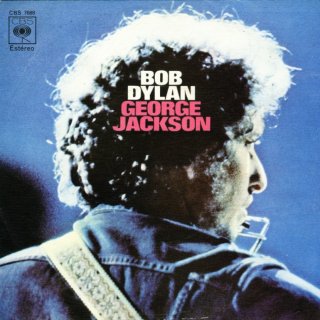
 Photo by
  why I’ve
 devoted the majority of my professional writing life to researching the lives of the heroes and sheroes of American arts and letters and where they meet the political and social issues of our own lives and times. When my last two assignments concerned two iconic men who made an imprint on the culture at large in the late ’60s and early ’70s, I must admit I paused to check if I was locked in some kind of retro-groove, reliving a past that I wasn’t quite old enough to participate in firsthand. Though very quickly, it became clear to me that both subjects made contributions to the national dialogue that remain of absolute and vital relevance to the here and now. It is precisely that reason why two very serious people, Frank Zappa and Bobby Seale, are of interest to me…
 A righteous pundit, Loudon Wainwright III has been pursuing music since the late ’60s, debuting with a self-titled album in 1970. Aside from his honest and deeply felt songs on relationships and life circumstances, he’s long written satirical work, a style he calls “musical journalism,” best demonstrated over an album’s length on 1999’s Social Studies (he sticks it to O.J. Simpson, Tonya Harding, and Jesse Helms). For awhile he was the in-house songsmith for Nightline and is occasionally commissioned songs for NPR. His latest is a hilarious nightmare vision of this year’s U.S. Presidential election.
 at the water’s edge. Born on an avenue named after the sea, the story goes my parents met at San Francisco’s public beach and I took some of my earliest steps there. Of my not-so-many teenage accomplishments, I took most pride in holding what I think was the land speed record of 30 minutes by Mustang, from high school parking lot to Sunny Cove in Santa Cruz. As an adult, I’ve lived life either blocks away or on a bus line to the water. I’m comfortable wearing the scars of a weather-worn Californian who knows her Coast, from Del Norte to Coronado.
 Five days after ending their hunger strike, on Thursday morning the

 Denise Sullivan