Against a backdrop of escalating war in Vietnam and social and political mayhem to accompany it at home, by the late ’60s and early ’70s, the conditions were perfect for hard-hitting topical rock and soul songs to step in and document the times. John Lennon put forth “Imagine,” the follow-up to his and Yoko Ono’s initial bursts of song devoted to giving peace a chance. Marvin Gaye voiced his concerns in “Inner City Blues (Makes Me Wanna Holler),” “What’s Going On?” and “Mercy, Mercy Me (The Ecology),” while Cat Stevens boarded the “Peace Train” that would ultimately take him to study the Qur’an and inspire a conversion to Islam. At the height of the era of music for change, it was more or less expected serious artists would weigh in during times of trouble with a song. From the chart-busting Motown artists who began to draw from a repertoire that was Blacker and stronger, to the rush-released recording by Crosby, Stills, Nash and Young of “Ohio” concerning the shooting tragedy at Kent State, the appetite for topical songs in the US was spurred on by their chart successes. Of course it was Bob Dylan’s early ‘60s pro-civil rights and anti-war songs that were the catalysts for the decade’s new strain of rock and soul music with a message.
Dylan’s arrival in Greenwich Village in 1961, to a scene informed equally by poetry and politics as it was jazz and folk, found him mastering pointed and topical song form early on, from “Blowin’ in the Wind,” “Masters of War,” and “A Hard Rain’s A-Gonna Fall,” to “The Times They Are A-Changin’,” “Only A Pawn In Their Game,” “Ballad of Hollis Brown,” and “The Lonesome Death of Hattie Carroll.” He followed his first act with his famous retreat from political songs and folk music. Resisting the tag, “voice of a generation,” he leaned more toward poetical and philosophical lyric forms, rather than those polemical or topical and developed his own world of song perhaps best exemplified by the rambles, “Like A Rolling Stone,” “Desolation Row,” and other epics on the trilogy of albums, Bringing It All Back Home, Highway 61 Revisited, and Blonde on Blonde. From 1966 through much of 1971 Dylan remained in self-imposed exile, off the road and away from the spotlight.
Making his way back to performing in public for the first time since his Isle of Wight concert in 1969, Dylan appeared at Madison Square Garden on August 1st, 1971 at the Concert for Bangladesh, the model for all of today’s all-star charity events. Organized by George Harrison and Ravi Shankar, the rally for Bangladesh raised awareness and funds for the residents of East Pakistan and Bengal India, regions beset by complications of war plus a cyclone and the flooding and famine that followed. An already troubled region was now devastated, and as Shankar outlined the situation for concert-goers, Dylan helped to draw them, performing “A Hard Rain’s A-Gonna Fall,” as well as a handful of more apolitical songs. Not long after the concert, on August 21, 1971, George Jackson was shot to death during an alleged prison escape and Dylan would once again pluck his subject matter from the headlines, returning to his roots as a social and racial justice singer. One could suggest it was Harrison’s and Shankar’s example of engaging with the world outside their door that inspired Dylan’s subject, though perhaps it was more a matter of his coming to terms with his own gift for topical songs.
Dylan’s relationship to the political world and the matters he chooses to champion or protest have been the subject of much debate, discussion, and inspiration for over 50 years; his life and songs have been over-analyzed and well-examined, but the 1971 single, “George Jackson,” a remembrance for the radicalized convict and Black Panther who died in a San Quentin prison shoot-out remains one of his most intriguing cuts. Not only does “George Jackson” mark the songwriter’s return to topical song form and to touring, its subject remains almost mysterious and misunderstood to the general audience as the singer himself.
Landing in California following a life on the streets of Chicago, a 70-dollar robbery is what landed Jackson in state prison, his sentence indeterminate. Jackson immediately found trouble on the inside too when guards took an instant dislike to him and his sentences were extended following events occurring at Soledad State Prison in which three Black inmates and a white guard were killed. Using his time in solitary to educate himself, Jackson studied psychologist Franz Fanon (The Wretched of the Earth), Marx, and Mao, and came to understand the incarceration of poor Blacks for petty crime in a political context. A leader in moving prisoners to radicalize, Jackson joined the Black Panthers and became one of the group’s most celebrated members. However by 1969, J. Edgar Hoover had declared the Black Panthers to be public enemy number one and set out to decimate them. Nevertheless, Soledad Brother: The Prison Letters of George Jackson was published in 1971 and was greeted by a positive reception by intellectuals and political progressives. That Jackson had been framed for conspiring to kill a guard in the Soledad incident was a widely held belief; his defenders were vocal and his case was a cause célèbre. But a few days before the Jackson trial was to begin, a riot broke out in San Quentin in which inmates and guards were again slain and Jackson was among those killed as he ran across the yard in an alleged escape attempt.
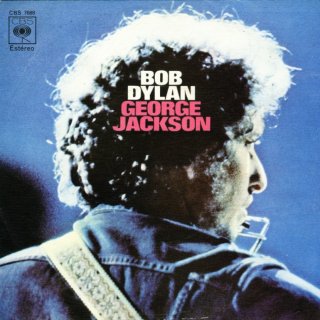
Less than a month after the prison shooting in California, a historic event at Attica Correctional Facility wherein prisoners took control of the prison to protest its poor conditions resulted in more fatalities—an unmistakable call for prison reform. Perhaps it was the call to which Dylan was responding when in November, he cut and released “George Jackson”, a 45-rpm record that reached the Top 40 in January of 1972. Opening with the blues trope, “I woke up this morning,” Dylan’s “George Jackson” is not a typical blues song, though it surely addresses the larger topic of racial and socio-economic oppression from which a certain style of blues was born. It also leaves a record of Jackson and his story.
“The power of George Jackson’s personal story remains painfully relevant to our nation today, with its persistent racism, its hellish prisons, its unjust judicial system, and the poles of wealth and poverty that are at the root of all that,” wrote historian Howard Zinn in an updated version of Jackson’s Soledad Brother. Wresting larger truths from the events of 1971, Dylan delivered his summation in these often quoted lines from “George Jackson”:
Sometimes I think this whole world Is one big prison yard Some of us are prisoners The rest of us are guards
Dylan cut two versions of “George Jackson” for a double sided seven-inch: A “big band” version featuring Kenny Buttrey (drums), Ben Keith (steel guitar), and Leon Russell (bass), and a solo acoustic version. Among the various issues of the single—and there are many—is a picture sleeve with an image of Dylan performing at the Concert for Bangladesh; it remains sought-after by record collectors.
The details of the George Jackson case are still debated today by scholars, historians, and those who remember the events. Last year, the last incarcerated member of the San Quentin Six, Hugo Pinell, was killed while serving his life sentence, much of it in solitary confinement.
The following is a live recording of Joan Baez singing “George Jackson.”
So sung Walter “Furry” Lewis, born on March 6, 1893 in Greenwood, Mississippi and raised in Memphis, Tennessee. He sung of injustice regularly, dispensed mostly by the uneven hand of Judge Harsh, the arbiter of “Good Morning, Judge”- fame and the unbelievable, actual surname of the guy who did the sentencing in Lewis’ part of town.
They arrest me for murder and I ain’t never harmed a man
The arrest me for murder and I ain’t never harmed a man
Arrest me for forgery and I can’t even sign my name
Lewis’ story isn’t much told, though the chapter in Rythm Oilby Stanley Booth tells it as it’s known. Lewis worked on Beale Street during its high cotton days; he lost his leg jumping a freight train; spent the Depression, the war, the ‘50s, and part of the ‘60s working sanitation detail for the City of Memphis. It was in his retirement that he was rerecorded and began to perform again. Allen Ginsberg loved him, and so did the Rolling Stones; Joni Mitchell wrote a song about him though Lewis was not a fan. No stranger to film and television, he appeared on Johnny Carson’s show and acted in the Burt Reynolds movie, W.W. and the Dixie Dancekings. Died in ’81 at 88.
Furry Lewis’ songs and old-time style will pick-you-up when you’re down. His “Judge Harsh” blues from Good Morning Judge, never fails to restore my cheer. People rely on the blues to chase away their own; when I play Furry Lewis, I don’t stay down too long. His delivery and his guitar style are unique (check the move he calls “spanking the baby,” or the he way he ends his jams abruptly and without ceremony). His recorded output is generally optimistic, and brings a smile, though his lines and the rhymes will break your heart.
Tell me baby, what ever have I done?
Tell me baby, what ever have I done?
Blood in my body done got too low to run
Covering in song the spectrum of life in all its colors—from white lightening and black gypsy to high yellow—he’ll turn your face red and your money green. Of course he also had a new way of spelling Memphis, Tennessee.“I may be weak, but I’m willing” he said. And for that, I am most grateful that he was born to sing and play the blues.
February 4 is the birthday of Rosa Parks, the rebellious civil rights activist remembered most for refusing to move to the back of the bus: The Montgomery Bus Boycott, in the name of the desegregating public transit, was organized immediately following her arrest on December 1, 1955.
Born Rosa Louise McCauley in Tuskegee, Alabama in 1913, Parks was a student of non-violent protest and an active member of her local chapter of the NAACP in Montgomery. Her refusal to move on the bus that day was not part of any kind of group action or occupation—she held her seat on her own steam–though she knew her rights, the protocol for civil disobedience, and the possibility of taking an arrest. In the immediate aftermath of sitting down for racial equality and desegregation, far from receiving any heroine’s awards, Parks paid a price for asserting her right to ride. She could no longer find work in the Montgomery area; she and her husband Raymond moved north, eventually settling in Detroit where she worked the better part of her life as a secretary for US Representative John Conyers.
Parks would one day receive the highest honors in the land– from the NAACP’s Spingarn Medal, to the Presidential Medal of Freedom (awarded to her by President Bill Clinton), and the Congressional Gold Medal. A new political biography of Parks details a life dedicated to seeking justice, from the Scottsboro Boys case to the anti-apartheid movement.
Parks remained particular and protective of her legacy: She slapped legal actions on filmmakers and recording artists who wished to use her name and likeness, though “Sister Rosa,” a tribute to her by New Orleanians the Neville Brothers, was cleared to appear on their 1989 album, Yellow Moon. Produced by Daniel Lanois, and accompanied by The Dirty Dozen Brass Band and Brian Eno for the sessions, Yellow Moon is an exceptional record. The band transforms two Bob Dylan songs (“With God On Our Side,” “The Ballad of Hollis Brown”), the Carter Family classic “Will the Circle be Unbroken,” Sam Cooke’s civil rights anthem, “A Change is Gonna Come,” and Link Wray’s “Fire and Brimstone” (title self-explanatory, taken from the guitarist’s obscure and brilliant 1971 album). Standing alongside the Neville Brothers’ bayou-fired originals, “Sister Rosa” is their attempt at rap.
Chronicling the New Negro Movement of the 1920s and 1930s, Langston Hughes (born February 1, 1902) was a leading figure in the Harlem Renaissance. Writing about life in a familiar and authentic vernacular, he incorporated the sound of music into his prose and poems: “Take Harlem’s heartbeat, Make it a drumbeat, Put it on a record, Let it whirl.” Originally a Midwesterner with a family history that included mixed-race people and abolitionists, Hughes’ ability to distill truth and outrage while maintaining an uncommon faith in humankind made a deep impression on the voices of the Freedom Movement in the ’60s. His style was a breakthrough in modern literature and its lyricism translated into the development of blacker voices in music, too. Nina Simone, Len Chandler, Richie Havens and Gil Scott-Heron are among the musical artists who say they were profoundly influenced by Hughes’ jazz-inspired work. As decades wore on, his imprint resounded in the work of poets Amiri Baraka, Al Young, Jayne Cortez, Sonia Sanchez, Nikki Giovanni and many more. Decades later, Hughes remains a continuous source of inspiration and influence, his words impacting the work of artists and scholars diverse as Cambio and Dr. Cornel West.
It was a long road to the third Monday in January when all 50 states observe the birth of Martin Luther King, Jr. and the day named in his honor. Largely owed for making the dream of a King holiday a reality is Stevie Wonder, who back in 1980, wrote the pointed song, “Happy Birthday,” then launched a 41-city U.S. tour (and invited Gil Scott- Heron along) to promote the idea which was first mooted by Rep. John Conyers in 1968. The musical efforts were ultimately the key in collecting the millions of citizen signatures that had a direct impact on Congress passing the law signed by President Ronald Reagan in 1983, declaring a day for MLK. Observed for the first time in 1986, some states were late to the party, however, by the turn of the 21st Century, all were united in some form of remembrance of the civil rights giant. “Happy Birthday,” which served as the Wonder-campaign theme (and is now the “official” King holiday tune) is the last track on Hotter Than July. The album also features “Master Blaster,” Wonder’s tribute to Bob Marley (he’d been scheduled for the tour until he fell too ill to participate). Stepping into the breach was Scott-Heron whose 2011, posthumous memoir The Last Holiday, details his own journey with music and activism, and helps retracethe long and winding road Wonder took to bring home the last US federal holiday, with the help of a song.
The Hotter Than July tour brought Gil and Stevie to Oakland, where they played in the name of King, as did Rodney Franklin and Carlos Santana. In a weird turn of events, the concert coincided with the shocking night John Lennon was killed. The musicians and crew learned of the tragedy from a backstage television; the job fell to Wonder, with Scott-Heron and the other musicians at his side, to deliver the news to the arena of assembled music fans. “For the next five minutes he spoke spontaneously about his friendship with John Lennon: how they’d met, when and where, what they had enjoyed together, and what kind of man he’d felt Lennon was,” wrote Scott-Heron. “That last one was key, because it drew a line between what had happened in New York that day and what had happened on that motel balcony in Memphis, Tennessee, a dozen years before. And it drew a circle around the kind of men who stood up for both peace and change.” Scott-Heron devotes the final pages of The Last Holiday to a remembrance of how the murder of Lennon fueled the final drive to push for a federal observance of an official MLK Day.
The politics of right and wrong make everything complicated
To a generation who’s never had a leader assassinated
But suddenly it feels like ’68 and as far back as it seems
One man says “Imagine” and the other says “I have a dream”
Some time in New York City, 1971, John Lennon and Yoko Ono came up with a Christmas song for the ages, its subject peace on earth during wartime, its melody extraordinarily similar to “Stewball,” a hoary folk song about a racehorse. Behind its veil of bluegrass, “Stewball” has deep roots plus class and race resonances, but only a tangential connection to the “Happy Xmas” song (if you’ve got the time to delve into these matters, there’s more where this came from, including clips and further linkage).
In his final major interview, Lennon explained, “‘Happy Christmas’ Yoko and I wrote together. It says, ‘War is over if you want it.’ It was still that same message—the idea that we’re just as responsible as the man who pushes the button. As long as people imagine that, somebody’s doing it to them and they have no control, then they have no control.” Lennon and Ono had used the slogan “War Is Over! (If You Want It)” in their 1969 billboard campaign that sold peace to the people just as aggressively as consumer goods and war were promoted in the public sphere.
Recorded in October at the Record Plant and assisted by producer Phil Spector, the Plastic Ono Band (who for this session included Jim Keltner, Nicky Hopkins, and Hugh McCracken) were joined by the children of the Harlem Community Choir (they sing, “War is over if you want it”). The single was released in the US on December 6th and held until the following November of 1972 for release in the UK.
Spector’s influence is clearly a presence on the track—you can hear his signature claustrophobic effects, similar to those on the Paris Sisters’ “I Love How You Love Me” and the Teddy Bears’ “To Know Him Is to Love Him.” But there is another ghost of rock and roll past in the room: The song borrows the feeling and the melody of “Pledging My Love” by Johnny Ace, a well- known Lennon favorite.
As for the slogan War is Over, the Doors had previously used it in their 1968 anti-war song, “Unknown Solider” as had W.S. Merwin in his anti-Vietnam poem, “When the War Is Over,” published in 1967. “Happy Xmas” bears traces of all the aforementioned melodies and influences, in addition to their somber moods, along with the note-for-note cadence of “Stewball.” Opening with a whisper to their children from whom they were estranged at the time (“Happy Christmas Kyoko, Happy Christmas Julian”), the lyrics open with a rather pointed question (“And so this is Christmas, and what have you done?”) and wishes for a better world to follow. All is forgiven by the final uplift.
As most readers know, Spector is currently serving time in a California state prison for using a firearm to murder Lana Clarkson. Legend has it Johnny Ace shot himself by accident, and the persecution of peacenik Lennon as well as his end have been well-documented. Ono continues to work for peace and against gun violence. The song “Happy Xmas (War Is Over)” itself has inspired many covers, none of them worth mentioning, and at least one (Billy Bob Thornton) worth calling out as being unmentionable. The only version worth a bleep I’ve ever heard is the original: It just might be the best rock’n’roll song to capture the spirit of Christmas.
If by now you are seeking something a bit cheerier to spin, I wouldn’t blame you, so I’ve included a clip of “Run Rudolph Run” by Chuck Berry—original rock ’n’ roller and another Lennon-inspirer—as a seasonal gift to you. Merry Christmas Everybody, and God Bless Us, Everyone.
Bob Neuwirth is one of those characters from the secret history of rock ‘n’ roll; if you know, you know. In 2011, on the occasion of a retrospective of his paintings showing in LA, I seized a rare opportunity to interview him for Crawdaddy! and got a few words on the state of 21st Century music and art.
Update: Neuwirth died on May 18, 2022. With deepest condolences to his partner, his family and many friends, I’m reposting this brief in his memory.
“I think it was Matisse who said artists should have their tongues cut out,” says Bob Neuwirth. As a visual artist and songwriter, his large abstract canvases are rarely shown, but enjoyed by collectors privately, while his solo singer-songwriter albums Back to the Front and 99 Monkeys are appreciated by connoisseurs of the form.
A great teller of tales, as opposed to a tale-teller, Neuwirth has remained largely in the shadows since his ’60s and ’70s associations at the epicenter of music and culture, but through the years, he’s played a unique role in the lives of his fellows: He’s served as an ear and inspirer to friends in the arts for five decades. Often the a catalyst to epic songs, he lived the moments we read about in history books.
“Art is everywhere,” explains Neuwirth. “Though it takes a different set of eyes to recognize it. If it’s music, it’s a different set of ears…Just because something is reproduced in multiples doesn’t make it good,” he says. “Turn on the radio. What you hear on the radio is for people who aren’t really listening.”
Sometimes what Neuwirth is rapping sounds as cryptic as a zen koan, though he’s earned a right to wax on as one who actually pulled-off the great American hat trick of living a rich artist’s life while remaining under the radar of mass success. An original hipster—back when it was still cool to be cool—his tales of beatnik glory took him from Boston’s Back Bay, hanging out with folk guitarist Sandy Bull, to checking into art school (“but not for long,” as he sings in his semi-autobiographical song, “Akron,” the rubber city from which he ran). From Boston it was on to busking in Paris with Ramblin’ Jack Elliott; from there, to Berkeley where he developed his abstract-expressionist painting and tried winging it as a folksinger who “couldn’t sing and couldn’t play,” he says.
In his time, he was insulted by Lenny Bruce, kissed on the mouth by Miles Davis, and invited to meet the Beatles while on tour with Bob Dylan in England, a trip he took in exchange for art supplies.
“He said I’ll give you a leather jacket and all the canvas you can paint on,” remembers Neuwirth of the deal with Dylan. The resulting tour was documented in D.A. Pennebaker’s milestone rock documentaries, Don’t Look Back and the follow-up, Eat the Document, which Neuwirth also had a hand in technically assisting. He remained a confidante of Dylan’s (he was there when they switched on the electricity at Newport, and was also invited on board the Rolling Thunder Revue). He’s been a compadre to Kris Kristofferson, a friend to Janis Joplin (he co-wrote “Mercedes Benz”), a companion to Jim Morrison and a filmmaker for the Doors.
In the ’70s Neuwirth moved on to pre-punk New York and the Max’s Kansas City scene, a legendary hanging place for visual artists. He brought in songwriters like Willie Nelson and Waylon Jennings (who weren’t as well-appreciated in that period as they are now), and contributed to the club’s culture while making music and gathering more fuel for his great untold stories of rock’n’roll.
“Then the New York Dolls showed up, and that was pretty much it,” he says of the temporary displacement of folk-inspired, singer-songwriters from Manhattan. And yet, Neuwirth had a direct hand in the changing of the guard when he advised one of the club’s regulars, Patti Smith, to turn her poems into songs: “Next time I see you I want a song out of you,” is how Smith remembered his encouragement in her autobiography, Just Kids.
Going on to collaborate with John Cale on The Last Day on Earth, a prescient musical theater piece concerning the apocalypse, and working on projects that took him from Cuba (Havana Midnight) to Appalachia (Down From the Mountain), Neuwirth remained in the orbit of collaboration with musicians and artists of all stripes. There are plenty more stories where these came from, though between his brushes with greatness, Neuwirth stayed devoted to his own art, attempting to collage and paint his masterpiece. Bumping around from studio to studio, he lived in a loft (“rat-infested,” by his description) formerly occupied by jazzman Eric Dolphy. By then, New York and the art scene had changed. The roads for struggling artists to take had gradually began to close down and the art and music inspired by the ideas that emerged in the ‘60s and ‘70s were subsumed into a new age of mass consumerism. Could Neuwirth imagine the culture returning to a time when artists and musicians held as much influence as 15 minutes of Internet fame do today?
“In the 21st Century, everyone thinks they’re an artist,” he says, “But trying to do anything good is harder than it looks. There’s lots of good around but that doesn’t make it excellent and it doesn’t make it art. Someone actually just said to me that they thought banking was an art,” he says.
So where does one find art in the culture today?
“If people want art, they have to look for art,” he says. “There are plenty of musicians with things to say. There’s plenty of jazz…classical….there are really good paintings around—maybe not for sale. ”
“There’s something to be said for beauty being in the eye of the beholder,” he says, staking his claim. “Bad art is better than good bombs.”
During San Francisco’s notoriously punishing, foggy summers, there are those who find it extremely necessary to leave city limits and seek sun. On most days, it can be found shining a few short miles from the Golden Gate Bridge in Marin County, known the world over for its rich hippie homes of ’60s and ’70s rock stars. Though several decades have come and gone since Marin’s hot tub, water bed and peacock-feathered days, no matter how many times I drive north, down the long stretch of Sir Francis Drake Boulevard and through San Anselmo toward the beaches, my wandering mind inevitably lands on one question: How could Van Morrison stand it here?
As most Morrison fans know, the redwood chapter of the Irish singer-songwriter’s story was relatively brief, compared to his life in music, now in its sixth decade. And yet the period beginning when he emigrated to America (coinciding with family life and a big burst of creativity) and ending with his three-year hiatus from performing and recording (following the release of Veedon Fleece) is notable: Morrison’s Bay Area tenure produced such an abundance of songs there was a surplus; moreover, they were consistently played on the radio and still are, forever ensuring his place in local music history. Van’s persistent presence, in and on-the-air here, has not only soundtracked our lives: it’s in our DNA, the songs passed on by Irish immigrant and hippie parents, down to their tattooed love children (and their children), even when concerning faraway characters like the “Brown-Eyed Girl” or “Madame George.” Chances are whether you live in Nor Cal, North Carolina, or Northern Ireland you feel this connection too, yet the combination of deep personal content and universal humanity tucked inside Morrison’s songs was largely lost on me until reading the verses as a whole in Lit Up Inside (City Lights, 2014), the first published collection of his lyrics, handpicked by the songwriter.
I have an image of him in the late ’50s: Still underage, he sneaks through the curtains at the front door of the hungry i, the Keystone Korner, or the Purple Onion, slinks into one of the seats in back, and gets lost in music.
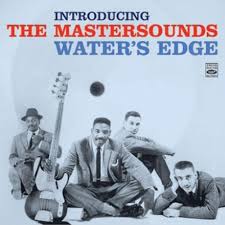
He must’ve told me of the nights as a teenager, he went to hear Dave Brubeck, Gil Evans, Gerry Mulligan, and the Mastersounds, with Wes Montgomery. But it wasn’t until he died that I understood what it meant to be there in North Beach, San Francisco, Saturday night, 1958 or ’59: The Beats had arrived, and Jack Kerouac and Allen Ginsberg passed through, but my dad was from across town—the Sunset, Ocean Beach, a Catholic boy—and the cleanest cut kid in the joint. Lenny Bruce worked in the area and would’ve called him “Jim,” the comedian’s nickname for a stiff-necked straight, but my father was no square: I like to imagine the neighborhood regulars welcoming him, an innocent among hipsters for the night.
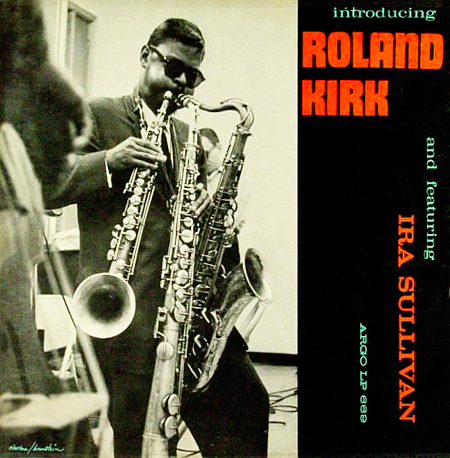
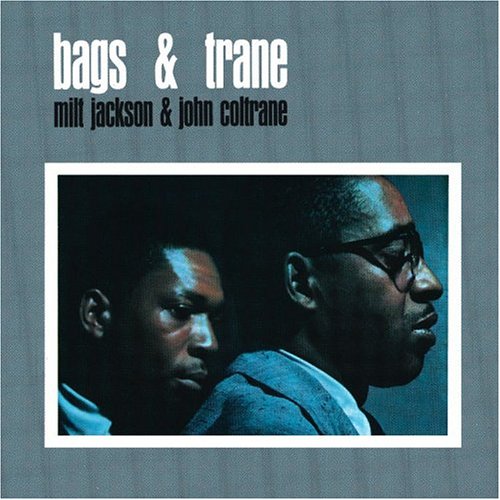
As a child, I didn’t grasp that my dad was a jazz fan, though his stack of interesting looking records were his only possessions I ever admired. I realize now that his was a modest-sized collection, though it was very tidy, very specific and very, very cool. It was Cool Jazz, also known as West Coast, that he favored and he had every recording by the Modern Jazz Quartet featuring Milt Jackson. I guess he liked Jackson’s vibraphone because Cal Tjader’s records were also well represented, along with MJQ sound-a-likes the Mastersounds with Buddy Montgomery on vibes, and his brother Monk on bass, and sometimes Wes on guitar. Piano jazz also rated on his scale–Brubeck was a hero, as was iconoclast Ahmad Jamal. And there were even stranger sounding names to this kid–Joao Gilberto, Antonio Carlos Jobim and Laurindo Almeida–with their pronunciations that confounded me, and their breezy bossa nova guitars that captured the scene at Ipanema Beach. And then there were the Stans: Getz and Kenton, alongside tenor sax man, Rahsaan Roland Kirk (who was still just Roland back then). Flipping through the stacks, I felt like I knew these jazzmen, in a way others tell me they’ve known Frank Sinatra, James Brown, Bob Dylan and Jerry Garcia; they were like fathers, a part of the family.
It was the colorful, modern art-inspired album covers on the Verve, Prestige, Argo, and Fantasy labels that first drew me in, long before I knew anything about musical shapes, colors or subtleties, and all the shades they could throw. I think of putting one of those records on the turntable now, pouring over the liner notes and getting lost myself, while holding an actual Blue Note or Impulse! sleeve, instead of a reissued imitation. Sure, I could pick up a copy of one or two at a vintage vinyl store but it’s my dad’s records I really want, caked with his energy, accompanied by the stories of their purchase, and a recounting of the historic gigs where the songs came alive for him. I also want his approval and enthusiasm for my taste in the avant-garde and for own small, tidy, and very cool stack of Alice Coltrane, Ornette Coleman and Sun Ra. But even if he were here to sit with me, I don’t know that he’d be all that interested in talking jazz. Somewhere along the way, he left behind his passion for it.
By the mid ‘60s, more and more fans of Cool Jazz had turned to hard bop and rock’n’roll. Times changed, and the City, as we call it, had been psychedelicized. My dad was a young suburban family man, a periodic drinker who put down the bottle long enough to regain his vision and become a health food nut, a jogger and a tennis bum, long before those things helped define leisure styles in the laidback ‘70s. “Over-committed,” is how he referred to the house, the yard, the two kids and three cars— and his life between jobs just outside San Francisco. Music didn’t figure into that picture. There was no nightlife to pursue there and no trips to town to hear the jams; most all the old clubs had gone dark though North Beach was becoming home to the next generation of outsiders, the art students and punk rockers of my generation. Not yet 40 years old, a suspended driver’s license kept my dad unemployable and housebound, his wife at work on the swing shift. By day, he slept in the hammock or sat at the kitchen table, pouring filtered coffee through a cone. He stayed occupied, typing mysterious reports and letters on the Royal and watering the lawn, but he never reached for the stack of vinyl or the phonograph, adjacent to the patio, just on the other side of the sliding glass door, in the family room of our California ranch-style home. It was as if getting up, the simple act of putting a needle to a record, was just too much for him: He had entered the no-jazz zone.
Though occasionally he’d ignite the old flame: He took me to see Cal Tjader locally, though teenage me couldn’t understand why a so-called legend should be playing at St. Francis High School. I heard he rousted my brother and took him to see Milt Jackson at the grand opening of the Mayfield Mall. Other times, if ever he dug the music in the air, he’d partake of that jazzer’s strange custom, finger-clicking (shoulders hunched). And sometimes while driving, he’d tune into the jazz spot and bop to the radio, occasionally gesturing with an air-cymbal crash. These efforts were simultaneously embarrassing and ethereal for me: Jazz made life bearable, if only for a moment, as we floated off to another land, returning refreshed, for a couple of bars or beats.
When my dad moved out of the house at the end of the ’70s, my mom gave his records to a young jazz enthusiast, a boy she thought would appreciate them. I moved back to San Francisco, and I’d heard so did my dad, after he’d done some rambling. Eventually we got together for lunch, often at St. Francis Creamery in the Mission, and other times at Mama’s or Vanessi’s in North Beach; on those days he was feeling more flush and would spread the wealth. We never spoke of the past—it wasn’t in our repertoire—but the memory of his LPs, their covers, their vibraphone, horn and piano sounds, and their spiraling liner notes occupied a large space in my heart, lighting a space in the darkness of the holy here and now. I wonder, had he lived, if we’d ever get back to jazz, if he would’ve rediscovered his passion for it, or if he would share mine for Mingus and Monk. If only it had occurred to me to have played some Louis Armstrong at his funeral. What if he’d lived to see his 50s? Would he have succumbed to the Quiet Storm or held strong? For sure we’d agree Duke is king, and we most certainly would’ve gone to see Ahmad Jamal at his most recent appearance in town. But would he still put on that ridiculous posture as he be-bopped down the hall, and would I still reflexively roll my eyes at him? I will never know, though whatever his style and taste in his 70s and whether we agreed wouldn’t matter, if only he was here, right now. Because what I really need to ask him, what I really want to know, is if he can remember the moment he stopped listening.
In what is perhaps the best-known story of a blues woman as legend, Big Bill Broonzy tells of the “cutting” contest he lost to Memphis Minnie following her 20-minute performance of “Me and My Chauffeur Blues.” So carried away was she with the jam, Minnie was carted offstage by the judges who were said to be bluesmen Tampa Red, Muddy Waters and most unlikely, Mississippi John Hurt. Meanwhile, as Minnie was catching her breath, Big Bill was making off with the two bottles of hooch earmarked to be taken home by the grand prize winner.
“…She can make a guitar speak words, she can make a guitar cry, moan, talk, and whistle the blues,” Broonzy wrote in his memoir. Man enough to admit he’d been whupped by a gal, the story behind their supposed tussle in 1930s Chicago has over time been revealed to be a conflation of repeated guitar stand-offs between Broonzy, other bluesmen, and Minnie who was known to routinely trounce all-comers throughout the South and Midwest with the antics on her ax. While Broonzy would go on to be remembered as the musician who brought the blues to England and influenced an entire generation of rock’n’roll guitarists, Minnie’s legacy is less tangible and entrenched. For reasons not entirely clear and despite repeat testimonials from Bonnie Raitt and Lucinda Williams, Minnie’s only had a few, cheapo boxed sets and a recent tribute compiled; there have been no lovely vinyl reissues, collector’s editions, or special treatments given to her recorded legacy. As for what we know of her history, most all of it comes down to Paul and Beth Garon’s 1992 volume, Woman With Guitar: Memphis Minnie’s Blues, available once again in an updated and revised edition with a forward by Jim O’Neal (City Lights, 2014). Twenty-two years after its initial publication, the most profound details of Minnie’s story still reveal a hard travelin’ blues woman—singing and performing her ribald, daring, and well-honed songs in the early part of the 20th Century—as a player who has yet to be honored and enshrined in equal measure to her accomplishments.


 February 4 is the birthday of Rosa Parks, the rebellious civil rights activist remembered most for refusing to move to the back of the bus: The Montgomery Bus Boycott, in the name of the desegregating public transit, was organized immediately following her arrest on December 1, 1955.
 Some time in New York City, 1971,


 Denise Sullivan