Denise Sullivan

Author, Arts & Cultural Reporter and Worker

What Would Jerry Do? Notes on Dead & Company, Inc.® © ™

Back in the Paleolithic era, I worked as front desk receptionist for concert promoter Bill Graham and had several encounters with members of the Grateful Dead family. Not that I knew who they were at the time: it was a big part of my identity as a modern music lover to not know, though I’ve come around to their sound and specifically to Jerry Garcia.

For the sake of a prequel and partial sequel to the business at hand, I accidentally experienced the Dead at a Day on the Green concert in 1976 when they co-headlined with The Who. At the time I didn’t know or care that the big events staged at Oakland’s stadium would became a kind of testing ground for the full scale festival tours we know today. It didn’t help I didn’t know “Scarlett Begonias” from “China Cat Sunflower” or to that to my unformed mind, experiencing the Dead was just a three hour endurance test before the Who hit the stage. I was not transformed, my consciousness was not altered by their music, as some members of the band and the people who love them claim, though today, I quite like most all of Garcia’s and lyricist Robert Hunter’s material. I like to think I have grown into it.

But even back when, I knew Jerry was Jerry, and later in my role as receptionist, I certainly knew enough about receiving office visitors that I was not to waylay people of his renown at the entrance with formalities like announcing their arrival. In the flash it took me to recognize a musician, he could walk past me, nod, and in Jerry’s case, with his cherubic smile, head bowed and hands jammed in his pockets, proceed without pause, into the open main office, then in the direction of Bill’s corner sanctum. Same went for Carlos. Santana. He and Jerry were of course legends by then, their reputations enshrined thanks to their inimitable, celestial guitar styles. I was less generous about their music then, but showed respect anyway: These were people born in the same decade as my parents. Then again, I can’t claim to have displayed anything resembling even courtesy the day an even older man dressed in a fur loin cloth and carrying a walking stick announced his arrival.

“Bear for Bill.”
“Excuse me?”
I couldn’t hide my contempt, buzzing over the line to Bill’s assistant.
“Someone named Bear is here for Bill?”
“Send him in.”
The shock registered on my face compelled a co-worker witnessing the scene to whisper my way.
“Bear is Owsley.”
“And?”
“He invented acid.”
I get it now.

On another day, Mountain Girl announced herself. My lack of exposure to hippie culture was pitiable and the name drew a complete blank. I said something like, “Say what now?”  I feel sorry for being just one more person to judge Carolyn Garcia based on her chosen name and hope she can forgive me. Perhaps we might even agree that Jerry would be “rolling in his grave” in connection with some of events of the last few weeks celebrating the 60th anniversary of the formation of the Grateful Dead. 
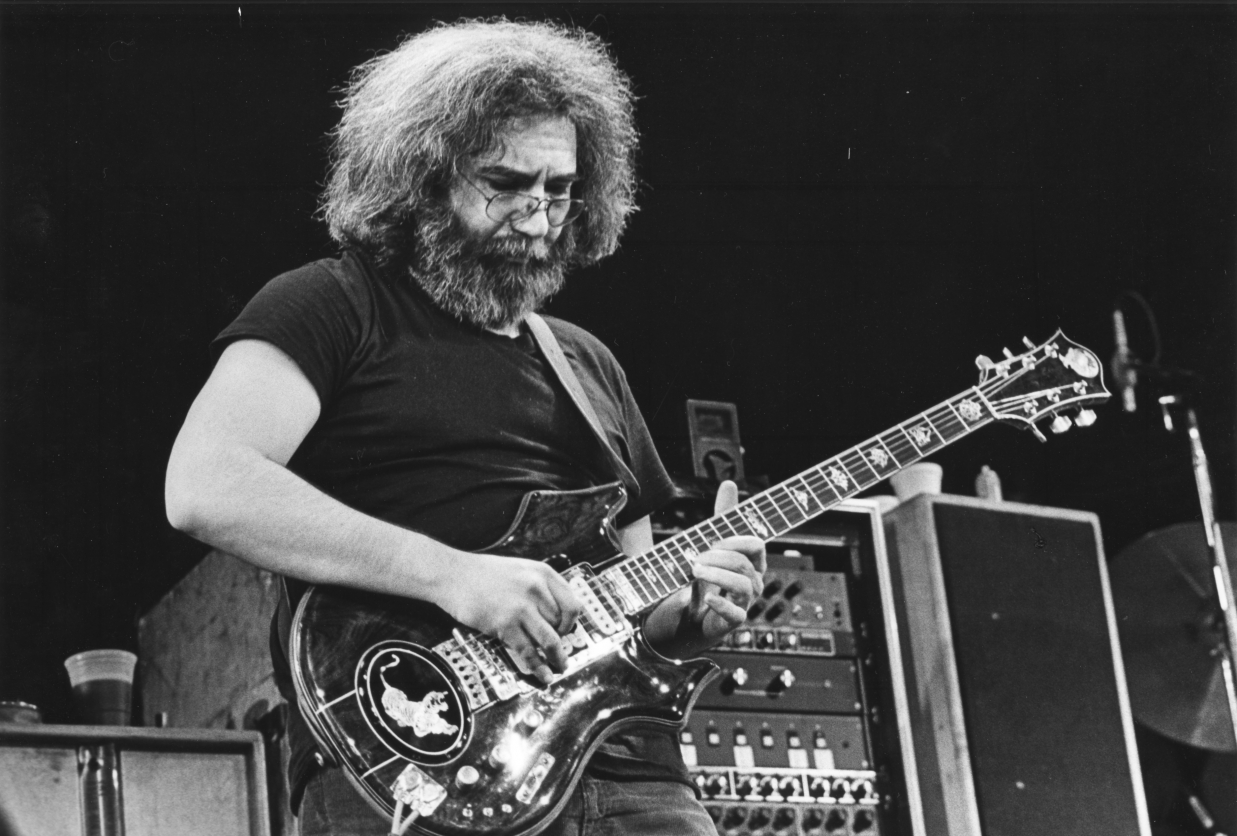
Thirty years ago, on August 9, 1995, Jerry Garcia died. His diabetes raged, his heart gave out and his body failed him while detoxing from a lifetime of drug dependence. A few days later, his life was celebrated with a public memorial concert in Golden Gate Park. By that time, the Dead had been doing big business for some time, thanks to constant touring and their first top 40 hit, “A Touch of Gray.” Never mind then that Garcia’s health was down and his addictions were up: The show must go on as the Dead’s touring, merch and ticket sales were doing the kind of big boring business the music industry represents today.

The bands formed in Jerry’s wake include The Other Ones, The Dead, Further, Ratdog, Phil Lesh & Friends and the Rhythm Devils (there are more). But the extreme monetization of all things rock ’n’ roll, psychedelic and Dead had been well under way for several decades. The Grateful Dead as corporation was just another aspect of its long strangely quirky and contradictory trip.

Beginning in 2015, Dead members Bob Weir and Mickey Hart began billing themselves Dead & Company; by 2023, they played to bid goodbye to touring with their Fare Thee Well shows. Those dates, according to published accounts in music industry trade magazines and other media outlets, grossed $114.7 million over 28 shows, though they were hardly the end. In 2024, Weir, Hart and an amalgamation of musicians played a 30 show stand at the Sphere in Las Vegas and earned $130 million that year as Dead & Company. This year’s Dead & Company returned from the dead, again, for 18 shows at the Sphere and three in Golden Gate Park to mark the 60th anniversary of the formation of the Grateful Dead and 30 years since Jerry’s passing. The tour receipts for this year have not yet been published, though some fiscal facts are known.

Tickets for the Golden Gate Park weekend ranged from $600 for three days and went up to $7k for the VIP Package. The concerts brought $150 million to the city’s economy, $7 million into the Parks and Recreation Dept. according to local media, and some untold sum for promoter, Another Planet Entertainment, not to mention the band, its agents, managers and other profiteers. I don’t know much about the Grateful Dead but I’ve read the books and can tell you that profit was not a big motivator when the band was founded. Money and possessions were seemingly of little interest to Garcia.

To say it another way, Dead & Company do not embody the spirit of the Dead and its commitment to alternatives to commercialism and mainstream culture. That is if there is such a thing as a spirit of a band: In the Dead’s case, that bird has definitely flown. I can say more, much more, but won’t now except: In 1996 I spent six weeks on the road with the Further festival. It was unpleasant to say the least and I survived it by immersing myself in nightly sets by Los Lobos, a band I am certain has a spirit because I can feel it. 

And yet, there are still some traces of Jerry’s spirit around if you are looking for it in the city that raised him. Whether its the makeshift shrines in the Haight, stenciled Jerry bears on sidewalks around town, or the annual Jerry Day free concert at McLaren Park, I could swear some days, especially in August which marks his birth and death, he hovers.

Jerry Day was established in 2003 to celebrate the Excelsior District’s most famous son; this year a street there was named for him. But the future of Jerry Day is imperiled due to “lack of funding” and city support. How could this be in a city of 80 billionaires? How could this be in a city whose mayor is worth millions made from the profits of Levi Strauss, the jeans favored by hippies and punks and everyone else, you may ask and I will answer: We are a city that creates and then commodifies everything: From rock ’n’ roll, psychedelics, and cannabis, to the Grateful Dead, to mention but a fraction of what comes from Northern California. We even have a Counterculture Museum to keep the idea of an underground in place. 

No, I don’t blame the latest generation who want to partake in their own rituals or a virtual tribal love rock musical: It’s the cost to play the game I can’t relate to. There’s also the carbon in/carbon out trucking and busing of staging and sound equipment on public park grounds, our much-needed oasis in a largely concrete residential neighborhood that’s hard to get your head around. 

Jerry loved Golden Gate Park. It’s east to west world map of flora and fauna literally inspired his guitar playing. But following the three dates of Dead & Company there, the three-day Outside Lands festival and last week’s straight vanilla “alt-country” event, the concerts have trampled the landscape and turned the largely working class, Democratic voting blocks of the outer Richmond and outer Sunset neighborhoods into a parking lot.  And we did nothing to prevent it. Oh sure, we voted to make the Great Highway a park, but we got very little in return for that either.

The highway, its nearby grid of avenues, and the park itself, were built on sand dunes. They were not designed with an in and out flow of 60,000 non-residents a day in mind. These neighborhoods of families, people with disabilities, seniors and people of all ages who speak more languages than in any other area of the city are boxed in. Many of us are in the work force and use the roads to travel to and from our jobs. There are hospitals and other services that bookend the park and people need access. And then there is the wildlife that has been displaced for a month by top volumes, distracting spotlights, and cyclone fencing not to mention the human footprints marring their paths home.

Jerry used the park himself to find peace and quiet: That’s where he was found one morning in his car in 1985 with a shit ton of drugs on him and in him (in 2025, concert goers in the park enjoy the brain freezing drug of nitrous oxide). Communing with nature takes many forms but the combination of numbing out in these times seems less like a tribute and more like a cop-out.

Granted, my distress is not about the disruption outside my window but is intertwined with the upheavals worldwide. If you’re reading this, you wake up screaming in some form or another, whether about detainment, displacement, about the genocides, dictatorships, rolled back rights and the current incompetence at most levels of leadership [release the files]. And yet these cries are signs of our human connection, our consciousness, the kind once encouraged by the Dead or psychedelics or a combination of the two. 

Even though now it seems like no one is listening, those of us who are awake and alive are the miracles we are seeking. The shakedown, whether in the park, at the Dead & Company HQ or on the national stage is just another version of life in all its stages: good, bad, ugly and beautiful.  So I keep doing what I do. Live my life accordingly. Sometimes I ask myself, what would Jerry do? And while I choose not to check out, I can’t deny we’re living in a blast furnace. Yet I see no choice but to play it through, and just keep truckin’ on.

Filed under: anti-capitalist, anti-racist, anti-war, Arts and Culture, California, rock 'n' roll, Rock Birthdays, San Francisco News, , , , , ,

Local Writers Make Good

It takes an extraordinary effort to write a book and see it through to completion. That might seem like an obvious and plain thing to say, but it’s true: Though many folks like to think they can do it or try to, fewer actually do. Perhaps that is why publication day and month is most always a big deal for writers: Congratulations cards, flowers and gifts are in order! Short of those things, I’ve got a couple of articles I wrote about two very different writers with two very different books celebrating mutual publication dates to share with you.

“Sexy Life, Hello!” is the first book for Michelle Kircherer. Her debut novella is also the premiere release of her independent publishing venture, Banana Pitch Press. Kicherer is an ambitious performer, writing coach and instructor and has a big vision for her multimedia venture, without any of the yuckiness associated with the big three publishing houses. She will be reading from her book and discussing it at Green Apple on the Park in San Francisco on March 6 and at Clio’s in Oakland on March 8. You can read more about Michelle in my profile of her for the San Francisco Chronicle.

“The Mansion” (Gnashing Teeth Publishing) is the tenth collection of poems by Dee Allen. A performance poet, Dee has been writing and performing his work in San Francisco, Oakland and beyond for over 20 years. I had the good fortune to first hear him read in 2012, or maybe it was 2013 — at any rate, that was several books ago for Dee. I try never to miss his publications and readings, but they are coming so fast and furious, I accidentally skipped 2024’s collection “Discovery.” It’s time to catch up and that’s exactly what we’ll be doing during a live-streamed conversation from Bird and Beckett Books and Records on Sunday March 9 at 10 a.m. A sneak preview of what’s likely to come up is in this profile for Bay City News, published today.

Congratulations to Michelle and Dee on their respective new publications. Though writing is its own reward, sometimes it helps to know there are those of us reading and appreciating the work, respecting what goes into the process and identifying with it. Thanks to this pair of authors for making our Bay Area literary community particularly unique, for making my job reporting on them easy, and for helping to keep the spirit of independent publishing alive in these unreal times.

Filed under: Arts and Culture, Book news, Books, California, San Francisco News, , , , , , , , , ,

Litquake at 25

updated from a previous post on Litquake at 20

This week San Francisco’s literary festival, Litquake, celebrates 25 years of supporting writers, publishers, bookstores and the literary arts here in the Bay Area.

Running October 10-26, Litquake is the big event of the year for the Bay Area’s literary community. The mostly free readings and panels during Litquake and Litcrawl have become starting places for some of our writers and remain a testing and resting ground for those with more experience in need of a little recharge. These days, I mostly write about books, but when the festival rolls around, it’s a chance to remind myself, I too am a writer of books.

The festival’s co-founders, Jack Boulware and Jane Ganahl are my kind of people: Journalists and authors by trade, they dared to dream beyond the newsroom and share their love of the writing life with their immediate community. As their cohort of writers grew to include novelists, memoirists, biographers, sexperts, technologists and performance poets, the festival grew and grew, blossoming into its current incarnation as year round foundation and a 10+ day fest, culminating with an evening LItcrawl. Boulware and Ganahl have since stepped down as directors and as of this year, the organization welcomes its new director, Norah Piehl. Litquake is also powered by a small staff and tons of volunteers.

Though the years, I’ve been lucky to participate in the annual festival as a reader. Litquake has always been a place to try out new ideas and styles and as a writer I’ve test run biography, memoir and poetry, to get a feel for how the work sits with an audience of listeners. Litquake month has also served as a time of the year to create new work, to reset and reclaim one’s writing life, and affirm, that we are still readers and writers, no matter where the day or our lives may take us.

In more recent years, I’ve volunteer-organized and curated readings at Litquake in support of independent bookstores, particularly during San Francisco’s gentrification crisis. In 2014 we celebrated 55 years of Marcus Books. In 2015 and 2016, we honored the Mission District booksellers Modern Times Bookstore Collective, Alley Cat, Dog Eared and Adobe Books with standing-room-only events at the Make Out Room as fundraisers for Litquake and the grassroots United Booksellers (UBSF has since disbanded, but not before publishing a series of chapbooks, The City Is Already Speaking in collaboration with poet laureate Kim Shuck and featuring contributions by Tongo Eisen-Martin, Alejandro Murguía and other Bay Area poets). This year, the festival honors bookstores citywide at its opening night fundraiser, the Bookseller’s Ball. We are lucky to have so many bookstores here in San Francisco (my go-to is Bird & Beckett Books and Records). Despite digitization, the pandemic, extreme rent and operating costs (like insurance), San Francisco’s independent bookstores are strong and thriving.

It was at Bird and Beckett in 2019, that we hosted a full house for a comeback discussion with author David Talbot on Between Heaven and Hell: The Story of My Stroke, which he survived in 2017 and lived to write about. Talbot, a longtime supporter of independent booksellers and up and coming authors, has since survived a second stroke. You may offer financial support to him and his family by linking here.

As a literary community, I like to think we are mindful of supporting authors in need, as well as our elder writers and readers. For the last five years, I’ve been associated with Litquake as a teaching artist with The Elder Project, a community writing program offered to older adults. Facilitating these groups, meeting writers and hearing their stories has been an unexpected source of inspiration. The program continues to grow and each season we welcome new writers at all levels of their practice. It’s a great joy and privilege to carry on the work, conceived by poet, Jessie Scrimager Galloway, with our participants and my fellow teaching artists.

I had hoped to return to this year’s festival to read from my new book, Len Chandler: Shadow Dream Chaser of Rainbows, along with some as yet unpublished work. Due to a conflict, I will not be reading as scheduled, though I hope to find an alternative venue to test drive the new writings. Stay tuned to this space for updates and until then, I will see you at the festival. As always, thanks for reading and for your support of this webpage.

Filed under: Book news, California, San Francisco News, , , , ,

Ann Mack: new to SF, but not to the jazz life

Ann Mack was born into a family with a historic jazz lineage and sang with trios around her native Cleveland for most of her life. But it wasn’t until she moved to the West Coast less then 10 years ago that Mack fulfilled a long time coming, lifelong dream to sing the standards backed by a big band led by Jimmy McConnell. Most recently Mack has been singing her way through the Great American Songbook and Bay Area clubs like Geoffrey’s Inner Circle and Savanna Jazz, a welcome addition to very alive jazz circuit here that includes Yoshi’s, SFJazz, Mr. Tipples, The Black Cat, Bird and Beckett Books & Records, Keys, Sheba Piano Lounge and the Church of St. John Coltrane, among others. Read more about “The Macknificent” Ann Mack, her contribution to Bay Area jazz, and her family’s extraordinary history at Bay City City News.

Filed under: California, Jazz, San Francisco News

Supporting San Francisco Independent Reporting

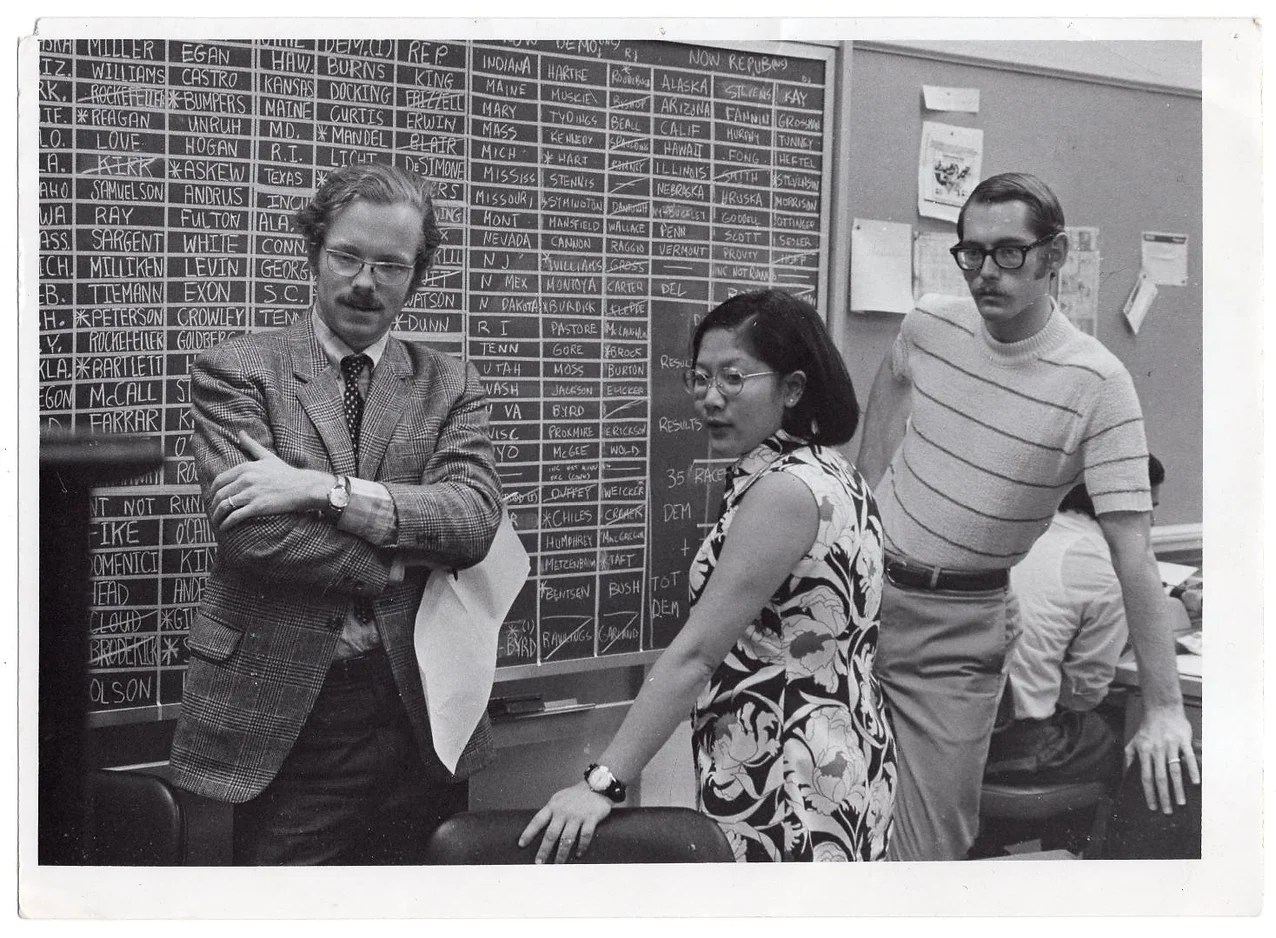
“Rally” is a film about San Francisco political figure, Rose Pak. Her life was extraordinary and the role she has played in our city’s development since the days of Moscone and Milk is perhaps not fully understood or acknowledged. Rooth Tang’s excellent film, which I hope will reach a wider release this year, debuted at the San Francisco Film Festival in April. The photograph above pictures Pak in the ’70s when she was the first Asian American female reporter hired by the San Francisco Chronicle. Tang, an Angeleno, traveled to the center of Pak’s story in the way that perhaps only a Chinatown and San Francisco outsider could, but he had plenty of local insider assistance. As personal, political and documentaries of time and place go, Tang’s film is essential.

Kasey Rios is one of those freethinking and spirited San Franciscans that is the embodiment of our sanctuary city at its best. Serving residents of the Tenderloin and SoMa with a vision of greener and self-sustaining neighborhoods and fair wages for all seems a reasonable part of the solution toward improving our civic direction — a plan that includes all people, not just the wealthiest ones. Rios makes a case for less law enforcement and authority and more autonomy for residents, while paying folks to beautify and clean public spaces one neighborhood at a time. It’s a bottom up rather than a top down system and it is working in places like Mexico City and Paris, so why not here? Building the workforce is key: But such ideas can’t take if workers cannot afford to live here and we perpetuate a cycle of displacement and profits over people.

Like the city itself, the local media continues to experience loss, change and reorganization: Like everywhere, there has been a real drain of alternative news outlets here in recent years, and a co-opting and misunderstanding of what journalism is and can be. But there remains hope: Independent news organizations and reporting are the present and future of the form. As a new contributor to Bay City News Foundation, a local wire service and network of regional news outlets including Local News Matters, I’m happy to continue to do my work delivering under-reported stories to a wider public, as well as through the monthly live stream project, SFLives/Live Talks.

This Sunday, our guest is Malia Spanyol, a small business owner with an eye on keeping safe spaces alive for women and queer folks in the Mission District, a neighborhood that remains in persistent risk of over-gentrification. Next month on June 11, we will be in discussion with the aforementioned Kasey Rios at 10 am. SFLives livestreams on the Bird and Becket Books channel. Please join us and keep your eyes open for more on-the-ground coverage from San Francisco — from myself and other dedicated reporters from our city. We’re still here.

Filed under: Arts and Culture, gentrification, San Francisco News, Women's issues,

SF Lives/Live Talks Are Back!

Greetings fellow Friscans and those interested in the latest from our much maligned and beloved city. As readers know, I occasionally write about San Francisco’s people, poets, places and solutions to its problems for a project dubbed SF Lives. Its print/text version is in process of seeking a new home beyond this blog and the archives of the San Francisco Examiner. However, if you’re interested in keeping up with all the news that I see fit to report from my outpost at the edge of the world, our SF Lives/Lives Talks, is once again livestreaming conversations from Bird &Beckett Books and Records.

This month I interviewed Kelley Cutler, the human rights coordinator at the Coalition on Homelessness. Cutler is a 20-year veteran of providing services to our unhoused neighbors and has seen firsthand the way people’s lives change dramatically for the better when they are able to secure housing. But promised housing by the City of San Francisco and the supportive services to assist people in need have still not materialized: There are no beds available and a dysfunctional intake system continues to challenge and stymie the best efforts by outreach workers and the people living on our streets. In this conversation, Cutler helps us understand why the cycle of dysfunction persists. With much gratitude to her and the work she the Coalition do, I hope you will take an hour to hear why the mayor’s Tenderloin emergency plan and other efforts to house people are failing, why the city is in violation of people’s basic human rights, and why the work Cutler does is essential to all of our SFLives.

Filed under: California, gentrification, income disparity, San Francisco News, Tales of the Gentrification City, , , ,

Total Recall (San Francisco Edition)

If you are getting your news about San Francisco in the national mainstream media, you are understandably confused. Take last week’s recall of three members of our school board.

For anyone seeking actual answers as to how San Francisco was played in the outcome of its particularly San Franciscan recall, educational policy expert Kevin Kumashiro, author of Surrendered: Why Progressives Are Losing The Biggest Battles In Education, offered a streamlined and clear explanation to Ian Masters on a recent edition of Background Briefing.

Kumashiro has been following the nationwide dismantling of school boards in the wake of pandemic closures and the concurrent CRT debates, and breaks down how specifically GOP strategies, money and other forces came to bear on San Francisco’s maligned school board.

“This was about some people feeling the school board was putting too much of its time into ‘equity issues’ [renaming schools and admission policies], and not enough attention on reopening,” said Kumashiro. He further notes San Francisco reopened last fall like many other school districts, but the emphasis was placed on the slow action and competence of its three now-recalled board members who are, as you might’ve guessed, Black, Asian-Pacific Islander and Latina. Make no mistake: Kumashiro describes what happened in San Francisco as part of a larger plan to prey on national race anxieties that will ultimately be used to strike down affirmative action in the Supreme Court. This is cause for anyone with a pulse to feel alarmed. And yet, still not reading much real talk about this angle of the outcome of the recall in the press. Read my full report on the recall in Down With Tyranny which also links directly to the interview with Kumashiro.

Filed under: San Francisco News, , , , ,

Looking For A Home

Dear Reader,

Living and working in major U.S. cities throughout my adult life, I always came back to thinking, and sometimes writing, about San Francisco. Maybe it’s because I was born here, have spent the majority of my waking and working life here, and expect to remain here (unless I make it out alive). But writing about this place I call home – whatever home means – for myself and for publication has been my preoccupation, and for the past four years, my vocation. One of the spaces I’ve found for my work as a reporter has been as a biweekly columnist at The San Francisco Examiner.

In 2018, I was invited to create and contribute SFLives, a series about people, to the paper. Since launching, I’ve written over 100 columns, earned two awards in the columnist category (from the San Francisco Press Club in 2020 and 2021), and curated and hosted a monthly hour-long talk series, live streamed from Bird & Beckett Books and Records (continuing on the second Sunday of each month). Writing the SFLives column, intended to celebrate the extraordinary lives of everyday people who make this a singular city, has been one of the greatest honors and privileges of my life. To get to know people, to be invited into the homes, businesses and lives of so many San Franciscans, particularly during the pandemic, and be trusted to tell their stories in a metropolitan newspaper, has helped me to better understand a complex city, though I can’t claim to know all its secrets just yet.

I don’t do the work alone: trusted friends and contacts have introduced me to people I may not have otherwise encountered. And of course the subjects themselves, San Francisco’s people, fulfill the major role in filling the column inches with their survival tactics, wisdom and personal histories every other week. Occasionally I get a little closer to the bone and to home, but it’s generally other people’s unsung, everyday achievements I’m interested in celebrating. Surely, I benefit far more from these tellings than do my subjects, though some of them reported back wonderful things that happened following the publication of their stories. I can’t think of anything more gratifying to me professionally, to be living and working in a complicated city with its neighborhood identities, and introducing its people to each other and to the larger community. I intend to tell these stories until my work here is done, though SFLives will no longer be hosted by the Examiner.

My consideration of our city’s emergency plan to bring “law and order” to the Tenderloin – San Francisco’s most long term troubled neighborhood – is my farewell for now. That the column concerns San Franciscans living unhoused on our streets is a sort of bittersweet occurrence but is not a coincidence. The city and its power base has not done right by its least fortunate and most vulnerable people (and the United Nations backs up that claim). Meanwhile the convulsive changes at the Examiner, a newspaper claimed by new ownership and management seeking a new identity, has recently made for a less than comfortable home for SFLives. I’ll be using my time away from it to continue my work as a teaching artist/writing instructor and a cultural reporter at other news outlets, and to further develop the SFLives project.

I am grateful to be among the housed in one of the wealthiest cities in the wealthiest region of the country, and to continue my work, documenting the lives and times of my fellow San Franciscans living through perilous times. But please keep the faith, friends and readers, that San Francisco, as a city, as an idea, as a state of mind and as a people, does the right thing and cares for its most vulnerable people this winter, as the COVID variants surge. There are plenty of good folks and organizations here, with open hearts and a willingness to communicate with care and compassion: I intend to stick with them, to keep doing my job, and telling your stories, in conjunction with partners whose values and mine are better aligned. Thank you for supporting independent thought and reporting and please return or subscribe to this space for updates.

In solidarity,

Denise

SFLives

Filed under: Arts and Culture, California, San Francisco News, , , , , ,

Celebrating 100 San Francisco Lives

Corner Launderette, California Street, Inner Richmond District, San Francisco, 2021 photo by Denise Sullivan

The idea of the “soul of San Francisco,” and whether it’s been lost or found in these years of our gentrification and more recently the pandemic is worn-out. But what exactly does it mean, to go in search of something as ephemeral as a city’s spirit? After 99 columns, I’m still trying to find out.

“One of the things people say to me all the time is they’re happy we’re still here. As if they are expecting me not to be,” said Paula Tejada, the self-proclaimed Empanada Lady who presides over Chile Lindo, her specialty food stand and catering business on 16th between Capp and South Van Ness, the crossroads of good fortune and hard luck.

Tejada is the among the San Franciscans I’ve talked to for SFLives, my column that has been running every other week in the San Francisco Examiner for going on four years. In that time we’ve earned second and third place awards in the columnist category of the San Francisco Press Club’s annual Northern California Journalism Awards, launched a monthly talk series at Bird and Beckett Books & Records, talked to over 100 San Franciscans and shared a bit of our own history. The space has been devoted largely to probing the idea of what keeps some of us here, while there are others who try us, then decide it’s time to leave in a hurry. The whole project has been a thorny proposition, fraught with the usual contradictions of writing about a complex city. And yet, I learn more and more about San Francisco each day by talking to folks who call this place home.

“Foot traffic in the morning is done,” Tejada told me when I checked in on her pandemic status, three years after we first sat down for a chat.

“There are no Google buses, people who used to walk by in the morning aren’t going to work on BART and I never know if I’m going to have that customer that’s coming in for a dozen.”

And yet, Tejada digs into reserves she doesn’t really have to pay topflight jazz, salsa and bossa nova musicians to perform at her storefront, thanks in part to The City relaxing regulations around outdoor dining and drinking during the pandemic. She does it because she believes in that ineffable thing we call the soul of San Francisco…

READ THE ENTIRE COLUMN HERE and 99 other columns HERE.

As I like to say, please don’t believe everything you read in the national and international press about San Francisco. But if you get a chance to talk to one of us who lives here, you might find out, like I’ve found out, that our people have still got that indescribable something that it’s been said we San Franciscans are made of and carry with us wherever in the world we go: Maybe it’s a can-do spirit, maybe it’s soul; some might call it grace and I call it home. We all carry the place where we’re from with us, sometimes for better and sometimes for worse. I truly hope that here in this place once known as the City That Knows How we can find within us and its city limits the ability to rise from this very, very broken place we’ve arrived post-pandemic. Until then, squint your eyes and try to find some light in the darkness: I promise it’s here, but you have to look up at just the right moment or you just might miss it.

Filed under: San Francisco News, , ,

Real SF Lives Talk Real: New Series!

First Stop/Last Stop photo by Denise Sullivan

If you read the national news- or even some of our local papers – you might think San Francisco is beyond redemption. I blame it on seven dollar coffee and toast (the fourteen dollar snack). Some will tell you it’s the corruption inside city hall, the mishandling of affordable housing, and the public school system, and I would believe them: All of it part of the unfinished jigsaw of our city’s story and there is more to it than that. But one thing we handled, and handled well, was the pandemic. So thanks for that, to the medical professionals and city officials, essential workers and everyday citizens who did their part to mask up and slow the spread. Though it might be fair to say the statewide reopening on June 15 felt hasty and confusing to those who adhered to the guidelines for the duration -no non-essential travel, social or business activity, six feet of distance, masking and no gathering. The mask off and the rush back to life is stress-inducing and no-wonder: There is so little known about the mutation of the virus, the variants; as it is, hospitalizations are up in some California counties…

In an effort to air some of the public’s immediate practical and emotional concerns and to feel uplifted during the transition, on June 13, a couple of days before “reopening,” we kicked off a livestreamed discussion series with our fellow San Franciscans, hosted by Bird & Beckett Books and Records. Our first guest was artist Anna Lisa Escobedo, an extraordinary San Franciscan with an LA background and a story to tell. Our second guest was columnist and independent publisher, Kelly Dessaint. Future guests will include many of the subjects of my column, SFLives, which runs every other week in the San Francisco Examiner: The folks I cover and tend to want to speak to in-depth are our on-the-ground leaders and everyday workers in arts, culture and various essential jobs that make San Francisco the place we call home.

In recent columns, I’ve covered the controversy surrounding the opening of the Great Highway from a very personal perspective; I’ve spoken to photojournalist/filmmaker Lou Dematteis, musician/composer Jon Jang, artist/urban farmer/community historian Lisa Ruth Elliott and Japantown community leader Grace Horikiri (You can peruse nearly 100 columns at the Examiner’s website).

Porthole photo by Denise Sullivan

In some of these talks we take on gentrification issues, the ways in which the city has ceded the people’s interests to newly minted tech barons and their minions and pretty much successfully destroyed our international reputation as a sanctuary for artists and outsiders. Yes, that. But mostly in 2020 and beyond it, we confronted pandemic issues, how we coped and how our hometown did that aforementioned exemplary job at keeping the spread under control, even though we as a city continue to fail our most vulnerable — those without homes, seniors without families, and developmentally and physically disabled folks. As for the rocky “reopening,” we’ll be talking about that too: Nobody really knows how to handle the summer rush. There are no workers for low-wage jobs. And as the unvaxed and unmasked descend upon us, the most committed lovers of this place are at the brink: There are stories we’re moving out in droves, moving to Tahoe (and ruining the way of life there). A recent New York Times story about organized shoplifting crimes at Walgreen’s is the latest outrage, meanwhile, children remain out of school while a dysfunctional school board (we voted for) squabbles over….don’t ask, most of us have lost the plot; discontent –no, rage–directed at the district attorney (we voted for) has degenerated into moms shouting down other moms at the neighborhood farmer’s markets. Finally, the web of deep corruption within city hall and other city agencies continues to be investigated by the feds. These are just a few of the challenges confronting us in perilous times. Yes, this place is for the birds. And where isn’t right now?

What I feel like I’ve failed to put into words, ever, but especially in these times, is there is nowhere else I would rather be. This is that elusive place called home. There is something about waking up in the City and County of San Francisco seeing the sun (or at this time of year, fog), and feeling in your bones it’s the right place to be; that there is something to be said for enduring our cold summer winters, days like these. And on other days, one peek at the sky, if it’s that particular shade of blue I have not yet found words to describe, with clouds that seem to move as I go, the contentment and acceptance that I’m in San Francisco turns to deep joy and gratitude that I’m San Franciscan. In the blue, I can breathe more deeply, though why that is I haven’t yet discovered. So until then, I’ll keep talking about this place with you. And taking photos. And writing about it. Here’s to another day in the beautiful city. I have so much left to learn.

Please join the conversation with San Francisco’s artists, essential service providers and and everyday people as we talk about this place we call home. Coming up, Sunday August 8, 10 a.m. live from Bird and Beckett, filmmaker Eric Goodfield.

Filed under: Arts and Culture, California, photography, San Francisco News, serial, Tales of the Gentrification City, , ,

Archives

Recent Posts

Browse by subject or theme