Denise Sullivan

Author, Arts & Cultural Reporter and Worker

What Would Jerry Do? Notes on Dead & Company, Inc.® © ™

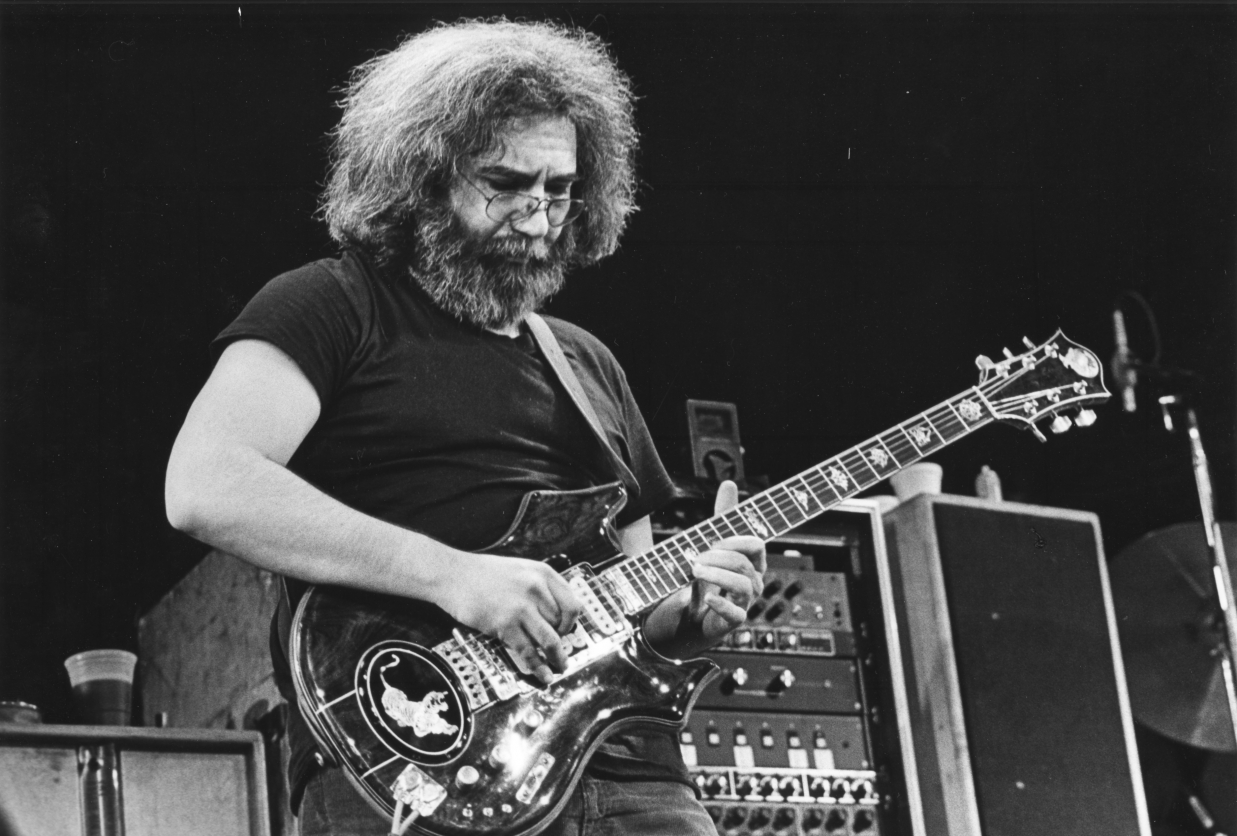
Back in the Paleolithic era, I worked as front desk receptionist for concert promoter Bill Graham and had several encounters with members of the Grateful Dead family. Not that I knew who they were at the time: it was a big part of my identity as a modern music lover to not know, though I’ve come around to their sound and specifically to Jerry Garcia.

For the sake of a prequel and partial sequel to the business at hand, I accidentally experienced the Dead at a Day on the Green concert in 1976 when they co-headlined with The Who. At the time I didn’t know or care that the big events staged at Oakland’s stadium would became a kind of testing ground for the full scale festival tours we know today. It didn’t help I didn’t know “Scarlett Begonias” from “China Cat Sunflower” or to that to my unformed mind, experiencing the Dead was just a three hour endurance test before the Who hit the stage. I was not transformed, my consciousness was not altered by their music, as some members of the band and the people who love them claim, though today, I quite like most all of Garcia’s and lyricist Robert Hunter’s material. I like to think I have grown into it.

But even back when, I knew Jerry was Jerry, and later in my role as receptionist, I certainly knew enough about receiving office visitors that I was not to waylay people of his renown at the entrance with formalities like announcing their arrival. In the flash it took me to recognize a musician, he could walk past me, nod, and in Jerry’s case, with his cherubic smile, head bowed and hands jammed in his pockets, proceed without pause, into the open main office, then in the direction of Bill’s corner sanctum. Same went for Carlos. Santana. He and Jerry were of course legends by then, their reputations enshrined thanks to their inimitable, celestial guitar styles. I was less generous about their music then, but showed respect anyway: These were people born in the same decade as my parents. Then again, I can’t claim to have displayed anything resembling even courtesy the day an even older man dressed in a fur loin cloth and carrying a walking stick announced his arrival.

“Bear for Bill.”
“Excuse me?”
I couldn’t hide my contempt, buzzing over the line to Bill’s assistant.
“Someone named Bear is here for Bill?”
“Send him in.”
The shock registered on my face compelled a co-worker witnessing the scene to whisper my way.
“Bear is Owsley.”
“And?”
“He invented acid.”
I get it now.

On another day, Mountain Girl announced herself. My lack of exposure to hippie culture was pitiable and the name drew a complete blank. I said something like, “Say what now?”  I feel sorry for being just one more person to judge Carolyn Garcia based on her chosen name and hope she can forgive me. Perhaps we might even agree that Jerry would be “rolling in his grave” in connection with some of events of the last few weeks celebrating the 60th anniversary of the formation of the Grateful Dead. 

Thirty years ago, on August 9, 1995, Jerry Garcia died. His diabetes raged, his heart gave out and his body failed him while detoxing from a lifetime of drug dependence. A few days later, his life was celebrated with a public memorial concert in Golden Gate Park. By that time, the Dead had been doing big business for some time, thanks to constant touring and their first top 40 hit, “A Touch of Gray.” Never mind then that Garcia’s health was down and his addictions were up: The show must go on as the Dead’s touring, merch and ticket sales were doing the kind of big boring business the music industry represents today.

The bands formed in Jerry’s wake include The Other Ones, The Dead, Further, Ratdog, Phil Lesh & Friends and the Rhythm Devils (there are more). But the extreme monetization of all things rock ’n’ roll, psychedelic and Dead had been well under way for several decades. The Grateful Dead as corporation was just another aspect of its long strangely quirky and contradictory trip.

Beginning in 2015, Dead members Bob Weir and Mickey Hart began billing themselves Dead & Company; by 2023, they played to bid goodbye to touring with their Fare Thee Well shows. Those dates, according to published accounts in music industry trade magazines and other media outlets, grossed $114.7 million over 28 shows, though they were hardly the end. In 2024, Weir, Hart and an amalgamation of musicians played a 30 show stand at the Sphere in Las Vegas and earned $130 million that year as Dead & Company. This year’s Dead & Company returned from the dead, again, for 18 shows at the Sphere and three in Golden Gate Park to mark the 60th anniversary of the formation of the Grateful Dead and 30 years since Jerry’s passing. The tour receipts for this year have not yet been published, though some fiscal facts are known.

Tickets for the Golden Gate Park weekend ranged from $600 for three days and went up to $7k for the VIP Package. The concerts brought $150 million to the city’s economy, $7 million into the Parks and Recreation Dept. according to local media, and some untold sum for promoter, Another Planet Entertainment, not to mention the band, its agents, managers and other profiteers. I don’t know much about the Grateful Dead but I’ve read the books and can tell you that profit was not a big motivator when the band was founded. Money and possessions were seemingly of little interest to Garcia.

To say it another way, Dead & Company do not embody the spirit of the Dead and its commitment to alternatives to commercialism and mainstream culture. That is if there is such a thing as a spirit of a band: In the Dead’s case, that bird has definitely flown. I can say more, much more, but won’t now except: In 1996 I spent six weeks on the road with the Further festival. It was unpleasant to say the least and I survived it by immersing myself in nightly sets by Los Lobos, a band I am certain has a spirit because I can feel it. 

And yet, there are still some traces of Jerry’s spirit around if you are looking for it in the city that raised him. Whether its the makeshift shrines in the Haight, stenciled Jerry bears on sidewalks around town, or the annual Jerry Day free concert at McLaren Park, I could swear some days, especially in August which marks his birth and death, he hovers.

Jerry Day was established in 2003 to celebrate the Excelsior District’s most famous son; this year a street there was named for him. But the future of Jerry Day is imperiled due to “lack of funding” and city support. How could this be in a city of 80 billionaires? How could this be in a city whose mayor is worth millions made from the profits of Levi Strauss, the jeans favored by hippies and punks and everyone else, you may ask and I will answer: We are a city that creates and then commodifies everything: From rock ’n’ roll, psychedelics, and cannabis, to the Grateful Dead, to mention but a fraction of what comes from Northern California. We even have a Counterculture Museum to keep the idea of an underground in place. 

No, I don’t blame the latest generation who want to partake in their own rituals or a virtual tribal love rock musical: It’s the cost to play the game I can’t relate to. There’s also the carbon in/carbon out trucking and busing of staging and sound equipment on public park grounds, our much-needed oasis in a largely concrete residential neighborhood that’s hard to get your head around. 

Jerry loved Golden Gate Park. It’s east to west world map of flora and fauna literally inspired his guitar playing. But following the three dates of Dead & Company there, the three-day Outside Lands festival and last week’s straight vanilla “alt-country” event, the concerts have trampled the landscape and turned the largely working class, Democratic voting blocks of the outer Richmond and outer Sunset neighborhoods into a parking lot.  And we did nothing to prevent it. Oh sure, we voted to make the Great Highway a park, but we got very little in return for that either.

The highway, its nearby grid of avenues, and the park itself, were built on sand dunes. They were not designed with an in and out flow of 60,000 non-residents a day in mind. These neighborhoods of families, people with disabilities, seniors and people of all ages who speak more languages than in any other area of the city are boxed in. Many of us are in the work force and use the roads to travel to and from our jobs. There are hospitals and other services that bookend the park and people need access. And then there is the wildlife that has been displaced for a month by top volumes, distracting spotlights, and cyclone fencing not to mention the human footprints marring their paths home.

Jerry used the park himself to find peace and quiet: That’s where he was found one morning in his car in 1985 with a shit ton of drugs on him and in him (in 2025, concert goers in the park enjoy the brain freezing drug of nitrous oxide). Communing with nature takes many forms but the combination of numbing out in these times seems less like a tribute and more like a cop-out.

Granted, my distress is not about the disruption outside my window but is intertwined with the upheavals worldwide. If you’re reading this, you wake up screaming in some form or another, whether about detainment, displacement, about the genocides, dictatorships, rolled back rights and the current incompetence at most levels of leadership [release the files]. And yet these cries are signs of our human connection, our consciousness, the kind once encouraged by the Dead or psychedelics or a combination of the two. 

Even though now it seems like no one is listening, those of us who are awake and alive are the miracles we are seeking. The shakedown, whether in the park, at the Dead & Company HQ or on the national stage is just another version of life in all its stages: good, bad, ugly and beautiful.  So I keep doing what I do. Live my life accordingly. Sometimes I ask myself, what would Jerry do? And while I choose not to check out, I can’t deny we’re living in a blast furnace. Yet I see no choice but to play it through, and just keep truckin’ on.

Filed under: anti-capitalist, anti-racist, anti-war, Arts and Culture, California, rock 'n' roll, Rock Birthdays, San Francisco News, , , , , ,

It’s Only Rock ‘n’ Roll Writing

As one who started writing about music for publication in high school and started working professionally as a columnist for a regional music paper before college graduation, some might say I’ve earned space to vent about the state of the music press. Lucky for all of us, Paul Gorman wrote Totally Wired! The Rise and Fall of the Music Press, so I didn’t have to. A well-considered overview of the 100-year-old music press, it’s almost the book I would’ve written (though without the British accent. I wouldn’t have confused Penelope Houston for Penelope Spheeris, though I probably would’ve confused every guy who wrote for Rolling Stone named David, so there’s that). Anyway, I loved the book and you can read more about Totally Wired in my latest column for Tourworthy. And if you want a little bit more about my life writing about rock, there’s this:

By the time I was writing full-time in the ‘90s, it was a good time to earn a dime by writing about music, on assignment and for hire, with or without a byline, and for cranking out content for the nascent Internet which had very little in the way of information on offer until we entered the data.

(Me getting it together while Laurie Anderson patiently looks on – photo by Bobby Castro)

I contributed to what was called the first online music magazine, Addicted to Noise (consult the Wayback Machine) and the reboot of Crawdaddy! and newsstand magazines like Paste, Harp, Ray Gun, Q, MOJO, and others I care not to name. Digital back issues are hard to come by with rights having been bought, sold, and rendered inaccessible by the general public. Every few years I write a plea like this, hoping a tech savvy reader will lend a sister a hand and free my digital archives (no such luck). If a print edition existed, I have at least one copy archived (in case anyone is seeking material for a time capsule or a bonfire).

Even without digital evidence of my work, I continue to gather knowledge, form wild opinions and indulge in some meandering riffs, online and in print. I’ve written on jazz and blues, punk and hip hop, and all forms of arts and culture. But my interest in rock has waned, considerably, and perhaps understandably given its late stage decline (see: latest works by the AI-assisted Beatles and the ungodly Rolling Stones). I am rarely surprised when I hear the music business or the publishing trade being cited for racism, sexism and homophobia, or when artists and writers claim victimization (I often cover these angles in my occasional Soundinista columns). The latest case of the Go-Go’s co-founder Jane Wiedlin and several more women accusing DJ Rodney Bingenheimer of sexually assaulting them when they were teenagers at his underage disco is disturbing and heartbreaking (though for those of us paying attention, not entirely unexpected).

Sometimes it’s unclear to me what I would do if I could ascertain whether rock ‘n’ roll never forgets or rock ‘n’ roll always forgets; whether time waits for no one, if I could turn back time or if time has told me. I do know at one time I loved rock ‘n’ roll and everything about it — the way it sounded, its hair and its clothes. The music imprinted my soul, provided sanctuary and inspiration, gave me a lifetime of listening and a wide, now small, circle of friends. Yes, I’m certain that’s all true and yet, these are the good times.

Filed under: Arts and Culture, Books, rock 'n' roll, , , , , ,

Surrender Bono: There’s No Band Like U2

During U2’s earliest shows in San Francisco, a ritual developed: Bono would lift a child from the crowd onto the stage and prop her on his shoulders. The girl’s name was Megan and I was acquainted with her family; they ran the Psychedelic Shop on Market Street, a remnant of the hippie days and an essential stop on our ‘80s routes as one of the few places in town that sold rock ’n’ roll badges. I haven’t seen Megan or her family for years but she appears at about the forty minute mark in U2’s live set from California Hall, May 15, 1981, just two months after their first San Francisco appearance at the Old Waldorf on March 20.

The band gave small nightclub performances with stadium energy. Their gestures – well at least one member’s – were at once big and grand, generous and self-indulgent, a harbinger of a future self. These were also the things I came to love and not so much love about Bono. In passage over passage in Surrender, Bono’s recently published memoir, the singer knows this about himself – he is a the ultimate showman and a humble servant to the stage. The two extremes come packed with the character traits that make him a frontman: He runs mostly in the red. I think I would have rejected him and the band entirely back then had I not felt like what my generation needed was a rock star of our own- not Bob Dylan or Patti Smith, the Ramones, or the Clash but boys and girls – just  like us – who seemed capable of making something happen, of getting something done in the face of a new age of nihilism. The earnest young men of U2 seemed like contenders – a “nice bunch of Christian boys,” as photographer Chester Simpson characterized them. The band fulfilled its promise and then Bono went beyond the call of duty to become the most charitable of rock stars of my generation. His faith is estimable, though he is a man and U2 is a band of contradictions. There is much more to tell. Full story at the the link to Tourworthy.

Filed under: anti-war, Arts and Culture, rock 'n' roll, , , , , , , ,

The Tao of Rock

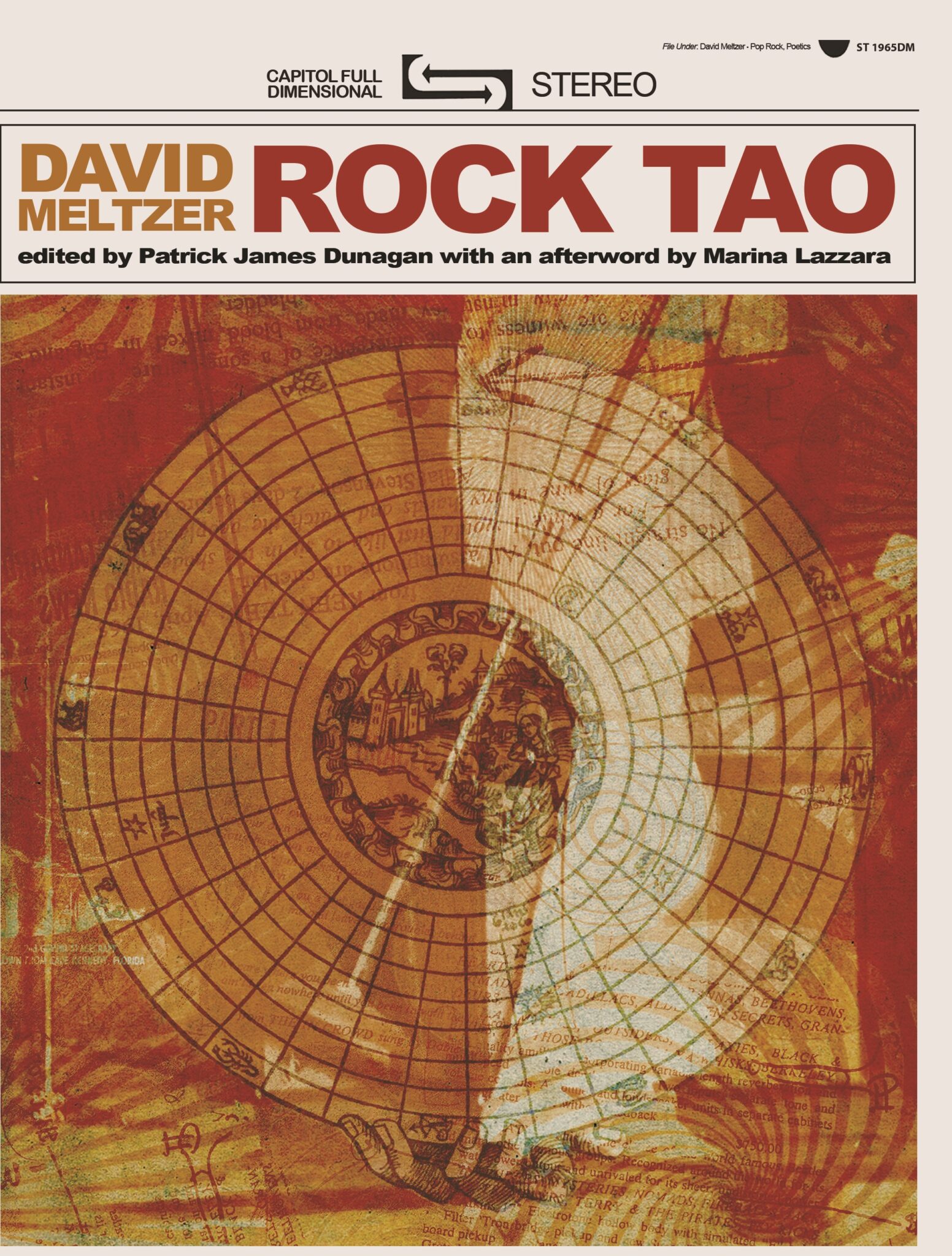
“If the Tao is a way of doing something in concert with its essential nature, David Meltzer’s ‘Rock Tao,’ a relic from the 1960s published for the first time this year by Lithic Press, is an aptly named guide. It’s a book as mysterious, ageless and full of contradiction as rock music itself.

Presented on the page as a textual collage in six parts, Meltzer alternates quotations from the I Ching with Greek philosophy and lyrics by the Supremes. He expounds on the teen appeal of the Beatles and the Rolling Stones, and touches on the artistry of Sam Cooke and showmanship of James Brown, among others. Weaving in and out of the music with scene-changing headlines, Meltzer chronicles, annotates, observes and critiques his times in “Rock Tao,” providing a portal into the mind of an insider.” Read the full story, my latest for Datebook in the San Francisco Chronicle

Filed under: Books, California, Poetry, rock 'n' roll, , ,

Future of Live Music Still Uncertain

Musician David James outside his Mission District home on Thursday, Aug. 27, 2020. (Kevin N. Hume/S.F. Examiner)

Musicians and live music venues are truly hurting five months into the pandemic: With all benefits expired, and no sign of returning to work on the horizon, clubs and the players themselves have turned to crowdfunding, busking (at risk to themselves and others) and live streaming from home for a small fee. So far, the live streams have proven to be either substandard or just plain boring and there doesn’t seem to be a whole lot on offer in the way of innovation or improved quality.  There are also the artists who won’t stay off the internet: broadcasting from their living rooms, hawking merch, doing what people have to do to survive. Yet art and music are important to a culture and to the well being of all people. Where is the support for it on a national, state and local level?  Where is the relief? It’s a sad state of things when the best option put forth at the highest levels of entertainment has been turning drive-in movie theaters into music venues. Ok, maybe. It’s a start (though do you know where there are still existing drive-ins? I don’t). Until there’s a real solution on offer, perhaps the best an artist can do while not drawing an income is to turn to woodshedding–the sharpening of skills, learning new tricks, deepening one’s artistry–and composing. 

San Francisco bandleader and guitarist David James finally got a break after years of hard work on the road and behind the counter: In addition to being a professional touring and recording musician (with Spearhead and The Coup), he’s held a day job as a record buyer for 35 years which means he could more easily claim unemployment than the average independent musician (there are also bands-as-corporations, like the Eagles and Pearl Jam who got gigantic PPP payouts, but this post isn’t about that, exactly). As for James, his bonus arrived just in time: An artist’s grant earmarked for the composition of a suite, based on the life of his father.  You can read the full story in my San Francisco Examiner column, SF Lives.

Photo of Henri Cash by Gilbert Trejo

During the pandemic season, I also visited (by phone) with young guitarist, Henri Cash of Starcrawler: He was set to visit the DMZ in Korea for a peace festival when live music and festival gathering came to a halt and the possibility of a long flight overseas was out of the question. Lucky for him, Cash had seen a good part of the world as a teenager with his band’s several tours of Europe and Asia before the world went awry.  Until further notice, he’s chillin’ at home with his family like the rest of us. His thoughts on pandemic life appeared in my column for Tourworthy.

And early in the breakdown of the nation’s health and welfare, I spoke to singer-songwriter, Betty Soo. She decided to come off the road early, out of precaution for herself and others, and immediately learned what she could about live stream production. As early as March, she was concerned about the future of the tiny folk clubs and coffeehouses where artists like herself are traditionally best heard and it was her aim to share her earnings with them. I also talked to Soo’s friend, singer-songwriter, Jaime Harris (the two paired up for some broadcasts). Read the full story about Soo and Harris here.

Everyday citizens and the people in congress who represent us don’t seem to understand the income streams and the way musicians earn their pay – If they did, the laws about music monopolies and online streaming would change. Nothing I or anyone else can say can will make it any more clear: There is no money to be made from streaming. Musicians earn money when they play on the road. The rest of the time, the pay pie is eaten up by everyone but the person who creates it. Please think about that the next time you pay nothing for a piece of music. Musicians are people trying to survive the pandemic too.

What in the world are we and the musicians of the world going to do about the future of live music? Rest assured, there is hope. Where there are artists, there is a solution in the works: Musicians have the insight and vision to imagine new realities for all of us. It’s just a matter of when.

Filed under: Arts and Culture, rock 'n' roll, Women in Rock, , , , , , ,

Come Back Little Stevie (for JW)

It’s been years since I saw you at Gilbert’s El Indio

We waved but I didn’t stay. It was clear you were in deep

They say I wouldn’t recognize you so I’ve kept my vision pure

Giddy, ridiculous, sun bombed, self-conscious, unselfconscious

Like Stevie

Back then, we knew everything there was to know about

Everything

You couldn’t tell us

Anything

We hadn’t yet left home or done much

But we were destined

For the big screen and magazines

You knew the names of all the actors and the models, even the minor ones

Patti Hanson, Kim Alexis

I committed it all to memory. Documenting the rise. I’d write your bio, say I knew you when

We were 15 but said we were 16, just so we could work

At Woolworths

I thought you were smart, had things wired

And you did

Until the switch flipped

I don’t know when you found trouble or how it found you

These things have gone wrong since the dawn of time,

Or at least since the dawn of 7-11 parking lots

But we who belong to the sisterhood of checked-out mothers, stay at home mothers, gone to the club mothers, corporate executive at the bar mothers, overwhelmed by life and death and disappointed by life and divorce mothers, hooked on their own unique blend of white wine and Valium mothers, frozen in time mothers, younger than we are now that some of us are grandmothers mothers are here

And we love you

So tell us

Is it over now? And

Do you know how

To pick up the pieces and go home?

Filed under: Poetry, rock 'n' roll, video, Women in Rock, , , , , , , , , ,

A Very Merry Christmas

Holiday greetings:  This post is adapted annually for your reading pleasure.

Some time in New York City, 1971, John Lennon and Yoko Ono came up with a Christmas song for the ages, its subject peace on earth during wartime, its melody extraordinarily similar to “Stewball,” a hoary folk song about a racehorse. Behind its veil of bluegrass, “Stewball” has deep roots plus class and race resonances, but only a tangential connection to the “Happy Xmas” song (if you’ve got the time to delve into these matters, there’s more where this came from, including clips and further linkage).

In his final major interview, Lennon explained, “‘Happy Christmas’ Yoko and I wrote together. It says, ‘War is over if you want it.’ It was still that same message—the idea that we’re just as responsible as the man who pushes the button. As long as people imagine that, somebody’s doing it to them and they have no control, then they have no control.” Lennon and Ono had used the slogan “War Is Over! (If You Want It)” in their 1969 billboard campaign that sold peace to the people just as aggressively as consumer goods and war were promoted in the public sphere.

Recorded in October at the Record Plant and assisted by producer Phil Spector, the Plastic Ono Band (who for this session included Jim Keltner, Nicky Hopkins, and Hugh McCracken) were joined by the children of the Harlem Community Choir (they sing, “War is over if you want it”). The single was released in the US on December 6th and held until the following November of 1972 for release in the UK.

Spector’s influence is clear—you can hear his signature claustrophobic effects, similar to those on the Paris Sisters’ “I Love How You Love Me” and the Teddy Bears’ “To Know Him Is to Love Him.”  But there is another ghost of rock and roll past in the room: The song borrows the feeling and the melody of “Pledging My Love” by Johnny Ace, a well- known Lennon favorite.

As for the slogan War is Over, the Doors had previously  used it in their 1968 anti-war song, “Unknown Solider” as had W.S. Merwin in his anti-Vietnam poem, “When the War Is Over,” published in 1967.  “Happy Xmas” bears traces of all the aforementioned melodies and influences, in addition to their somber moods, along with the note-for-note cadence of “Stewball.” Opening with a whisper to their children from whom they were estranged at the time (“Happy Christmas Kyoko, Happy Christmas Julian”), the lyrics open with a rather pointed question (“And so this is Christmas, and what have you done?”) and wishes for a better world to follow. All is forgiven by the final uplift.

The persecution of peacenik Lennon as well as his end have been well-documented; Ono continues to work for peace and against gun violence and nearly 50 years since its release, their seasonal single and collaboration has taken on a life of its own.


Filed under: anti-capitalist, anti-war, Arts and Culture, rock 'n' roll, video, , , ,

Wayne Kramer’s Jailhouse Blues

The MC5. photo by Charlie Auringer

The legendary Detroit rock ‘n’ roll band MC5 was always a bit of a hard sell for me:  You just don’t have the right rock critic and fan credentials if you don’t bow down to the band and well, I frankly didn’t always hear it or have it in me to do that. Showmanship, yes. Sheer raw power, without a doubt. And a story that’s something else: Political to be sure, and sometimes problematic, but it’s fueled by a love of jazz and freedom and well, they kinda had me after that.

Wayne Kramer led the band through the early Detroit scene, back when they could manage mostly blues and R&B-based covers; eventually they graduated to grinding originals (you’ve probably heard their signature song, “Kick Out The Jams”). Kramer loved straight up Chuck Berry as well as Sun Ra, Cecil Taylor, and other avant garde music and the band attempted to merge roots rock guitar with the freedom of far out jazz. When the band joined forces with a local jazz writer, John Sinclair, things started to stir:  “The MC5 grew from a unique period of social, political and musical upheaval and created a sound that reverberated through their city with resonances throughout the counter cultural movement,” is how I put it in Keep on Pushing: Black Power Music From Blues to Hip Hop. In the course of writing that book, I spoke with Kramer about his life and times with the band and their political involvements, including all that came before and after their appearance at the Democratic Convention in Chicago in 1968. Since that interview, he’s written his own memoir, The Hard Stuff, much of it concerning his drug addiction, his prison time behind that addiction, and of course his time with the band (which sounds a little a sentence of its own variety).

Further thoughts on the MC5, Kramer and his work as a contemporary prison activist are what’s on the page in this month’s edition of my column for Tourworthy.  I hope you’ll click through and have a look at it, and as ever, thanks for reading.

Filed under: anti-capitalist, anti-war, Archie Shepp, Arts and Culture, Black Power,, Blues, Books, rock 'n' roll, , , , ,

Remembering Tom Petty

Tom Petty was born today in 1950 in Gainesville, Florida.  He died suddenly earlier this month at home in Los Angeles.

Like countless rock ‘n’ roll fans of my generation, I loved the music of Tom Petty and the Heartbreakers from the first notes I heard.  I saw the band perform countless times in every decade they worked, from an early band show at the Santa Cruz Civic Auditorium, to an intimate gig at McCabe’s Guitar Shop, where Petty and guitarist Mike Campbell sat in with J.J. Cale.  The Heartbreakers and their leader made it look easy, in the way that only musicians who are of one mind do: The mastery of their musicianship and its intensity, particularly over the three nights I saw them during their historic Fillmore run, remains burned in my consciousness. When I call up the memory, I can feel the room levitate as it did each night during “Runnin’ Down A Dream.” Not every concert is like that.

This month’s column is dedicated to the music and memory of Tom Petty with a focus on his quiet work as a philanthropist, and not so quiet work as a rock ‘n’ roll giant.  READ THE WHOLE ARTICLE at Tourworthy.


Filed under: Obituary, rock 'n' roll, Rock Birthdays, , , ,

Archives

Recent Posts

Browse by subject or theme