Denise Sullivan

Author, Arts & Cultural Reporter and Worker

For Father’s Day: Kind of Blue

I have an image of him in the late ’50s: Still underage, he sneaks through the curtains at the front door of the hungry i, the Keystone Korner or the Purple Onion, slinks into one of the seats in back, and gets lost in music.
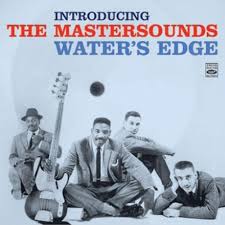
He must’ve told me of the nights he went to hear Dave Brubeck, Gil Evans, Gerry Mulligan, and The Mastersounds, with Wes Montgomery. But it wasn’t until he died that I understood what it meant to be there at that time: North Beach, San Francisco, probably 1958 or ’59.  The Beats had arrived by then–outlaw heroes like Jack Kerouac and Allen Ginsberg passed through as did my dad, the cleanest cut kid in the joint. Lenny Bruce would’ve called him “Jim,” the comedian’s nickname for a straight, but my dad was no square: I like to think of the original hipsters welcoming him in, an innocent among them for the night.

As a child, I didn’t grasp that my dad was a jazz fan, though his stack of interesting looking records were his only possessions I ever admired. I realize now that his was a modest-sized collection, though it was very tidy, very specific and literally very, very cool. It was Cool Jazz, also known as West Coast, that my dad favored. He had every recording by the Modern Jazz Quartet featuring Milt Jackson. I guess he liked Jackson’s vibraphone because Cal Tjader’s records were also well represented, as were MJQ sound-a-likes the Mastersounds with Buddy Montgomery on vibes, and his brother Monk on bass, and sometimes Wes on guitar. Piano jazz also rated on his scale–Brubeck was a hero, as was iconoclast Ahmad Jamal. And there were even stranger sounding names to this kid–Joao Gilberto, Antonio Carlos Jobim and Laurindo Almeida–with their pronunciations that confounded me, and their breezy bossa nova guitars that captured the scene at Ipanema Beach. And then there were the Stans: Getz and Kenton, alongside tenor sax man, Rahsaan Roland Kirk (who was still just Roland back then). Flipping through the stacks, I felt like I knew these jazzmen, in a way other kids might’ve known Frank Sinatra or Bob Dylan; they were a part of the family. 
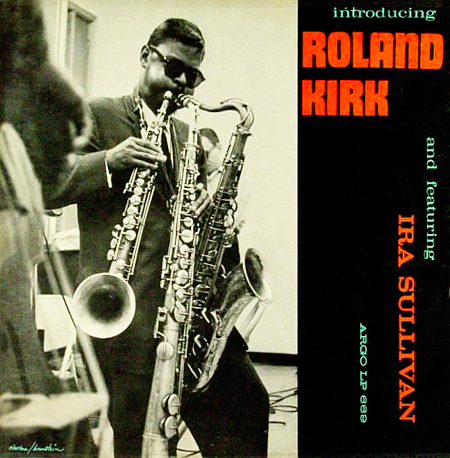

It was the colorful, modern art-inspired album covers on the Verve, Prestige, Argo, and Fantasy labels that first drew me in, long before I knew anything about musical shapes, colors or subtleties, and all the shades they could throw. I think of putting one of those records on the turntable now, pouring over the liner notes and getting lost myself, while holding an actual Blue Note or Impulse! sleeve, instead of a reissued imitation. And yes, I could pick up a copy of one or two at a vintage vinyl store but it’s my dad’s records I want, with his energy, the stories of their purchase, and a recounting of the historic gigs where the songs came alive for him. I also want his enthusiasm for my taste for the avant-garde and for my similarly small, tidy and very cool stack of Alice Coltrane, Ornette Coleman and Sun Ra. But even if he were here to sit with me, I don’t know that he’d be all that interested in talking jazz because somewhere along the way he left behind his passion for it.

By the mid ‘60s, more and more fans of Cool Jazz had turned to hard bop and rock’n’roll. Times had changed, The City, as it’s known, had been psychedelicized.  My dad was now living as a young suburban family man.  A periodic drinker who put down the bottle long enough to regain his vision from time to time, he became a health food nut, a jogger and a tennis bum, long before all three things helped define the laidback ‘70s. “Over-committed,” is how he referred to the house, the yard, the two kids and three cars— his life, between jobs, outside San Francisco. Naturally there was no nightlife to pursue, no trips to town to hear music; most of the old clubs had gone dark by then anyway. And so he spent a fair share of time at home, sleeping in the hammock, sitting at the kitchen table, pouring coffee, typing mysterious reports and letters on the old Royal, watering the lawn, but never touching the stack of vinyl or the phonograph, even though it was positioned to be within easy reach of the California-style kitchen-family room-patio. It was as if the simple act of putting a needle to a record was too much trouble.

Occasionally, he’d ignite the old jazz flame: He once took me to see Cal Tjader locally, though teenage me couldn’t understand why a so-called legend should be playing in the St. Francis High School gym. My brother has a similar story: Was it Milt Jackson at the Grand Opening of the Mayfield Mall? I don’t know, I have to ask him. And if dad ever dug the music in the air, he’d partake of that strange jazzer’s custom, the finger click (shoulders hunched). Sometimes while driving, he’d find the jazz spot on the radio and start bopping, gesturing with an occasional air-cymbal crash. For me, these small acts were simultaneously embarrassing and ethereal: Jazz made life bearable for a moment as we floated, refreshed, for a couple of beats or bars.
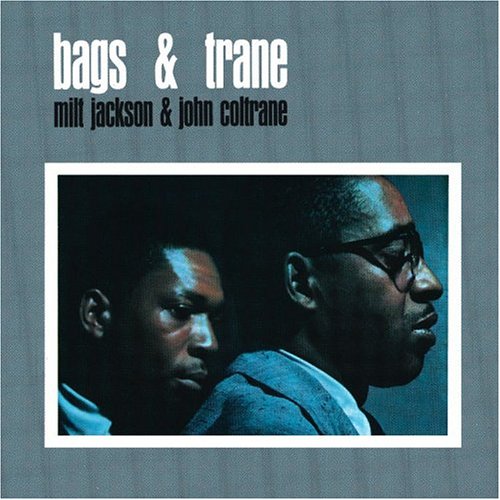
When my dad moved out of the house at the end of the ‘70s my mom gave his records to a young jazz enthusiast, a boy she thought would appreciate them; our jazz days were over and so was our family. And yet the LPs—their covers, their vibraphone, horn and piano sounds, and their longwinded notes on the people who played  them—occupy a significant space in my heart and light my way in the darkness.  Sometimes I wonder had he lived, if my dad would’ve rediscovered his passion for jazz. And if only it had occurred to me when he died in the ‘80s to have played a little Louis Armstrong at his funeral. If he was with us today, would he have succumbed to the Quiet Storm? Or would he hold strong and enjoy classic Mingus and Monk with me? For sure we would agree that Duke is the king, and we certainly would’ve gone to see Ahmad Jamal when he rolled through town last week. But would he still put on that ridiculous posture as he be-bopped down the hall, and would I reflexively roll my eyes like I did as a teenager when he paused by my bedroom door, approving of the horn charts of Blood, Sweat and Tears and Chicago? Hard to say. I’ll never know. Though whatever the mood, and  whether we agreed or not, it would all be ok by me—if only he was here right now. Because what I really need to ask him, what I really want to know, is if he can remember the moment he stopped listening.

http://www.youtube.com/watch?v=_Qc3VaXtW5M

Filed under: Jazz, , , ,

For National Poetry and Jazz Appreciation Month: Gil Scott-Heron

April marks National Poetry Month and Jazz Appreciation Month. This month’s posts will attempt to shine a light on great moments and people in jazz and poetry history, as well as the places where the two forms meet.

In 1970, Gil Scott-Heron was barely 21 when his first novel, The Vulture, was published and his startling, spoken-word record, Small Talk at 125th and Lenox, caught his incisive cool on tape. “I consider myself neither poet, composer, or musician. These are merely tools used by sensitive men to carve out a piece of beauty or truth that they hope may lead to peace and salvation,” he wrote in the album’s liner notes. Accompanied only by conga drums and percussion, Small Talk at 125th and Lenox featured a reading of  “The Revolution Will Not Be Televised”, Scott-Heron’s most enduring work and an early masterpiece, its flow combining elements of both poetry and jazz.

“The revolution will not be brought to you by Xerox

In four parts without commercial interruptions.”

Excoriating the media and marketing, the song’s structure burrowed its way into the collective consciousness of musicians—both mainstream and underground—and listeners alike; it is referenced throughout music, and rather un-ironically the title phrase has been repurposed to advertise consumer goods, from sneakers to television itself. The piece is also, of course, foundational to hip-hop, its words potent and direct, even if some of the allusions and references may be lost on those uneducated in ‘60s or ‘70s culture. It also sounds great, which explains why it’s a standard-bearer for all music, whether it be politicized rock’n’soul, funk or jazz. Pulsing throughout the piece is Scott-Heron’s projection, a foreshadowing of the realities of global connectivity and the pacifying effect on the brain produced by viewing from a small screen. Heron’s vision was a word to the wise:

“The revolution will not give your mouth sex appeal…
The revolution will not make you look five pounds
thinner, because the revolution will not be televised.”

Positing a necessary parsing of media-generated “reality” from truth and setting his poem to music on his 1971 album, Pieces of a Man, Scott-Heron was caught in the chasm between jazz and soul, poetry and rock, and few knew just what to do with the new poet and big bass voice on the scene, though time would reveal his impact:  As the years rolled by, this poet of vision would weigh in on matters environmental and racial, as well as political and social. Though Scott-Heron’s voice was too often a cry in wilderness, it served as a clarion for future generations of conscious writers and thinkers.

Scott-Heron was raised in Tennessee by his grandmother, until he and his single mother, a librarian, eventually moved north to New York City. As a teenager, he excelled at writing and earned enrollment at Fieldston, a progressive Ivy League preparatory school. Upon graduation, he chose to attend Lincoln University in Philadelphia, quite simply because it was the alma mater of poet Langston Hughes. As a musician, Scott-Heron’s style was conjoined with the word styles of Hughes, as well as those of talkers like Malcolm X and Huey Newton. But it was “musicians more than writers” who inspired him, and he used the rhythms of folk, blues, soul, and jazz to fulfill the intensity of his emotion. “Richie Havens—what he does with the images and themes, Coltrane—the time defiant nature and thrust of his work. Otis Redding—the way he sings lyrics so that they come through as sounds. You can really appreciate how close a saxophone is to the human voice when you hear Otis singing. I sometimes write poetry, in a way, like Otis sings. The sounds form shapes. Like clouds banging into each other. That’s how I get loud sounds in my poetry,” said Scott-Heron to Jazz and Pop‘s Nat Hentoff.

Read: More on Gil Scott-Heron in Keep on Pushing.

Filed under: Gil Scott-Heron, Jazz, Poetry, , , ,

We Insist! Freedom Now

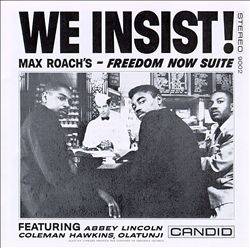
Two albums credited for fusing the politics of black liberation with the sound of freedom are Sonny Rollins’s Freedom Suite—the first experiment in 1958—and We Insist! Max Roach’s Freedom Now Suite— the fulfillment of the form. Born for the record in rural North Carolina on January 10 (by his family’s recollection it was the 8th) 1924, and raised in Bedford-Stuyvesant, Brooklyn, Roach was not only an innovative drummer who revolutionized jazz rhythms, he was actively engaged as a civil rights advocate and performed frequently for the cause.  His Freedom Now Suite was initially conceived as a performance piece to coincide with the fast-approaching centennial of the Emancipation Proclamation in 1963:  Fifty years later, as the historic document that freed all slaves celebrates its 150th anniversary, Roach’s piece with vocals by his then-wife Abbey Lincoln, (with Coleman Hawkins on sax, Olatunji on congas and lyrics by Oscar Brown Jr.) sounds as radical as the ’60s revolution in words and sound it helped to launch.freedomnow

The cover art, in bold black and white, was groundbreaking graphic and image-wise in its depiction of three African American men at a lunch counter, a white waiter standing by, a reference of course to the sit-in on February 1, 1960 at a Greensboro, North Carolina Woolworth’s store that became a pivotal action in the non-violent fight for civil rights. But inside the cardboard sleeve, the vinyl grooves were an assault on the senses, capturing as they did the sound of exploitation, degradation, and ultimately, freedom. A sonically and politically strong statement, the Freedom Now Suite is a cornerstone recording in the history of contemporary black liberation music and remains a challenging, invigorating, and inspiring listen for anyone interested in such things. Making a link between the oppression of blacks throughout the world, Roach and other politically motivated American artists like Harry Belafonte and Nina Simone sought to parallel the civil rights movement in the US with the unfolding liberation of Kenya, Ghana, Congo, and Algeria. Dubbed the Year of Africa, 1960 held hope for the continent for independence from France, Britain, and Belgium and the promise that human rights, dignity, and economic health would be restored throughout the land.  Fifty-three years later, the people here and there continue the fight for human rights, and the chance to be emancipated from the conditions of poverty, ill-health, environmental crisis, and violence that defines both our lands, while Freedom Now Suite still pounds out the sound of impending liberation.

The following clip depicts civil rights power couple Max Roach and Abbey Lincoln with their band performing the suite’s “Triptych (Prayer/Protest/Peace)” on Belgian television in 1964. Roach passed in 2007, though in his lifetime he he’d been a recipient of the USA’s MacArthur genius award, a commandeur in France’s Ordre des Artes et les Lettres, and a RIAA (Grammy) honoree. Read more on both Rollins, Roach, and their respective Freedom Suites in Keep on Pushing.

http://www.youtube.com/watch?v=q5Dj7HQEasQ

Filed under: Civil Rights, France, Freedom Now, Harry Belafonte, Jazz, Keep On Pushing, Nina Simone, video, , , ,

Survive Baraka, Survive

“Never settle for the given.  What is it that hasn’t been mentioned? What is beyond that?” These are the words of activist, actor, poet, playwright, director, and music critic Amiri Baraka. “Art is supposed to unlock you, make the world more available to you,” like the way he felt when he heard Thelonious Monk for the first time, he said. Baraka was at the Hammer Museum in Los Angeles last weekend, in conversation with his daughter, Kelly Jones, curator of the wildly successful exhibit, Now Dig This! Art and Black Los Angeles 1960—1980, to discuss art and family, though the conversation inevitably turned to Baraka’s recurrent theme, surviving America. “Do you understand the world?…What do you think?… What is important to you?…What is it you want to say?…How do you say what the world is?…How do you tell us who lives on this planet?…How do you make something speak to the world?…” These are the questions he asks of himself and of other artists.

Born LeRoi Jones in 1934 in Newark, NJ, where he lives today, Baraka chronicled the birth of free jazz as a journalist; he wrote an Obie award-winning play, The Dutchman, and he is the author of Blues People, one of the first books to make connections between music and social history. Equally informed by the poetry of Langston Hughes, the politics of Malcolm X and the Black Mountain College poets, Allen Ginsberg and the Beat movement, in the mid-‘60s, Baraka founded the Black Arts Repertory Theater/School (BARTS) in Harlem which contributed to the development of a new, unapologetically black style of writing, its creation dovetailing with the Black Power movement’s cultural agenda. His album It’s Nation Time—African Visionary Music, for Motown’s Black Forum label, features his Black Nationalist poetry set to music.

Stirring it up for 50 years, in 2002, Baraka was named Poet Laureate of New Jersey and of the Newark Public Schools amidst controversy over his poem, “Somebody Blew Up America” (who? who?  who?). That same year, The Roots accompanied him on “Something in the Way of Things (In Town),” on their album, Phrenology. More on Amiri Baraka, the Black Arts Movement, and his connections to music, from blues to hip hop in Keep on Pushing.

Filed under: Blues, Jazz, Keep On Pushing, , , , ,

Bert Jansch: Nov, 3, 1943—Oct. 5, 2011

Filed under: Blues, Folk, Jazz, , , ,

Sonny Rollins: Saxophone Colossus

Tenor saxophone giant, Sonny Rollins, turned 81 on September 7. Last week, he turned in a short but hard-swinging set at UCLA’s Royce Hall. After running through about seven songs, he finished up with “Don’t Stop the Carnival”,  and his word was my command. My Sonny Rollins Weekend began with his Friday appearance on the Tavis Smiley show. Saturday I cleaned the house to the tune of Saxophone Colossus (great for me, though probably not so interesting for you)On Sunday, I reflected on something the giant of Harlem jazz had said on Thursday, about trying versus doing (or was it  doing versus trying?), while presumably he was trying to do what he’s done so many nights before, somewhere on the road to infinity.

Starting with Miles, Monk and Max Roach, Rollins took his own giant step toward direct political and musical fusion on Freedom Suite, the 1958 album on which he was accompanied by bassist Oscar Pettiford and drummer Roach. “The Freedom Suite,” a nearly 20 minute piece, was the first jazz instrumental to claim social issues as its inspiration.  “America is deeply rooted in Negro culture.  It’s colloquialisms, its humor, its music.  How ironic that the Negro, who more than any other people can claim America’s culture as his own is being persecuted and repressed.  That the Negro who has represented the humanities in his very existence is being rewarded with inhumanity,” wrote Rollins on the album’s original sleeve notes.

Last year, Rollins received the National Medal of the Arts from President Obama. This year, on December 4, he’ll receive his Kennedy Center Honors. Congratulations, Sonny Rollins: Keep on Swinging.

[youtube.com/watch?v=-2wOQaxhkA4]

Filed under: Jazz, , , ,

Strange Feelin’: When Rock Meets Jazz


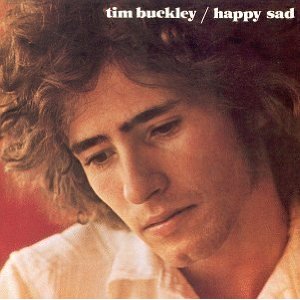
In July of 1969, while Neil Armstrong took his walk on the moon, here on earth, Tim Buckley and Miles Davis were taking their own giant steps toward where only few had gone before: Buckley changed his style and went jazz-rock on his acoustic odyssey Happy Sad, while Davis went entirely electric, forever changing jazz and launching fusion with In a Silent Way. Both men had their reasons for changing their songs… Dig these origins of the new music.

Davis’1959 album Kind of Blue had already revolutionized jazz, steering away from chord progression and toward modes or scales as the base for its jams. Contributing to Miles making the leap in his own music was his contemplation of the piano style of Ahmad Jamal. “In Jamal he recognized a kindred spirit and freely borrowed whatever he could from him,” wrote Jack Chambers in Milestones: The Music and Times of Miles Davis. “Davis made no effort to conceal his debt.” Nor would Buckley try to hide his 10 years later when he used Miles’ “All Blues”, from Kind of Blue, as the inspiration for his vocal improvisations on “Strange Feelin’”, which opens Happy Sad. Improvisation, interpretation, and expression of influence are of course just a part of what makes jazz swing.

Buckley had been studying up on the music’s construction while hanging out at his Venice, California pad, listening to Miles and guitarist Gabor Szabo and saxophonist Roland Kirk, among other jazzers. He was a fan of the Modern Jazz Quartet, especially its vibraphonist Milt Jackson, who specialized in cool, and was inspired to secure a vibes player of his own, David Friedman, for his new lineup. In December of 1968, Buckley, with his 12-string acoustic, headed to Elektra Sound Recorders in Los Angeles with Friedman, Lee Underwood on lead guitar, Carter Collins on congas, and John Miller on acoustic bass for the recording of Happy Sad. The acoustic lineup was a switch, as was the absence of Buckley’s writing partner, Larry Beckett—an attempt to break free from the constraints of poetic social protest and into the revolution of his own mind. Guitarist Underwood recalls this period and his time with Buckley in his memoir, Blue Melody: Tim Buckley Remembered.

“Tim treasured his independence above all,” he wrote. “Right from the beginning, the music industry’s business categories never fit. Buckley was unique. He played Buckley music.” As a singer-songwriter Buckley appreciated the spirit of Fred Neil and his acolyte Richie Havens, both of whom pushed folk’s limits with the use of suspended chords and improvisatory jams. Underwood confirms the genesis of “Strange Feelin’” as the result of Buckley walking in on Friedman and Miller playing Miles’ “All Blues” at the recording session.

With roots planted in the same American soil that sprouted the work and sacred songs that bloomed into blues and R&B, it was inevitable that by the mid-’60s, post-bop/modern jazz and rock (which was doing its Beatles/Dylan self-contained band and singer-songwriter thing) would meet. Twenty-two-year-old composer and pianist Herbie Hancock had pointed the way in 1962 when he used the blues as a base for “Watermelon Man” and scored a pop hit with it; he was then promptly snapped up by Miles for his band. Young guitarist Larry Coryell created a synthesis in 1966 when, with drummer Bob Moses and saxophonist Jim Pepper, he formed the Free Spirits. They released one album, Out of Sight and Out of Sound, before Coryell left the group and went on to conquer the world of jazz fusion guitar, while Jeremy Steig, with Jeremy and the Satyrs, gave jazz-rock-fusion a shot in 1968, too (you may know Steig’s “Howlin’ for Judy” as the main sample from the Beastie Boys track, “Sure Shot”). Though one-offs, Coryell and Steig had succeeded in bringing a touch of rock’s freaked-out psychedelic vibe to jazz, while freaked-out rockers were getting all jazz-like. As Jimi Hendrix, Duane Allman, and Jerry Garcia were taking soloing and improvisation to new extremes, rockin’ the jazz organically grew: The Doors specialized in Miles-forged modalities, while acts diverse as Blood Sweat and Tears, Frank Zappa, and England’s Soft Machine all drew from variations on jazz themes. So too did Van Morrison on his singer-songwriter-folk-jazz-solo-acoustic album Astral Weeks in 1968, for which real jazzers (including bassist Richard Davis and the Modern Jazz Quartet drummer Connie Kay) were hired for the sessions.

On the Miles side, this was the period in which he was said to have proclaimed, “I could put together the greatest rock ‘n’ roll band you ever heard.” Until then, he assembled a great band period for the recording of In a Silent Way, its individual members going on to inform the direction of jazz fusion from those days forward. Convening at CBS Studios in February of 1969 were Herbie Hancock and Chick Corea on electric piano, Wayne Shorter on sax, Dave Holland on double bass, John McLaughlin on electric guitar, and Tony Williams on drums, with Joe Zawinul, the composer of  “In a Silent Way”, on organ. The album’s electric keyboard sounds would become identifiable as one of fusion’s prime instruments. Having opened the door to electric music on the albums just prior to In a Silent Way, Davis’ follow-ups, Bitches Brew and On the Corner, took melding new tastes and textures even further out, while fusion became the dominant direction for jazz in the ‘70s. In the wrong hands, fusion is a senseless mess, which is how it earned its bad rap. But in the hands of experts, it served as a gateway to funk and hip-hop and a great harmonizer between all styles. Hancock specifically would become fusion’s jazz warrior with the full synth sound of Head Hunters, but he’d been working the borders since his “Watermelon Man” was recorded by Afro-cuban bandleader Mongo Santamaria. Hancock’s “Cantaloupe Island” is said to have brought the funk rhythms to jazz as early as 1964; his slamming ‘80s “Rockit” period (on which DXT rocked the turntable) and the return of “Cantaloop (Flip Fantasia)” with a rap by Us3, put Hancock at every juncture of rock ‘n’ rap and jazz.

Down through the years, it’s been widely acknowledged that Davis’ wife at the time, singer and scenester Betty (Mabry) Davis, exerted her rock ‘n’ soul interests on her husband, introducing him as she did to Hendrix, among other rock ‘n’ rollers. But it was all part of a logical progression for Miles, who had even tried the slogan “Directions in Music by Miles Davis” to lift him beyond the limits of just jazz. Buckley’s record company had tried a slogan to describe him too—“Buckley music”—though Buckley liked “heart music” to describe his work, if in fact he had to have a label at all. “I feel proud of Happy Sad,” writes Buckley guitarist and friend Underwood. “Rough spots and all. Its heartsong flies in spring’s blue skies outside of time. Some of the music on it will last for decades to come.” True that, though it would take another folk-singing switch-hitter to turn rock toward jazz and into something entirely new, and then sustain that direction for the rest of her career: Joni Mitchell had also studied Miles, and following a period of woodshedding with the blue notes in 1971, she released Blue. Composed with alternate tunings and unusual juxtapositions of notes, the album was a game-changer in pop and certainly a milestone for Mitchell, who steadily moved into regions you could only call “Mitchell music.”

I asked my friend Pat Thomas, who leads the contemporary jazz-prog-rock consortium Mushroom, to weigh in on the subject of jazz and rock, and he pointed to 1970 England and Soft Machine’s Third,another considered classic of the genre. “Some of the most over-the-top fuzzed-out and distorted playing I’ve ever heard,” he says. The Soft Machine’s meeting of jazz, rock, and classical also equals the birth of prog, another subject for another column. Jazz-rock-prog is alive and kicking on Mushroom’s latest, Naked, Stoned & Stabbed, an adventure in Afro, Latin, and jazz rhythmics mixed with freaked-out folk, blues bases, and ambient, Alice Coltrane-trance states. Like Tortoise, Mushroom use music—all music—to travel outta sight and outta sound. If you’ve got any contemporary or classic fusion faves, we’d love to hear your comments, as you’ve just read some of mine save for one:

In 2007, though you couldn’t call it fusion, you wouldn’t call it rock, though you might call it jazz, two legends collided after four decades of music making. River: The Joni Letters, was a collection of mostly Mitchell songs performed by Herbie Hancock, joined by Wayne Shorter, Dave Holland, and special guest vocalists for the sessions. The jazz cats would call it too much, but I think it’s out of this world. Better yet, leave off the label and just call it Music: It’s the next big thing.–published May 13, 2010 in Crawdaddy!


Filed under: Jazz, , , , ,

Archives

Recent Posts

Browse by subject or theme