Denise Sullivan

Author, Arts & Cultural Reporter and Worker

The world according to Les McCann

Jazz musician Les McCann died of pneumonia in Los Angeles on December 29, 2023 at age 88. As a leader and sideman, he recorded countless albums and made major contributions to the soul-jazz music of the ’60s and ’70s. His piano work has also been sampled frequently in the modern hip hop era. McCann has been most often remembered and celebrated for his performance of the Eugene McDaniels song, “Compared To What.” Performed live with Eddie Harris at the Montreux Jazz Festival in 1969 and released on their album, Swiss Movement, McCann on vocals and piano gave the song a certain punch and swagger. This is an edited transcript of my talk with McCann, about the origin of the song widely considered to be the greatest protest song of the Vietnam eraand his thoughts on life in 2016, from his then 80-year-old vantage point. May he rest in peacewith condolences to his surviving loved ones and friends.

“When I began my career in LA we had immediate attention. And whenever you have attention, you have other people coming around, trying to get your attention. I was performing with my trio at LA City College and Eugene McDaniels came by one night. I didn’t know who he was, but he liked what were doing and started hanging out. I thought he was the greatest male voice I’d ever heard. I invited him to join my group.

We started working together, and the money wasn’t good, but it was the beginning of us being professionals. He was different from all of us. He could speak English. A lot of people who didn’t like him, didn’t like him because of that. He was a very bright man, very clever. He knew what he was doing and he went after it. I believe he was the son of a pastor.

We were kinda like friends, he’d sit in, but we also hung out. We had a vocal group, a choir, and we’d get together and sing, 12 people, but all were potentially looking for their own career. When he came to us, and said, “I got a record deal, they gave me a lot of money,” we were happy for him, but not only did he stop singing the music we loved for him to do, he started doing all these other things. When they offered him the big money, some people thought he was being a traitor to jazz. But we were all just trying to make it. I was his reminder, the one who told him, don’t forget where you came from, don’t forget why you’re here.

He didn’t know he was a songwriter, but he’d ask me what I thought: Everything he showed me was unbelievable. I didn’t know he loved Bob Dylan. When I first heard “Compared To What,” it was just a set of words, there was no music. It had the words “God dammit” in it, and it was one of the reasons stations wouldn’t play it. No one had ever done that before. They were his words and I was speaking them: This was Gene son of a preacher, questioning whether he should speak his truth, which involved speaking words a preacher’s son shouldn’t say. It also involved a man speaking perfect English and being Black.

I could do what I wanted on my record label and so I recorded the song. But it was nothing like it was six years later when we did it on Swiss Movement. All that happened right there. We were just doing what we thought was great. It took me six years, but the way everyone now hears it happened in a moment, instantly onstage.

_____

“We think we’re unique, that nobody knows what we go through, but it’s not about the singing it’s about being a human, living in this world. These are lessons on learning how to love, trying to find our place and be who we are…You need to deal with the fear and the bullshit. We’re taught to be afraid of everything. Don’t do this or that: It’s said on purpose, part of the curriculum of this earthly school. Everyone has a blueprint, everyone sets out to do their thing. It’s all here, for us to learn. I’ve never stopped learning.

Earth ain’t meant to be heaven. We’re all angels having an earthly experience. Everything you can think of happens right here on this earth. If it wasn’t for sex and money and fighting, there would be no problems. It’s all how you look at things. We all have intuition.The real truth is in the quiet of who you are. I walk hand in hand with who I really am.

I remember my other lifetimes. I don’t want to do the same things over and over. It might take many times but the choice is whether we decide to live in love or in the things we fear.

Every time you do an interview, ask yourself the questions you want the answers to, ask everything you want to know of yourself: You’ll hear things you never heard before. You already know all this. It’s not anything you haven’t heard before.

Fear or love.

You have go through it and deal with it.

It’s how get to where we want to be by the time we die.

Did we really answer the call?

Did you live the life you wanted to live?”

c. 2016, Denise Sullivan

Filed under: anti-racist, anti-war, Arts and Culture, Jazz, Obituary, Origin of Song, Soul, , , , ,

Ann Mack: new to SF, but not to the jazz life

Ann Mack was born into a family with a historic jazz lineage and sang with trios around her native Cleveland for most of her life. But it wasn’t until she moved to the West Coast less then 10 years ago that Mack fulfilled a long time coming, lifelong dream to sing the standards backed by a big band led by Jimmy McConnell. Most recently Mack has been singing her way through the Great American Songbook and Bay Area clubs like Geoffrey’s Inner Circle and Savanna Jazz, a welcome addition to very alive jazz circuit here that includes Yoshi’s, SFJazz, Mr. Tipples, The Black Cat, Bird and Beckett Books & Records, Keys, Sheba Piano Lounge and the Church of St. John Coltrane, among others. Read more about “The Macknificent” Ann Mack, her contribution to Bay Area jazz, and her family’s extraordinary history at Bay City City News.

Filed under: California, Jazz, San Francisco News

National Poetry Month and Jazz Heritage Month Open with Gil Scott-Heron, Born 4/1

April marks National Poetry Month and Jazz Appreciation Month. This month’s posts will attempt to shine a light on great moments and people in jazz and poetry, past and present.  

Gil Scott-Heron is a timeless poet and performer who published poems and prose, in addition to performing songs on piano–often classified as jazz–but with an emphasis on words. There are echoes of blues and gospel, rock’n’soul in his grooves. And prophecy. Always ahead of the game and yet right on time. Alien (Hold On To Your Dreams) is one of his classics, a song I think of often in these trying times for

In 1970, Gil Scott-Heron was barely 21 when his first novel, The Vulture, was published and his startling, spoken-word record, Small Talk at 125th and Lenox, caught his incisive cool on tape. “I consider myself neither poet, composer, or musician. These are merely tools used by sensitive men to carve out a piece of beauty or truth that they hope may lead to peace and salvation,” he wrote in the album’s liner notes. Accompanied only by conga drums and percussion, Small Talk at 125th and Lenox featured a reading of “The Revolution Will Not Be Televised”, Scott-Heron’s most enduring work and an early masterpiece, its flow combining elements of both poetry and jazz.

“The revolution will not be brought to you by Xerox

In four parts without commercial interruptions.”

Excoriating the media and marketing, the song’s structure burrowed its way into the collective consciousness of musicians—both mainstream and underground—and listeners alike; it is referenced throughout music, and rather un-ironically the title phrase has been repurposed to advertise consumer goods, from sneakers to television itself. The piece is also, of course, foundational to hip-hop, its words potent and direct, even if some of the allusions and references may be lost on those uneducated in ‘60s or ‘70s culture. It also sounds great, which explains why it’s a standard-bearer for all music, whether it be politicized rock’n’soul, funk or jazz. Pulsing throughout the piece is Scott-Heron’s projection, a foreshadowing of the realities of global connectivity and the pacifying effect on the brain produced by viewing from a small screen. Heron’s vision was a word to the wise:

“The revolution will not give your mouth sex appeal…
The revolution will not make you look five pounds
thinner, because the revolution will not be televised.”

Positing a necessary parsing of media-generated “reality” from truth and setting his poem to music on his 1971 album, Pieces of a Man, Scott-Heron was caught in the chasm between jazz and soul, poetry and rock, and few knew just what to do with the new poet and big bass voice on the scene, though time would reveal his impact: As the years rolled by, this poet of vision would weigh in on matters environmental and racial, as well as political and social. Though Scott-Heron’s voice was too often a cry in wilderness, it served as a clarion for future generations of conscious writers and thinkers.

Born in Chicago April 1, 1949, Scott-Heron was raised in Tennessee by his grandmother until he and his single mother, a librarian, eventually moved north to New York City. As a teenager, he excelled at writing and earned enrollment at Fieldston, a progressive Ivy League preparatory school. Upon graduation, he chose to attend Lincoln University in Philadelphia, quite simply because it was the alma mater of poet Langston Hughes. As a musician, Scott-Heron’s style was conjoined with the word styles of Hughes, as well as those of talkers like Malcolm X and Huey Newton. But it was “musicians more than writers” who inspired him, and he used the rhythms of folk, blues, soul, and jazz to fulfill the intensity of his emotion. “Richie Havens—what he does with the images and themes, Coltrane—the time defiant nature and thrust of his work. Otis Redding—the way he sings lyrics so that they come through as sounds. You can really appreciate how close a saxophone is to the human voice when you hear Otis singing. I sometimes write poetry, in a way, like Otis sings. The sounds form shapes. Like clouds banging into each other. That’s how I get loud sounds in my poetry,” said Scott-Heron to Jazz and Pop‘s Nat Hentoff.

Read: More on Gil Scott-Heron in Keep on Pushing.

Filed under: Arts and Culture, Black Power,, Jazz, Poetry, , ,

The World According to Les McCann

We’re taught to be afraid of everything. Don’t do this or that: It’s said on purpose, part of the curriculum of this earthly school. Everyone has a blueprint, everyone sets out to do their thing. It’s all here, for us to learn. I’ve never stopped learning. Earth ain’t meant to be heaven. We’re all angels having an earthly experience. Everything you can think of happens right here on this earth. If it wasn’t for sex and money
 and fighting, there would be no problems. It’s all how you look at things. We all have intuition. The real truth is in the quiet of who you are. I walk hand in hand with who I really am. I remember my other lifetimes. I don’t want to do the same things over and over. It might take many times but the choice is whether we decide to live in love or in the things we fear. Every time you do an interview, ask yourself the questions you want the answers to, ask everything you want to know of yourself. You’ll hear things you never heard before. You 
already know all this. It’s not anything you haven’t heard before. Fear or love. You have go through it and deal with it. It’s how get to where we want to be. By the time we die, did we really answer the call? Did you 
live the life you wanted to live?

As told to Denise Sullivan, with thanks to Karen McDaniels, Pat Thomas and of course Les McCann who was born on this day in 1935 in Lexington, Kentucky. With Eddie Harris, McCann had a worldwide hit with the Eugene McDaniels composition, “Compared To What,” when it was released on the album, Swiss Movement, recorded live at the Montreux Jazz Festival in 1969.


Filed under: Jazz, Soul, , , ,

Jazz Appreciation Month: Branford Marsalis

If you’re a faithful reader of this blog, a fan of jazz, or a follower of Branford Marsalis,  I have some news to share:  I recently did an in-depth interview with the mercurial bandleader and composer for the May 2019 issue of DownBeat, available at newsstands throughout the month of April (and also online). The bonus is the timing coincides with National Jazz Appreciation Month and the magazine itself, publishing since 1934, is a jazz treasure: I’m so grateful for the opportunity to be a regular contributor, and to have been assigned this story about one of the many accomplished members of the Marsalis family musical dynasty.

There was no subject off-limits in our conversation. Marsalis was open with every question I asked and and he introduced plenty of ideas and topics of his own that moved us beyond music and into other realms. And while our side-roads into botany and archaeology didn’t make the final cut, Marsalis stressed how his divergent interests inform his music.  You can hear how the influences add up on the new album by his quartet, The Secret Between The Shadow And The Soul. Have a listen and let me know what you think about the interview.  As ever, thanks for reading.

Filed under: Arts and Culture, Jazz, new article, , , , ,

Wayne Shorter’s Legend and Legacy

88be2d1eb4124206aeb362e8da4e0f22Saturday night’s celebration of Wayne Shorter’s music in San Francisco turned out to be a symbolic passing of the torch by the Wayne Shorter Quartet to jazz’s new leading lights, Kamasi Washington and Terrace Martin. The LA musicians and their relationship to tradition, innovation and carrying the music forward is similar to the role Shorter and his close collaborator Herbie Hancock played in the ’70s and beyond.  Read the entire review, my take on the show, in DownBeat online. 
Also, in this week’s online issue of DownBeat, my profile on pianist Joey Calderazzo of the Branford Marsalis Quartet on how he beat cubital tunnel syndrome. The story also appears in the January newsstand issue of the magazine: DownBeat has been publishing since 1934 and I am thrilled to have become a regular contributor there. Look for the February issue on newsstands now.

Filed under: Arts and Culture, California, Concerts, cross cultural musical experimentation, Jazz, , , , , ,

Song For My Father

I have an image of him in the late ’50s: Still underage, he sneaks through the curtains at the front door of the hungry i, the Keystone Korner, or the Purple Onion, slinks into one of the seats in back, and gets lost in music.

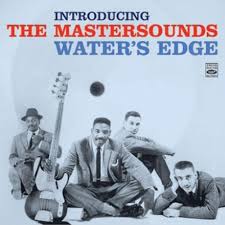
He must’ve told me of the nights as a teenager, he went to hear Dave Brubeck, Gil Evans, Gerry Mulligan, and the Mastersounds, with Wes Montgomery. But it wasn’t until he died that I understood what it meant to be there in North Beach, San Francisco, Saturday night, 1958 or ’59: The Beats had arrived, and Jack Kerouac and Allen Ginsberg passed through, but my dad was from across town—the Sunset, Ocean Beach, a Catholic boy—and the cleanest cut kid in the joint. Lenny Bruce worked in the area and would’ve called him “Jim,” the comedian’s nickname for a stiff-necked straight, but my father was no square: I like to imagine the neighborhood regulars welcoming him, an innocent among hipsters for the night.

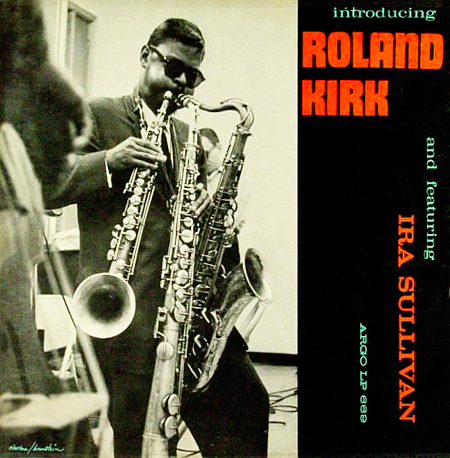
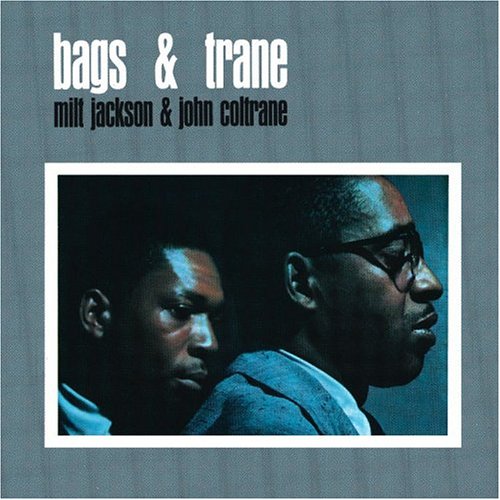
As a child, I didn’t grasp that my dad was a jazz fan, though his stack of interesting looking records were his only possessions I ever admired. I realize now that his was a modest-sized collection, though it was very tidy, very specific and very, very cool. It was Cool Jazz, also known as West Coast, that he favored and he had every recording by the Modern Jazz Quartet featuring Milt Jackson. I guess he liked Jackson’s vibraphone because Cal Tjader’s records were also well represented, along with MJQ sound-a-likes the Mastersounds with Buddy Montgomery on vibes, and his brother Monk on bass, and sometimes Wes on guitar. Piano jazz also rated on his scale – Brubeck was a hero, as was iconoclast Ahmad Jamal. And there were even stranger sounding names to this kid –J oao Gilberto, Antonio Carlos Jobim and Laurindo Almeida – with their pronunciations that confounded me, and their breezy bossa nova guitars that captured the scene at Ipanema Beach. And then there were the Stans: Getz and Kenton, alongside tenor sax man, Rahsaan Roland Kirk (who was still just Roland back then). Flipping through the stacks, I felt like I knew these jazzmen, in a way others tell me they’ve known Frank Sinatra, James Brown, Bob Dylan and Jerry Garcia; they were like fathers, a part of the family.

It was the colorful, modern art-inspired album covers on the Verve, Prestige, Argo, and Fantasy labels that first drew me in, long before I knew anything about musical shapes, colors or subtleties, and all the shades they could throw. I think of putting one of those records on the turntable now, pouring over the liner notes and getting lost myself, while holding an actual Blue Note or Impulse! sleeve, instead of a reissued imitation. Sure, I could pick up a copy of one or two at a vintage vinyl store but it’s my dad’s records I really want, caked with his energy, accompanied by the stories of their purchase, and a recounting of the historic gigs where the songs came alive for him. I also want his approval and enthusiasm for my taste in the avant-garde and for own small, tidy, and very cool stack of Alice Coltrane, Ornette Coleman and Sun Ra. But even if he were here to sit with me, I don’t know that he’d be all that interested in talking jazz. Somewhere along the way, he left behind his passion for it.

By the mid ‘60s, more and more fans of Cool Jazz had turned to hard bop and rock’n’roll. Times changed, and the City, as we call it, had been psychedelicized.  My dad was a young suburban family man, a periodic drinker who put down the bottle long enough to regain his vision and become a health food nut, a jogger and a tennis bum, long before those things helped define leisure styles in the laidback ‘70s. “Over-committed,” is how he referred to the house, the yard, the two kids and three cars— and his life between jobs just outside San Francisco. Music didn’t figure into that picture. There was no nightlife to pursue there and no trips to town to hear the jams; most all the old clubs had gone dark though North Beach was becoming home to the next generation of outsiders, the art students and punk rockers of my generation. Not yet 40 years old, a suspended driver’s license kept him unemployable and housebound, his wife at work on the swing shift. By day, he slept in the hammock or sat at the kitchen table, pouring filtered coffee through a cone. He stayed occupied, typing mysterious reports and letters on the Royal and watering the lawn, but he never reached for the stack of vinyl or the phonograph, adjacent to the patio, just on the other side of the sliding glass door, in the family room of our California ranch-style home. It was as if getting up, the simple act of putting a needle to a record, was just too much for him: He had entered a jazz-free zone.

Though occasionally he’d ignite the old flame:  He took me to see Cal Tjader locally, though teenage me couldn’t understand why a so-called legend should be playing at St. Francis High School. I heard he rousted my brother and took him to see Milt Jackson at the grand opening of the Mayfield Mall.  Other times, if ever he dug the music in the air, he’d partake of that jazzer’s strange custom, finger-clicking (shoulders hunched). And sometimes while driving, he’d tune into the jazz spot and bop to the radio, occasionally gesturing with an air-cymbal crash. These efforts were simultaneously embarrassing and ethereal for me: Jazz made life bearable, if only for a moment, as we floated off to another land, returning refreshed, after a couple of bars or beats. 

When my dad moved out of the house at the end of the ’70s, my mom gave his records to a young jazz enthusiast, a boy she thought would appreciate them.  I moved back to San Francisco, and I’d heard so did my dad, after he’d done some rambling.  Eventually we got together for lunch, often at St. Francis Creamery in the Mission, and on days he was flush, at Mama’s or Vanessi’s in North Beach. We never spoke of the past — it wasn’t in our repertoire — but the memory of his LPs, their covers, their vibraphone, horn and piano sounds, and their spiraling liner notes occupy a large space in my heart, lighting a space in the darkness of the holy here and now. I wonder, had he lived, if we’d ever get back to jazz, if he would’ve rediscovered his passion for it, or if he would share mine for Mingus and Monk. If only it had occurred to me to have played some Louis Armstrong at his funeral.  What if he’d lived to see his 50s?  Would he have succumbed to the Quiet Storm or held strong?  For sure we’d agree Duke is king, and we most certainly would’ve gone to see Jamal at his most recent appearance in town.  But would he still put on that ridiculous posture as he bopped down the hall, and would I still reflexively roll my eyes at him?  I will never know, though whatever his style and taste in his 70’s and whether we agreed wouldn’t matter, if only he was here, right now.  Because what I really need to ask him, what I really want to know, is why he stopped listening.


A version of this piece was published in my 2016 chapbook, Awful Sweet.

Filed under: It's Personal, Jazz, Sunnyside Up, , , , , ,

I Called Him Morgan

ichm_lee-morgan-color_publicity_kcpab_francis_wolff.jpgI reviewed the new documentary on the life of jazz trumpet player and composer, Lee Morgan, in the new edition of No Recess! magazine

I Called Him Morgan

A Film by Kasper Collin

1h 32min

Non-Americans are empirically better at appreciating our country’s cultural output than we are: Look what England, Canada, and Australia did with rock ‘n’ roll. Then there are the French, the Dutch, the Danish, and the Swiss, who have archived and appreciated jazz far better than we have. Just ask the musicians who thrived in Europe in the 20th Century, some of them making their homes away from home there.

Currently, it’s the Swedes in the lead, who are deconstructing our culture in state-of-the-art documentaries on Black lives. Göran Hugo Olsson’s The Black Power Mixtape (2011) took up connections between 50 years of Black liberation movement and hip-hop and reinvented the socio-political-music documentary. Now we have Kasper Collin’s I Called Him Morgan, concerning the life and death of composer and trumpet player Lee Morgan, shot in 1972 by his wife and manager Helen, that takes the music doc into uncharted territory.

Collin delivers a self-described “understated narrative” that sidesteps the fine points of biography and allows the musician’s compositions to speak for themselves, resulting in a whole new filmic form of redemption song.

Collin, a relative newcomer to filmmaking with one film, 2007’s My Name Is Albert Ayler, to his credit (about iconoclastic musician Albert Ayler), came to his second subject through his music that still plays in regular rotation, at least on YouTube. “It was never my intention to make another jazz film,” he told an audience at the San Francisco International Film Festival in April. Indeed, he knew of Morgan’s background sketch — super-talent, magnificent in fact, his hit “The Sidewinder,” and the crime of passion that ended it all. But when he came upon a clip of Morgan as a young man playing with Art Blakey’s Jazz Messengers, he became spellbound by sound.

Combing the internet for information about his newfound obsession, Collin unearthed some documentation just too tempting to let pass: There existed a 27-minute recorded interview transcript with Helen, recounting the couple’s story. Told in 1996 (just a month before her death) to her teacher and jazz enthusiast in Wilmington, North Carolina, Collin made it his business to find its recordist, Larry Reni Thomas, and the cassette itself, which was degenerating by the minute in a drawer.

With this crackling piece of audio tape (restored, of course), Collin found his basic track for the film, and it became his invitation to tell two stories: One of the hardscrabble country girl who made her way to New York City; the other of a teenage musical prodigy turned dope fiend who made an incredible comeback and a lasting impression on jazz itself. Layering the audio with an unprecedented number of high-quality stills (taken by Blue Note’s Francis Wolff), moving footage of Morgan, newly rendered experimental B-roll, and important interviews with friends and bandmates like Wayne Shorter, Paul West, and Bernie Maupin, Collin’s film sails on Morgan’s melodies toward its dizzying denouement that coincides with an epic Noreaster. But it is Morgan’s horn and his own original sound over a vast Blue Note catalog that lives strong: The title piece from his 1964 recording, Search For The New Land, serves as a theme throughout the film, encapsulating in sound Morgan’s story: low down, but with hints of shimmer and brilliance shining through.

Morgan hailed from Philadelphia and joined Dizzy Gillespie’s band at age 18. He and saxophonist Wayne Shorter soon joined Art Blakey’s Jazz Messengers and began their careers in earnest, traveling the world, blowing their horns, indulging in the best of everything from cars to shoes and clothes. “Best car, best lady, best shoes,” said friend and bassist Paul West. But it wasn’t long before Morgan fell for drugs and quit playing altogether. At one point he not only sold his horn but his shoes, claiming he preferred dope to all else life had to offer. “He came to the studio in his slippers,” recalled bassist Jymie Merritt, still visibly pained by the memory of his once sharp-dressed pal sinking so low.

Enter Helen, a self-made woman from the South and fixture on the jazz scene; she lived not far from Birdland and was known to the jazz crowd for her home cooking and hospitality. Helen met Morgan (as she preferred to call him) at a house party when he was at his worst: no coat, no shoes, no teeth, and certainly no horn. Fourteen years his senior, she made it her job to get him clean. By all accounts, their life together was good — which made its end when Lee was just 33 and on the comeback trail all the more shocking to their inner circle and the jazz public. Helen’s taped explanation of what happened that night is brief and to the point, as if it could’ve happened to anyone, but its chilling vocalization is best saved for the viewer.

Like the deaths of Billie Holiday and Charlie Parker, which were not entirely unexpected, and that of Clifford Brown which was, Morgan’s loss continues to be grieved by the jazz survivors who knew him well. I Called Him Morgan ensures listeners of Lee Morgan and newcomers to the sound will feel the loss too, not only for the life of an American giant and sessions never recorded, but for the gone world, when jazz defined excellence, style, and ultimately rebellion.

Filed under: Arts and Culture, film, Jazz, , , , ,

RIP: Mose Allison, 1927-2016

6a00e008dca1f0883401b7c7e47060970b-500wi

Jazz-blues singer-songwriter and pianist Mose Allison is yet another extraordinary example of the ways in which the best (and by that I mean, the only good) American popular music made by white people borrows, steals, and is inspired by music that is tied to a root of African or African-American origin. American music is, as the narrative goes, where “the races meet;” the space where we walk right in, set right down and let it all hang out. While that is often the case, Black, Latino, other non-white, female, LGBTQ, and disabled musicians will tell you a different story; the contradictions are a part of the story too and must be aired out consistently to get the full picture. This is perhaps related or not to how Allison, a Mississippi-born white man came to sing cotton-picking songs on the piano and inspired a generation of rock musicians to look back and discover Bukka White, Sonny Boy Williamson and Willie Dixon. When Allison opened his mouth to accompany his piano songs in 1963, he reached The Who, Van Morrison, Elvis Costello, the Clash and the Pixies… and that’s only a fraction of the artists he touched.


Read the entire article at Down With Tyranny!

Filed under: anti-war, Blues, cross cultural musical experimentation, Jazz, ,

Dear (White) Liberal San Franciscan,

fillmore-jazz-2014

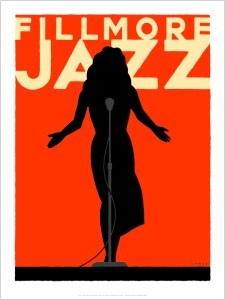
The last sign of any jazz in San Francisco’s Fillmore District is this banner, hoisted in 2014.

I regret to inform, you missed it: The final day of celebration for the St. John Coltrane African Orthodox Church on Fillmore Street was Sunday. Aside from its usual meditation on “A Love Supreme” and a service to deliver the wisdom in its creator’s words, there was even a bit of time that day reserved to remember Prince, a kindred spirit and sound messenger of love who transitioned last Thursday. But really, there is no need to cry for the Coltrane Church: Going strong for nearly 50 years, it will continue to thrive in one incarnation or another, in accordance to its creed proclaiming life everlasting. Armed with a faith that knows no bounds, no building is going to hold down Archbishop Franzo King and his congregation. He and his musically gifted family of ordained ministers will remain in the light of Coltrane consciousness and on the move for truth and justice. However, if you’d still like to grieve our losses, please consider the sorry state of San Francisco, and our complicity in the soul murder of the city the Church calls home.

Read entire thing here:

Filed under: Arts and Culture, column, Jazz, racism, San Francisco News, , , ,

Archives

Recent Posts

Browse by subject or theme