Had he survived the cancer that killed him in 1981, Bob Marley would’ve been 70 today. Perhaps he would’ve looked something like this computer-generated image. Perhaps he would still be on the road and recording albums with some frequency, in the way, say Bob Dylan does. Or maybe he would enjoy staying at home with his many children and grandchildren in Nine Mile, the place he was born and buried. Whatever he’d be doing, it’s certain that we’re still singing his songs, the lion’s share of which concern revolution, no more war, and universal love; sadly, they are as relevant as they were in the days he wrote them.
In honor of the Tuff Gong’s 70th, his family has launched the #Share1Love campaign; it encourages hashtag activism—video-making and sharing—and the Marleys will donate a dollar for every creation to charities bringing clean water to countries and regions where it is most needed. The family also oversees the 1LoveFoundation, its mission to “do good in honor of Bob Marley’s vision of a better tomorrow.”
If you are unable to give, the best thing you can do today to remember Bob Marley is to keep it positive. In that spirit, I can’t resist this crazy rare clip of him lip synching with the I Threes (“Roots, Rock, Reggae,” “One Love” and “Positive Vibration”). It’s followed by the classic Wailers appearance on the Old Grey Whistle Test in 1973 performing the more downbeat, “Concrete Jungle.” Happy Bob Marley Day to everyone.
“If you have, give. If you need, take.” That is comedian and San Francisco native Margaret Cho’s simple, seasonal message to the people of her hometown and so far the directive is working: Staging impromptu street performances, Cho is devoting two months to raising awareness and much-needed funds and supplies for the homeless here, in memory of her philanthropic comic inspirer, Robin Williams.
Cho for change, Market and Powell, San Francisco (photo courtesy Gerard Livernois)
“With Comic Relief he raised 70 million dollars for homelessness causes,” claims Cho of the series of televised charity shows and events hosted for over 20 years by Williams, Whoopi Goldberg, and Billy Crystal. Calling from San Antonio where she was performing her stand up act over the weekend, Cho explained, “He had written into his contracts that a certain percentage of homeless workers had to be employed on the set. He was very conscious of homeless people and he turned in perhaps the greatest performance of a homeless person ever in The Fisher King.” The loss of Williams this year she says, was more than the death of a dangerously depressed fellow comedian and street theater vet. “We lost a passionate activist.”
On November 20, 1969, All Tribes of the Native Nations occupied the island of Alcatraz in the San Francisco Bay. The taking of the former state penitentiary (the one that once held down gangster Al Capone and the notorious “Birdman,” famous for escaping it) was a major awareness-raising event, illuminating the treatment and near-extinction of Native people in the US. Issues like land theft and other deceptions served to Americans were in process of being clarified for all of us by members of the Native Nations: the Indians had longer-term plans to establish a culture center on the Rock, but federal authorities ultimately ended the peaceful occupation—with force—after a 19-month stand. Today, the former prison operates as a museum; it is presently hosting an art installation of work by renowned Chinese artist Ai Weiwei, with reference to the island’s Native American protest past)
Among those who heard the call to gather in 1969 was John Trudell (Santee Sioux) who served as a broadcaster, the Voice of Alcatraz. Radio Free Alcatraz reached the airwaves daily via KPFA in Berkeley and KPFK in Los Angeles (the Pacifica radio network). “He is extremely eloquent, therefore extremely dangerous,” says the note in Trudell’s FBI file. In 1979, Trudell lost his wife, his three children and his mother-in-law in a mysterious house fire. The event was a turning point toward his life as a poet, musician and actor; miraculously his spirit remains outspoken and free.
Deborah Iyall (Cowlitz) was just a teenager at the time of the occupation: She ran away from her childhood home (with her mother’s blessing) to join the protestors on Alcatraz. “I remember a song this woman Oona taught me at the powwow… I felt like I had these little nuggets and culture to hang on to.” Iyall remained on the Rock for a few foggy and cold nights before returning home, but her introduction to a creative Native person helped shape her own identity as a professional visual artist, poet and musician (Iyall recorded and toured as the frontwoman of Romeo Void and remains a solo artist. Read more on the lives of Debora Iyall, the work of John Trudell, Buffy Sainte-Marie and other artists inspired by the American Indian Movement in Keep on Pushing).
The anniversary of the Alcatraz occupation, the annual sunrise Thanksgiving Day ceremony there, the team sports protests and the ongoing violation of Indian lands made it an Indian news-filled week here in Nor Cal, but then, here in the US, everyday is an opportunity to remember what the Indian people sacrificed for US and to say thank you for their land which the rest of us occupy.
Thanks to Mary Jean Robertson—host of Voices of the Native Nation, broadcasting every second, third, and fourth Wednesday of the month on KPOO—for bringing the news to Natives and their allies. Last night she played the above clip by Redbone, released in 1970 at the height of the occupation, with footage collected from more recent sunrise ceremonies.
Today’s first-ever Howard Zinn Bookfair convenes at San Francisco’s historic Mission High School with a list of right-on authors as long as your arm so you’re going to have to check the program to believe your eyes. Organized by author James Tracy who also founded the San Francisco Community Land Trust, the day is jam–packed with discussion and presentations concerning the people’s history—past, present and future—and is free to the public. I’ll be leading the discussion titled Supporting Our Bookstores in a Time of Gentrification from 1:30-2:30 PM in the James Baldwin Room, and will be joined by Karen and Gregory Johnson of Marcus Books San Francisco and Kate Rosenberger of the Mission District’s Dog Eared and Alley Cat Books. We hope to see the room filled with bookstore workers and supporters as we imagine ways in which our City’s bookstores can work cooperatively and reach out to each other more in what was a record-breaking year of small business closures in San Francisco.
As the day-long celebration of our stories transitions into the evening, there will be an arts and awards ceremony: I’m pleased to say, Marcus Books will be making an announcement about the store’s future and will be receiving a lifetime achievement award for their service to the people of San Francisco and beyond it. Read my coverage on the current state of San Francisco’s bookstores at 48 Hills, and I’ll see you at the people’s bookfair.
SAN FRANCISCO, CA—Where the fall days are shorter, sometimes hotter, and always foggier, where we are spoiled for choice between the play-offs, election season, the Mission Playground debacle, and our annual book festival, Litquake, already in progress, and where we are one progressive free weekly shorter as of this afternoon. It is here, in this wonderland that just yesterday, the Columbus/Indigenous People’s holiday, that District 9 Supervisor David Campos chose the Beat literature/Italian American landmark, Caffe Trieste in North Beach as the time and place to roll out his proposed legislation that may contribute toward saving San Francisco from itself. Grasping at straws? Pulling at threads? It’s all in a day’s work around here, but I promise it will all come together before nightfall, or daybreak—at least that’s what I tell myself.
Flanked by a handful of small business advisers, city officials and somewhat surprisingly, me (representing for the independent booksellers in past or imminent peril due to increasing rents and few protections), the Supervisor pledged on Monday, “City Hall has a responsibility” to protect what he’s calling our legacy and heritage businesses.
In a report commissioned by Campos and released last Friday, the number of small businesses here that will be lost by the end of this year is 4,378. You read it correctly. That’s “a significant increase from the 693 businesses lost in 1992, the first year of the study.” Closures and relocations in the period from 1992 to 2011 have also risen: from nearly 1300 to nearly 13,000. What happened in the intervening years is of course familiar to anyone vaguely familiar with the economic system in the USA, Inc.com. But it seems someone at City Hall is listening and it just might be Campos (and Supervisor Mark Farrell who co-created the plan based partly on programs in place in London, Barcelona and Buenos Aires where policies have been implemented to aid local heritage). San Francisco could be the first US City to add small local and culturally relevant businesses to its recently collated registry of historic bars and restaurants deemed worth preserving. By incentivizing commercial property rentals and when possible, advising and assisting through cooperative agencies the purchase of anchor businesses and properties, community character and services shall be retained and our neighborhoods will continue to provide jobs, remain more diverse, enjoy less crime, and stay vital, all according to plan.
Sounds lovely, doesn’t it? And apparently it’s entirely possible, especially if you belong to the stable sector of small retail that hopes to benefit from the heritage program. For example, a store like Green Apple Books, awarded 2013 Bookstore of the Year by national book trade magazine Publisher’s Weekly, is an exemplar of the kind of indie business the City is looking to preserve. Who can’t appreciate and celebrate the successes of a bookstore like Green Apple? They earned their kudos and we all wish them well-deserved continued success. Though at the other end of the spectrum are the stores that are struggling through crushing economic downturns, bad loans, wily speculators, poor City planning and a trail of broken promises that leads straight to City Hall. These are the stores that serve our communities most at risk—sometimes at their own peril—and have done so for decades. Stores like Marcus Books San Francisco (evicted, 2014,and hoping to relocate after 53 years), and Modern Times Bookstore Collective (after 43 years it is next in line to close in 2015 unless something gives), and Bibilohead Bookstore (in a holding pattern after 10 years, displaced behind a retrofit and awaiting terms of a new space). These are the stores that some of us rely on for our everyday interests, our community, our culture and lives of the mind. As an author, a part-time bookstore worker and activist, I have seen our stores time and again get left out and left behind or be judged by the community as “not having the right business model.” They’ve been accused of “mismanagement” or entering into “bad leases” (are there good ones?). None of these booksellers could have thrived for as long as they did and have the answers to their problems be quite so convenient. These stores and their personnel have been on the wrong end of wrongheaded assumptions and I fail to accept that kind of treatment of our small retailers and fellow San Franciscans (you know, the ones who’ve allowed you to use their bathroom, even though you couldn’t repay them by buying a book from them). Rather, it’s matters of racism, sexism, classism, simple greed, poor City planning and the public’s allergy to reality which are at the root of the problems faced by these stores and others like them (like queer-focused A Different Light which closed in 2011). I’m happy that Supervisor Campos has displayed the courage to acknowledge these facts—that the City does indeed have some kind of responsibility to its small businesses, in particular the ones which are most at risk precisely because they promote literacy, diversity and community, to the people who need those things the most: The immigrant, poor, working class, artist, intellectual and politicized people and people of color in town. These are the folks who gave San Francisco its progressive reputation in the first place and who have been disgraced and abandoned on Mayor Lee’s watch.
The businesses that I and others in the progressive communities are interested in registering and preserving received loans with interest rates too high for anyone to make good on because they were discriminatory. The mortgage crisis put some of these small business owners and their stakeholders homes at risk as they attempted to keep the businesses afloat. Some of them have been harassed or received ambivalent protection from law enforcement. What do I mean by that, exactly? Well, the political and activist groups who convene at community spaces are targeted for spurious code violations and other so-called crimes. Marcus Books’ property was stolen and destroyed in broad daylight! Disbelieve me if you like, but these are some of the more systemic problems besieging our City; I want to believe Supervisor Campos is not blind and seeks to amend them.
Here it is a little more concretely: On Sunday, Modern Times celebrated 43 years of progressive bookselling with its Litquake event featuring writers and poets Aimee Suzara, Dee Allen, Kim Shuck, Ocean Capewell, Tommi Avicolli Mecca and Don Skiles. Last year the Litquake legacy celebration at Marcus headlined literary and visual artists esteemed as Genny Lim, Chinaka Hodge, Raina J. Leon and Lewis Watts. I mention all this because this year, Marcus Books didn’t have a Litquake event and next year, Modern Times might not have one either. So when we talk about preserving our City’s cultural institutions and legacy businesses, I hope this is the kind of thing the Supervisor is mindful of, because it’s what’s on my mind. And while we’re here: Litquake is our City’s only festival of books: It is the finest moment—now in its 15th year—of our small but mighty book community. It celebrates author excellence, charm, and ridiculousness. Founded by my colleagues Jack Boulware and Jane Ganahl (who both made the move from journalism and publishing toward organizing literary events), they survive by their wits, and to my knowledge, with little to no funds from the moneybags known as City of SF, a circumstance that appalls me and I hope outrages you, too. Without the stewardship of our community by Boulware and Ganahl, I’m not sure we’d have a book community at all. My expression of gratitude to them is to devote as much time to their festival as I can as a curator and booster. But while we are all congratulating ourselves, celebrating our new books, all our new multi-digi-partner-publishing-platform ventures, and awarding our community pillars like Malcolm Margolin and Dave Eggers, let us also pause for a moment of grave concern:
San Francisco is hemorrhaging bookstores and small businesses, and though you won’t hear a lot of talk about it at the lit festival, or at the new restaurant on Divisadero, nor will you read a thing about it in the paper, please take a moment of your time to remember the bookstore that held you up in lean times, that gave you your start, provided you with reading matter or a seat and place to read in rain. They have been on the critical and missing list for some time and will remain there until further notice, to be replaced by a vegan bacon donut shop or some other culinary monstrosity coming to a vacant $675.10 (actual figure) per square foot space near you soon.
So yes, it is my wish that so inspired by Mr. Campos on his way to Sacramento, that we all insist his personal legacy be a registry of historic legacy businesses that includes as many of our small bookstores all over town (but especially the three on Calle 24), whether they be shiny and new or dusty and dark, so that we may all eat and grow strong and acknowledge our beauty and power collectively, despite the world being on fire just outside our doors. And oh: Go Giants.
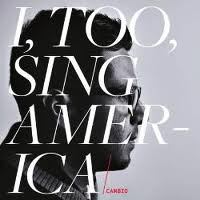
Cambio’s album title, I, Too, Sing America caught my eye for being named after a Langston Hughes poem (his answer to Walt Whitman’s work, “I Hear America Singing”). Cambio’s music caught my ear, too, thanks to a broadcast by Ignacio Palmieri on KPOO San Francisco about a year ago. With allusions to illusions, references to referendums, and tracks built on layers upon sound bites, scratch noises, and clips of speeches, Cambio’s point of view is progressive to the max, and that powerful voice is at the center of the mix.
Californian by birth, Latino by descent, Cambio is from Watsonville while belonging to Quilombo Arte, the international collective of artists, writers and musicians spearheaded by Mexico’s Bocafloja, committed to breaking down barriers and to emancipation for all people.
As a Latino influenced by hip hop, a young man in love with basketball and a speaker of “broken Spanish,” Cambio described himself as “having issues within his own community.” It was through becoming educated and learning the stories of colonization that he began to seek and find his place in the world as an artist. Beginning to record and perform locally, it was by chance that Bocafloja heard Cambio’s recordings and reached out to him. Though he records in English, Cambio has since found an audience for his music in Mexico and throughout Latin America.
An earlier album, Or Does It Explode?, also has a title borrowed from a Hughes poem (“A Dream Deferred”); a newer project, Underground Railroad, of course refers to the network built from slavery to freedom. History, poetry, social movement and music are among the themes in Cambio’s work: One minute he’ll borrow from Malcolm X, Fred Hampton or Che Guevara, the next from Nina Simone or Bob Dylan. Here’s a remix “I Need A Dollar” featuring Bocafloja originally from I, Too, Sing America.
This Saturday afternoon, Cambio and I will be making a presentation on music with a message and music for change at the Oakland Museum of California. If you are interested in hearing more from Cambio, check his Bandcamp page and the archived broadcast of the show I heard. Please support his work and the work of other musicians for change: Positive hip hop is still marginalized but Cambio’s voice, if given a proper hearing could resound all over this land: He, too, sings America.
It all started with Ritchie Valens and “La Bamba” and The Champs and “Tequila” in 1958, though it would be another decade before Santana took Tito Puente’s “Oye Como Va” and freaked it out in 1970. Los Lobos brought Spanish language to LA punks with “Anselma” in the early ’80s and to the masses in 1987 with a remake of “La Bamba”; in 2002, they tore it up Chicano style with “Good Morning Aztlán.” Of course, these names of Latino rock royalty can twist a phrase en español—it is their birthright. But what about los gringos without Latino roots who’ve brought a Mexican vibe to their rock ‘n’ roll? And the bands that feature lesser known Mexican-American musicians, plus los otros conquistadors of south-of-the-border sound? Well, they are the subject of this Cinco de Mayo post, claro que si.
There are any number of starting points I could choose to begin the story of Latin rock and the use of Spanish language in rock ‘n’ roll, but since I’m not a scholar of the stuff and just an admiradora, I’ll apologize upfront for any mismanagement of details, mangling of the language, and my Anglo-centric survey of the music. Let’s just say for the sake of ease we start with 1948 and Don Tosti’s recording of “Pachuco Boogie”, a swingin’ tune about the rebellious zoot-suiters featuring a conversation or street rap in Caló, the urban dialect of the Pachuco subculture. The Pachucos donned the zoot suit and started a ’40s fashion and attitude riot that asserted individuality and anger in the face of having been stripped of a cultural identity. What, you are asking yourself, does this have to do with music? Well, Southwestern Chicanos adopted the baggy trouser/knee-length jacket uniform that had previously been seen on the Harlem jazz scene, and Don Tosti earned the nickname “the Godfather of Latin Rhythm and Blues.” Alongside Lalo Guerrero, “the Father of Chicano Music,” who also sang of Pachuco life as well as farm laborers’ rights, Tosti opened the door for an ethnocentric brand of music to cross into the mainstream (“Pachuco Boogie” was a massive seller), though it wouldn’t be until the late ’60s that the Chicano Movement would come to organize in the name of cultural identity. “Suavecito”, the 1972 hit by Malo (the group led by Santana’s brother Jorge), is an example of Caló y Latin rhythms coming together in one classic R&B/rock ballad. But what happened between “Pachuco Boogie” and the day when Santana threw down at Woodstock before even releasing a debut album?
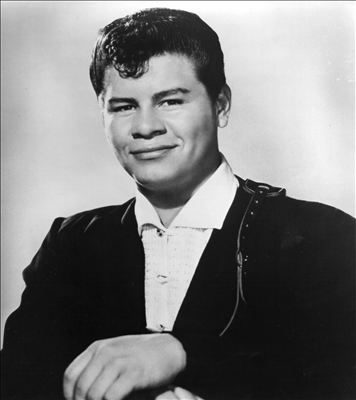
Well, that would be the invention of Latin rock by California son, Ritchie Valens, a rocker whose “Come On, Let’s Go” and “Donna” are ’50s standards, but who happens to be most remembered for the music of his cultural heritage. As we know, the music died on February 3, 1959 when Buddy Holly, the Big Bopper, Valens, and the pilot died in a plane crash in Iowa, yet “La Bamba”, the el hefe of Spanish language rock songs, lives on. Starting out as a hundreds year-old Mexican folk song, Valens rocked it up and delivered a three-chord wonder that eventually any garage or punk-rock band could play. The Plugz, an LA band by way of El Paso, featuring Tito Larriva and Charlie Quintana, self-released their cranked-up version of “La Bamba” in 1981. The Plugz also recorded two long-playing rare classics, Electrify Me and Better Luck, before morphing into the Cruzados and then eventually going their separate ways, but not before their “El Clavo y La Cruz” and “Hombre Secreto” (as in “Secret Agent Man”) gave the right touch to Repo Man, the punky midnight movie about “the LA experience.” In 1987, Los Lobos were asked to re-record some Valens songs for the soundtrack to La Bamba, a Hollywood bio depiction of the Richie Valens story starring Lou Diamond Phillips. It was then the band, formed in 1973 in East LA, rose to a new level of fame (their take on “La Bamba” went to number one). Debuting in 1976 with Si Se Puede! benefitting the United Farm Workers, and inspired by music diverse as Bob Dylan and Traffic, R&B, Mexican folkloric music, Jimi Hendrix and Marvin Gaye, Los Lobos are as American and rock’n’roll as they come, while they continue to clutch the roots of their musical heritage, masterfully incorporating traditional corridos and norteño sounds into their alternately furious rock’n’roll and laid back jams.
Los Lobos were also inspired by the Eastside sound of Thee Midnighters and Little Willie G (more on them in a minute), as well as Carlos Santana y Jerry Garcia, and the Sir Douglas Quintet, distinguished by Augie Meyers’ Vox Continental organ sound and the soulful singing of Doug Sahm who started their band in San Antonio, Texas. Their greatest hit, “She’s About a Mover,” as released in 1965. Sir Douglas Quintet belonged to the handful of US groups who brought the spirit of the British Invasion (English musicians doing American music), back into the hands of Americans by tricking the public into thinking they were playing British-styled music like the Beatles and the Stones, rather than American music by Americans. It was Sir Doug that officially added the Tex-Mex sound to the American music mix, while Sahm would also go on to sing of the border and other Mexican concerns (“Michoacan”). In later years, Sahm and Meyers would also join forces with Mexican-American rock and genre-straddling songwriter Freddie Fender and accordion virtuoso Flaco Jimenez as the Texas Tornados.
The Farfisa organ sound and the count-off uno, dos, one-two, tres cuatro would become recognized around the world that same year as the opening to “Wooly Bully” by Sam the Sham and the Pharaohs. Led by a Texas-born son of Mexican immigrants, Domingo (Sam) Samudio, the song is about nothing really and was said to be named after his cat. Domingo worked as an itinerant musician and reportedly as a carny before forming the Pharaohs, who took their name from Yul Brynner because he looked tough as the character in The Ten Commandments, one of those epic 1950s Bible movies. “Wooly Bully” became a staple of the frat-rock genre though it was more distinctive than just serving as the soundtrack to AnimalHouse-style hijinks. The song spent an incredible 18-week stand on the charts, and by the end of 1965, it was named Billboard magazine’s Number One Record of the Year and had helped dislodge singles on the charts by the aforementioned pesky British bands of the era. Sam the Sham’s “Li’l Red Riding Hood” was certainly another fine moment for the band, but it lacked the Tex-Mex organ sound that would crop up on the great singles of the ’60s made by another legendary group of Mexican-Americans: “96 Tears” by Question Mark & the Mysterians, who hailed from Michigan and were fronted by Question Mark aka Rudy Martinez and featured a teenaged organ player, Frank Rodriguez, Jr. The organ riffing would also inspire the group’s “Can’t Get Enough of You, Baby.” In 1998, Smash Mouth from San Jose, California, had a hit with the song alongside their hit remake of “Why Can’t We Be Friends?” by War, a mixed-race funk band whose big hit “Low Rider” was a hats-off to cruisin’, Chicano style.
Of course, when it comes to cruisin’ Chicano style, the band for that is East LA’s Thee Midniters. Known for their instrumental jam “Whittier Boulevard”
The band and their especially soulful singer Willie Garcia, better known as Little Willie G, was a big inspiration to the future members of Los Lobos. The song was a natural to cover for Los Straitjackets, the contemporary (mostly) all-instrumental band that performs in Mexican wrestler masks. Okay, so copping a Spanish name and wearing a mask does not make a Mexican rocker. But by virtue of using the article “los” in their names, Los Straitjackets, as well as Texas rockers Los Lonely Boys, are filed in American record stores with the other “los bands,” like Los Bravos, the rock group from Spain whose 1966 hit, “Black Is Black”, did not contain a word of Spanish. Nor to my knowledge did the Zeros, the Mexican-American band from San Diego, ever sing in Spanish, though as members of the class of ’77, they are distinguished as first-wave punk rockers; they also sprung Robert Lopez, aka El Vez, the Mexican Elvis. Somewhere, there exists a rare single of their anthem “I Don’t Wanna” backed with “Li’l Latin Lupe Lu”, a cover of the first Righteous Brothers hit made even more famous by Mitch Ryder.
I have only scratched the surface of the Latino influence on rock, precisely because it is inescapable and inextricable. I never got to point toward the “Spanish” sound on all those Brill Building and Phil Spector hits, or delve deep into the Afro Cuban percussive roots of rock (best exemplified by Bo Diddley borrowing the rhumba-like clave beat), nor did we open the pandora’s box of disco that partially paved the road to hip hop and other forms of dance music. There is so much to uncover, from Devendra Banhart’s musings en español on Cripple Crow to the Mission District’s #1 son, Jerry Garcia (that is if you don’t count figure #1a, Tijuana-born Carlos Santana). I had planned to wax on about Jack White’s and Beck Hansen’s Mexican-American neighborhood origins as well as the exact definition of un perdedor as heard in Beck’s “Loser,” but I will leave that to you to explore. While were are here, let’s not forget the great Spanish-lover, Joe Strummer, whose Mexico City childhood allowed him to open his corazón to the Spanish-speaking world, and they to him. I had hoped to remind you to remember to forget U2’s lame-o uno, dos, tres, catorce countdown to “Vertigo”, but who am I to talk when all I can offer are my own gabacha sign-offs, ay, caramba y que lástima. Yo no soy una roquera, lo siento. Pero, in the hands of the Mars Volta, Ozomatli, Zack de la Rocha, La Santa Cecilia, Cambio, y todos los músicos, there is mas y mas y mas y mas musica: Rest assured, La Raza rocks on. Wishing all a safe and sane Cinco de Mayo.
The research compiled in this column was originally published some years ago in my Crawdaddy! column, The Origin of Song.
“Somewhere I read of the freedom of assembly. Somewhere I read of the freedom of speech. Somewhere I read of the freedom of the press. Somewhere I read that the greatness of America is the right to protest for right,” said Dr. King in his final speech, delivered on April 3 to striking sanitation workers in Memphis, Tennessee. The following day, April 4, the civil rights leader, winner of the Nobel Peace Prize, and beloved hero to millions around the world, was shot to death on the balcony of the Lorraine Motel. Forty-eight years later, the work of non-violent protest in the name of desegregation, voting rights, racial harmony, jobs, freedom, opportunity, and an end to wars, is carried on by an international community of civil rights advocates and human rights and anti-war activists. Among the musical tributes in response to the tragedy were Dion’s popular “Abraham, Martin and John,” Otis Spann’s less-known “Blues for Martin Luther King, ” and Nina Simone’s enduring and emotional “Why (The King of Love is Dead),” first performed in his memory on April 7, 1968, the national day of mourning following the assassination. For further reflection on Dr. King’s message of love, please start with the The King Center archives, dedicated to the non-violent eradication of poverty, racism and violence.
Filed under: Dr. Martin Luther King Jr., Keep On Pushing, Nina Simone, “I’ve Been to the Mountaintop”, “Why (The King of Love is Dead)”, April 4 1968, Memphis TN, Striking Sanitation Workers
In one of those weird, under-reported facts, the origin of the third Monday in January when all 50 states are set to observe the birth of Dr. Martin Luther King, Jr. (January 15, 1929) is not widely acknowledged, but it is in fact a musician we may largely thank for the creation of a federal holiday in the name of MLK. Back in 1980, Stevie Wonder wrote his pointed song “Happy Birthday,” then launched a 41-city U.S. tour (and invited Gil Scott- Heron along) to promote an idea first mooted by Rep. John Conyers in 1968. The city to city tour was ultimately the key in collecting the millions of citizen signatures which had a direct impact on Congress passing the law signed by President Ronald Reagan in 1983, declaring the day for MLK. Of course it took some more years, more activist effort, more songs, and more applied pressure for the idea to catch on and the day to become a reality.
“Happy Birthday,” which served as the Wonder-campaign theme (and is now the “official” King holiday tune) is the last track on Wonder’s Hotter Than July album which also features “Master Blaster,” his tribute to Bob Marley. The reggae giant was also scheduled for the tour until he fell too ill to participate. Stepping into the breach was Scott-Heron whose 2011, post-humously published memoir, The Last Holiday, details his own journey with music and activism; he retraces the long and winding road Wonder took to bring home a US federal holiday with the help of a song. In a a strictly horrific twist of fate, the tour brought Gil and Stevie to Oakland, California, where they were playing in the name of King (as did Rodney Franklin and Carlos Santana) on the night John Lennon was assassinated. The story of the evening is better read in Scott-Heron’s book, though here’s a clip of Wonder delivering the news to the assembled crowd, back in the time before we carried our own tracking devices.
Observed for the first time in 1986, some states were late to the party, however, by the turn of the 21st Century, all were united in some form of remembrance. On Monday January 20, cities all across the country will attempt to honor Dr. King’s dream the best they can, given our nation’s state of economic and moral poverty. In King’s birthplace of Atlanta, Georgia, the King Center, has a full weekend schedule of events culminating on Monday (the King Center’s events are dedicated to discussing and teaching non-violence). In San Francisco on January 20, there is an all-day celebration of King’s life, its theme Now is the Time, at Yerba Buena Center for the Arts from 11 a.m. — 5 p.m. Among the events scheduled are author readings sponsored by Marcus Books, America’s oldest black-owned bookstore engaged in a final push to preserve culture and community in the City’s historic Fillmore District. San Francisco is generally struggling with displacement of its African American population, as well as other issues related to the City’s techsploitation of housing and services. City of Santa Monica hosts Southern California’s largest King Day event; this year’s theme is Unity in the Community. I am permanently dumfounded by the American shame that is Skid Row LA: Just spitting distance from the unfathomable displays of wealth that define Beverly Hills, Hollywood and the Westside, human life and dignity are compromised there everyday.
Much like Dr. King’s vision, justice and equality in our democracy remain very much a dream. But wherever we go, whatever we do that day, let us not only continue to dream of love and peace, but to take an action toward eradicating poverty, eliminating racial injustice, and loving our fellows, in the name of MLK.
“We need people like Bradley Manning,” said singer Graham Nash on Friday night at the Nourse Auditorium in San Francisco, in conversation about his new book, Wild Tales: A Rock & Roll Life. The evening ended with questions from the crowd, a convention that in lieu of any interesting questions coming from the stage often provides the most interesting parts of these so-called public discussions.
“Where is the anger?” someone from the audience asked. “Why aren’t we rising up?”
“Do you think they really want protest songs on the airwaves? Do you think they want people singing about these things on TV?” answered Nash with more questions, while further noting the media has largely turned its back on free speech matters. Though he suggested our first and fifth amendment rights were our country’s greatest assets, his questions were perhaps an acknowledgement that we can no longer rely on a free press to help us protect those rights to speech, a fair trail, or to keep us truly free.
Advocating for truth-speaking and against torture, as well as for solar power and ending world hunger, Nash isn’t just a one-size-fits-all protest singer; rather, he’s one who’s consistently stood strong against nuclear power, supports the science behind climate change, and was on the side of the Occupiers on Wall Street. The musician of conscience has consistently weighed in with songs of resistance since the dawn of his career, as a solo artist, as a member of the duo, Crosby & Nash, and the supergroup, Crosby, Stills, Nash & Young. Last week I posted Nash and James Raymond’s song for Bradley Manning; his earlier works like “Chicago” and “Immigration Man,” among others, bear his mark of vocal excellence combined with pointed, topical concerns.
Among his known charitable activities, Nash co-founded the Musicians United for Safe Energy in 1978; he participated in 1985’s Live Aid, spotlighting famine in Africa and he toured with CSNY in 2006 on the Freedom of Speech tour, a traveling protest roadshow. “We knew what we had to say, especially about George Bush,” Nash said, though the message was not entirely popular, particularly as they crossed the red states. “I’d never been on a tour where there were bomb-sniffing dogs. I’d never been on a tour where people walked out. You bought a ticket to a Crosby, Stills, Nash & Young concert…what did you expect?”
On Friday, the crowd was comprised largely of freethinkers, baby-boomers, and progressives in accordance with Nash’s views, clued-in enough to ask: Had he ever requested his FBI files? Born in Blackpool, England but a citizen here since 1978 Nash answered with yet another question: “Why would I care if they have papers on me?” He shouldn’t. But rest assured, they do. And had I held a mic that night, I would’ve first and foremost thanked Graham Nash—bold enough to sing the contents of his heart and mind for over 50 years—no questions asked.

 Had he survived the cancer that killed him in 1981, Bob Marley would’ve been 70 today. Perhaps he would’ve looked something like this computer-generated image. Perhaps he would still be on the road and recording albums with some frequency, in the way, say Bob Dylan does. Or maybe he would enjoy staying at home with his many children and grandchildren in Nine Mile, the place he was born and buried. Whatever he’d be doing, it’s certain that we’re still singing his songs, the lion’s share of which concern revolution, no more war, and universal love; sadly, they are as relevant as they were in the days he wrote them.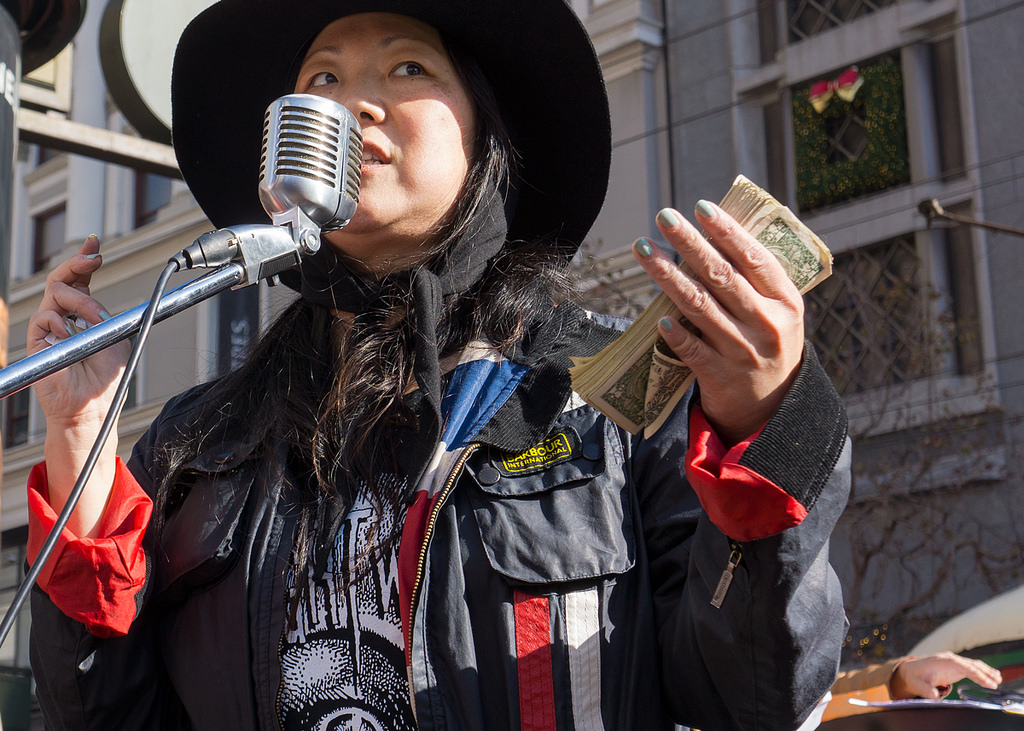








 Denise Sullivan