Denise Sullivan

Author, Arts & Cultural Reporter and Worker

Jim Morrison For Sale

last-photos-of-jim-morrison-paris-1971-g1(UPDATE, December 19: Morrison’s notebook reportedly sold for the unverified amount of $200,000 on December 18, 2013).

This week’s news that Jim Morrison’s “Paris” notebook will be auctioned later next month, 10 days after what would’ve been the singer and poet’s 70th birthday, hasn’t exactly set the night on fire. The headline, characterizing the discovery as his  “druggy musings” makes it sound like more of the same, and yet, we’re talking about the recovery of a holy relic of rock’n’roll history here.  Media and mythology strike again, though the story managed to uncover the seller of the notebook as Graham Nash.  He and the Doors shared a manager who gifted Nash with the collection of notes and sketches, valued to be worth approximately $320,000. There was no mention of who shall benefit from the sale of the artifact which likely dates back to the singer’s life in the pre-Doors dawn, during his time spent at UCLA, his interests more focused on poetry and film than on songs. The inside flap of the book features a quote from a 1963 Paris Review interview with Norman Mailer (Morrison was an avowed fan) alongside an image of the artist Francis Bacon, artistic inspirers from the early ’60s.

As for Morrison, deceased since 1971,  the ‘60s most idolized rock star was no doubt plagued by alcoholism and drug addiction,  and yet, he was able to keep his artistic life somewhat sacrosanct; it is said when he left for Paris he took only his poems, filed in old notebooks, and his canisters of film with him. The notebook, with its so-called musings are presumably continuations of his creations, a winnowing and distillation of the things he’d been jotting down in notebooks he carried with him at all times,  even since before he arrived to the California coast as a student from Florida. The writings in his own hand offer more than  “a window into the mind of the deep-thinking singer, known for his drug abuse, in the run up to his death.”  They are a closer look at his process as an artist, a chance to examine the singer’s life through a new pair of glasses, one that isn’t too concerned with ‘60s nostalgia, preserving mystique or cashing in on it. Whatever its true origins, I would hope that the notebook will be purchased with the intent to publicly display it.

It is time to retire the persistent media portrait of the artist as a semi-dimensional party dude with a quasi-mystic side. My forthcoming book, Shaman’s Blues, The Art and Influences Behind Jim Morrison and the Doors, to be published early next year, attempts to cancel some of the old notions, and replace them with the source of Jim’s ideas and what he was creating with his body of work. I went in search of the building blocks that make his songs and poems meaningful to each new generation, his messages, and even his meanderings, still relevant to listeners in the 21st Century.

To better appreciate Morrison’s “druggy musings” is to understand his complete devotion to Arthur Rimbaud’s systematic derangement of the senses, the principles behind Antonin Artaud’s Theater of Cruelty, Bertolt Brecht’s dramaturgy, and Julian Beck’s Living Theater, among other sources of his inspiration. One must have a general sense, if not  knowledge, of what those historic, artistic precedents were about to fully appreciate the Doors’ work. I took on the project as an opportunity to investigate the people, places and other worlds alluded to in Morrison’s songs, to seek the poetry at the core of the stories, and the diligence that went into creating the Doors’ own dark music.  And then I tried to unravel some of all that for the general reader without boring people to death by use of academic language, while striving to make Morrison more whole, less of an icon, and more of a human. Because behind the Hollywood and media representations of him, Morrison has largely been remembered well by family and friends. He was said to be thoughtful, loving, humorous, artistic, and pretty decent young cat, when he wasn’t under the influence (though there would also appear to reasons for his discontent, in addition to a predisposition to alcoholism).  I make no apologies for the drunk and disorderly behavior; it is on the record and clearly a part of who he was, but it was not all of Jim Morrison. And that’s part of why I’m so interested in the news of the notebook going on the market:  It is part of the ongoing rehabilitation of Morrison’s legacy, the process of demythologizing the mythic Lizard King.

I’m pleased to say I’m not a voice in the wilderness in my attempts to bring more light to the other side of Morrison’s work.  His friend Frank Lisciandro, who has long worked to keep Jim’s poetry and filmmaking in the public consciousness, is compiling Jim Morrison: Friends Gathered Together, an oral history of the singer’s pre-Doors years.  And filmmakers Jeff and Jess Finn continue work on Before the End: Jim Morrison Comes of Age, a documentary take  on the tale we all (think we) know so well, as told by Jim’s closest intimates, guided by the filmmakers’ access and own intuitive sense of his Jimness.

When I hear Jim speak or sing, on the page and on audio and video, on his clear days he seems thoughtful, interesting and right-on to me too. This is the Morrison I wanted to capture in Shaman’s Blues, and I certainly hope it is received in that spirit, though a writer cannot predict how she will be read. Perhaps there is no better example than Jim Morrison’s own legacy, to illustrate the dichotomy of the saying about one man’s trash: Welcome to “The Soft Parade.”

Filed under: Arts and Culture, Book news, Books, film, France, Jim Morrison, Poetry, Smarter than the average bear, , ,

Veterans Day: War Is Over

Iraq Veterans Against the War asked supporters to use social media this Veteran’s Day to speak about personal experience with militarism.  I don’t have much direct contact to report, unless you count carrying a sense of American shame and holding a deep well of sadness for the amount of senseless violence, killing, overspending, and harm done to the world’s people and resources in the name of liberty and justice for all.  My immediate family is not militarily descended, though among my few relatives who were called up, I remember an uncle named Charlie who went to Vietnam and mercifully returned, then asked to be called Charles from there on; I have not seen much of him in 30 years, but I suspect he’s suffered, the result of time served.

My own conscientious objection and moral opposition to war developed out of the lessons taught by a few good teachers who waged stealthy anti-militarism campaigns in their high school classrooms: Images from documentaries on the Holocaust and post-atomic bomb Japan have stayed with me strong since I saw them. An education in war’s atrocities, along with my own love of the message music of the ‘60s and ‘70s, I believe schooled me well, until I went on to research and learn more.

Created at the height of the Vietnam era, conceived with strength and intended as a balm and wake-up call for all that had gone wrong, artist/activists from Buffy Sainte-Marie (“Universal Soldier”) and Phil Ochs (“I Ain’t Marching Anymore”) to giants Bob Dylan (“Blowing in the Wind,” “Masters of War”), John Lennon and the Plastic Ono Band (“Give Peace a Chance,” “Imagine”), the stars of Motown (Marvin Gaye’s “What’s Going On?”, Edwin Starr’s “War,” written by Whitfield and Strong) and singers, songwriters and performers of all forms (“Peace Train” by Cat Stevens and “Love Train” by the O’Jays”), delivered the songs of peace. Quite often they took anti-war sentiment to the top of the charts. It was a time when an anti-war view didn’t have to fight for space on the front page or evening news—it was the news. Back then, unless they were complete squares, members of the silent majority or total idiots, men and women were not afraid to stand against war.

As time went on, the wealth of Vietnam-themed Hollywood feature films (Coming Home, The Deer Hunter, Full Metal Jacket, Platoon) depicting the horrors of war, and set to a rock music soundtrack of songs associated with the time period (Creedence Clearwater Revival’s “Run Through the Jungle” and “Who’ll Stop the Rain,” for two)  further informed my own beliefs about  that time.  The truth had surfaced and history was beginning to support the unjust nature of all that war’s ill concepts and casualties. Bombing unarmed innocents in the name of freedom is pure and simple, illegal, immoral, and just plain wrong. One of the movies, Francis Ford Coppola’s Apocalypse Now!, so convincingly used “The End” by the Doors  to convey a soldier’s pain, one could be forgiven for thinking the music was written to fit the sequence(s) in which it was used (it was not). Here is the opening scene of the film that stars Martin Sheen as the fictional Captain Benjamin Willard:

Lost in a Roman wilderness of pain, and all the children are insane.  Jim Morrison’s apocalyptic visions and anti-imperialist artistic views were tied up in a deep study of history and the humanistic concerns he shared with the artists of peace and vision who inspired him. Given his own generation’s stand against the war, Morrison’s radically left of center way of approaching life and art was complicated by his own family ties to militarism:  His father, Admiral Steven Morrison commanded the forces in the Gulf of Tonkin incident that sent the Vietnam war into overdrive. The Doors cut at least one specifically anti-war song, or at least we can deduce that theme from the action in their own short film for “Unknown Soldier.”

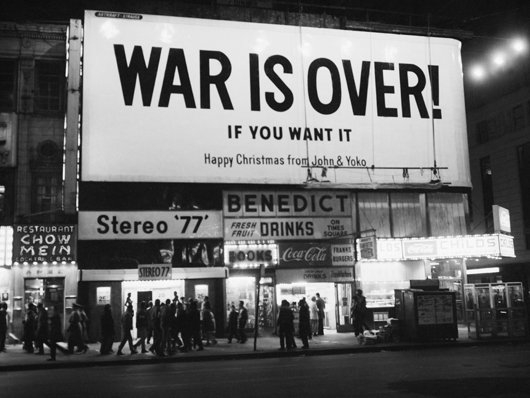
“War is over,” the present tense affirmation that serves as the chorus to”Unknown Solider,” predates the use of the phrase in the Plastic Ono’s Band “Happy Xmas (War is Over)” (1971); it coincided with the Phil Ochs song “The War is Over” (1968) and knowing Morrison’s influences, was likely borrowed from French filmmaker Alain Resnais’ 1966 film, War is Over, a political thriller set in Franco-era Madrid and Paris.

As time went on, the anti-war song fell out of favor, at least in the U.S. where our direct involvement in wars was mostly covert and away from our shores.  Now and again, we’d get a crucial reminder that war is bad and killing is no good in songs (“War” by Bob Marley), while other times when war was declared and battles raged on, anti-war songs experienced a tiny revival (“Killing in the Name” by Rage Against the Machine comes to mind, as does “Living With War” by Neil Young who continues to wage peace every day of the year). But unless mandatory service makes a comeback, it is guaranteed you’ll hear fewer songs of resistance to war, or resistance to much of anything, really. Killing for peace, bombing for safety and drones from here to kingdom come are not really what the people want from their songs anymore. Until further notice, the rocket’s red glare shall shine on, while few take a stand in song to abhor them.

Where are the songs that urge calling off drone strikes?  I know there are some, but they are not on the Top 40, blasting from jukeboxes and commanding the dancefloor the way Edwin Starr made a stand: “War! Huh-good God, y’all, what is it good for? Absolutely nothing. Say it again. Yea.” Though once again, the ’60s generation—I’m not saying they’re the only ones, but in terms of longevity, staying the course, consistency of message and laying it down—comes through. Septugenarian Graham Nash cut a song with James Raymond for Bradley Manning.

Nash had done the same for Bobby Seale and the Chicago Seven who among other things, opposed the war.  I’m not telling fans of ’60s rock anything they don’t already know.  But for the sake of the song, if you’re a singer or a songwriter and think that killing and torture in the name of what is wrong, use your stage to sing out and decry the lie, even if it’s just one song. Or do something: Professional musician Darden Smith is writing songs with vets. Recounting their experiences with war and turning them into songs, Smith has aided soldiers in coming to terms with their opposition to violence of all kinds.

The Veterans Against the War say on their website that everyday, 22 veterans take their own lives. Could it be that they cannot stand the post-traumatic stress of remembering?  Were they tortured, or asked to torture someone else?  We will not know now or ever because they’re gone, as are the great mean of peace, Gandhi, Dr. King and John Lennon. Today I thank all, veterans and others, who fought and now work for peace: You remind us that we can not tell ourselves that war is something that only happens over there, far away, to other people. We cannot continue to pretend that we are  not connected or impacted too. We are responsible. The horror, the horror.

Filed under: anti-war, Arts and Culture, Bob Dylan, Bob Marley, Buffy Sainte-Marie, film, France, , ,

The Long Distance Revolutionary: Mumia Abu-Jamal

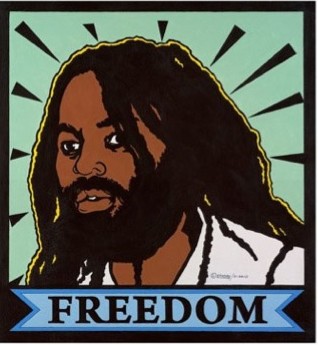
freedom

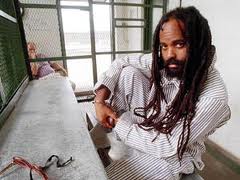
There is only one voice like Mumia Abu-Jamal’s, its tone perfect for professional broadcasting, its message carrying necessary information for our times.  But Abu-Jamal, as most people know, is no longer primarily an announcer by trade.  Better known as Mumia to the worldwide community of human rights activists who support his case, the former radio journalist has been serving time in prison for over 30 years now. He has spent much of that time writing and appealing his case.

In the documentary Long Distance Revolutionaryfilmmaker Stephen Vittoria and co-producer/Prison Radio sound recordist Noelle Hanrahan, make a compelling case that Mumia’s situation as a prisoner for life is more than a miscarriage of justice:  Rather than retell the circumstances that lead to the incarceration of the journalist/activist (whose views forced him to moonlight as a cabbie, just to survive), they shine a light on how he’s used misfortune as opportunity, to become a prophetic voice for the voiceless.

Angela Davis, Amy Goodman, Alice Walker, Cornel West, Tariq Ali, Ruby Dee and James Cone are among the scholars, theologians, journalists, actors, activists, writers, colleagues, and family members who testify in the film on the important role Mumia—the writer as political prisoner—plays on the world stage, reflecting the revolutionary’s role in contemporary American society. Through interviews, news reel footage, photographs and most of all, interviews and sound recordings of Abu-Jamal, Long Distance Revolutionary tells the story of an intuitive and self-described “nerd” of a child, Wesley Cook, who journeyed into the Black Panthers, then followed his call to report on his city as he saw it, much to the distaste of its notoriously racist law enforcement. Of course, that’s business as usual in the land of the free, while the mystery that unfolds onscreen in Long Distance Revolutionary is more to a specific point: Just how does a death row inmate as sharp as Abu-Jamal  keep his mind in shape and his spirit alive while the state does its job squeezing the life out of him? Of particular note are the words of literary agent Frances Goldin who I’m unable to quote here, but who talks of how she was sufficiently moved by Mumia’s prose to take a chance on him in the book market.  But the most convincing voice of all is Mumia’s own which can be read in his multiple books in print all over the world and heard on Prison Radio, still recorded by Noelle Hanrahan.  At the film’s premiere in Mill Valley, California last October,  Mumia delivered an address, especially recorded for the Bay Area. He remembered its “luscious sun,” and the Bay as a place where he,  “a tall, skinny, dark sunflower,” could be among some of the “best, boldest, blackest, sweetest” brothers and sisters he claims to have known.

Curiously, the film’s only musical voice in the chorus is M-1 of Dead Prez. Used to be musicians sang out for injustice, the way that Bob Dylan once did for Rubin “Hurricane” Carter (who also appears in the film); in that case, the musical association indirectly lead to Carter’s exoneration. But the music community has largely remained silent on the subject of Abu-Jamal. So where are the other contemporary Musicians for Mumia? According to director Vittoria, the usual suspects were approached, but only Eddie Vedder responded to the urgency of the call.  “Please know that I (and my co-producers) tried hard to get…and a number of other musicians into the mix—on numerous occasions and through numerous fronts—but not one of them would agree to interview (except M-1) and/or offer a musical piece or new selection,” Vittoria wrote in an email to me.  Vedder’s song “Society” (previously associated with the feature film, Into the Wild,  concerning environmentalist/adventurer, Christopher McCandlessserves as the film’s closing theme. “I was fortunate that Eddie allowed us to grace the film with his powerful song,” added Vittoria.

Abu-Jamal was taken off death row late last year; he remains sentenced for life without possibility of parole and lives among the general prison population at the Pennsylvania State Correctional Institution at Mahanoy. But the system has not vanquished his spirit or his message. Mumia is still on move: Long Distance Revolutionary has been on the festival circuit and in general release throughout the year. It opens August 23 at the Roxie Theatre in San Francisco and next month at Spokane’s Magic Lantern.  Here’s the trailer:

Filed under: Angela Davis, anti-war, Arts and Culture, Bob Dylan, Book news, film, France, Never Forget, Now Playing, Poetry, , , , , ,

This Business of Music is a Buzzkiller

Injustice in the music business is one of the themes shared by three summer music documentaries now playing in theaters or on demand. Twenty Feet From Stardom, A Band Called Death and Big Star: Nothing Can Hurt Me all concern the lives of musicians who did not reap the benefits of success their superstar counterparts or even their industry’s executives enjoy. These tales of a typically unkind, fickle and often unethical music business are told far too often:  There is of course a long tradition of broke and hungry blues singers and ripped-off rock’n’rollers; perhaps most famous are the Funk Brothers, creators of the Motown sound, whose untold history became Standing in the Shadows of Motown, the blueprint for these kind of behind the veil stories. And yet, the background vocalists of Twenty Feet… and the musicians of the ironically named ‘70s bands, Death and Big Star, though largely overlooked, unsung, and often underpaid themselves, also delivered life-giving music of lasting value—music far more focused and accomplished than many of their more successful name brand peers.

Much to the younger generation of musicians in their family’s delight, the Hackney brothers co-created punk rock in early ‘70s Detroit.  A Band Called Death is their story, as told by surviving brothers Bobby and Dannis, with credit due to brother David for the vision. Inspired by their minister dad’s insistence they watch the Beatles on Ed Sullivan, the boys formed a band; as rock evolved, so did their sound. David aimed to combine the guitar chords of Pete Townshend of the Who with the leads of  Jimi Hendrix. With Bobby’s vocals and bass, and Dannis’ agility on drums central to the crunch, David’s idea came into focus, though it had also been shaped by forces much stranger than spine-chilling rock’n’roll.  Impacted by the accidental death of their father, David’s idea—a hard rock threesome named Death with a triangular mind-body-spirit logo was an entire  concept, though it turned out to be a bit much for listeners to metabolize in the post-‘60s hour of segregated rock and soul.  It is generally agreed among band and family, record industry personnel and public perception that David’s extreme construct did the band no favors, particularly when they were very close to getting a record deal with Clive Davis and David wouldn’t budge. “First you let them change your name and then…” You may as well surrender your soul is the implication, and there is truth in those words. Though he and his brothers’ band were consigned to the rare and forgotten records rack for 30 years, David’s vision, that Death would one day be poplar after he was gone, turned out to be prophecy. A Band Called Death lets that story unfold, as it unleashes the power and excitement of the music, highlighting its timelessness and virtuosity. For non-believers, their pure rock’n’roll single, “Keep on Knocking,” may be the convincer:  I never tire of it and could happily spin it over and over and over again.

If there is such a thing as rock justice, revived career status may also be in the balance for some of the singers profiled in Twenty Feet From Stardom, a look at the ladies (and one man) who sing the background vocals to the soundtrack of your life.  To their tremendous credit, director Morgan Neville and producer and industry vet Gil Friesen don’t flinch from the cruelty of the record business, a model that has historically cheated its true talent while rewarding mediocre copycats. The film debuted at the Sundance Festival and screened earlier this year at the San Francisco International Film Festival and is told by the vocalists Darlene Love, Merry Clayton, Claudia Lennear, their contemporary counterparts, Lisa Fischer and Judith Hill,  and the musicians they sing for (Stevie Wonder, Bruce Springsteen, Sting and Mick Jagger). With differing degrees of yearning for the spotlight, each woman shares her own tale of what it was like to sing behind Ray Charles, the Rolling Stones and Michael Jackson and in the case of Love, for producer Phil Spector (now serving a prison sentence for murder).  Both Fischer and Lennear, emerge as the pair who crave little more than what they have: Fischer’s devoted to her gift and married to the music and a life on a road. Lennear stepped back and became a teacher, though as a result of the film and revisiting her years alongside George Harrison, Joe Cocker, and Ike and Tina Turmer, she’s been inspired to reclaim her place in the spotlight.  Here’s her version of the Beatles song, “Let It Be.”

Perhaps most depressing in this downbeat trio of tales is Big Star: Nothing Can Hurt Me, a story of unrequited loves and life let downs. Chris Bell, who alongside Alex Chilton, was a principle songwriter on the Memphis group’s first album, left the fold under what the film portrays as mysterious circumstances. What’s clear however, is that he was touched by substance abuse, and sexual and religious confusion, and all the troubles conspired to takeaway his life at the cursed rock’n’roll age of 27. It didn’t help that Big Star’s record label, Ardent, was affiliated with Stax, though while giants of the soul industry were experiencing business and reorganization troubles just as they crossed the bridge toward releasing rock’n’roll records. And then there is Chilton, a vocal talent with qualities so chameleon-like, and a reticence to be interviewed, that he’s hard to pin down. The teenaged soul singer of “The Letter” shifted gears in Big Star, and yet again in his post-band, punkish years; he passed away in 2010 before the completion of the film, and his presence in it is confined to audio and performance clips.  It would’ve been interesting to hear what he might say of his former band from a 60-year-old’s vantage point, but without him or Bell to speak for themselves, the real story of Big Star largely remains a mystery, to be filed under bands that never made it, but could have, if only the stars had aligned in their favor. Though their story is grim, their recording legacy is the prize: “The Ballad of El Goodo” from #1 Record, is a collaborative effort between Chilton and Bell, a power-pop freedom song:

Though I would not characterize any one of these music documentaries as uplifting, within the frames of each reel, and certainly within the individual stories, there are flashes of reverence, bright spots of humor, and in all cases, impeccable music. There is no shortage of stories like these, ready to unspool and cast the music business as it was once known in its true, unflattering light.  I don’t want to say I’m happy that everyone can see for themselves the hit parade of human sacrifice, left in the wake of what it takes to create superstar entertainment for the masses. Nor do I delight in the music industry’s complete and total rupture.  But it’s no doubt valuable for music consumers, just like consumers of other goods, to know a little bit more about what goes into the making of product they love so much. The music business is a killer, with very little to do with the art of its creators. Certainly it has shown little to no compassion for the health and welfare of musicians, without whom, there would be no primary product.  Perhaps it’s best we no longer fool ourselves into thinking that talent and excellence are qualifications for success, no matter what business we may find ourselves. The artist or worker without a killer instinct, will need to make a choice: Take a backseat willingly, or be content, to be left standing in the shadows.

Filed under: Arts and Culture, film, Now Playing, Roots of Rock'n'Soul, video, , , , , , , ,

Punky Reggae Party Revisited

images“Anybody’s who’s meant to get it, gets it, and those who don’t, they never will,” says Don Letts. The filmmaker and musician is talking about the ways in which the rhythms of Africa have a habit of turning up in popular music from around the globe, most noticeably these days in the work of Vampire Weekend and Animal Collective. But Letts could just as easily be commenting on his own career as a DJ, writer, and member of the Clash posse, or as an accidental pioneer of sampling as a member of Big Audio Dynamite, the Mick Jones-led Clash sequel.

“Like a lot of great ideas, these things are stumbled upon rather than by design,” he says, somewhat understatedly. But when it comes right down to it, Letts’ life story reads like a series of 20th century music history flashpoints: From the time meeting with Bob Marley led to the Rastaman’s song “Punky Reggae Party”, to when, as a punk club DJ, he spun reggae when he ran out of punk discs (few existed at the time). “New wave/new phrase,” sang Marley. “Rejected by society / Treated with impunity / Protected by my dignity / I search for my reality / It’s a punky reggae party / And it’s all right.”

You might even say that without Letts’ point in the magic triangle, the resulting permanent alliance between the two major forms of rebel music might not have ever happened.

READ MY FULL INTERVIEW WITH DON LETTS HERE:

Filed under: cross cultural musical experimentation, film, Interview, Punk, Reggae, , ,

Hello Mumia, Goodbye Columbus

There is only one voice like Mumia Abu-Jamal’s, its tone perfect for professional broadcasting, and its message carrying necessary information for our times.  But Abu-Jamal as most people know, is not an announcer by trade; better known as Mumia to the worldwide community of human rights activists who support his case, the former radio journalist has been serving time in prison for 30 years now. He has spent much of that time writing and appealing his case.

In a new film, Long Distance Revolutionarywhich made its worldwide premiere over Columbus Day Weekend at the Mill Valley Film Festival, filmmaker Stephen Vittoria and co-producer/Prison Radio sound recordist Noelle Hanrahan, make a compelling case that Mumia’s situation as a prisoner for life is more than a miscarriage of justice:  Rather than rehash the circumstances that lead to the incarceration of the journalist/activist forced to moonlight as a cabbie, they shine a light on how he’s used the misfortune as prophetic opportunity, to become a voice for the voiceless.

In the film, Angela Davis, Amy Goodman, Alice Walker, Cornel West, Tariq Ali, Ruby Dee and James Cone are among the scholars, theologians, journalists, actors, activists, writers, colleagues, and family members who speak to the important role Mumia, the writer as political prisoner, plays on the world stage, as he reflects the revolutionary’s role in contemporary American society. Through interviews, news reel footage, photographs and most of all, interviews and sound recordings of Abu-Jamal, Long Distance Revolutionary tells the story of an intuitive and self-described “nerd” of a child, Wesley Cook, who journeyed into the Black Panthers, then followed his call to report on his city as he saw it, much to the distaste of its notoriously racist law enforcement. Of course, that’s business as usual in the land of the free; the mystery that unfolds onscreen is more to the point: Just how does a death row inmate as sharp as Mumia keep his mind in shape and his spirit alive while the state does its job squeezing the life out of him? Of particular note are the words of his literary agent Frances Goldin who I’m unable to quote here, but who was sufficiently moved by Mumia’s prose to take a chance on him.  Of course the most resounding voice of all is Mumia’s own which can be read in his multiple books in print all over the world; it can also be heard on Prison Radio, still recorded by Noelle Hanrahan.  For the Mill Valley premiere, Mumia delivered an address, especially recorded for the Bay Area which he remembered from visiting once as having a “luscious sun,” where he, “a tall, skinny, dark sunflower,” could be among some of the “best, boldest, blackest, sweetest” brothers and sisters he claims to have known.

Curiously, the film’s only musical voice was M-1 of Dead Prez; traditionally, it is musicians who sing out for injustice, in the way that Bob Dylan once did for Rubin “Hurricane” Carter (who also appears in the film), indirectly leading to his exoneration. Eddie Vedder’s recording of  “Society” (previously associated with the feature film, Into the Wild,  concerning environmentalist/adventurer, Christopher McCandless), serves as a closing theme. So where are the other contemporary Musicians for Mumia? According to director Vittoria, the usual suspects were approached, but only Vedder responded to the urgency of the call.

Abu-Jamal was taken off death row late last year; he remains sentenced for life without possibility of parole and lives among the general prison population at the Pennsylvania State Correctional Institution at Mahanoy. But the system has not vanquished his spirit or his message. Mumia is on move: Long Distance Revolutionary is on its way to festivals in Denver, Copenhagen and New York City.  It opens in wider release in February of 2013.  Here’s the trailer.

Filed under: Angela Davis, film, France, Keep On Pushing, Reviews, , ,

The Black Power Mixtape 1967-1975

Last year’s most insistent documentary, The Black Power Mixtape 1967-1975, makes its public television debut this month: By any and all means, see this film.

Written and directed by Göran Hugo Olsson and co-produced by actor and one-time San Francisco State student activist Danny Glover, The Black Power Mixtape is a visual record of a period that inalterably changed America, as viewed through outsider lenses.  Edited from footage shot then by a Swedish television crew, the material was rescued and revisited 35 years later by Olsson and a cast of contemporary American musicians and activists who provide voiceovers. The resulting mash-up is as disassociated and cohesive, chaotic and united, as were the times themselves; the film is a testament to the people who lived and died through the upset.

This new version of American history, as told by Europeans and African Americans could ideally serve the new generation as a long-overdue introduction to who and what made the Black Power Movement move. From the Black Panther Party’s survival programs, toward its mission for freedom for all oppressed people, and into black empowerment’s more  general directive to teach true history, self-reliance and pride, the film also spells out the forces that conspired to decimate the people and dismantle the movement from within and outside it.  As for those already well-familiar with the subjects of political activism and the social changes that took place in the US in the ’60s and early ’70s, The Black Power Mixtape offers an opportunity to view rare footage that you haven’t seen a million times; rest assured, the contemporary voiceovers not only add fresh insights but are in synch with contemporary survival issues, as well as with the current protests taking place in US town squares.

My enthusiasm for The Black Power Mixtape is partly based on my interest in the subject matter and my passion for passing on recommended listening, viewing and reading materials; I also see it as the perfect  audio/visual companion to my own text on the subject, specifically chapters four, five and six of Keep on Pushing (though the film is undoubtedly more concentrated and is  enhanced by the voices of Questlove, Erykah Badu, Talib Kweli, Angela Davis, Sonia Sanchez and author Robin D.G. Kelley, among other noted artists and activists). I’m about to quote heavily from the film here so if you haven’t yet seen it and like being surprised,  you may want to stop reading and start streaming.

There’s a moment when the historic footage of the activists-then, dovetails in chilling harmony with the now-narration. Talib Kweli, a contemporary rapper/resistor, in the black radical tradition, begins his story of being inspired by the words of Stokely Carmichael. “He was a fiery speaker and had passionate ideas, but he was a calm, cool, collected person,” say Kweli. “None of these people were evil or bad or even extra violent.  Common sense meant that they had to speak and stand up for themselves….” In the name of research and inspiration, and in preparation for his own studio recording, Kweli began to study some of Carmichael’s widely available speeches.  “It was shortly after 9/11 in America,” he explains. “I was making a reservation on Jet Blue airlines to fly to California.  When I got to the airport…they came and intercepted me, all these guys in black suits, and they took me into a back room and started questioning me…They were very concerned with me listening to this Stokely Carmichael speech from 1967,” says Kweli. “We have gangster rappers talking about shooting people all the time but the FBI is not looking for them. They’re looking at me because I’m listening to a speech from 40 years ago…”

As the film wraps, author and scholar Robin D.G. Kelley underscore’s black power’s links to second wave feminism and gay liberation movement.  Readers of Keep on Pushing will also recollect that the entire second half of the book is dedicated to the impact of black power on other minority cultural and political movements, while it also follows power music into its next black incarnations. In The Black Power Mixtape, singer Erykah Badu puts in a word for the importance of documentation—the writing and reading—of black history by blacks, while filmmaker Melvin Van Peebles suggests that the movement was not a racial cause, but a freedom cause, for all the world’s people.

“People need to know, particularly in the 21st Century, it is important even under a black president, to bring the kind of pressure, to force the kinds of issues that will allow us to imagine a future without war, without racism and without prisons,” says Angela Davis.

“The rich are getting richer, not only in America but in the world…” says Sonia Sanchez.  “You’ve got to talk about that one percent or five percent that runs everything. It’s a lot of work. You don’t get any reward…The reward is knowing that when you make transition when you die, if you have children, there’s a better world for them and if you don’t have children, there’s a better world for other people too.”

Check your local PBS listings and Independent Lens for further February screenings of  The Black Power Mixtape 1967-1975—there are many.  The film is also available as a DVD.

Filed under: Angela Davis, film, Keep On Pushing, , , , , ,

Archives

Recent Posts

Browse by subject or theme