
This week, and what a week it was, I’m pleased to introduce you to several writers living and working in San Francisco, all of them striving
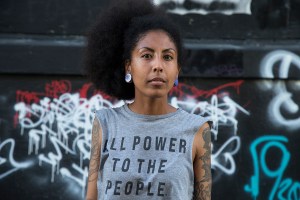
Poet and activist Thea Matthews in the Mission District on Wednesday, June 3, 2020. (Kevin N. Hume/S.F. Examiner)
toward a more just and equitable society in their own unique ways. First, poet and activist Thea Matthews is a San Francisco born and raised writer, celebrating the publication of her first poetry collection for a local press. She’s also deeply involved and on the frontlines of the Movement 4 Black Lives. Read more about where she’s been and where she’s going in this week’s San Francisco Examiner column, SFLives.
Also publishing today, a story I was reporting on and off for about five months on the Writers Grotto, a community of authors who found they needed to recreate their organization so that it would be more inviting to writers of color. You can read the full story in today’s San Francisco Chronicle Datebook (and one day, I promise to a write story about the process of reporting it).
I love my work, seeking out the stories on the lives of the people and places that show San Francisco at its best. What a privilege it is to be trusted to tell these stories and deliver them to you, especially in these times. As ever, I thank you for taking the time to read and I bid the best to you and your families as the pandemic runs its course. May the moral arc of the universe continue its bend toward justice.
Filed under: anti-capitalist, anti-war, Arts and Culture, Black Power,, Books, Poetry, racism, San Francisco News, Thea Matthews, Writers Grotto
 Francisco when I returned here, following a decade of living in Los Angeles. A housing advocate, particularly devoted to keeping seniors in their homes, and a cultural worker whose art is poetry, whether in the fight to preserve bookstores or entire neighborhoods, from the Fillmore to the Mission, Robles was a strong presence in the various communities he represented, from North Beach to City Hall and South of Market. Combining community and culture in the spirit and tradition of his uncle Al, one of our city’s beloved poet activists, Robles is a fighter for the city he’s allowed to hate — because he loves it — even though he’s left us for rural North Carolina…
 Hello faithful family of friends and readers: First things first, I wish you health and safety in these troubling times. I’ve been keeping my head down, safe distancing and generally following the recommendation of my state and local leaders to shelter in place. Here in San Francisco, we went on the unfortunately termed “lockdown” at midnight on March 16 in an effort to “flatten the curve.” There is so much left to learn and know about this virus. I will continue to cover its impact from my usual arts and cultural perspective as long as necessary.




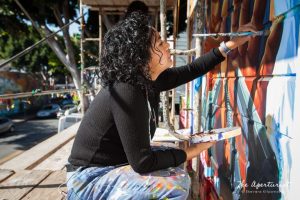 go in la Misión, a tribute to those who’ve lost their lives to police violence in San Francisco and to state violence at the US border. Centered around the figure of Amilcar Perez-Lopez, I spoke to several artists on the project, including Carla Wojczuk and Lucia González Ippolito while covering the story for Current SF. The project was photographed beautifully by Ekevara Kitpowsong; we’ve worked together on several stories together about local muralists last year (including one on

 This week San Francisco’s literary festival, Litquake, is celebrating 20 years of supporting writers, publishers, bookstores and the literary arts here in the Bay Area. The festival’s co-founders, Jack Boulware and Jane Ganahl are my kind of people: Journalists by trade, they dared to dream beyond the newsroom and share their love of the writing life with their immediate community. As their cohort of writers grew to include novelists, memoirists, biographers, sexperts, technologists and performance poets, the festival grew and grew, blossoming into its current incarnation as a 10-day event with international offshoots of the culminating night’s promenade, LIt Crawl.
 Once in a great while, a film score really grabs me from the inside out: It’s not just the beauty of the suite or piece of music alone, but when the sounds are perfectly matched with the mood, look, and feel of the story being told on screen and the elements combine to make one extraordinary whole, the inextricable links between music and movie become entwined with the soul, as if we’ve heard these strains somewhere before. The Last Black Man in San Francisco, directed by Joe Talbot with music by Emile Mosseri, is the ideal marriage of sound and image for The City right now. It’s melancholy but not maudlin; it’s shimmering but not overwhelmingly bright and it surprises with its subtlety. I have much to say about the film, and its operatic dimensions cut from indie cloth, but I’m not yet done formulating my thoughts (I’m a little stuck in the real life tragedy of it all). For those of us living here, thinking about the state of our city comes second to surviving it. Living in a place of such extreme, rapid and frankly terrifying gentrification is a job in itself; for those of us born here, we live everyday with the specter of something we love being taken from us — again, and again — rendering our home unrecognizable. The grief is ongoing and it feels like it will never end. It’s a daily discipline simply to get up and out of bed to ready one’s self for the day ahead: Who or what will we lose next? At least now we have a soundtrack to accompany the loss.
 Denise Sullivan