Denise Sullivan

Author, Arts & Cultural Reporter and Worker

Some of us are prisoners, the rest of us are guards

Back when I wrote for the music press part time and worked at a small record label where it was also my job to answer the phone, I received a call from San Quentin. Immediately a recording played, stating the call was coming from a California correctional facility, though I was surprised to learn the call was for me. Though I did not know the person, he was seeking a member of the press to write about the sudden cessation of the prison’s writing program. He said it was imperative to get the word out so that some action could be taken to preserve the incarcerated population’s right to read. I listened to the plea, said I would do what little I could, and called a reporter, a friend of mine’s sister, who worked at the San Francisco Chronicle. I think the calls came a couple of more times, but there wasn’t much I could do. To my knowledge there was never a news story about conditions at the prison or its literacy programs. At the time, I didn’t realize there wasn’t any meaningful oversight of the state prison system and that “privileges” like food, exercise and activities were withheld at random, say, if a guard took a dislike to an incarcerated individual.

During the ’80s, the Reagan administration’s War on Drugs created the conditions that led to the over-incarceration we see today, particularly of Black and Latinx individuals. Scholars, like Michelle Alexander and Angela Davis among others, contend incarceration is a racist system of control that extends outside prison walls. There is plenty documented on the subject and I invite you to read more

Today there are over 2 million people living inside America’s prisons. According to the Sentencing Project, at the time I received the call from San Quentin, there were about 40,000 people in prison at the cost of approximately 6 billion dollars annually. Today the state spends over 60 billion on incarcerating its citizens. Two new books on the subject, mostly in the words of people who have done their time, suggest that prisons are a modern day form of slavery and that we abolish the prison nation.

I reviewed Reimagining The Revolution and Beneath The Mountain in this weekend’s San Francisco Chronicle Datebook.


When I received that phone call from San Quentin some years ago, I did not know that the prison population would increase by 500 percent over the next 40 years. Surely by now, most every American knows someone whose life or family has been impacted by the carceral system.

Writing and educational programs have been restored on and off in the California system, though mostly, they are off.

Over the years, I thought about that phone call, the lack of coverage of the prison system in the media, and lack of oversight behind prison walls. I became aware of the prison industrial complex — the relationship between businesses and institutions — as well as the basic human rights violations of incarcerated individuals, and corresponding mobilization efforts, inside and out, to raise awareness of the injustices and correct the abuses.

I am still learning about how we talk about the injustices of incarceration. Hearing stories from people who have lived the horror of America’s prisons seems to offer the most hope toward solutions. I recently viewed the documentary, The Strike, and learned more about the historic California State Prison hunger strike; I listen to Prison Radio, which broadcasts the voices of incarcerated, and look forward to the compact commentaries, often prophecies from Mumia Abu-Jamal. I read the San Francisco Bay View, one of the few publications that delivers firsthand coverage from incarcerated reporters; and I have spoken to San Franciscans who do what they can, using their time and talent to care for incarcerated loved ones and strangers.

Please take a moment today to consider the over 2 million Americans incarcerated. If interested, one action you can easily take is to support the Prison Literature Project: They send books to incarcerated individuals which is not as easy as it sounds — it’s a process and they are specialists. Thanks for reading today. Songs also contain information. Thanks for listening.


Filed under: Angela Davis, anti-capitalist, anti-racist, anti-war, Arts and Culture, Black Power,, Bob Dylan, Book news, California, Malcolm X, Prison Justice, , , , ,

Pac & Biggie Are Dead, opens in Oakland

Tupac Shakur and the Notorious B.I.G. (aka Biggie Smalls) are hip hop legends, but actor and playwright Biko Eisen-Martin recognized their ends as a take on Shakespearean tragedy. Inspired to write a play about the pair after acting in a production of “Rosencrantz and Guildenstern Are Dead.” Eisen-Martin’s “Pac & Biggie Are Dead” runs throughout June at BAM House, home of the Lower Bottom Playaz, in Oakland.

“I wouldn’t call it an existential romp, but more of an existential quest,” he says.

Read more about the play and Biko Eisen-Martin’s career as a playwright, actor and visual artist here: My latest for Bay City News.

Filed under: Arts and Culture, Hip Hop, live theater, , ,

On aging & the performing arts

Earlier this year in San Francisco, there was a live, all-star tribute to 92-year-old folksinger, Ramblin’ Jack Elliott. Making his way around the world in the ‘50s, and a friend of Woody Guthrie’s during the pivotal modern era of American folk music, the contemporary celebration of Elliott was also a benefit for Sweet Relief, the 30-year-old organization founded by Victoria Williams to assist musicians in need. Oddly, the show was mostly void of political content save for a few remarks by musical director Joe Henry, 64, and Jackson Browne, 75, nodding to Guthrie and the roots of American folk and topical song.

Showing up in Elliott’s honor were Joan Baez and Bob Weir, both 83, and Steve Earle and Rickie Lee Jones aged 69. Of course there were younger performers on the bill, but my eyes and ears weren’t trained on them as much as they were on the older adults onstage and in the house: I gleefully whispered to my husband that unusually, I was among the youngest in the room.

Read the rest of the column here:

Filed under: anti-capitalist, anti-racist, anti-war, Arts and Culture, Bob Dylan, California, column, Editorial

The world according to Les McCann

Jazz musician Les McCann died of pneumonia in Los Angeles on December 29, 2023 at age 88. As a leader and sideman, he recorded countless albums and made major contributions to the soul-jazz music of the ’60s and ’70s. His piano work has also been sampled frequently in the modern hip hop era. McCann has been most often remembered and celebrated for his performance of the Eugene McDaniels song, “Compared To What.” Performed live with Eddie Harris at the Montreux Jazz Festival in 1969 and released on their album, Swiss Movement, McCann on vocals and piano gave the song a certain punch and swagger. This is an edited transcript of my talk with McCann, about the origin of the song widely considered to be the greatest protest song of the Vietnam eraand his thoughts on life in 2016, from his then 80-year-old vantage point. May he rest in peacewith condolences to his surviving loved ones and friends.

“When I began my career in LA we had immediate attention. And whenever you have attention, you have other people coming around, trying to get your attention. I was performing with my trio at LA City College and Eugene McDaniels came by one night. I didn’t know who he was, but he liked what were doing and started hanging out. I thought he was the greatest male voice I’d ever heard. I invited him to join my group.

We started working together, and the money wasn’t good, but it was the beginning of us being professionals. He was different from all of us. He could speak English. A lot of people who didn’t like him, didn’t like him because of that. He was a very bright man, very clever. He knew what he was doing and he went after it. I believe he was the son of a pastor.

We were kinda like friends, he’d sit in, but we also hung out. We had a vocal group, a choir, and we’d get together and sing, 12 people, but all were potentially looking for their own career. When he came to us, and said, “I got a record deal, they gave me a lot of money,” we were happy for him, but not only did he stop singing the music we loved for him to do, he started doing all these other things. When they offered him the big money, some people thought he was being a traitor to jazz. But we were all just trying to make it. I was his reminder, the one who told him, don’t forget where you came from, don’t forget why you’re here.

He didn’t know he was a songwriter, but he’d ask me what I thought: Everything he showed me was unbelievable. I didn’t know he loved Bob Dylan. When I first heard “Compared To What,” it was just a set of words, there was no music. It had the words “God dammit” in it, and it was one of the reasons stations wouldn’t play it. No one had ever done that before. They were his words and I was speaking them: This was Gene son of a preacher, questioning whether he should speak his truth, which involved speaking words a preacher’s son shouldn’t say. It also involved a man speaking perfect English and being Black.

I could do what I wanted on my record label and so I recorded the song. But it was nothing like it was six years later when we did it on Swiss Movement. All that happened right there. We were just doing what we thought was great. It took me six years, but the way everyone now hears it happened in a moment, instantly onstage.

_____

“We think we’re unique, that nobody knows what we go through, but it’s not about the singing it’s about being a human, living in this world. These are lessons on learning how to love, trying to find our place and be who we are…You need to deal with the fear and the bullshit. We’re taught to be afraid of everything. Don’t do this or that: It’s said on purpose, part of the curriculum of this earthly school. Everyone has a blueprint, everyone sets out to do their thing. It’s all here, for us to learn. I’ve never stopped learning.

Earth ain’t meant to be heaven. We’re all angels having an earthly experience. Everything you can think of happens right here on this earth. If it wasn’t for sex and money and fighting, there would be no problems. It’s all how you look at things. We all have intuition.The real truth is in the quiet of who you are. I walk hand in hand with who I really am.

I remember my other lifetimes. I don’t want to do the same things over and over. It might take many times but the choice is whether we decide to live in love or in the things we fear.

Every time you do an interview, ask yourself the questions you want the answers to, ask everything you want to know of yourself: You’ll hear things you never heard before. You already know all this. It’s not anything you haven’t heard before.

Fear or love.

You have go through it and deal with it.

It’s how get to where we want to be by the time we die.

Did we really answer the call?

Did you live the life you wanted to live?”

c. 2016, Denise Sullivan

Filed under: anti-racist, anti-war, Arts and Culture, Jazz, Obituary, Origin of Song, Soul, , , , ,

It’s Only Rock ‘n’ Roll Writing

As one who started writing about music for publication in high school and started working professionally as a columnist for a regional music paper before college graduation, some might say I’ve earned space to vent about the state of the music press. Lucky for all of us, Paul Gorman wrote Totally Wired! The Rise and Fall of the Music Press, so I didn’t have to. A well-considered overview of the 100-year-old music press, it’s almost the book I would’ve written (though without the British accent. I wouldn’t have confused Penelope Houston for Penelope Spheeris, though I probably would’ve confused every guy who wrote for Rolling Stone named David, so there’s that). Anyway, I loved the book and you can read more about Totally Wired in my latest column for Tourworthy. And if you want a little bit more about my life writing about rock, there’s this:

By the time I was writing full-time in the ‘90s, it was a good time to earn a dime by writing about music, on assignment and for hire, with or without a byline, and for cranking out content for the nascent Internet which had very little in the way of information on offer until we entered the data.

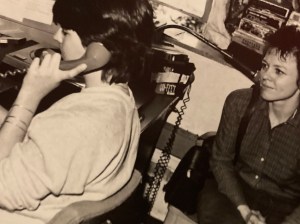
(Me getting it together while Laurie Anderson patiently looks on – photo by Bobby Castro)

I contributed to what was called the first online music magazine, Addicted to Noise (consult the Wayback Machine) and the reboot of Crawdaddy! and newsstand magazines like Paste, Harp, Ray Gun, Q, MOJO, and others I care not to name. Digital back issues are hard to come by with rights having been bought, sold, and rendered inaccessible by the general public. Every few years I write a plea like this, hoping a tech savvy reader will lend a sister a hand and free my digital archives (no such luck). If a print edition existed, I have at least one copy archived (in case anyone is seeking material for a time capsule or a bonfire).

Even without digital evidence of my work, I continue to gather knowledge, form wild opinions and indulge in some meandering riffs, online and in print. I’ve written on jazz and blues, punk and hip hop, and all forms of arts and culture. But my interest in rock has waned, considerably, and perhaps understandably given its late stage decline (see: latest works by the AI-assisted Beatles and the ungodly Rolling Stones). I am rarely surprised when I hear the music business or the publishing trade being cited for racism, sexism and homophobia, or when artists and writers claim victimization (I often cover these angles in my occasional Soundinista columns). The latest case of the Go-Go’s co-founder Jane Wiedlin and several more women accusing DJ Rodney Bingenheimer of sexually assaulting them when they were teenagers at his underage disco is disturbing and heartbreaking (though for those of us paying attention, not entirely unexpected).

Sometimes it’s unclear to me what I would do if I could ascertain whether rock ‘n’ roll never forgets or rock ‘n’ roll always forgets; whether time waits for no one, if I could turn back time or if time has told me. I do know at one time I loved rock ‘n’ roll and everything about it — the way it sounded, its hair and its clothes. The music imprinted my soul, provided sanctuary and inspiration, gave me a lifetime of listening and a wide, now small, circle of friends. Yes, I’m certain that’s all true and yet, these are the good times.

Filed under: Arts and Culture, Books, rock 'n' roll, , , , , ,

Rest In Power, Len Chandler: Shadow Dream Chaser of Rainbows Died on August 28, 2023

images

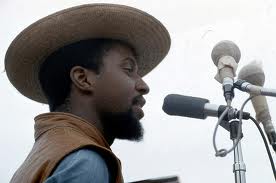
As anyone with their eyes on the prize knows, the 60th anniversary of the historic March on Washington for Jobs and Freedom was on August 28, 2023.  Among those assembled to help Dr. King push forward his dream of racial harmony and economic justice was Len Chandler (often overlooked in the history of civil rights work), one of the voices in a trio that day which included Bob Dylan and Joan Baez (Chandler appears at about 17 minutes into the following clip, though the whole 25 minutes is worth your time). Unfortunately, I come here today with a heavy heart to belatedly report that Chandler died at home in Los Angeles, on August 28, 60 years to the day of the march.

It was a blessing to have interviewed Len on several occasions for the purpose of documenting his story. I was invited to the home he shared with his wife Olga James, to break bread with him, and to participate in several community functions and political gatherings where he was still singing for freedom in the 21st Century. My deepest condolences to all who loved him. I did not know him well, but his work has continued to move and motivate me, long after first making contact with him more than a decade ago.

It was hoped that Chandler and I would be visiting the Bob Dylan Center in Tulsa this year, to deliver a panel on singing, songwriting, racial justice and voting rights, to coincide with the publication of my essay commissioned by the Center on Chandler. But none of that was to be. Timing, as it’s said, is everything. And racism is still very much alive, very much afoot in America, 2023.

The following is a repost from my previous posts on Chandler

Chandler would march with Dr. King and travel throughout the South in the name of voter registration, informing rural Southerners of their polling rights, often at great risk to his own life. His poems were recognized by Langston Hughes, he wrote the folk standard “Green, Green Rocky Road” with poet Bob Kaufman, and recorded two albums for Columbia Records, but little is known about him or his life.  I sought out Chandler when I wrote Keep on Pushing, my text that tracks the origins and evolution of freedom music, and its roots in African American resistance and liberation movement.

Originally from Akron, Ohio, and studying on scholarship at Columbia in the ’50s, Chandler made his way to Greenwich Village folk music by accident: Lured to the sounds of Washington Square Park by the downtown youths he was mentoring, he easily fell into the scene with his natural ear for songwriting and his familiarity with the songs of Lead Belly, Big Bill Broonzy, and Woody Guthrie.  Following a performance at the popular Village coffeehouse, the Gaslight Cafe,  Chandler landed a contract to go to Detroit, writing and performing topical songs for local television. A few months later, when he returned to New York, the folk thing was in full swing:  Bob Dylan was the latest arrival to town and the pair started to trade ideas and songs.

“I hadn’t yet begun writing streams of songs like I would, but Len was, and everything around us looked absurd—there was a certain consciousness of madness at work,” wrote Dylan in his book Chronicles.  Chandler remembers it like this in Keep on Pushing:  “The first song I ever heard of Dylan’s was ‘Hey ho, Lead Belly, I just want to sing your name,’ stuff like that.”  Dylan used Chandler’s melody for his song, “The Death of Emmett Till.” “Len didn’t seem to mind,” Dylan wrote.

Chandler went on to record two albums for Columbia:  To Be a Man and The Loving People. He continued to work as a topical songwriter, a peace and civil rights advocate, and as a songwriting teacher; his tour of Pacific Rim bases with Donald Sutherland, Jane Fonda, Holly Near and Paul Mooney was documented in the Francine Parker film, FTA, a must-see for anyone interested in US history and anti-war efforts within military ranks. Catch a glimpse of Chandler at the end of this trailer for the film:

It was an extreme privilege (and I have since found out a rare opportunity) to meet one of the true unsung heroes of singing activism (as well as his wife Olga James, a pioneering performer in her own right), and have him tell his story to me. Though largely retired from performing, he remains well- informed on human rights, politics, and the arts and will step up and step out for civil rights. You can read a portion of our talks in Keep on Pushing, and someday I will post the complete unedited transcripts, though for now, enjoy the voice of Chandler from back in the day, when singing was a huge part of moving the movement forward.

Filed under: anti-capitalist, anti-racist, anti-war, Arts and Culture, Black Power,, California, Civil Rights, Folk, racism, ,

Rest in Power: Sinéad O’Connor

When I heard the news that Sinéad O’Connor died last week, the news was not terribly surprising – people suffer, they take ill, they die. And yet, the depth of my feeling for the world’s loss of such a prophetic, powerful and perfect singer was startling. Though I’m well-familiar with her work and saw her perform live more than once (she was after all a part of the fabric of the ’80s and ’90s popular culture), I think what struck me hardest was how much of her good work for humankind and her general love of the world’s people had gone unnoticed. Here was a God-loving and spiritually devoted singer who had never turned away from her mission to help others, and yet, others had turned away from her time and again.

And then I remembered her turn as the Virgin Mary in Neil Jordan’s film, The Butcher Boy: There was something about her performance that stayed with me, all these years later. I guess what I mean to say is there is no doubt in my mind that someday, future generations will see Sinéad as the visionary, the prophet, the truthsayer and comforter she was; maybe she’ll even be venerated accordingly.

My full remembrance of O’Connor can be read at the link to Tourworthy.

Filed under: anti-capitalist, anti-racist, anti-war, Arts and Culture, Bob Marley, film, Hip Hop, Immigration Reform, income disparity, Nina Simone, Protest Songs, racism, ,

Sonali Kolhatkar: Pursuing Racial Justice

It feels like something changed this Fourth of July: On the morning of the fifth, I woke up to one radio report after another in which people, ordinary American citizens, were expressing their disbelief, distress and general fatigue at being sold a story about our country’s origins that doesn’t quite add up to the truth. This, it would seem, is a good thing: More and more people have woken up to the idea that all is not well with us, that their children have been and continue to be misled and are ill-prepared for the future. To prevent further erosion to our democracy, our planet, and life at large, it’s time for all of us to participate in some form of direct action. At least that’s my interpretation of things on the morning after a restless night of listening to cherry bombs bursting in air, for the sake of our freedoms.

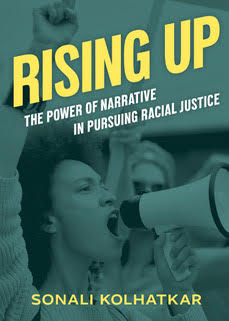
But despite sustained political efforts to constrict our liberties and suppress the truth of the United States’ origins (as in the current opposition to teaching critical race theory and the trend toward banning books and criminalizing the teaching of history) there are other ways to forge change to a tired old story. In Rising Up: The Power of Narrative in Pursuing Racial Justice, Sonali Kolhatkar has constructed a guide to the ways in which we can all participate in a sea change by becoming better consumers of the media and resisting the stories we are told. She offers tools for more critical thinking, productive discussion and ways to create empathy as opposed to enmity. As racial justice editor of Yes! magazine and host of Pacifica Radio’s Rising Up With Sonali, Kolhatkar is a solutions-oriented journalist, focused on progress rather than problems. I have long been a fan of her broadcasts and was delighted to talk to her more about the pursuit of racial justice.

My full interview with Kolhatkar appears in Bay City News/Local News Matters. For now, free speech and a free press remain among the cornerstones to democratic society. I hope you’ll take a moment to read the profile and support independent voices inside and outside the media.

Filed under: anti-capitalist, anti-racist, anti-war, Arts and Culture, Books, , ,

Supporting San Francisco Independent Reporting

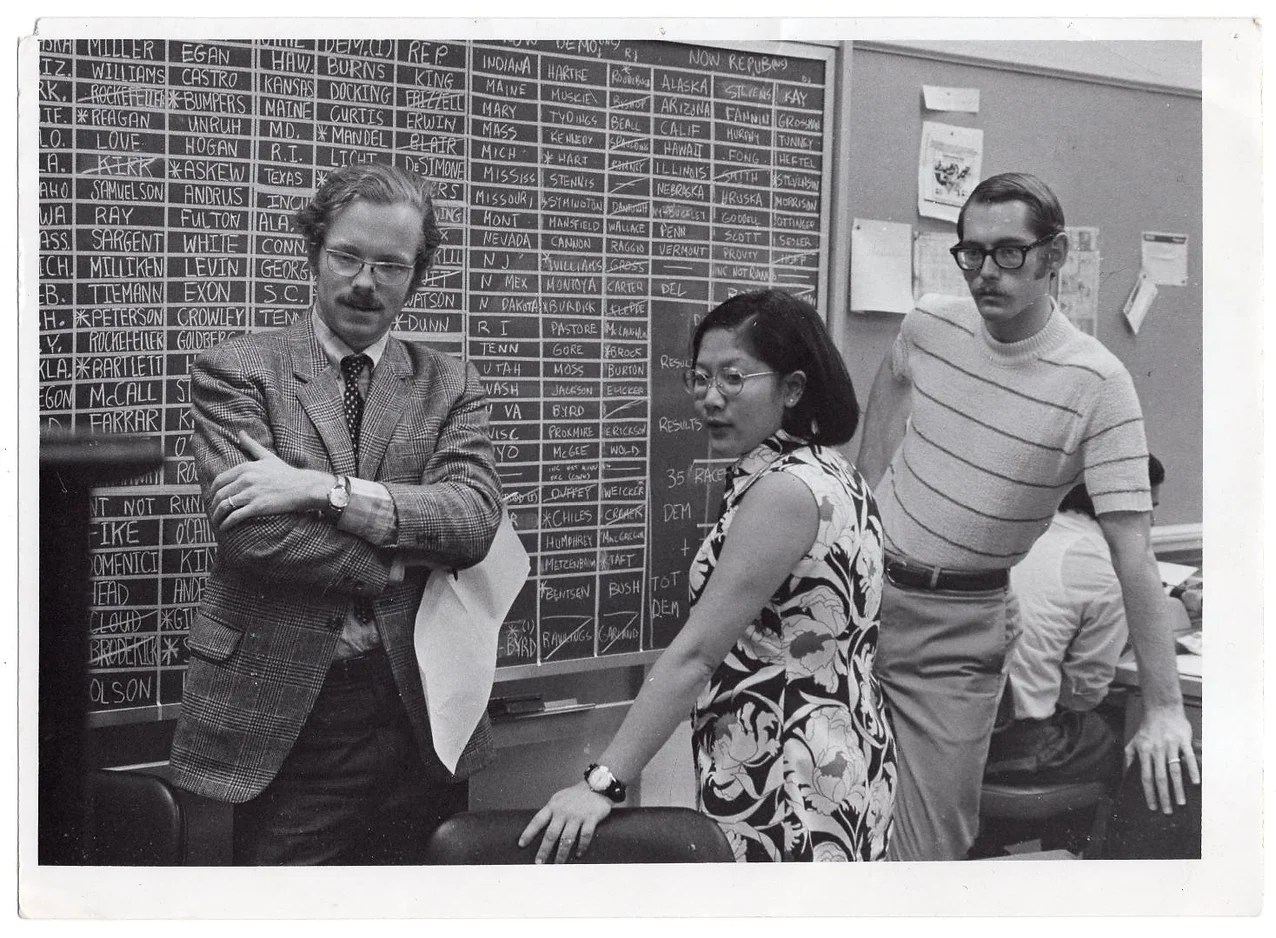
“Rally” is a film about San Francisco political figure, Rose Pak. Her life was extraordinary and the role she has played in our city’s development since the days of Moscone and Milk is perhaps not fully understood or acknowledged. Rooth Tang’s excellent film, which I hope will reach a wider release this year, debuted at the San Francisco Film Festival in April. The photograph above pictures Pak in the ’70s when she was the first Asian American female reporter hired by the San Francisco Chronicle. Tang, an Angeleno, traveled to the center of Pak’s story in the way that perhaps only a Chinatown and San Francisco outsider could, but he had plenty of local insider assistance. As personal, political and documentaries of time and place go, Tang’s film is essential.

Kasey Rios is one of those freethinking and spirited San Franciscans that is the embodiment of our sanctuary city at its best. Serving residents of the Tenderloin and SoMa with a vision of greener and self-sustaining neighborhoods and fair wages for all seems a reasonable part of the solution toward improving our civic direction — a plan that includes all people, not just the wealthiest ones. Rios makes a case for less law enforcement and authority and more autonomy for residents, while paying folks to beautify and clean public spaces one neighborhood at a time. It’s a bottom up rather than a top down system and it is working in places like Mexico City and Paris, so why not here? Building the workforce is key: But such ideas can’t take if workers cannot afford to live here and we perpetuate a cycle of displacement and profits over people.

Like the city itself, the local media continues to experience loss, change and reorganization: Like everywhere, there has been a real drain of alternative news outlets here in recent years, and a co-opting and misunderstanding of what journalism is and can be. But there remains hope: Independent news organizations and reporting are the present and future of the form. As a new contributor to Bay City News Foundation, a local wire service and network of regional news outlets including Local News Matters, I’m happy to continue to do my work delivering under-reported stories to a wider public, as well as through the monthly live stream project, SFLives/Live Talks.

This Sunday, our guest is Malia Spanyol, a small business owner with an eye on keeping safe spaces alive for women and queer folks in the Mission District, a neighborhood that remains in persistent risk of over-gentrification. Next month on June 11, we will be in discussion with the aforementioned Kasey Rios at 10 am. SFLives livestreams on the Bird and Becket Books channel. Please join us and keep your eyes open for more on-the-ground coverage from San Francisco — from myself and other dedicated reporters from our city. We’re still here.

Filed under: Arts and Culture, gentrification, San Francisco News, Women's issues,

Surrender Bono: There’s No Band Like U2

During U2’s earliest shows in San Francisco, a ritual developed: Bono would lift a child from the crowd onto the stage and prop her on his shoulders. The girl’s name was Megan and I was acquainted with her family; they ran the Psychedelic Shop on Market Street, a remnant of the hippie days and an essential stop on our ‘80s routes as one of the few places in town that sold rock ’n’ roll badges. I haven’t seen Megan or her family for years but she appears at about the forty minute mark in U2’s live set from California Hall, May 15, 1981, just two months after their first San Francisco appearance at the Old Waldorf on March 20.

The band gave small nightclub performances with stadium energy. Their gestures – well at least one member’s – were at once big and grand, generous and self-indulgent, a harbinger of a future self. These were also the things I came to love and not so much love about Bono. In passage over passage in Surrender, Bono’s recently published memoir, the singer knows this about himself – he is a the ultimate showman and a humble servant to the stage. The two extremes come packed with the character traits that make him a frontman: He runs mostly in the red. I think I would have rejected him and the band entirely back then had I not felt like what my generation needed was a rock star of our own- not Bob Dylan or Patti Smith, the Ramones, or the Clash but boys and girls – just  like us – who seemed capable of making something happen, of getting something done in the face of a new age of nihilism. The earnest young men of U2 seemed like contenders – a “nice bunch of Christian boys,” as photographer Chester Simpson characterized them. The band fulfilled its promise and then Bono went beyond the call of duty to become the most charitable of rock stars of my generation. His faith is estimable, though he is a man and U2 is a band of contradictions. There is much more to tell. Full story at the the link to Tourworthy.

Filed under: anti-war, Arts and Culture, rock 'n' roll, , , , , , , ,

Archives

Recent Posts

Browse by subject or theme