As if Tuesday’s election result wasn’t enough to knock out poets, artists, activists, and other sentient beings, Thursday’s announcement that singer-songwriter and poet Leonard Cohen, 82, had died earlier in the week was simply too much bad news in an already unprecedented year of loss. Not only will Cohen obviously be missed by fans and fellow artists who relied on his wisdom, but women have rarely known an artist of Cohen’s generation who loved, admired, honored, respected, and employed them in the studio and on the road as consistently as he did.
The women in Cohen’s life were not simply ornaments, adjuncts, or names in song titles: Marianne, and Suzanne were famously real people as was Joan of Arc. But Cohen who notoriously loved the company of women, was also an advocate for working women artists and paid them (we hope equally as their male counterparts) to write with him, produce and engineer his records, and sing on the road. Even in the so-called liberal, open-minded and progressive music business, there are relatively few working female producers and engineers and too few top name recording artists who employ them. But Cohen consistently placed female collaborators in the highest levels of operation. That he should be such a hit with us is no surprise. Elevating women in song and verse is one thing but having the knowledge and humility to take our value into the workplace added a layer and depth to his own art. His actions are pretty much unprecedented in the male-dominated music business, unless I’m missing something: Jennifer Warnes, Sharon Robinson, Leanne Ungar, Perla Battala, Anjani Thomas, Julie Christensen and Rebecca De Mornay were among his most frequent collaborators; I’ve missed some, but you get the idea. Cohen’s biographer was Sylvie Simmons and Lian Lunson directed the 2005 concert film, I’m Your Man.
The Thursday morning announcement that Bob Dylan has won the 2016 Nobel Prize in Literature, seems to have struck a raw nerve among (mostly) male novelists and some crabby millennials on social media who were intent on disputing the 75-year-old American songwriter’s worthiness of the honor. We pay no attention to them other than to say, they are entirely wrong: Dylan is a writer the likes of which we will never again see in our lifetimes. That we lived in his time and were able to see him perform his written work just happens to have been our good luck and privilege, an idea suggested by the writer Paul Williams and one I believe should be kept close at hand when the inevitable bashing and clashing continues.
The Nobel committee called Dylan’s work “poetry for the ear,” celebrating him for “having created new poetic expressions within the great American song tradition;” authors Joyce Carole Oates and Mary Karr weighed in with a series of favorable tweets as did the great Salman Rushdie who offered comparisons to Orpheus and Faiz.
Meanwhile author Gary Shteyngart (Absurdistan) used his twisted sarcasm to tweet, “books are kinda gross.” Irvine Welch (Trainspotting) was a little more coarse, and Hari Kunzru (My Revolutions) wins for angriest. That Dylan is a songwriter, and an innately American one, touring during his country’s likeliest darkest hours yet was not enough to stop the novelists’ outbursts: All three were born outside of the USA and are well read here, though none among them have written anything that can remotely compare to the beauty of “Mr. Tambourine Man” and “Visions of Johanna” nor anything as compelling as “Masters of War,” “Ballad of a Thin Man,” “It’s Alright Ma (I’m Only Bleeding)” or “Subterranean Homesick Blues.” Their lyricism has not been likened to that of Keats, Blake, and Shakespeare, like Dylan’s work has been. Of course this is barely scratching the surface of a long list of Dylan-writings, including songs, poems, memoirs and screenplays, and possible reasons for other writers’ grievances. One is tempted to simply list the titles and produce evidence of the full bodied depth and freshness to the work that stretches out following the ’60s and into the ’70s, ’80s and beyond, whether it be the collaborative Desire or high watermarks Infidels and Oh Mercy, or late work like “Not Dark Yet” from Time Out of Mind and “Mississippi” and “Sugar Baby” from the 21st Century magnum opus, Love and Theft, released on September 11, 2001.
Poet Janice Mirikitani, GLIDE co-founder and housing activist, at State of the City Forum on Gentrification Issues, curated and moderated throughout 2014-15 by Denise Sullivan at Modern Times Bookstore Collective
How does a revolutionary bookstore and its personnel survive in the new Gilded Age? A rhetorical question perhaps, but often asked, discussed, debated, and ultimately decided at 2919 24th Street in San Francisco, Modern Times Bookstore Collective. After 45 years of selling incendiary books to the loving people, the bookstore will close its doors next month.
You say you’re sad? We are too. You hope another independent radical bookstore will take its place. How can it?
Modern Times is where the brave, the broken, the bleeding hearts go to be repaired and refreshed, to be fed by literature and conversation, made (mostly) by Marxists, Radical Queers, revolutionary sweetheart poets, and organized minds, the kind who protect Black Lives and Sacred Waters; your housing advocates, labor unionists, People’s politicians, Green partiers, anti-ablist, anti-ageist, anti-capitalist, anarchist cooks, militant vegans, and hopeful activists. And then there were the passersby who knew–there was a bathroom inside.
It was dirty in there: Waged that war once or twice and lost it. I heard the staff of another neighborhood bookstore, never mind its name, speak ill of our sacred, safe, Spanish-speaking (ok, poor-Spanish-speaking), space. It hurt, but why reply and dignify ignorance: We were too busy anyway, blasting the surveillance state, police terror, environmental crisis, and the racist, sexist, bully nation.
We’ve been beat up, we’ve been thrown out, but we’re not down. We’re coming up, coming out, over the wall, across the bridge, under the freeway, on the block, in the chamber, in the jail cell, special housing unit, death row, and we’re gonna be alright. Because we don’t stop, you don’t stop, and there is no. sleep. ’til recall. Just know, even when the power gets cut, and the nights grow long and cold, Modern Times still sees you, and the little light that shines from your heart.
Written on October 11, 2016, barely revised, and read live that night at the Mission Bookstores/ Litquake Benefit, accompanied by Victor Krummenacher on guitar. Long live Modern Times Bookstore Collective.
During San Francisco’s notoriously punishing, foggy summers, there are those who find it extremely necessary to leave city limits and seek sun. On most days, it can be found shining a few short miles from the Golden Gate Bridge in Marin County, known the world over for its rich hippie homes of ’60s and ’70s rock stars. Though several decades have come and gone since Marin’s hot tub, water bed and peacock-feathered days, no matter how many times I drive north, down the long stretch of Sir Francis Drake Boulevard and through San Anselmo toward the beaches, my wandering mind inevitably lands on one question: How could Van Morrison stand it here?
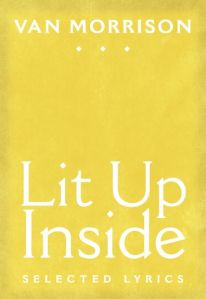
As most Morrison fans know, the redwood chapter of the Irish singer-songwriter’s story was relatively brief, compared to his life in music, now in its sixth decade. And yet the period beginning when he emigrated to America (coinciding with family life and a big burst of creativity) and ending with his three-year hiatus from performing and recording (following the release of Veedon Fleece) is notable: Morrison’s Bay Area tenure produced such an abundance of songs there was a surplus; moreover, they were consistently played on the radio and still are, forever ensuring his place in local music history. Van’s persistent presence, in and on-the-air here, has not only soundtracked our lives: it’s in our DNA, the songs passed on by Irish immigrant and hippie parents, down to their tattooed love children (and their children), even when concerning faraway characters like the “Brown-Eyed Girl” or “Madame George.” Chances are whether you live in Nor Cal, North Carolina, or Northern Ireland you feel this connection too, yet the combination of deep personal content and universal humanity tucked inside Morrison’s songs was largely lost on me until reading the verses as a whole in Lit Up Inside (City Lights, 2014), the first published collection of his lyrics, handpicked by the songwriter.
It is within these songs—written in Morrison’s own Irish, romantic, soul code, with their carefully planned lines and studied notes and phrases, learned from jazz and classic blues and early rock ‘n’ roll—the story of Morrison’s life unfolds. Whether in the concise rock ‘n’ roll tale, “The Story of Them,” the timeless “Gloria,” “Lonely Sad Eyes,” and “Mystic Eyes,” or epics like “T.B. Sheets” and “Tore Down à la Rimbaud,” we get a glimpse into the people and places of Morrison’s heart, while every sha la la la la la la la la lala dee dah, every your eye, your eye, your eye, your eye, your eye, your eye rolls off his tongue with the same ease it does our own.
Rarely a day passes in which I don’t silently quote from Morrison’s common poems and prayers. In fact, it is from one song, “Domino,” from which I draw most phrases, using them as mantras (though not necessarily in the order they were written). Popping forth, just when I need them most, the words have saved me needless worry, disgrace, despair, disgust, and other things worse. Dig it: There’s no need for argument. Don’t want to discuss it. Think it’s time for a change. Get some heavy rest. There you go. Lord have mercy (not that Morrison holds a copyright on that bit).
While “Domino” isn’t included in Lit Up Inside (it doesn’t need to be), others that work similar magic are included: “Blue Money” (take five, honey—when this is all over, you’ll be in clover, etc.), “Saint Dominic’s Preview” (as we gaze out on, as we gaze out on), “The Great Deception,” (you don’t need it): All are timeless, rich, and just that much sweeter for capturing a place, a time, a San Francisco (or other locale) that no longer exists.
And then there are the hymns, so many of them, providing the book’s heft, conjuring the Almighty, and the music itself, and the ability to heal, whether for the skeptic in “Dweller on the Threshold” or the believer in “See Me Through Part II (Just a Closer Walk with Thee).” Literature serves as savior in “Summertime in England,” the book’s centerpiece, as Wordsworth, Coleridge, Blake and Eliot join the gospel of Mahalia Jackson in one hella hallelujah chorus. In his celebration of the oneness (“Rave on John Donne”) and explorations of the dark (“Tore Down à la Rimbaud”) there is an unremitting acceptance of the what is.
Even in what some might call the middle of the road songs, “Days Like This” and “Have I Told You Lately That I Love You,” Morrison provides simple truths served up by a full service songwriter, and the kind of warmth, companionship, healing, and love too often in short supply in real life (in spite of a reputation that has painted him as a bit gruff). Reading these works on the page I was not only mesmerized, but delivered to a place where recordings cannot always take me. I’m astonished by the depth of the songs, unaccompanied, and their illumination of the Vanness—of a life lived intentionally yet with imagination.
In keeping with the new tradition of assigning the task of writing about musicians to those who generally write on other subjects, Irish professor Eamonn Hughes, American poet David Meltzer and Scottish crime writer Ian Rankin provide the book’s largely personal front material. Both forwards include testimony of the ways in which music in general and Morrison specifically aid transition and provide a vision toward destinations unknown. All the contributions refer to Morrison’s Belfast past and soul while Meltzer makes a case for the Irish songman belonging to the City Lights family of outsider poets and dissidents. Though I had not previously given much thought to the idea of Morrison—maker of hit singles, taker of world tours and recognizable throughout the West and way beyond it—as an outsider, the songs compiled are certainly a validation that fitting in is for squares, being on trend is for the birds, and speaking one’s mind may not win you any popularity contests, but in the end, truth wins. Lit Up Inside is further evidence, as if more was needed, that Morrison’s burr takes us toward our own truths and serves as a guide for the weary and restless on their way home. An artist for the ages, his songs are timeless contributions to poetry, written and spoken word, and shall remain in the air, long after we’re gone and the very last foghorn blows.
Cultural history has everything to tell us about our present dilemmas which is my simple and short explanation of why I’ve devoted the majority of my professional writing life to researching the lives of the heroes and sheroes of American arts and letters and where they meet the political and social issues of our own lives and times. When my last two assignments concerned two iconic men who made an imprint on the culture at large in the late ’60s and early ’70s, I must admit I paused to check if I was locked in some kind of retro-groove, reliving a past that I wasn’t quite old enough to participate in firsthand. Though very quickly, it became clear to me that both subjects made contributions to the national dialogue that remain of absolute and vital relevance to the here and now. It is precisely that reason why two very serious people, Frank Zappa and Bobby Seale, are of interest to me…
Eat That Question: Frank Zappa In His Own Words opened in New York and Los Angeles over the weekend and goes into wider release on July 1. I recently interviewed the film’s director, Thorsten Schütte, in San Francisco and we talked about Zappa’s lifelong commitment to freedom of expression. Read the entire article in Down With Tyranny!.
The week prior, I had the rare opportunity to attend a live Q&A between Black Panther Party co-founder Bobby Seale and San Francisco hip hop emcee and activist, Sellassie. Again, I reported on it for Down With Tyranny! (and I hope you’ll read my impressions and other contributions there). Though the meeting between generations betrayed the proverbial gap, it’s been gratifying to watch these kinds of alliances unfold along with the new movement for racial and economic justice since the 2011 publication of Keep on Pushing: Black Power Music From Blues to Hip Hop. At the time of publication, there was no such movement in place, though the persistence of the leaders of the ’60s, as well as the idea of musicians and student leaders playing a role in bringing the next generation to consciousness, are what inspired me to write the book in the first place. I hope to begin revisions to the text soon and deliver an updated edition of the book in 2018. Until then, thanks for reading.
A righteous pundit, Loudon Wainwright III has been pursuing music since the late ’60s, debuting with a self-titled album in 1970. Aside from his honest and deeply felt songs on relationships and life circumstances, he’s long written satirical work, a style he calls “musical journalism,” best demonstrated over an album’s length on 1999’s Social Studies (he sticks it to O.J. Simpson, Tonya Harding, and Jesse Helms). For awhile he was the in-house songsmith for Nightline and is occasionally commissioned songs for NPR. His latest is a hilarious nightmare vision of this year’s U.S. Presidential election.
In a recent post for Down With Tyranny!, I report on the forced resignation of the Chief of SFPD and the way forward in the fight by the Frisco 5 to reclaim San Francisco. The activists who recently survived a 17-day hunger strike had a volunteer attending physician, Dr. Rupa Marya: She’s since founded the University of California San Francisco (UCSF) Do No Harm Coalition of medical professionals with participation of students from SF State, and has declared the epidemic of police brutality a public health emergency (with data to back up the claim). Read the full story at Down With Tyranny! and be sure to enjoy this clip of Dr. Marya’s work away from the hospital, as leader of the group Rupa and the April Fishes (watch for the cameo by Bay Area activist/musician, Boots Riley).
I’m a beach person. Maybe it goes back to when my people came here by boat, in the early 20th Century, and set up business at the water’s edge. Born on an avenue named after the sea, the story goes my parents met at San Francisco’s public beach and I took some of my earliest steps there. Of my not-so-many teenage accomplishments, I took most pride in holding what I think was the land speed record of 30 minutes by Mustang, from high school parking lot to Sunny Cove in Santa Cruz. As an adult, I’ve lived life either blocks away or on a bus line to the water. I’m comfortable wearing the scars of a weather-worn Californian who knows her Coast, from Del Norte to Coronado.
David Evans, better known to the world as musician the Edge, was born outside of London, England, though his parents hailed from a coastal town in South Wales. The family moved when Evans was a babe in arms to Dublin, the Emerald Isle, where he formed a band with schoolmates Paul Hewson, Adam Clayton and Larry Mullen, Jr. (during the same window of time I was burning up the highway). Our generation was taught, by rock itself and the previous generation’s missteps, to tear up the rules and start again. U2, for their part, did it their way, and in a big way, joining spirituality and romance with a post-punk sound that rubbed against the grain of the movement’s nihilistic and apocalyptic profile. Edge was a guitar innovator and key architect of the sound of U2, who’d come to be identified as earnest, naive, over-arching, dramatic, and populist, mostly owed to singer Bono’s undeniable charisma and confidence. Occasionally humorous (though not enough), in their years as a top name in rock ‘n’ roll, they’ve collaborated with artists the likes of Salman Rushdie and Wim Wenders, sat at tables with world leaders, and used their name to do good, raising money for Africa’s hungry with Live Aid and Ireland’s jobless with Self Aid and for worldwide human rights with Amnesty International. Bono co-founded the One and (Red) campaigns to ease poverty and disease, and Edge created Music Rising to support musicians post-Katrina. Most recently, the band lifted its voice against terrorism in Paris. Supporting all manner of progressive causes, a list of the band’s good works would be exhaustive; they are peerless, though their lofty aspirations toward creating a better world have made them easy targets, especially Bono because, well, he’s Bono. Like Bono, The Edge is in an elite class as a member of the band whose recent world tour grosses broke all previously existing box office records. Their spoils include multiple residences not only in their country of origin, but here and elsewhere. And as of December of last year, the 150,000 highly contested acres The Edge acquired above Malibu in the Santa Monica Mountains has been cleared by the California Coastal Commission for development.
The last sign of any jazz in San Francisco’s Fillmore District is this banner, hoisted in 2014.
I regret to inform, you missed it: The final day of celebration for the St. John Coltrane African Orthodox Church on Fillmore Street was Sunday. Aside from its usual meditation on “A Love Supreme” and a service to deliver the wisdom in its creator’s words, there was even a bit of time that day reserved to remember Prince, a kindred spirit and sound messenger of love who transitioned last Thursday. But really, there is no need to cry for the Coltrane Church: Going strong for nearly 50 years, it will continue to thrive in one incarnation or another, in accordance to its creed proclaiming life everlasting. Armed with a faith that knows no bounds, no building is going to hold down Archbishop Franzo King and his congregation. He and his musically gifted family of ordained ministers will remain in the light of Coltrane consciousness and on the move for truth and justice. However, if you’d still like to grieve our losses, please consider the sorry state of San Francisco, and our complicity in the soul murder of the city the Church calls home.
It’s been 30 years since Beat poet Bob Kaufman passed on, a few months shy of his 61st birthday. The often underlooked surrealist was a contemporary of Allen Ginsberg and William Burroughs; he lived in the North Beach and the Mission Districts of San Francisco for much of his life. In the spirit of National Poetry Month and in commemoration of what would’ve been his 91st birthday today, his work was celebrated here last week, a demonstration that it is never too late or too early to appreciate a visionary artist.
Speaking to Kaufman’s influence on the wider world of poetry and his deep imprint on them, poets Anne Waldman and Will Alexander, though only briefly acquainted with him personally, read Kaufman’s work aloud, accompanied by saxophonist David Boyce and percussionist Kevin Carnes. Sponsored by the Before Columbus Foundation and the San Francisco Public Library, members of Kaufman’s family traveled from Mississippi and Louisiana to be present and to honor his memory.
Listening to Waldman and Alexander, you could hear why Kaufman’s poems are best experienced aloud and accompanied by the jazz he loved. Kaufman’s epic “The Ancient Rain,” written after his famous vow of silence (following the Kennedy assassination and until the end of the Vietnam war) was read by Waldman, as she sounded out the blows empire wages against humankind, and on bodies Black and Brown. Readings were also selected and extracted from “I, Too, Know What I Am Not,” “Rue Miro,” and “Afterwards, They Shall Dance,” among others (I did not hear my favorite, “Hollywood,” though that doesn’t mean it wasn’t read).
Kaufman gave up writing down his poetry in 1978, but his words survived thanks to friends, fellow poets and his wife Eileen who taped and cobbled together the pieces collected in the works published after his death. Though
Kaufman’s poems foretold the persistent dilemmas of our age—the surveillance state, police violence (he was arrested over 30 times), media irresponsibility, a collapsing democracy and unnecessary poverty in a nation of great wealth—with his vision came the cost of direct engagement with such disturbing truth.
In his introduction to the posthumous Kaufman collection, Cranial Guitar, writer David Henderson noted that Kaufman’s life was unusual for a man of letters in that he left very little in the way of written materials or correspondence; just three published volumes, the broadsides Abomunist Manifesto, Second April and Does The Secret Mind Whisper? and some songs. One of those songs, “Green Rocky Road” has enjoyed a long tenure as a folk music standard; most recently it was revived in the Coen Brothers film, Inside Lleweyn Davis. Co-written with Len Chandler, and popularized by Dave Van Ronk, the song bears the dreamlike, compelling qualities that are the hallmark of Kaufman’s poems; Chandler adapted the melody from a slave-era song quite possibly from the Georgia Sea Islands.
Kaufman’s most easily accessed works in libraries and bookstores are generally Solitudes Crowded with Loneliness, The Ancient Rain: Poems 1956–1978 and Cranial Guitar: Selected Poems by Bob Kaufman as well as Mel Clay’s Jazz Jail and God: Impressionistic Biography of Bob Kaufman. A new film, debuting at the San Francisco International Film Festival, And When I Die, I Won’t Stay Dead(Billy Woodberry, 2015), burrows into some of Kaufman’s secret history, from his beginnings as a union organizer, to the shock therapy at Bellevue that contributed to his silent years; there was substance and alcohol abuse and he was an absent father, though his magnitude as a poet is not open to debate. Artist and translator Mary Beach says, “I think he was one of the greatest of the 20th Century, frankly.”
I think of Kaufman’s poem, “Afterwards, They Shall Dance,” just about everyday. It begins like this:
In the City of St. Francis they have taken down the statue of
St. Francis,
And the hummingbirds all fly forward to protest, humming
feather poems.
The following is a rare, brief clip of Kaufman at work (likely at San Francisco Art Institute).




 extremely necessary to leave city limits and seek sun. On most days, it can be found shining a few short miles from the Golden Gate Bridge in Marin County, known the world over for its rich hippie homes of ’60s and ’70s rock stars. Though several decades have come and gone since Marin’s hot tub, water bed and peacock-feathered days, no matter how many times I drive north, down the long stretch of Sir Francis Drake Boulevard and through San Anselmo toward the beaches, my wandering mind inevitably lands on one question: How could Van Morrison stand it here?
 It is within these songs—written in Morrison’s own Irish, romantic, soul code, with their carefully planned lines and studied notes and phrases, learned from jazz and classic blues and early rock ‘n’ roll—the story of Morrison’s life unfolds. Whether in the concise rock ‘n’ roll tale, “The Story of Them,” the timeless “Gloria,” “Lonely Sad Eyes,” and “Mystic Eyes,” or epics like “T.B. Sheets” and “Tore Down à la Rimbaud,” we get a glimpse into the people and places of Morrison’s heart, while every sha la la la la la la la la lala dee dah, every your eye, your eye, your eye, your eye, your eye, your eye rolls off his tongue with the same ease it does our own.
 why I’ve
 devoted the majority of my professional writing life to researching the lives of the heroes and sheroes of American arts and letters and where they meet the political and social issues of our own lives and times. When my last two assignments concerned two iconic men who made an imprint on the culture at large in the late ’60s and early ’70s, I must admit I paused to check if I was locked in some kind of retro-groove, reliving a past that I wasn’t quite old enough to participate in firsthand. Though very quickly, it became clear to me that both subjects made contributions to the national dialogue that remain of absolute and vital relevance to the here and now. It is precisely that reason why two very serious people, Frank Zappa and Bobby Seale, are of interest to me…
 A righteous pundit, Loudon Wainwright III has been pursuing music since the late ’60s, debuting with a self-titled album in 1970. Aside from his honest and deeply felt songs on relationships and life circumstances, he’s long written satirical work, a style he calls “musical journalism,” best demonstrated over an album’s length on 1999’s Social Studies (he sticks it to O.J. Simpson, Tonya Harding, and Jesse Helms). For awhile he was the in-house songsmith for Nightline and is occasionally commissioned songs for NPR. His latest is a hilarious nightmare vision of this year’s U.S. Presidential election.
 at the water’s edge. Born on an avenue named after the sea, the story goes my parents met at San Francisco’s public beach and I took some of my earliest steps there. Of my not-so-many teenage accomplishments, I took most pride in holding what I think was the land speed record of 30 minutes by Mustang, from high school parking lot to Sunny Cove in Santa Cruz. As an adult, I’ve lived life either blocks away or on a bus line to the water. I’m comfortable wearing the scars of a weather-worn Californian who knows her Coast, from Del Norte to Coronado.
 It’s been 30 years since Beat poet Bob Kaufman passed on, a few months shy of his 61st birthday. The often underlooked surrealist was a contemporary of Allen Ginsberg and William Burroughs; he lived in the North Beach and the Mission Districts of San Francisco for much of his life. In the spirit of National Poetry Month and in commemoration of what would’ve been his 91st birthday today, his work was celebrated here last week, a demonstration that it is never too late or too early to appreciate a visionary artist.
 Denise Sullivan