“We need people like Bradley Manning,” said singer Graham Nash on Friday night at the Nourse Auditorium in San Francisco, in conversation about his new book, Wild Tales: A Rock & Roll Life. The evening ended with questions from the crowd, a convention that in lieu of any interesting questions coming from the stage often provides the most interesting parts of these so-called public discussions.
“Where is the anger?” someone from the audience asked. “Why aren’t we rising up?”
“Do you think they really want protest songs on the airwaves? Do you think they want people singing about these things on TV?” answered Nash with more questions, while further noting the media has largely turned its back on free speech matters. Though he suggested our first and fifth amendment rights were our country’s greatest assets, his questions were perhaps an acknowledgement that we can no longer rely on a free press to help us protect those rights to speech, a fair trail, or to keep us truly free.
Advocating for truth-speaking and against torture, as well as for solar power and ending world hunger, Nash isn’t just a one-size-fits-all protest singer; rather, he’s one who’s consistently stood strong against nuclear power, supports the science behind climate change, and was on the side of the Occupiers on Wall Street. The musician of conscience has consistently weighed in with songs of resistance since the dawn of his career, as a solo artist, as a member of the duo, Crosby & Nash, and the supergroup, Crosby, Stills, Nash & Young. Last week I posted Nash and James Raymond’s song for Bradley Manning; his earlier works like “Chicago” and “Immigration Man,” among others, bear his mark of vocal excellence combined with pointed, topical concerns.
Among his known charitable activities, Nash co-founded the Musicians United for Safe Energy in 1978; he participated in 1985’s Live Aid, spotlighting famine in Africa and he toured with CSNY in 2006 on the Freedom of Speech tour, a traveling protest roadshow. “We knew what we had to say, especially about George Bush,” Nash said, though the message was not entirely popular, particularly as they crossed the red states. “I’d never been on a tour where there were bomb-sniffing dogs. I’d never been on a tour where people walked out. You bought a ticket to a Crosby, Stills, Nash & Young concert…what did you expect?”
On Friday, the crowd was comprised largely of freethinkers, baby-boomers, and progressives in accordance with Nash’s views, clued-in enough to ask: Had he ever requested his FBI files? Born in Blackpool, England but a citizen here since 1978 Nash answered with yet another question: “Why would I care if they have papers on me?” He shouldn’t. But rest assured, they do. And had I held a mic that night, I would’ve first and foremost thanked Graham Nash—bold enough to sing the contents of his heart and mind for over 50 years—no questions asked.
Iraq Veterans Against the War asked supporters to use social media this Veteran’s Day to speak about personal experience with militarism. I don’t have much direct contact to report, unless you count carrying a sense of American shame and holding a deep well of sadness for the amount of senseless violence, killing, overspending, and harm done to the world’s people and resources in the name of liberty and justice for all. My immediate family is not militarily descended, though among my few relatives who were called up, I remember an uncle named Charlie who went to Vietnam and mercifully returned, then asked to be called Charles from there on; I have not seen much of him in 30 years, but I suspect he’s suffered, the result of time served.
My own conscientious objection and moral opposition to war developed out of the lessons taught by a few good teachers who waged stealthy anti-militarism campaigns in their high school classrooms: Images from documentaries on the Holocaust and post-atomic bomb Japan have stayed with me strong since I saw them. An education in war’s atrocities, along with my own love of the message music of the ‘60s and ‘70s, I believe schooled me well, until I went on to research and learn more.
Created at the height of the Vietnam era, conceived with strength and intended as a balm and wake-up call for all that had gone wrong, artist/activists from Buffy Sainte-Marie (“Universal Soldier”) and Phil Ochs (“I Ain’t Marching Anymore”) to giants Bob Dylan (“Blowing in the Wind,” “Masters of War”), John Lennon and the Plastic Ono Band (“Give Peace a Chance,” “Imagine”), the stars of Motown (Marvin Gaye’s “What’s Going On?”, Edwin Starr’s “War,” written by Whitfield and Strong) and singers, songwriters and performers of all forms (“Peace Train” by Cat Stevens and “Love Train” by the O’Jays”), delivered the songs of peace. Quite often they took anti-war sentiment to the top of the charts. It was a time when an anti-war view didn’t have to fight for space on the front page or evening news—it was the news. Back then, unless they were complete squares, members of the silent majority or total idiots, men and women were not afraid to stand against war.
As time went on, the wealth of Vietnam-themed Hollywood feature films (Coming Home, The Deer Hunter, Full Metal Jacket, Platoon) depicting the horrors of war, and set to a rock music soundtrack of songs associated with the time period (Creedence Clearwater Revival’s “Run Through the Jungle” and “Who’ll Stop the Rain,” for two) further informed my own beliefs about that time. The truth had surfaced and history was beginning to support the unjust nature of all that war’s ill concepts and casualties. Bombing unarmed innocents in the name of freedom is pure and simple, illegal, immoral, and just plain wrong. One of the movies, Francis Ford Coppola’s Apocalypse Now!, so convincingly used “The End” by the Doors to convey a soldier’s pain, one could be forgiven for thinking the music was written to fit the sequence(s) in which it was used (it was not). Here is the opening scene of the film that stars Martin Sheen as the fictional Captain Benjamin Willard:
Lost in a Roman wilderness of pain, and all the children are insane. Jim Morrison’s apocalyptic visions and anti-imperialist artistic views were tied up in a deep study of history and the humanistic concerns he shared with the artists of peace and vision who inspired him. Given his own generation’s stand against the war, Morrison’s radically left of center way of approaching life and art was complicated by his own family ties to militarism: His father, Admiral Steven Morrison commanded the forces in the Gulf of Tonkin incident that sent the Vietnam war into overdrive. The Doors cut at least one specifically anti-war song, or at least we can deduce that theme from the action in their own short film for “Unknown Soldier.”
“War is over,” the present tense affirmation that serves as the chorus to”Unknown Solider,” predates the use of the phrase in the Plastic Ono’s Band “Happy Xmas (War is Over)” (1971); it coincided with the Phil Ochs song “The War is Over” (1968) and knowing Morrison’s influences, was likely borrowed from French filmmaker Alain Resnais’ 1966 film, War is Over, a political thriller set in Franco-era Madrid and Paris.
As time went on, the anti-war song fell out of favor, at least in the U.S. where our direct involvement in wars was mostly covert and away from our shores. Now and again, we’d get a crucial reminder that war is bad and killing is no good in songs (“War” by Bob Marley), while other times when war was declared and battles raged on, anti-war songs experienced a tiny revival (“Killing in the Name” by Rage Against the Machine comes to mind, as does “Living With War” by Neil Young who continues to wage peace every day of the year). But unless mandatory service makes a comeback, it is guaranteed you’ll hear fewer songs of resistance to war, or resistance to much of anything, really. Killing for peace, bombing for safety and drones from here to kingdom come are not really what the people want from their songs anymore. Until further notice, the rocket’s red glare shall shine on, while few take a stand in song to abhor them.
Where are the songs that urge calling off drone strikes? I know there are some, but they are not on the Top 40, blasting from jukeboxes and commanding the dancefloor the way Edwin Starr made a stand: “War! Huh-good God, y’all, what is it good for? Absolutely nothing. Say it again. Yea.” Though once again, the ’60s generation—I’m not saying they’re the only ones, but in terms of longevity, staying the course, consistency of message and laying it down—comes through. Septugenarian Graham Nash cut a song with James Raymond for Bradley Manning.
Nash had done the same for Bobby Seale and the Chicago Seven who among other things, opposed the war. I’m not telling fans of ’60s rock anything they don’t already know. But for the sake of the song, if you’re a singer or a songwriter and think that killing and torture in the name of what is wrong, use your stage to sing out and decry the lie, even if it’s just one song. Or do something: Professional musician Darden Smith is writing songs with vets. Recounting their experiences with war and turning them into songs, Smith has aided soldiers in coming to terms with their opposition to violence of all kinds.
The Veterans Against the War say on their website that everyday, 22 veterans take their own lives. Could it be that they cannot stand the post-traumatic stress of remembering? Were they tortured, or asked to torture someone else? We will not know now or ever because they’re gone, as are the great mean of peace, Gandhi, Dr. King and John Lennon. Today I thank all, veterans and others, who fought and now work for peace: You remind us that we can not tell ourselves that war is something that only happens over there, far away, to other people. We cannot continue to pretend that we are not connected or impacted too. We are responsible. The horror, the horror.
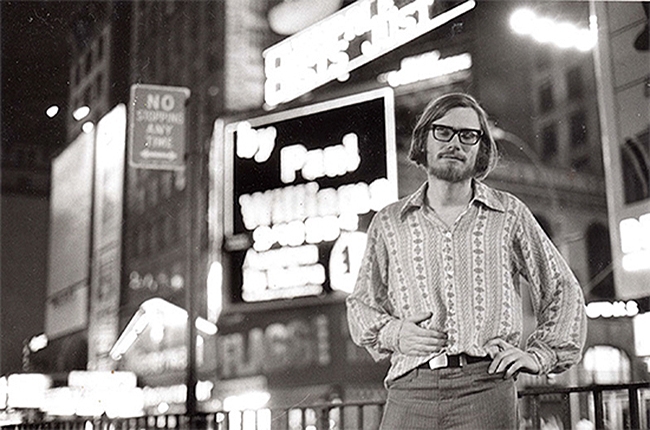
Tonight is the Lit Crawl, the final night of San Francisco’s annual festival of books, Litquake. For the occasion, I organized a tribute to writer Paul Williams who at age 17 founded Crawdaddy! the first national magazine of serious rock criticism. From John and Yoko’s bed-in for peace, to the back-to-the-land movement, and a literary association with Philip K. Dick, Williams wrote over 25 books on his travels through rock ‘n’roll and underground culture. The night’s offerings by, about, and inspired by Williams were prepared by Trina Robbins, Rudy Rucker, James Greene Jr., Ron Colone and Williams’ wife, Cindy Lee Berryhill, who (with the exception of Robbins) will be there to read them. The following is a repost of my remembrance of Paul Williams on the occasion of his passing on March 27, 2013, at the age of 64.
Crawdaddy! founder Paul Williams, widely considered to be the creator of modern rock’n’roll criticism, has died in Encinitas, California, following a long struggle with early onset dementia, the result of traumatic brain injury sustained following a bicycling accident in 1995.
In 1966, a 17-year-old Williams wrote, edited and distributed Crawdaddy! from his dorm room at Swarthmore College. As a young man at the epicenter of ‘60s music and movement, Williams had what is now recognized as incredible access as a journalist on the scene, whether taking calls from Bob Dylan, sitting in on a studio session and riding a plane with Jim Morrison and the Doors, partying with Beach Boy Brian Wilson, or running a gubernatorial campaign for Timothy Leary.
Here’s a clip of Paul with John Lennon and Yoko Ono at the celebrated Bed-in for Peace (he’s wearing a brown shirt, back-to-the-camera, front and center).
Williams had keen powers of observation and while his intellect was sharp, it was the emotional content of music that he attempted to unravel in his writing. Over time, Williams grew Crawdaddy! into a magazine with a circulation of 25,000—about the right size to serve his niche audience of music geeks, the diehards who lived the counterculture rock ‘n’ roll lifestyle. Williams, however, turned out to be more of a back-to-the-land guy. He left the city and turned over the magazine to capable hands while he pursued other roads—like a love of literary science fiction and tracing the evolving career of Bob Dylan as a live performer. Eventually becoming executor of the Philip K. Dick estate and editing a book of Theodore Sturgeon stories, the science fiction community also mourns the loss of Williams today.
In the ‘90s, Williams revived Crawdaddy! briefly as a newsletter; compiled by hand and from the heart, much the way he started it, his close-knit and handcrafted care contributed to Crawdaddy! maintaining its cachet through the years. It was in his middle period, of attending Bob Dylan concerts that I became acquainted with Williams while I was attempting to get my own career as a music writer up and running. He encouraged me to write my first book and introduced me to my first publisher. Williams was the closest person I had as a mentor among rock writers, though how I ended up writing for the online edition of Crawdaddy! from 2007-2011 was not related to our acquaintance. By that time, Williams had sold the rights to his magazine to an entity known as Wolfgang’s Vault and they hired me as a contributor there where it was my privilege to interview a crazy-long list of rock legends who gave me access largely based on the reputation of the magazine produced by Williams. Richie Havens, Yoko Ono, Van Dyke Parks, Eddie Kramer, Janis Ian, and John Sinclair, among others, all remembered howCrawdaddy! contributed to shaping the culture of music fan journalism, and all were happy to give back what Williams had so freely given to them with his magazine and with his words.
My interactions with Williams, a couple of handfuls of times over two decades, and just twice during his extended illness, were marked by a spark of familiarity—the kind that is shared by people who live and write inside the music, among a community of friends whose own lives are intertwined with art and music, the beauty of the everyday, and the struggle to survive it. Through the years, I closely observed Williams, watching as he maintained his dignity, despite the diminishing returns encountered by his rock writing. I noticed that he refused to compromise, that he did things for love instead of money, and admired that he remained a fan while maintaining his professional status on the inside track. As it turned out, taking a path like that is no way to make a living in the rock ‘n’ roll business, but it was a great way to live a rich life, full of love and friendship, full of writing, and full of rock’n’roll.
His passing last night comes as little surprise; the grieving process for family and friends had begun some years ago when Williams could no longer care for himself and became confined to an assisted living facility not far from the home he shared with his wife, singer-songwriter Cindy Lee Berryhill, and their son, Alexander. Last weekend in New York, Williams and his life’s work was celebrated at a one-day show of his manuscripts at the Boo-Hooray Gallery, organized by the Patti Smith Group’s Lenny Kaye. The intention of the exhibit was to shine a light on the vast literary contribution Williams made to rock journalism, science fiction, and to the study of Bob Dylan’s evolution as a performing artist in the late 20th Century.
Goodbye, Paul, with love and thanks to you for all you gave to the music, to the encouragement you gave to me as a writer, and with condolences to your friends, your sons, and your devoted wife, Cindy Lee.
Here’s a link to a piece I wrote about the love shared by Berryhill and Williams and how his longterm illness impacted and ultimately inspired her music. Some of text of this remembrance was borrowed from the piece that originally appeared in Crawdaddy! online in July 2011.
Buffy Sainte-Marie is one of the central figures in Keep on Pushing: As unique musically as she is direct lyrically, Sainte-Marie was born on the Piapot Cree Indian reservation in Saskatchewan and adopted by a family in Maine. She says that as a child she was artistic innately, as well by necessity. Befriended by a Narragansett couple who lived near her family in Maine, it was from them she learned about cultural handcrafts and kindness. “They didn’t sit around and give me Indian lessons,” she said, “But on the other hand, they didn’t chase me away.” As a young student, Sainte-Marie was drawn to philosophy and religion, while she simultaneously developed her musical side, as a folk performer. Her unique vibrato and innovative song style are what first drew me to finding out more about her story; what I found, moved me to the core, from the volume of hardship and turmoil she described, to her refusal to study war, which landed her among Nixon’s enemies. “I don’t think many people, even today, understand how much blacklisting has gone on of artists in the record business,” she says. In the face of the hassles, Sainte-Marie continued to innovate, as an electronic musician as well as a computer-based visual artist. Committed to teaching, to passing on what was given freely to her as well as what she fought to achieve, Sainte-Marie’s work still offers a pointed critique of war, greed, injustice and the anti-people policies that impact indigenous people all over this land.
Debora Iyall is one of the artists directly descended from Sainte-Marie’s example of native creativity: A singer, a songwriter, a poet, and a visual artist, Iyall’s story also unfolds throughout Keep on Pushing, beginning with her time as a teenager during the Indians of All Tribes’ Occupation of Alcatraz. Her punk-rooted style bears little resemblance to Sainte-Marie’s folk roots (Iyall was most influenced by Patti Smith), but a close connection to arts education and her roots in the Cowlitz tribe made her a unique presence in San Francisco art-punk band, Romeo Void. Iyall had the guidance of elders—her mother and the Natives she met at pow-wows and on Alcatraz—who supported her creative discoveries. “I felt like I had these little nuggets of information or culture to hang on to,” she said. Today, Iyall exudes confidence in her work as a performer and visual artist and is also a teacher and advocate, for artists of all colors and dimensions.
I was honored and humbled to have been allowed access to the lives of both Debora Iyall and Buffy Sainte-Marie—two women whose works have uplifted and inspired, not only their brothers and sisters native to the Americas, but their fellow artists and anyone who’s ever been broke or hungry, tired, or cast aside, and helped them to keep on keeping on: Their complete stories are told in Keep on Pushing.
As most readers know, today is the 50th anniversary of the the historic March on Washington for Jobs and Freedom. What you may not know, even as an astute observer of civil rights and music history and where they meet, is the name Len Chandler: He was among those assembled to help Dr. King push forward his dream of racial harmony and economic justice on that day, as well as on the marches in the Southern States. At the March on Washington, Chandler was one of the voices in a trio that included Bob Dylan and Joan Baez. He marched with Dr. King and traveled through the South in the name of voter registration, informing rural Southerners of their polling rights, at risk to his own life. It was a now-you-see-it-now-you- don’t YouTube clip of Chandler’s inspirational performance of “Eyes on the Prize” that contributed to inspiring me to track him down and move forward with the writing of Keep on Pushing, my text that unpacks the origins of freedom music, and its roots in African American struggle and triumph.
Originally from Akron, Ohio, and studying on scholarship at Columbia in the ’50s, Chandler made his way to Greenwich Village folk music a bit by accident. Lured to the sounds of Washington Square Park by the downtown youths he was mentoring, he easily fell into the scene based on his natural ear for songwriting and his familiarity with the songs of Lead Belly, Big Bill Broonzy, and Woody Guthrie. Following a performance at the popular Village coffeehouse, the Gaslight Cafe, Chandler landed a contract to go to Detroit, writing and performing topical songs for local television. A few months later when the gig was through, he returned to New York to find the folk thing in full swing: Bob Dylan was the latest arrival to town and the pair started to trade ideas and songs. “I hadn’t yet begun writing streams of songs like I would, but Len was, and everything around us looked absurd—there was a certain consciousness of madness at work,” wrote Dylan in his book Chronicles, remembering when. Chandler remembers it like this in Keep on Pushing: ”The first song I ever heard of Dylan’s was ‘Hey ho, Lead Belly, I just want to sing your name,’ stuff like that.” Dylan used Chandler’s melody for his song, “The Death of Emmett Till.” “Len didn’t seem to mind,” wrote Dylan.
Chandler went on to record two albums for Columbia: To Be a Man and The Loving People. He continued to work as a topical songwriter, a peace and civil rights advocate, and as a songwriting teacher; his tour of Pacific Rim bases with Donald Sutherland, Jane Fonda, Holly Near and Paul Mooney was documented in the Francine Parker film, FTA, a must-see for anyone interested in US history and anti-war efforts within military ranks.Catch a glimpse of Chandler at the end of this trailer for the film:
Today, Chandler is largely retired from performing, but he remains well- informed on human rights, politics, and the arts, and can write and perform songs that still pack a punch. I must say it was a privilege to meet one of the true unsung singing activists of my lifetime (as well as his wife Olga James, a pioneering performer in her own right), and have him tell his story in Keep on Pushing (which is where you will find more straight talk from Chandler, as well as my own perspectives on his contribution to civil rights history). I had hoped to see him on television today, in the crowd in Washington, or better yet, onstage with Peter and Paul, reviving a freedom song for our times. Perhaps I missed him, but Len Chandler belongs on the guest list of esteemed names assembled for any kind of 50th anniversary commemoration of the March, the Civil Rights Era, and anywhere Freedom Songs are still sung.
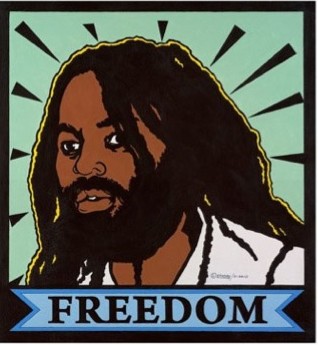
There is only one voice like Mumia Abu-Jamal’s, its tone perfect for professional broadcasting, its message carrying necessary information for our times. But Abu-Jamal, as most people know, is no longer primarily an announcer by trade. Better known as Mumia to the worldwide community of human rights activists who support his case, the former radio journalist has been serving time in prison for over 30 years now. He has spent much of that time writing and appealing his case.
In the documentary Long Distance Revolutionary, filmmaker Stephen Vittoria and co-producer/Prison Radio sound recordist Noelle Hanrahan, make a compelling case that Mumia’s situation as a prisoner for life is more than a miscarriage of justice: Rather than retell the circumstances that lead to the incarceration of the journalist/activist (whose views forced him to moonlight as a cabbie, just to survive), they shine a light on how he’s used misfortune as opportunity, to become a prophetic voice for the voiceless.
Angela Davis, Amy Goodman, Alice Walker, Cornel West, Tariq Ali, Ruby Dee and James Cone are among the scholars, theologians, journalists, actors, activists, writers, colleagues, and family members who testify in the film on the important role Mumia—the writer as political prisoner—plays on the world stage, reflecting the revolutionary’s role in contemporary American society. Through interviews, news reel footage, photographs and most of all, interviews and sound recordings of Abu-Jamal, Long Distance Revolutionary tells the story of an intuitive and self-described “nerd” of a child, Wesley Cook, who journeyed into the Black Panthers, then followed his call to report on his city as he saw it, much to the distaste of its notoriously racist law enforcement. Of course, that’s business as usual in the land of the free, while the mystery that unfolds onscreen in Long Distance Revolutionary is more to a specific point: Just how does a death row inmate as sharp as Abu-Jamal keep his mind in shape and his spirit alive while the state does its job squeezing the life out of him? Of particular note are the words of literary agent Frances Goldin who I’m unable to quote here, but who talks of how she was sufficiently moved by Mumia’s prose to take a chance on him in the book market. But the most convincing voice of all is Mumia’s own which can be read in his multiple books in print all over the world and heard on Prison Radio, still recorded by Noelle Hanrahan. At the film’s premiere in Mill Valley, California last October, Mumia delivered an address, especially recorded for the Bay Area. He remembered its “luscious sun,” and the Bay as a place where he, “a tall, skinny, dark sunflower,” could be among some of the “best, boldest, blackest, sweetest” brothers and sisters he claims to have known.
Curiously, the film’s only musical voice in the chorus is M-1 of Dead Prez. Used to be musicians sang out for injustice, the way that Bob Dylan once did for Rubin “Hurricane” Carter (who also appears in the film); in that case, the musical association indirectly lead to Carter’s exoneration. But the music community has largely remained silent on the subject of Abu-Jamal. So where are the other contemporary Musicians for Mumia? According to director Vittoria, the usual suspects were approached, but only Eddie Vedder responded to the urgency of the call. “Please know that I (and my co-producers) tried hard to get…and a number of other musicians into the mix—on numerous occasions and through numerous fronts—but not one of them would agree to interview (except M-1) and/or offer a musical piece or new selection,” Vittoria wrote in an email to me. Vedder’s song “Society” (previously associated with the feature film, Into the Wild, concerning environmentalist/adventurer, Christopher McCandless) serves as the film’s closing theme.“I was fortunate that Eddie allowed us to grace the film with his powerful song,” added Vittoria.
Abu-Jamal was taken off death row late last year; he remains sentenced for life without possibility of parole and lives among the general prison population at the Pennsylvania State Correctional Institution at Mahanoy. But the system has not vanquished his spirit or his message. Mumia is still on move: Long Distance Revolutionary has been on the festival circuit and in general release throughout the year. It opens August 23 at the Roxie Theatre in San Francisco and next month at Spokane’s Magic Lantern. Here’s the trailer:
(Preview of the book, Shaman’s Blues: The Art and Influences Behind Jim Morrison and the Doors, by Denise Sullivan, coming soon)
“Five to One,” was the outgrowth of a philosophical conversation among enthusiastic film students Jim Morrison, Ray Manzarek, and their friend Alain Ronay. Though it remains a lyric that was never fully explicated by Morrison for the record, the original conversation among student artists reportedly concerned a generation at odds with the established order at the height of the Vietnam era (“they got the guns but we got the numbers”). Driven by drummer John Densmore’s strict timing, there is a tension evoked as Morrison explodes into rebellious nuggets of truth— “Trading your hours for a handful of dimes”—blowing holes in the bubble once known as the American Dream. The song is also the source of the epigraphic phrase that would go on to be associated with Morrison and the Doors for all time: “No one here gets out alive.”
Morrison’s twist on the subject of power, his credibility as an outlaw street poet, and the Doors’ deep grooves would eventually weave their ways into the rebel music of the next generation and beyond, from punk rock to hip hop. Like Morrison at his finest, hip hop artists tell stories, some real, others fantastical, born from urban legend and rooted in folk and oral tradition. Hip hop’s more conscious artists seek to shine a light on societal ills, and work toward changing and correcting them; many have paid a price for their points of view by becoming ostracized from the mainstream or hunted by law enforcement. Like the bluesmen and rebel poets before him, Morrison shall remain a touchstone for the those who work in the tradition of prophetic and poetic verse, though his impact on hip hop, remains largely overlooked and under-explored.
The Cactus Album by 3rd Bass was an early example of the Doors’ embrace by hip hop artists (samples of “Peace Frog” and An American Prayer were used for its Bomb Squad-produced tracks in 1989). Since that early appropriation, DJs, producers, and emcees continue to pay homage with samples, mash-ups, and even covers (Snoop Dogg played with “dog without a bone,” in his own “Riders on the Storm”); there would likely be even more were the Doors not extremely protective of its legacy and cautious of approving tracks. “I’m the main spoiler in that area,” admits Densmore. He was however, willing to make a big exception.
In 2001, the Doors’ music made a massive leap into hip hop consciousness when producer Kanye West pulled a sample of “Five to One” to create the music bed for “Takeover” by Jay-Z. Conceived as a dis of fellow rapper Nas, “Takeover” launched a rap battle royale and series of answer songs and copycat tracks. “He sent me…a letter, explaining how what they were trying to do was what we were trying to do in the ‘60s, talk about social change, and I went, ‘Wow, and I got educated,” said Densmore who has done his best to maintain the integrity of the Doors’ catalog by holding out on commercial uses.
“You know a long time ago, Jim Morrison kinda blew up at us, because we were considering, “C’mon Buick, light my fire.’…Because the dough looked good and we were young,” he recalled. “Jim didn’t primarily write that song, and I thought God, he cares about the catalog, what we represent in general, the whole thing. And he’s dead. And I’m not. So I’m not gonna forget that.”
Jim Morrison died on July 3, 1970 in Paris, France. Largely estranged from his bandmates, family and friends who were in the midst of the US Fourth of July weekend, final arrangements for his burial at the Père Lachaise Cemetary were postponed until July 7.
This piece is adapted from an column that appeared in Paste in late 2011.
Alongside organizers, activists and orators, music people of all orientations have long brought the soul, sound, and heart to social and political movements. During 2011’s income disparity protests, the lionhearts of contemporary music turned out for the Occupation: Ever-ready artist/activist Michael Franti showed up to “Yell Fire.” Talib Kweli, longtime resident in the trenches of conscious hip hop, dropped some rhymes, weighing in with a powerful piece called “Distraction”: “Skip the religion and the politics and head straight for the compassion, everything else is a distraction,” he rapped. Tom Morello, who as The Nightwatchman, shows up with his ax wherever injustice is served, came out to lead a chorus of “This Land is Your Land,” the old Woody Guthrie song that’s easy enough to sing along to, even if you don’t know the words. And the generally apolitical Jeff Mangum of Neutral Milk Hotel delivered a rare, impromptu set of songs to the delight of Occupiers. In particular, the line “we know who are enemies are” from the fan favorite, “Oh Comely,” drew cheers from the crowd. Mangum’s appearance, if not his topically unspecific songs, provided the people with entertainment and support, the kind of unique companionship that only a song can provide in the cold, cold night.
“Our idea was to go down and raise their spirits,” said David Crosby, who with Graham Nash sang for the Zuccotti Park crowd. “What music is doing is unifying the people, bringing them together,” Nash told Rolling Stone.
“Everybody has a point, everybody has an idea everybody has a perspective on the world,” said rapper Lupe Fiasco when asked about musician participation in OWS. Stressing that celebrities are just like the rest of the occupiers, except in a higher tax bracket, he noted, “The leader is Occupy; it is the movement.”
Hip hop organizer and mogul Russell Simmons was among those on the street with the 99 percent; part of his role there was shepherding visitors like the Rev. Al Sharpton and Kanye West through the New York encampment.
The historic Occupy moment for social and economic equality was called by scholar Cornel West a “democratic awakening,” while throughout history, every freedom movement has had its own soundtrack or anthem for the long march home. And yet, there was not one dominant or lead song to emerge from the throng, an echo perhaps of the mass chorus of a movement without one soloist. Back in the high days of student organizations, protest and topical songs—the ’60s civil rights, free speech, anti-war and black power movements—marchers relied on folk tradition (reviving the old songs with the intention of forging something new). Rewriting spirituals for the secular world—or at least a world in which all faiths and traditions get equal respect—was an area mined by Pete Seeger, who along with Joan Baez, helped to turn “We Shall Overcome,” into an unofficial anthem of the Civil Rights Movement (most memorably, Baez sang it at the 1963 historic March on Washington; Seeger sang it at OWS).
Originally based on the gospel song, “I’ll Overcome Some Day,” composed by the Rev. Charles Albert Tinley and dating back to the African American Methodist Episcopal Church of the early 1900s, “We Shall Overcome” has changed shape through the years; also contributing to the version as we know it were elements of the spiritual “We’ll Overcome (I’ll Be All Right)”, another hymn from the immediate post-slavery period. But it wasn’t long after its arrival in church hymnals that “I’ll Overcome Some Day” was picked up by striking miners and laborers who went on to use it throughout their organizing fights in the ’20s, ’30s and ’40s. Sung by miners in the North as well as tobacco workers in the South, “We Shall Overcome” became a staple at the Highlander Folk School, the training ground for civil rights workers. Highlander teacher Guy Carawan helped to popularize the song among the forming Student Nonviolent Coordinating Committee (SNCC) in 1960 and the song was spread far and wide by Seeger who changed up the verses a bit. By and by, the melody to “We Shall Overcome” came closer to echoing another slave time spiritual, “No More Auction Block” (once sung by Paul Robeson and Odetta and used by Bob Dylan as the tune for “Blowin’ in the Wind”) than Tinley’s “I Shall Overcome” did. In essence, two folk standards emerged from one spiritual.
But more than its fairly tame melody, the strength of “We Shall Overcome” lies in its extraordinarily bold lyrical affirmations: We are not afraid/the truth shall make us free/we shall live in peace. These sentiments are as ripe for the current moment, as they were when the United Farm Workers used it in their fight for their rights, as when South Africans sang it in their struggle against Apartheid, and when Czechs sang it during the Velvet Revolution that overthrew communism. “We Shall Overcome” has been deployed in struggles in India and Ireland. It’s been sung by Bruce Springsteen and was recorded for his Seeger Sessions; Seeger, now in his ’90s, is still singing it. Though I’d say it’s time for someone from the youngest generation of American singers, songwriters and activists to adopt and adapt it, and lead the singalong. “We Shall Overcome” needn’t be consigned to folk’s moldy or buttoned-up past; rather, it’s protest gold, a song that hasn’t lost its value for over 50 years and counting. If it seems strange, update it. If it seems square, give it a beat. But traditional songs need to get sung and sung loud, as if your life depended on them because in fact there are people whose do: Overseas wars cost not only money but lives; poverty is killing people here at home. Workplace and housing discrimination, poor schools, environmental degradation, job disintegration—these are just some of the grievances that will end up in songs as the movement keeps moving on.
Dr. Martin Luther King Jr. knew what music could bring to a non-violent protest effort: he asked gospel great Mahalia Jackson to accompany him and Harry Belafonte to help organize his efforts. Belafonte’s life is a demonstration of just how important a role a singer can play in effecting change as well as how education in the arts can save young lives Nina Simone; Curtis Mayfield; Bob Marley; Peter, Paul and Mary; Sam Cooke; and many, many more singers and musicians contributed to positive social change and quite possibly political change with their music. You may laugh at this notion of change, but people from all walks of life, all genders, all religious backgrounds, colors and sexual orientation, here and elsewhere in the world, are standing up to the indignities served up to their communities.
So here’s to you, activists and musicians: To Michael Franti, Pete Seeger, Tom Morello, Talib Kweli, Boots Riley, Ozomatli and Ben Harper: Every movement, from abolition to women’s suffrage to labor and civil rights has its songs, and this moment in time has its songs too. Thank you—to the singers and your songs—songs that one night might be the only thing between the darkness, cold, tear gas and rubber bullets raining on someone’s soul. Thank you for singing, so that we shall all overcome, someday.
Origin of Song columnist Denise Sullivan is the author of Keep on Pushing: Black Power Music From Blues to Hip-Hop.
Extraordinary musician and activist Richie Havens has passed today, Earth Day, following a heart attack. Havens was a performing songwriter, though by his own admission, specialized in performing the songs of other writers. Havens’ life and how he came to be an activist through song throughout his career was central to the narrative of my book, Keep on Pushing; starting as a Doo-wop singer in Bed-Stuy, his curiosity led him to the Greenwich Village clubs of the late ’50s where he was exposed to folk music and poetry, and was encouraged by Allen Ginsberg to perform. His journey through the heart of the counter culture was the source of much inspiration as I wrote, and I will forever be grateful for the gift of our conversation, along with the beautiful songs he left us. Havens will be missed by music lovers and friends of the earth throughout the world. I would like to send my condolences to his family, friends, and fans, and will take the rest of this precious day to honor his memory by doing something for the earth. Thank you, Richie Havens, for your soulful lifetime contributions to our planet, Earth.
Update: There will be a public memorial for Richie Havens on Monday, April 29, at City Winery in New York City.
Crawdaddy! founder Paul Williams, widely considered to be the creator of modern rock’n’roll criticism, has died in Encinitas, California, following a long struggle with early onset dementia, the result of traumatic brain injury sustained following a bicycling accident in 1995.
In 1966, a 17-year-old Williams wrote, edited and distributed Crawdaddy! from his dorm room at Swarthmore College. As a young man at the epicenter of ‘60s music and movement, Williams had what is now recognized as incredible access as a journalist on the scene, whether taking calls from Bob Dylan, sitting in on a studio session and riding a plane with Jim Morrison and the Doors, partying with Beach Boy Brian Wilson, or running a gubernatorial campaign for Timothy Leary.
Here’s a clip of Paul with John Lennon and Yoko Ono at the celebrated Bed-in for Peace (he’s wearing a brown shirt, back-to-the-camera, front and center).
Williams had keen powers of observation and while his intellect was sharp, it was the emotional content of music that he attempted to unravel in his writing. Over time, Williams grew Crawdaddy! into a magazine with a circulation of 25,000—about the right size to serve his niche audience of music geeks, the diehards who lived the counterculture rock ‘n’ roll lifestyle. Williams, however, turned out to be more of a back-to-the-land guy. He left the city and turned over the magazine to capable hands while he pursued other roads—like a love of literary science fiction and tracing the evolving career of Bob Dylan as a live performer. Eventually becoming executor of the Philip K. Dick estate and editing a book of Theodore Sturgeon stories, the science fiction community also mourns the loss of Williams today.
In the ‘90s, Williams revived Crawdaddy! briefly as a newsletter; compiled by hand and from the heart, much the way he started it, his close-knit and handcrafted care contributed to Crawdaddy! maintaining its cachet through the years. It was in his middle period, of attending Bob Dylan concerts that I became acquainted with Williams while I was attempting to get my own career as a music writer up and running. He encouraged me to write my first book and introduced me to my first publisher. Williams was the closest person I had as a mentor among rock writers, though how I ended up writing for the online edition of Crawdaddy! from 2007-2011 was not related to our acquaintance. By that time, Williams had sold the rights to his magazine to an entity known as Wolfgang’s Vault and they hired me as a contributor there where it was my privilege to interview a crazy-long list of rock legends who gave me access largely based on the reputation of the magazine produced by Williams. Richie Havens, Yoko Ono, Van Dyke Parks, Eddie Kramer, Janis Ian, and John Sinclair, among others, all remembered how Crawdaddy! contributed to shaping the culture of music fan journalism, and all were happy to give back what Williams had so freely given to them with his magazine and with his words.
My interactions with Williams, a couple of handfuls of times over two decades, and just twice during his extended illness, were marked by a spark of familiarity—the kind that is shared by people who live and write inside the music, among a community of friends whose own lives are intertwined with art and music, the beauty of the everyday, and the struggle to survive it. Through the years, I closely observed Williams, watching as he maintained his dignity, despite the diminishing returns encountered by his rock writing. I noticed that he refused to compromise, that he did things for love instead of money, and admired that he remained a fan while maintaining his professional status on the inside track. As it turned out, taking a path like that is no way to make a living in the rock ‘n’ roll business, but it was a great way to live a rich life, full of love and friendship, full of writing, and full of rock’n’roll.
His passing last night comes as little surprise; the grieving process for family and friends had begun some years ago when Williams could no longer care for himself and became confined to an assisted living facility not far from the home he shared with his wife, singer-songwriter Cindy Lee Berryhill, and their son, Alexander. Last weekend in New York, Williams and his life’s work was celebrated at a one-day show of his manuscripts at the Boo-Hooray Gallery, organized by the Patti Smith Group’s Lenny Kaye. The intention of the exhibit was to shine a light on the vast literary contribution Williams made to rock journalism, science fiction, and to the study of Bob Dylan’s evolution as a performing artist in the late 20th Century.
Goodbye, Paul, with love and thanks to you for all you gave to the music, to the encouragement you gave to me as a writer, and with condolences to your friends, your sons, and your devoted wife, Cindy Lee.
Here’s a link to a piece I wrote about the love shared by Berryhill and Williams and how his longterm illness impacted and ultimately inspired her music. Some of text of this remembrance was borrowed from the piece that originally appeared in Crawdaddy! online in July 2011.

 “We need people like Bradley Manning,” said singer Graham Nash on Friday night at the Nourse Auditorium in San Francisco, in conversation about his new book, Wild Tales: A Rock & Roll Life. The evening ended with questions from the crowd, a convention that in lieu of any interesting questions coming from the stage often provides the most interesting parts of these so-called public discussions.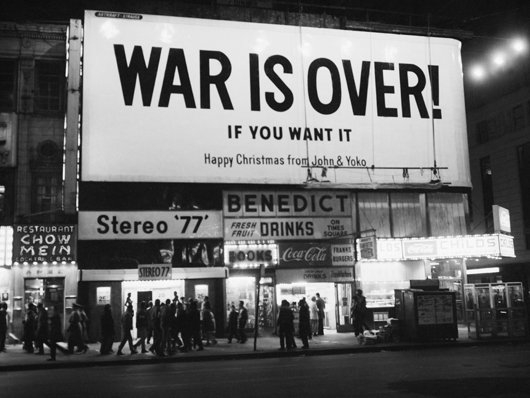



 Denise Sullivan