Denise Sullivan

Author, Arts & Cultural Reporter and Worker

For MLK Day: Len Chandler’s Shadow Dream – in memory of a singer, a movement & its leader

Len Chandler was a protest singer, movement worker and unsung hero from the Civil Rights Era, a frontline campaigner in the fight for voting rights, racial and economic justice and against wars of aggression. He performed with Bob Dylan and Joan Baez at the March on Washington For Jobs and Freedom in 1963 where Dr. Martin Luther King, Jr. delivered his historic “I Have A Dream” speech. In 2021, I was commissioned to write a piece on Chandler and his relationship to Bob Dylan in front of the opening of the Bob Dylan Center in Tulsa, OK. The essay is emerging here for the first time before its publication as a commemorative limited edition booklet on the life of Chandler (with expanded content). A portion of the book’s earnings will be contributed to voting rights organizations. Order here: Len Chandler: Shadow Dream Chaser of Rainbows/In memory of a movement hero

“You have to take the lead from somewhere and there were only a few performers around who wrote songs, and of them, my favorite was Len Chandler,” wrote Bob Dylan in his book, Chronicles.
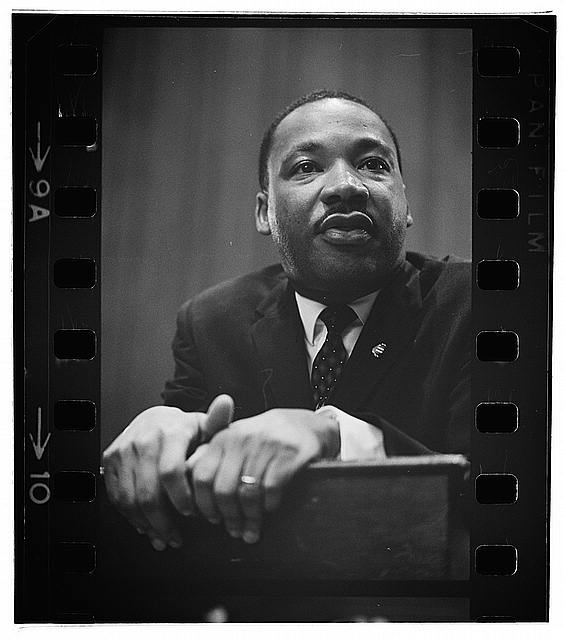
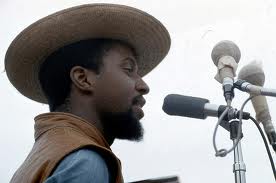
Among the singing foot soldiers in the civil rights movement, the students and teachers from coast to coast who sat in, stood up and rode on freedom’s highway, and of all the folksinging pamphleteers and poets who swarmed Greenwich Village in the late ‘50s and early ‘60s, only Len Chandler emerged from that fabled period an under-looked groundbreaker and a foundational freedom singer, a kind of cosmic twin to Bob Dylan.

“We talked all the time,” said Chandler. “I can’t remember what we talked about but half the time, it would be philosophical, our different approaches to things. We could talk for two days on whether it’s a straight line or circle,” he said, recalling that vortex, that wrinkle in time in Greenwich Village where the cultural happenings of the ‘60s were beginning to reveal themselves. “I’d argue today that it’s a circle. The circle is built into everything. It’s built into our DNA, it’s built into the way the cosmos is formed. Everything is circular.”

The Village swirled with poets, playwrights, and artists of all stripes, mixed with locals and others from afar, far-out people who sought a fluid place to become who they thought they were meant to be – the kind of place and kind of time where young Len Chandler (from Ohio) and young Bob Dylan (from Minnesota) could meet, become friends and learn how to frame, shape and deliver a song.

“He sang quasi-folk stuff with a commercial bent and was energetic, had that thing that people call charisma,” Dylan wrote. “Len performed like he was mowing down things. His personality overrode his repertoire. Len also wrote topical songs, front-page things.”

Ordering info Len Chandler: Shadow Dream Chaser of Rainbows

Filed under: anti-racist, anti-war, Bob Dylan, Civil Rights, Dr. Martin Luther King Jr., Poetry, , , ,

The world according to Les McCann

Jazz musician Les McCann died of pneumonia in Los Angeles on December 29, 2023 at age 88. As a leader and sideman, he recorded countless albums and made major contributions to the soul-jazz music of the ’60s and ’70s. His piano work has also been sampled frequently in the modern hip hop era. McCann has been most often remembered and celebrated for his performance of the Eugene McDaniels song, “Compared To What.” Performed live with Eddie Harris at the Montreux Jazz Festival in 1969 and released on their album, Swiss Movement, McCann on vocals and piano gave the song a certain punch and swagger. This is an edited transcript of my talk with McCann, about the origin of the song widely considered to be the greatest protest song of the Vietnam eraand his thoughts on life in 2016, from his then 80-year-old vantage point. May he rest in peacewith condolences to his surviving loved ones and friends.

“When I began my career in LA we had immediate attention. And whenever you have attention, you have other people coming around, trying to get your attention. I was performing with my trio at LA City College and Eugene McDaniels came by one night. I didn’t know who he was, but he liked what were doing and started hanging out. I thought he was the greatest male voice I’d ever heard. I invited him to join my group.

We started working together, and the money wasn’t good, but it was the beginning of us being professionals. He was different from all of us. He could speak English. A lot of people who didn’t like him, didn’t like him because of that. He was a very bright man, very clever. He knew what he was doing and he went after it. I believe he was the son of a pastor.

We were kinda like friends, he’d sit in, but we also hung out. We had a vocal group, a choir, and we’d get together and sing, 12 people, but all were potentially looking for their own career. When he came to us, and said, “I got a record deal, they gave me a lot of money,” we were happy for him, but not only did he stop singing the music we loved for him to do, he started doing all these other things. When they offered him the big money, some people thought he was being a traitor to jazz. But we were all just trying to make it. I was his reminder, the one who told him, don’t forget where you came from, don’t forget why you’re here.

He didn’t know he was a songwriter, but he’d ask me what I thought: Everything he showed me was unbelievable. I didn’t know he loved Bob Dylan. When I first heard “Compared To What,” it was just a set of words, there was no music. It had the words “God dammit” in it, and it was one of the reasons stations wouldn’t play it. No one had ever done that before. They were his words and I was speaking them: This was Gene son of a preacher, questioning whether he should speak his truth, which involved speaking words a preacher’s son shouldn’t say. It also involved a man speaking perfect English and being Black.

I could do what I wanted on my record label and so I recorded the song. But it was nothing like it was six years later when we did it on Swiss Movement. All that happened right there. We were just doing what we thought was great. It took me six years, but the way everyone now hears it happened in a moment, instantly onstage.

_____

“We think we’re unique, that nobody knows what we go through, but it’s not about the singing it’s about being a human, living in this world. These are lessons on learning how to love, trying to find our place and be who we are…You need to deal with the fear and the bullshit. We’re taught to be afraid of everything. Don’t do this or that: It’s said on purpose, part of the curriculum of this earthly school. Everyone has a blueprint, everyone sets out to do their thing. It’s all here, for us to learn. I’ve never stopped learning.

Earth ain’t meant to be heaven. We’re all angels having an earthly experience. Everything you can think of happens right here on this earth. If it wasn’t for sex and money and fighting, there would be no problems. It’s all how you look at things. We all have intuition.The real truth is in the quiet of who you are. I walk hand in hand with who I really am.

I remember my other lifetimes. I don’t want to do the same things over and over. It might take many times but the choice is whether we decide to live in love or in the things we fear.

Every time you do an interview, ask yourself the questions you want the answers to, ask everything you want to know of yourself: You’ll hear things you never heard before. You already know all this. It’s not anything you haven’t heard before.

Fear or love.

You have go through it and deal with it.

It’s how get to where we want to be by the time we die.

Did we really answer the call?

Did you live the life you wanted to live?”

c. 2016, Denise Sullivan

Filed under: anti-racist, anti-war, Arts and Culture, Jazz, Obituary, Origin of Song, Soul, , , , ,

War is Over! If You Want It

Every day I look at a framed poster on my office wall, its message of love and peace beaming down, from John and Yoko. The poster was a gift from a beloved friend who I haven’t seen in quite some time – I wish the circumstances weren’t so. “War is over if you want it.”

There are plenty of us, people and countries and friends and relatives who long for peace. And while I do believe I have to want it, I may also have to work for peace – make it my job. And yet, I choose to believe everything is in alignment just as it is (excepting that is, man-made disasters like war crimes, genocide, climate emergency, inequality and other conditions “unhealthy for children and other living things”). Severed ties, no replies, disappointments and other communication breakdowns may also fall into the category of human failings. So this year of our lord, 2023, certainly didn’t turn out the way I planned it, but my gracious, that is likely for the best (!). With that in mind I make the choice to carry on and employ whatever abilities I have accordingly. What I mean to say is, artists and writers, maybe more so than others but maybe not, use the skills we have to strike back. I mean, doctors help sick people. Caregivers give care. Billionaires could be of help, but often, they go the other way. Just thinking out loud here, but it’s been said writers write, so there’s that.

Pandemics, economic downturns and waiting for the long arc of the moral universe to bend toward justice have historically been periods of great discovery and learning, that is for those who seek knowledge. Turbulent times are valuable to artists and writers and thinkers and doers; it gives us space to get down to the real work of visualizing and implementing change and exercising resistance. And yes, both work and resistance require resilience, and resilience requires care and attention to self. Big questions, like how to tend to our own needs without turning our backs on the wider world at war or away from the people who need us will arise. And yes…I agree, that’s a fine line to walk, and there are times I fail miserably.

Lucky, and I am oh so lucky, living in the Bay Area, I am surrounded by people who provide living examples of the balancing act. I’m thinking right now of artist and activist Megan Wilson. I’ve had the opportunity to interview her several times, most recently about her curatorial and creative role with the Clarion Alley Mural Project’s current installation, Manifest Differently. Successfully merging the political and personal, community organizing and creativity into a holistic vision of making art with a message, Wilson and CAMP point the way for future directions of arts communities to flourish in perilous times. You can link to my full profile of the artist at Bay City News.

Despite the unforeseen this and that, these and those throughout the globe, I struck gold this year when my reporter self found an outlet to tell the stories I want to tell, uncensored and unbothered by market-driven concerns or an editorial board whose political leanings or voting record does not match my own. Independent, non-profit media was not always on my radar. Growing up in capitalism, caught between survival and Aquarian idealism, most of the time I chose survival. That often meant working for people and places I found shall we say, less than savory. Minimum wage in America is not a living wage as anyone who has worked or still works at that rate of pay well knows. Low wage work is painful and it is essential for the world to run as we know it. But maybe, things are changing. I see people rising up, organizing, reasserting their right to unionize and crowding the streets in protest – that makes me hopeful.

In the early part of this century, I was dreaming of people-powered movements coming to life again, the kind the world saw in the Sixties. I began researching and writing a book calling for change – fueled by the power of music. Keep on Pushing published in 2011, a couple of months before the Occupy Wall Street Movement and before Black Lives Matter hit the streets. The book was a vision. The time arrived. The moment passed. We keep working.

My day job as a writing instructor is often a night job. My “students” (strange to call such competent adult writers students) do great work and teaching has become an unexpected source of joy and gratification — the perfect adjunct to the writing life that keeps me engaged with trends and topics writers are interested in exploring and developing. But if I may speak the truth, and you know I will, my own work often takes a back seat to the job. I have once again failed to achieve mastery of life’s balancing act. Some personal and longer term projects were side-burnered, not always of my own choice or making, but so be it. Projects will likely reach completion in the new year and I hope at that time to share them with you. A way will be made.

I hope 2024 brings us all more work and more jobs to do. For now, I’ll leave you with links to my most recent assignments for hire, a review of Sonic Life, by Thurston Moore for the San Francisco Chronicle Datebook, a profile of Nathalie Lermitte and the songs of Edith Piaf, and the aforementioned profile of Wilson. I’m grateful for the weeks when paycheck and passions intersect, and mindful of my privilege to pursue both — in peace.

Filed under: anti-capitalist, anti-racist, anti-war, , , , , , ,

Rest In Power, Len Chandler: Shadow Dream Chaser of Rainbows Died on August 28, 2023

images

As anyone with their eyes on the prize knows, the 60th anniversary of the historic March on Washington for Jobs and Freedom was on August 28, 2023.  Among those assembled to help Dr. King push forward his dream of racial harmony and economic justice was Len Chandler (often overlooked in the history of civil rights work), one of the voices in a trio that day which included Bob Dylan and Joan Baez (Chandler appears at about 17 minutes into the following clip, though the whole 25 minutes is worth your time). Unfortunately, I come here today with a heavy heart to belatedly report that Chandler died at home in Los Angeles, on August 28, 60 years to the day of the march.

It was a blessing to have interviewed Len on several occasions for the purpose of documenting his story. I was invited to the home he shared with his wife Olga James, to break bread with him, and to participate in several community functions and political gatherings where he was still singing for freedom in the 21st Century. My deepest condolences to all who loved him. I did not know him well, but his work has continued to move and motivate me, long after first making contact with him more than a decade ago.

It was hoped that Chandler and I would be visiting the Bob Dylan Center in Tulsa this year, to deliver a panel on singing, songwriting, racial justice and voting rights, to coincide with the publication of my essay commissioned by the Center on Chandler. But none of that was to be. Timing, as it’s said, is everything. And racism is still very much alive, very much afoot in America, 2023.

The following is a repost from my previous posts on Chandler

Chandler would march with Dr. King and travel throughout the South in the name of voter registration, informing rural Southerners of their polling rights, often at great risk to his own life. His poems were recognized by Langston Hughes, he wrote the folk standard “Green, Green Rocky Road” with poet Bob Kaufman, and recorded two albums for Columbia Records, but little is known about him or his life.  I sought out Chandler when I wrote Keep on Pushing, my text that tracks the origins and evolution of freedom music, and its roots in African American resistance and liberation movement.

Originally from Akron, Ohio, and studying on scholarship at Columbia in the ’50s, Chandler made his way to Greenwich Village folk music by accident: Lured to the sounds of Washington Square Park by the downtown youths he was mentoring, he easily fell into the scene with his natural ear for songwriting and his familiarity with the songs of Lead Belly, Big Bill Broonzy, and Woody Guthrie.  Following a performance at the popular Village coffeehouse, the Gaslight Cafe,  Chandler landed a contract to go to Detroit, writing and performing topical songs for local television. A few months later, when he returned to New York, the folk thing was in full swing:  Bob Dylan was the latest arrival to town and the pair started to trade ideas and songs.

“I hadn’t yet begun writing streams of songs like I would, but Len was, and everything around us looked absurd—there was a certain consciousness of madness at work,” wrote Dylan in his book Chronicles.  Chandler remembers it like this in Keep on Pushing:  “The first song I ever heard of Dylan’s was ‘Hey ho, Lead Belly, I just want to sing your name,’ stuff like that.”  Dylan used Chandler’s melody for his song, “The Death of Emmett Till.” “Len didn’t seem to mind,” Dylan wrote.

Chandler went on to record two albums for Columbia:  To Be a Man and The Loving People. He continued to work as a topical songwriter, a peace and civil rights advocate, and as a songwriting teacher; his tour of Pacific Rim bases with Donald Sutherland, Jane Fonda, Holly Near and Paul Mooney was documented in the Francine Parker film, FTA, a must-see for anyone interested in US history and anti-war efforts within military ranks. Catch a glimpse of Chandler at the end of this trailer for the film:

It was an extreme privilege (and I have since found out a rare opportunity) to meet one of the true unsung heroes of singing activism (as well as his wife Olga James, a pioneering performer in her own right), and have him tell his story to me. Though largely retired from performing, he remains well- informed on human rights, politics, and the arts and will step up and step out for civil rights. You can read a portion of our talks in Keep on Pushing, and someday I will post the complete unedited transcripts, though for now, enjoy the voice of Chandler from back in the day, when singing was a huge part of moving the movement forward.

Filed under: anti-capitalist, anti-racist, anti-war, Arts and Culture, Black Power,, California, Civil Rights, Folk, racism, ,

Rest in Power: Sinéad O’Connor

When I heard the news that Sinéad O’Connor died last week, the news was not terribly surprising – people suffer, they take ill, they die. And yet, the depth of my feeling for the world’s loss of such a prophetic, powerful and perfect singer was startling. Though I’m well-familiar with her work and saw her perform live more than once (she was after all a part of the fabric of the ’80s and ’90s popular culture), I think what struck me hardest was how much of her good work for humankind and her general love of the world’s people had gone unnoticed. Here was a God-loving and spiritually devoted singer who had never turned away from her mission to help others, and yet, others had turned away from her time and again.

And then I remembered her turn as the Virgin Mary in Neil Jordan’s film, The Butcher Boy: There was something about her performance that stayed with me, all these years later. I guess what I mean to say is there is no doubt in my mind that someday, future generations will see Sinéad as the visionary, the prophet, the truthsayer and comforter she was; maybe she’ll even be venerated accordingly.

My full remembrance of O’Connor can be read at the link to Tourworthy.

Filed under: anti-capitalist, anti-racist, anti-war, Arts and Culture, Bob Marley, film, Hip Hop, Immigration Reform, income disparity, Nina Simone, Protest Songs, racism, ,

Sonali Kolhatkar: Pursuing Racial Justice

It feels like something changed this Fourth of July: On the morning of the fifth, I woke up to one radio report after another in which people, ordinary American citizens, were expressing their disbelief, distress and general fatigue at being sold a story about our country’s origins that doesn’t quite add up to the truth. This, it would seem, is a good thing: More and more people have woken up to the idea that all is not well with us, that their children have been and continue to be misled and are ill-prepared for the future. To prevent further erosion to our democracy, our planet, and life at large, it’s time for all of us to participate in some form of direct action. At least that’s my interpretation of things on the morning after a restless night of listening to cherry bombs bursting in air, for the sake of our freedoms.

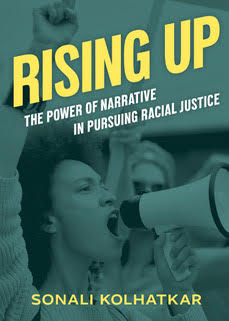
But despite sustained political efforts to constrict our liberties and suppress the truth of the United States’ origins (as in the current opposition to teaching critical race theory and the trend toward banning books and criminalizing the teaching of history) there are other ways to forge change to a tired old story. In Rising Up: The Power of Narrative in Pursuing Racial Justice, Sonali Kolhatkar has constructed a guide to the ways in which we can all participate in a sea change by becoming better consumers of the media and resisting the stories we are told. She offers tools for more critical thinking, productive discussion and ways to create empathy as opposed to enmity. As racial justice editor of Yes! magazine and host of Pacifica Radio’s Rising Up With Sonali, Kolhatkar is a solutions-oriented journalist, focused on progress rather than problems. I have long been a fan of her broadcasts and was delighted to talk to her more about the pursuit of racial justice.

My full interview with Kolhatkar appears in Bay City News/Local News Matters. For now, free speech and a free press remain among the cornerstones to democratic society. I hope you’ll take a moment to read the profile and support independent voices inside and outside the media.

Filed under: anti-capitalist, anti-racist, anti-war, Arts and Culture, Books, , ,

Surrender Bono: There’s No Band Like U2

During U2’s earliest shows in San Francisco, a ritual developed: Bono would lift a child from the crowd onto the stage and prop her on his shoulders. The girl’s name was Megan and I was acquainted with her family; they ran the Psychedelic Shop on Market Street, a remnant of the hippie days and an essential stop on our ‘80s routes as one of the few places in town that sold rock ’n’ roll badges. I haven’t seen Megan or her family for years but she appears at about the forty minute mark in U2’s live set from California Hall, May 15, 1981, just two months after their first San Francisco appearance at the Old Waldorf on March 20.

The band gave small nightclub performances with stadium energy. Their gestures – well at least one member’s – were at once big and grand, generous and self-indulgent, a harbinger of a future self. These were also the things I came to love and not so much love about Bono. In passage over passage in Surrender, Bono’s recently published memoir, the singer knows this about himself – he is a the ultimate showman and a humble servant to the stage. The two extremes come packed with the character traits that make him a frontman: He runs mostly in the red. I think I would have rejected him and the band entirely back then had I not felt like what my generation needed was a rock star of our own- not Bob Dylan or Patti Smith, the Ramones, or the Clash but boys and girls – just  like us – who seemed capable of making something happen, of getting something done in the face of a new age of nihilism. The earnest young men of U2 seemed like contenders – a “nice bunch of Christian boys,” as photographer Chester Simpson characterized them. The band fulfilled its promise and then Bono went beyond the call of duty to become the most charitable of rock stars of my generation. His faith is estimable, though he is a man and U2 is a band of contradictions. There is much more to tell. Full story at the the link to Tourworthy.

Filed under: anti-war, Arts and Culture, rock 'n' roll, , , , , , , ,

Stevie Wonder, Gil Scott-Heron and the road to MLK Day

Today would have been the 94th birthday of Dr. Martin Luther King, Jr. born January 15, 1929 in Atlanta, Georgia. It was a long road to the third Monday of the month when all 50 states will observe a federal holiday named in his honor. Largely owed for making the dream of MLK Day a reality is Stevie Wonder: Back in 1980, he wrote the pointed song, “Happy Birthday,” then launched a 41-city U.S. tour (and invited Gil Scott-Heron along) to promote the idea which was first mooted by Rep. John Conyers in 1968. The musical efforts were ultimately the key in collecting the millions of citizen signatures that had a direct impact on Congress passing the law signed by President Ronald Reagan in 1983, declaring a day for MLK.

Observed for the first time in 1986, some states were late to participate, however, by the turn of the 21st Century, all were united in some form of remembrance of the civil rights giant. “Happy Birthday,” which served as the Wonder-campaign theme (and is now the “official” King holiday tune) is the last track on Hotter Than July. The album also features “Master Blaster,” Wonder’s tribute to Bob Marley (Marley had been scheduled for the tour until he fell too ill which was how Scott-Heron came to participate. In his memoir The Last Holiday, Scott-Heron details his own journey with music and activism, as he retraces the long and winding road Wonder took to bring home the last US federal holiday, with the help of a song.

The Hotter Than July tour brought Scott-Heron and Wonder to Oakland, where they played in the name of King, along with Rodney Franklin and Carlos Santana. In a weird turn of events, the concert on December 8, 1980, coincided with the night John Lennon was killed. The musicians and crew learned of the tragedy from a backstage television, and the job fell to Wonder, with Scott-Heron and the other musicians at his side, to deliver the shocking news to an arena of music fans.

“For the next five minutes he spoke spontaneously about his friendship with John Lennon: how they’d met, when and where, what they had enjoyed together, and what kind of man he’d felt Lennon was,” wrote Scott-Heron.  “That last one was key, because it drew a line between what had happened in New York that day and what had happened on that motel balcony in Memphis, Tennessee, a dozen years before.  And it drew a circle around the kind of men who stood up for both peace and change.”   Scott-Heron devotes the final pages of The Last Holiday to a remembrance of how the murder of Lennon fueled the final drive to push for a federal observance of the official MLK Day.

The politics of right and wrong make everything complicated

To a generation who’s never had a leader assassinated

But suddenly it feels like ’68 and as far back as it seems

One man says “Imagine” and the other says “I have a dream”

Filed under: anti-capitalist, anti-war, Arts and Culture, Black Power,, Blues, Bob Marley, Civil Rights, Dr. Martin Luther King Jr., Georgia

Filed under: anti-capitalist, anti-war, Arts and Culture, Bob Marley, Civil Rights, Dr. Martin Luther King Jr., Georgia

Which side are you on, boys?

The stats are in: 66 songs, 110 writers, four songs performed by women and seven written by them. The woman pictured between Little Richard and Eddie Cochran is Alis Lesley, an obscure pioneer of rock ‘n’ roll. Nicknamed “The Female Elvis Presley,” she recorded one single and left the business before ever getting started. Lesley is a footnote in rock history and a link in the chain of so many women before, and thousands more after, who helped shape modern song as we know it today.

But this is not a further critique of the exclusion of women in Bob Dylan’s The Philosophy of Modern Song: you may read my review and plenty more elsewhere (though they don’t get much better than this one). In fact, in the best case scenario, the book’s omission of women is an invitation to further exploration – an opportunity to learn more about say, Sharon Sheeley, Cochran’s occasional co-writer and girlfriend and the youngest woman to reach the top of the charts with “Poor Little Fool,” the song she wrote for Ricky Nelson. But I’m not so sure it’s that simple. Or complicated…

“It seems reasonable to hope that an artist of Dylan’s magnitude would publish words in solidarity with half of humankind in this critical hour of rights rescinded, rather, he chooses demeaning stereotypes,” I wrote in the San Francisco Chronicle. “There are also several admonishments on “political correctness” that, given the current moment of extreme polarization, are disappointing, especially coming from an artist who is known for his care with language.”

There is hardly anything that bothers me more than a missed opportunity: A book publishing in yet another long, wintry season in America could’ve served as a chance to lift up women when we really need some light – allies, friends and champions. What we want are equal rights and justice. What we need is for men to stand with us. What this woman can’t use are more vulgar characterizations, slights and crude names leveled at us – whether in the name of art or satire. The world is cruel enough. Yes, for the historical record, there have been many demeaning names for women, and Dylan chose to use as many as could be called to mind. He did not choose to do the same with racist epithets throughout the book.

“As a people, we tend to feel very proud of ourselves because of democracy,” writes Dylan in his essay on the song, “War,” one of the book’s central pieces. “We walk into that booth and cast our votes and wear that that adhesive “I Voted” sticker as if it is a badge of honor. But the truth is more complex. We have as much responsibility coming out of the booth as going in.”

Dylan is writing here about voters electing officials who will wage peace instead of war. Much of the content of the passage regarding personal responsibility for war echoes the old song “Universal Soldier,” written by Buffy Sainte-Marie. There is no mistaking Dylan’s point of view: He’s taking a clear stance on a divisive issue as old as time. My sadness, on this election day in the US, is that he didn’t make a similarly clear, simple and strong statement toward a collective responsibility to women and our never ending war with an unjust system.

Filed under: anti-war, Arts and Culture, Books, Buffy Sainte-Marie, Civil Rights, Editorial, Women's issues, Women's rights, , ,

Antiracism isn’t only an idea, it’s an action

As one who writes at the intersection of culture and social issues – racism, sexism, income disparity – I appreciated the opportunity to speak to comic, W. Kamau Bell and human rights historian Kate Schatz about their collaborative project, Do The Work! An Antiracism Activity Book. Not only was it an opportunity to learn by doing the work to become more antiracist, but it was a chance to ask the authors some of my specific questions about language, how to use it, and what steps we can all take today to be better people in a country mired in a history of racism that is yet to be fully reckoned with.

“We were thinking of people who want to know what to do but who are overwhelmed because they may be short on time or didn’t grow up around other cultures,” Schatz said. The workbook addresses white people, but its exercises may be of interest to anyone seeking to up their game and take action when it comes to identifying and abolishing systemic racism.

“One thing you learn from being Black in America is that a good preacher is also funny,” Bell said. “You have to have a sense of humor to the message. My mother was the first person who demonstrated to me the humor to keeping it real.”

I hope you will read with interest the entire article in today’s San Francisco Chronicle Datebook.

Filed under: anti-capitalist, anti-war, Arts and Culture, , ,

Archives

Recent Posts

Browse by subject or theme