At the time the Iraq War started this month 10 years ago, millions of Americans objected to it, suspected it was unjust, and eventually came to know the truth, yet relatively few songs took on the state of the nation’s unrest or the war and its horrors. Three years into it, after the Dixie Chicks paid a very public cost for voicing their political views from the stage, Neil Young released Living With War, a concept album railing against George W. Bush and his administration.
Tuning into Jim Ladd’s show on KLOS-FM one late night in April 2006, it was by accident I heard the record’s debut, during a drive home from San Diego. I knew right then the game had changed, live on-the-air, and could hardly believe my ears: This was protest music, an album’s length of it, the likes of which wasn’t being made much anymore, at least by rock’n’roll musicians. Perhaps even more strikingly, it was direct, topical and easily understood. “Let’s impeach the president for lying,” was undeniable and couldn’t be mistaken for anything other than what it was—a protest song, and a creative blast of expression and truth. At the time, Young famously declared he was surprised that younger voices hadn’t weighed in on the subjects of war and greed, but that he could no longer wait around for someone else to do it, so he went ahead and composed and recorded the songs himself. Assisted in the studio by Rick Rosas on bass, Chad Cromwell on drums, Tommy Bray on trumpet, and the 100 voices of an LA choir, the quickly written and recorded work is an everlasting document of an artist waging peace in our time.
Young also launched a website, Living with War Today, and threw down a challenge to topical songwriters across the USA and around the world to write the songs of our lives: The best ones were posted, the songs remain, and the list is frequently updated. The site also carries reprints of relevant news items, a continuous tally of casualties, and links to sites like Iraq Veterans Against the War. Thank you to Neil Young and Co. for making Living With War and for maintaining the Living With War Today web resource: 10 years is far too long to be living with war in our hearts and our minds.
It was a long road to the third Monday in January when all 50 states will observe the birth of Martin Luther King, Jr. and the day named in his honor in their own unique ways. Largely owed for making the dream of a King holiday a reality is Stevie Wonder, who back in 1980, wrote the pointed song “Happy Birthday,” then launched a 41-city U.S. tour (and invited Gil Scott- Heron along) to promote the idea which was first mooted by Rep. John Conyers in 1968. The musical efforts were ultimately the key in collecting the millions of citizen signatures that had a direct impact on Congress passing the law signed by President Ronald Reagan in 1983, declaring a day for MLK. Observed for the first time in 1986, some states were late to the party, however, by the turn of the 21st Century, all were united in some form of remembrance of the civil rights giant. “Happy Birthday”, which served as the Wonder-campaign theme (and is now the “official” King holiday tune) is the last track on Hotter Than July. The album also features “Master Blaster”, Wonder’s tribute to Bob Marley who had been scheduled for the tour until he fell too ill to participate. Stepping into the breach was Scott-Heron whose 2011, post-humously published The Last Holiday, details his own journey with music and activism, while it retraces the long and winding road Wonder took to bring home a US federal holiday with the help of a song. The tour brought Gil and Stevie to Oakland, where they played in the name of King, as did Rodney Franklin and Carlos Santana, on the shocking night John Lennon was killed (though that is a story better read in Scott-Heron’s memoir).
In King’s birthplace of Atlanta, Georgia, the King Center, has a full schedule of events currently underway; the celebrations and various symposiums are of course dedicated to the King’s teachings in non-violence. In San Francisco on January 21, there will be an all-day celebration of King’s life at Yerba Buena Center for the Arts from 11 a.m. — 5 p.m. The City of Santa Monica also has a full weekend schedule of events beginning on Friday. The photo above was of course taken during the historic “I Have a Dream” speech, delivered on August 28, 1963 at the March on Washington now in its 50th anniversary year. Had he lived, Dr. King would’ve been 84 today—and still dreaming.
A version of this column originally appeared as an installment of The Origin of Song for Crawdaddy! online
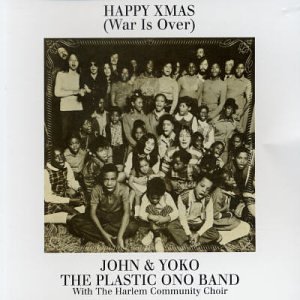
And so it was that a centuries-old folk song about a race horse launched a rock ‘n’ roll Christmas standard 40 years ago, or so the story goes. Oh, I know this will not be news to the most scholarly of you folk and rock types, however, for this folk and rock type, I hadn’t made the link until it was pointed out to me a couple of years ago that the melody to “Happy Xmas (War Is Over)” is a borrowed tune.
“Stewball” was a race horse, as the song goes, and the first song about him was written in the late 1700s. At that time, Stewball went by the name Skewball, though you might also see versions that tell of Sku-ball and Squball. The name was likely because his coat was of the skewbald variety, or what we call “pinto,” a horse with patches of color, usually on a chestnut or reddish base (funny that at some point he wasn’t dubbed Screwball). According to folk music lore and some reliable sources, Arthur Marvell’s Sku-Ball was set to race Sir Ralph Gore’s gray mare Miss Portly in Kildare, Ireland. But when the dark horse, or more accurately, the skewbald horse won, it took the horse people by surprise: They had expected the animal with the pedigree to take home the prize. Newsworthy as this was, the story made the broadsides: Printed on cheap paper and passed around, a popular ballad was born, beginning its journey through time and around the world.
Lyrically, there are plenty of variations on the “Skewball” story: For example, “Molly and Tenbrooks” is an American telling of a late 19th century horse race between California’s Mollie McCarty and Kentucky’s Ten Broeck. Versions of “Molly and Tenbrooks” were cut by bluegrass giants, the Stanley Brothers and Bill Monroe, but theirs are a different melody, though related by subject and genre to “Stewball” by kissin’ cousins the Greenbriar Boys. There lay the origin of the melody Joan Baez recorded. Her version is also somewhat of a conflation of the stories told in “Stewball” (who in some cases is a wine-drinking, winning race horse), and “Molly and Tenbrooks” (in which the mare stumbles and thus explains Stew’s win).
Comparing, compiling, and commenting on centuries-old ballads is a vocation to which I am not called; the work is best left to experts like Steve Roud of Croydon, London—he’s compiled the Roud Folk Song Index, listing 33 versions of Stewball and 22 versions of Skewball with data to match. He’s got the info on the John Lomax recordings of inmates of Parchman Farm singing their version in the ’30s, as well as Lead Belly’s ’40s adaptation (which begins “Way out in California…”), but again, different melody, different words, though the horse legend remains inasmuch as the “Stewball” recorded by Lead Belly, Woody Guthrie, and Cisco Houston concerns a race between a California and a Texas horse.
The version many of us know as “Stewball” entered the folk-rock zone in the ’60s, delivered by Baez and Peter, Paul and Mary via the Greenbriars song, credited to John Herald, Ralph Rinzler, and Robert Yellin. For rock folk, there could hardly be worse news than the prospect of yet another rousing verse of the song about a race horse by these buttoned-up icons of traditional song. But by 1966, the Hollies had delivered their folk-rock take on it, with the added zing of their harmony style. With this in mind, we now depart from the green fields of Ireland and the pastures of the Southwest where the story takes on a greater 20th century relevance as it moves to New York City in 1971, where John Lennon and Yoko Ono borrowed the melody and came up with a Christmas song, its subject peace on earth during wartime.
“‘Happy Christmas’ Yoko and I wrote together. It says, ‘War is over if you want it.’ It was still that same message—the idea that we’re just as responsible as the man who pushes the button. As long as people imagine that, somebody’s doing it to them and they have no control, then they have no control,” Lennon said in his final major interview. Lennon and Ono had used the “War Is Over! (If You Want It)” slogan in their billboard campaign of 1969, based on the idea that peace must be sold to the people just as aggressively as consumer goods and war is promoted (The Doors had previously used the slogan, “war is over,” in their 1968 anti-war song, “Unknown Solider” as had W.S. Merwin in his anti-Vietnam poem, “When the War Is Over,” published in 1967).
John and Yoko and the Plastic Ono Band (whose star players for the purpose of this session were Jim Keltner, Nicky Hopkins, and Hugh McCracken) and the Harlem Children’s Choir (they sing, “War is over if you want it”) recorded the song in October at the Record Plant, assisted by producer Phil Spector. It was released in the US on December 6th and held ’til the following November of 1972 for release in the UK.
Spector’s influence is clearly a presence on the track, though for now, it’s purely conjecture whether in addition to inspiration plucked from the Greenbriars’ version, as rendered by PPM and Baez, there is also a dash of such claustrophobic Spector efforts as the Paris Sisters’ “I Love How You Love Me” and “To Know Him Is to Love Him”, not to mention another song from Lennon’s past: “Pledging My Love” by Johnny Ace. “Happy Xmas” bears traces of those melodies in addition to their somber moods.
Opening with a whisper to their children from whom they were estranged at the time (“Happy Christmas Kyoko, Happy Christmas Julian”), the lyrics open with a rather pointed question (“And so this is Christmas, and what have you done?”) and wishes for a better world to follow. All is forgiven by the final uplift.
There are plenty of covers of “Happy Xmas (War Is Over)”, none of them mentionable, and some of them unmentionable (Billy Bob Thornton). The only version worth a bleep that I’ve heard is the original. The melody of “Stewball” seems to have been laid to rest with Lennon’s imaginative use of it, and has insured that it’s sung at least once a year.
From the race tracks of County Kildare to the chain gangs of Mississippi, Stewball is tired and has gone to the place where retired horses go. Think of him this year as you sing along. Or don’t. But do take to heart the song’s final verse: “A very Merry Christmas and a Happy New Year / Let’s hope it’s good one, without any fear”). That is my message to you, dear reader. Thanks for hanging with me through this “Stewball” adventure, and for that matter, throughout this year. If there are songs or subjects you are interested in reading about next year, let me know. Just no suggestions involving horses, please: I’m happy to say I’ve finished that race.
WARNING: Video depicts graphic imagery of the horror of war.
Remembering John Lennon (October 9, 1940—December 8, 1980) today, I offer an excerpt from Keep on Pushing and a clip from The Dick Cavett Show.
“Upon the release of Some Time in New York City in June of 1972, critics and consumers decreed that a heavy does of politics with their music was not what the people ordered. The album became the couple’s worst-received recording in their catalog. “We thought it was really good,” says Yoko Ono. Though Dylan had a hit with “George Jackson” and the Rolling Stones wrote “Sweet Black Angel” for Angela Davis, Lennon and Ono took the most heat of all for supporting radical ideals in song, and Ono got her fair share of abuse. “I wasn’t heardthen. Ok, I was heard, and then they trashed me for it,” she says. And yet the prescience of the concerns that the Lennons reaised in the high-era of public protest and their position at the vanguard of musical revolution —-raising ideas like making art and music for peace, standing together, and suggesting we engage in small acts of human kindness as a way to change the vibration of the world—were deemed threatening to national security and rejected by fans. With his commercial potency at a low ebb and his position on nonviolence officially committed to government documents [translation: he was for peace], one might think there was no case for the US government against the Englishman and his Japanese wife. But their problems with the immigration service and the Nixon White House had only just begun…”
Hats off to West Coast artists Tom Morello, Jello Biafra and Michelle Shocked for joining Lee Ranaldo and Co.at New York’s Foley Square Park last Sunday for the kick off of the one year anniversary week of Occupy. Shocked performed “99 Ways to Loathe Your Lender,” sung to the tune of Paul Simon’s “50 Ways to Leave Your Lover.” Though Shocked discourages filming of her shows, I hope she won’t mind that I found a barely viewed clip of her performing it (she follows Biafra’s spoken word piece). The protest standard, “Which Side Are You On,” was performed as a singalong (it’s as close as any song the movement has to an official anthem). Happy Anniversary Occupy, and thank you to the Occupiers and musicians who represent the 99 percent.
The following is an adaptation of a section from my book, Keep on Pushing. The passage concerns the legacy of protest music and American hero, Woody Guthrie. The people’s singer was born in Okemah, Oklahoma in 1912 on July 14. This weekend, all over the world, people gather to sing-out, in honor of his 100th birthday and centennial year.
“Paper Planes,” M.I.A.’s irresistible and ubiquitous alternative hip-hop track from 2007-08 combines her riff on the lyrical threads of the Clash classic, “Straight to Hell”, as well as a sample of it, alongside her own insouciant rap style and insistent and poetic verses. Punctuated by percussive pop, pop, pops and ka-ching sounds, the songs roots roll deep—from British punk and black empowerment, to American topical protest, in the mode of Woody Guthrie. Five years later, Maya Aprulgasam’s “Paper Planes” endures as music with a pointed message, a high-tilt boogie down production taking in immigration reform, ongoing war, and economic disrepair, though at the time it was released, it was largely misunderstood. It was also a hit record, the likes of which Woody Guthrie would not enjoy or ever know in his lifetime. But safe to say, he was the first contemporary singer to take on the dignity of the immigrant as the subject of a song: In 1948, Guthrie wrote “Deportee (Plane Wreck at Los Gatos).” It is performed here by Bob Dylan and Joan Baez.
The song concerns the treatment of 28 migrant farm workers, their deportation, and accidental demise in a plane crash as they were being returned to Mexico from Central California. Guthrie was struck by the facts: The immigrants were not mentioned by name in news reports (the vitals on the American flight crew got full coverage) and they were buried in a mass, unmarked grave. He wrote the unidentified departed what started out as a poem: “Goodbye to my Juan, goodbye Rosalita, adiós mis amigos, Jesús y María.” Ten years later, schoolteacher Martin Hoffman set it to music. Popularized by Pete Seeger, it is still sung and recorded, most famously by the Byrds, Joan Baez, Billy Bragg, and Bruce Springsteen. “Deportee” remains standing not only as a eulogy, but as a statement on the lack of rights and the poor conditions faced by immigrant farm workers to this day.
The Clash, and Joe Strummer in particular, were known the world over for covering the common man’s concerns, as well as the human cost of empire-building in song. Opening her immigrant song with four bars of “Straight to Hell”, M.I.A. tells us where the song is going and what it’s about before singing a word. Among Strummer’s most celebrated lyrics, its verses are devoted to the plight of the dispossessed. Not exactly sung (perhaps inspired by his new friend, poet Allen Ginsberg, who sat in on the Combat Rock sessions), “Straight to Hell” is a song to the outsider. It signifies where she stands in so-called “polite society,” whether cast-off North of England or in Vietnam: It could be anywhere… any hemisphere… no man’s land and there ain’t no asylum here, in the words of Strummer, or as Guthrie plays it, They chased them like outlaws, like rustlers, like thieves.
Guthrie’s Some of us are illegal, and others not wanted, ring out in Strummer’s … There ain’t no need for ya. Go straight to hell, boys….. The Clashman said he wrote the song while staying at the Iroquois Hotel, a home away from home for workers on the road to rock and roll.
“‘Straight to Hell’ was one of our absolute masterpieces. But the band had to shatter after that record,” Strummer said. Success contributed to hardliners the Clash giving up the ghost, but what they lost, 25 years later, was found when London called again in the form of M.I.A.
Originally appearing on her 2007 album, Kala, “Paper Planes” pushed ahead in 2008 when it was featured in the trailer for the stoner movie, Pineapple Express, as well as in the musical montage sequence to Slumdog Millionaire (the latter film arguably introducing a portion of mass American audiences to the multi-dimensionality of India at the time of its emergence in the world economy). Downloads of “Paper Planes” soared and an uncensored video became a YouTube sensation; to date the single has sold over two million singles in the US and has topped countless best-of lists and polls, receiving more royalties and accolades than Woody Guthrie or even Joe Strummer ever saw. The artist said her song’s success surprised her; she reckoned few would ever hear it, given her indie status at the time of its recording. Though on her way to hitsville, the song took some hits and stuck in some craws; critics thought it thuggish and hard and found ways to put down the singer’s tone. And while Arulpragasam dubs it a satire, “Paper Planes” also fits the categories of protest or empowerment anthem, reclaiming racial stereotypes.
“I don’t think immigrants are that threatening to society at all,” she said. “They’re just happy they’ve survived some war somewhere.”
As for the gunshots and cash register ring: “You can either apply it on a street level and go, ‘Oh, you’re talking about somebody robbing you and saying I’m going to take your money.’ But, really, it could be a much bigger idea: Someone’s selling you guns and making money. Selling weapons and the companies that manufacture guns—that’s probably the biggest moneymaker in the world.”
“Paper Planes” is commentary; an alternative point of view of the hardship of immigrant life and reconsideration of stereotypes leveled at those arriving from the developing world. When M.I.A. was put into the position of having to explain her song, the truth emerged in the light: The majority of immigrants are hard-working people. Many recent arrivals from far off shores have second and third jobs, driving cabs, working in restaurants, supporting families at a distance, while living multi-generationally in cramped rooms. When they die, their lives often go unacknowledged, by strangers in a strange land. That the M.I.A. song was ill-perceived speaks largely to the idea that there isn’t much familiarity or empathy for the subject of immigrants in our land, in the media, or among what used to be called “the record buying public.” It may also serve as an example of how unsung people and stories can be great motivators for songs and dialogues on a theme. Certainly the Guthrie, Strummer, and M.I.A. songs share a common message, and a common form, a heart-worn song.
Guthrie, Seeger and Paul Robeson were branded communist sympathizers and put out of work when they sang songs about forgotten people from other lands. Bob Dylan sang of the injustices met by the poor and black at home, though when he famously retreated from rigorous protest music, he was criticized and lost a portion of his audience in return for his trouble. He sang “I Pity the Poor Immigrant” and people hardly noticed it among the tracks on John Wesley Harding. When Bruce Springsteen sang “Born in the U.S.A.,” the story of a discarded veteran, he was almost universally misunderstood to be singing a patriotic song. This business of protest music has been known to be a hassle and a bit tricky; and while on one hand its more potent and pointed songs often get relegated to the underground, occasionally a white-hot blast like “Born in the U.S.A.” or “Paper Planes” strikes a chord with the mainstream, which is when there’s a chance for a real public discussion about it. Further distinguishing “Paper Planes” from much of the music on the popular charts: There is something to discuss in its content.
The additional touch of a child’s chorus in M.I.A.’s song (“All I wanna do”) was a precedent set by another important artist with an anthem: James Brown’s “Say It Loud – I’m Black and I’m Proud.”
The depth of Brown’s message song catapulted him to a front seat in community leadership; M.I.A. has also become a symbol for young people of color, especially for women’s empowerment across the world, from the subcontinent, Southeast Asia and the Middle East, to Hollis Queens, and East LA. Surely that is a good thing, though there are those who have designated her work as dangerous as they did Brown’s; what these misguided souls seem not to get is that both James Brown and M.I.A. are artists. Although M.I.A. hails from London, she was raised partly in Sri Lanka and in India by activist parents associated with the fight to liberate the Tamil region of their native country. Today, she makes her home in Brooklyn. Confusing? Not if you consider that Maya Arulpragasam, the person behind the artist M.I.A. is a refugee from a war-torn country, looking for a home in this world. The spirit of Woody Guthrie is alive and well in her and in all artists who use their voices, guitars and pens to fight injustice where they see it, recording it in a song.
[post-publication, it occurred to me that there is an undeniable link binding “Paper Planes” to Althea and Donna’s 1978 UK hit, “Uptown Top Ranking,” but that’s an extrapolation that will have to wait for another occasion].

 At the time the Iraq War started this month 10 years ago, millions of Americans objected to it, suspected it was unjust, and eventually came to know the truth, yet relatively few songs took on the state of the nation’s unrest or the war and its horrors. Three years into it, after the Dixie Chicks paid a very public cost for voicing their political views from the stage, Neil Young released Living With War, a concept album railing against George W. Bush and his administration.


 Denise Sullivan